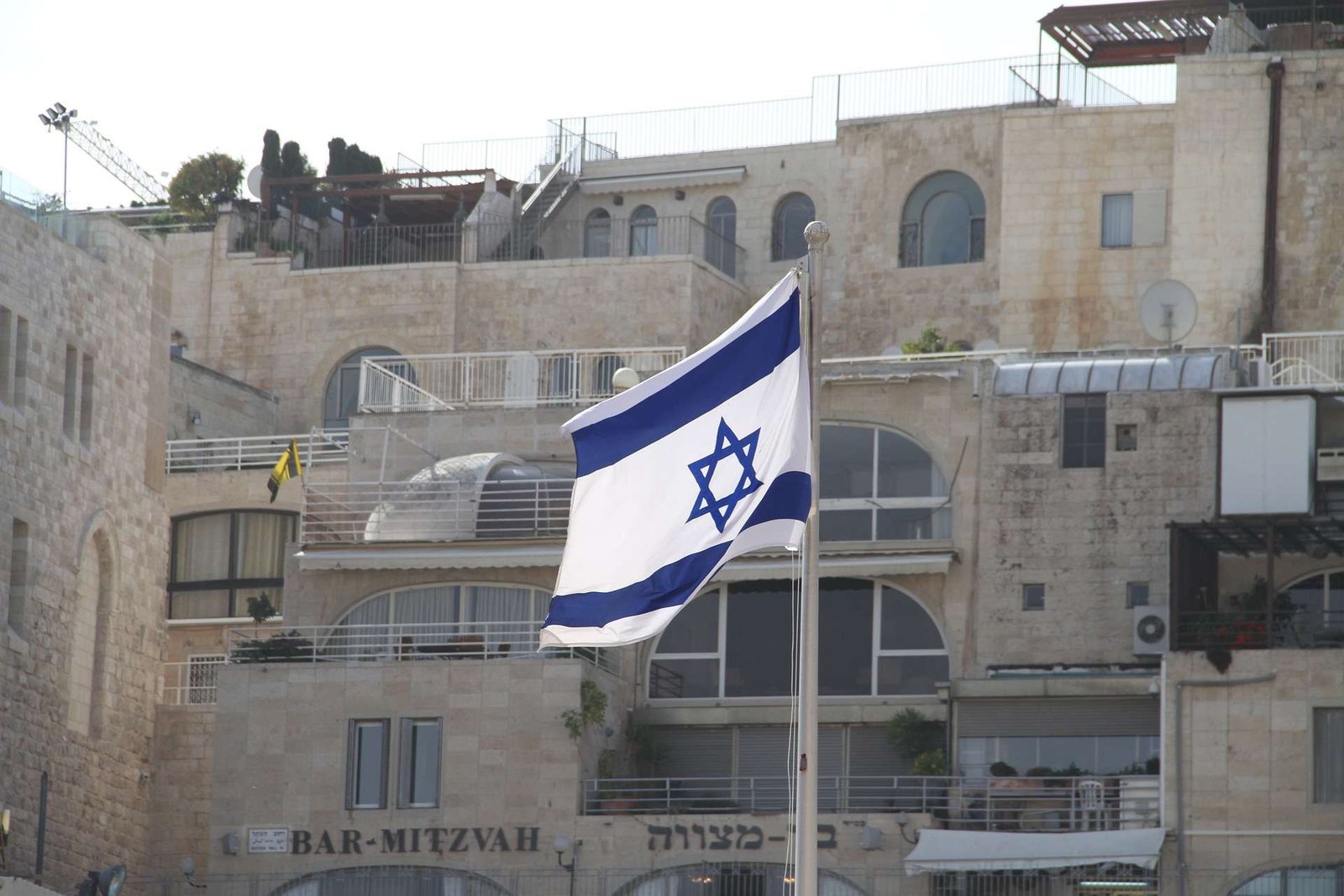
Jerusalem is Israel’s capital under Israeli law and the city where its main national institutions sit. Israel administers the entire municipality, but sovereignty over East Jerusalem is disputed: Palestinians claim East Jerusalem as their capital, and most governments treat the city’s final status and boundaries as matters for negotiation.
How to use this article: Start with the capital-status fast check, see how the Old City fits the wider city, understand what the population count includes, or go directly to recognition in practice.
Why Jerusalem Is Israel’s Capital (Law & Government)
Israel designates Jerusalem as its capital through the 1980 Basic Law: Jerusalem, Capital of Israel. The law declares, “Jerusalem, complete and united, is the capital of Israel,” and places the seats of the President, Knesset, Government, and Supreme Court in the city.
Israel does not have one codified constitution. Its Basic Laws form the country’s constitutional framework, making the Jerusalem law more consequential than an ordinary symbolic declaration. In practice, Israel’s legislature, highest court, presidential office, prime ministerial offices, and most national ministries operate in Jerusalem.
Capital status at a glance
- Under Israeli law: Jerusalem is the capital of Israel.
- In government practice: Israel’s principal national institutions sit there.
- In international diplomacy: Recognition varies, and sovereignty over East Jerusalem remains disputed.
These statements can all be true at the same time. The location of a country’s government is a practical fact; recognition of sovereignty over every part of the capital is a separate diplomatic and legal question.
Government precinct & national institutions
The area around the Knesset forms the national precinct known as Kiryat HaLe’om. It brings together the legislature, Supreme Court, major government offices, and Bank of Israel. The nearby Israel Museum contains the Shrine of the Book, where visitors can see material connected to the Dead Sea Scrolls.
| National institution | Area | Function |
|---|---|---|
| Knesset | Kiryat HaLe’om / Giv’at Ram | National legislature |
| Supreme Court | Kiryat HaLe’om | Highest appellate court; also sits as the High Court of Justice |
| Prime Minister’s Office | Government Quarter | Executive administration and coordination |
| President’s Residence | Talbiya | Official residence and office of the head of state |
Geography & Urban Layout
Jerusalem occupies a limestone plateau in the Judaean Mountains. The Mediterranean coastal plain lies to the west, while the land descends sharply toward the Jordan Rift Valley and Dead Sea to the east. Central locations commonly stand around 2,490–2,660 feet (760–810 meters) above sea level, although elevation varies considerably across the municipality.
The city has a Mediterranean-type climate with dry summers and cooler, wetter winters. Elevation makes summer evenings less humid than much of Israel’s coast. Snow is not an annual certainty, but the Israel Meteorological Service reports that snow accumulates in Jerusalem roughly five or six times per decade.
Jerusalem’s skyline steps across a series of ridges: Mount Herzl and Yad Vashem in the west, the government quarter around the Knesset, the city center along Jaffa Road, the Old City, and then Mount Scopus and the Mount of Olives. The Kidron and Hinnom valleys form prominent breaks in the terrain and strongly influence roads, views, and neighborhood boundaries.
Main roads tend to follow ridgelines, while smaller streets descend through steep slopes and stairways. Municipal planning rules requiring buildings to be built or faced with pale Jerusalem stone help create the city’s recognizable visual unity. The expanded Red Line light rail connects Neve Yaakov with Hadassah Ein Kerem through the city center, including Jaffa Road and stops near the Old City.
The Old City, its walls, and UNESCO status
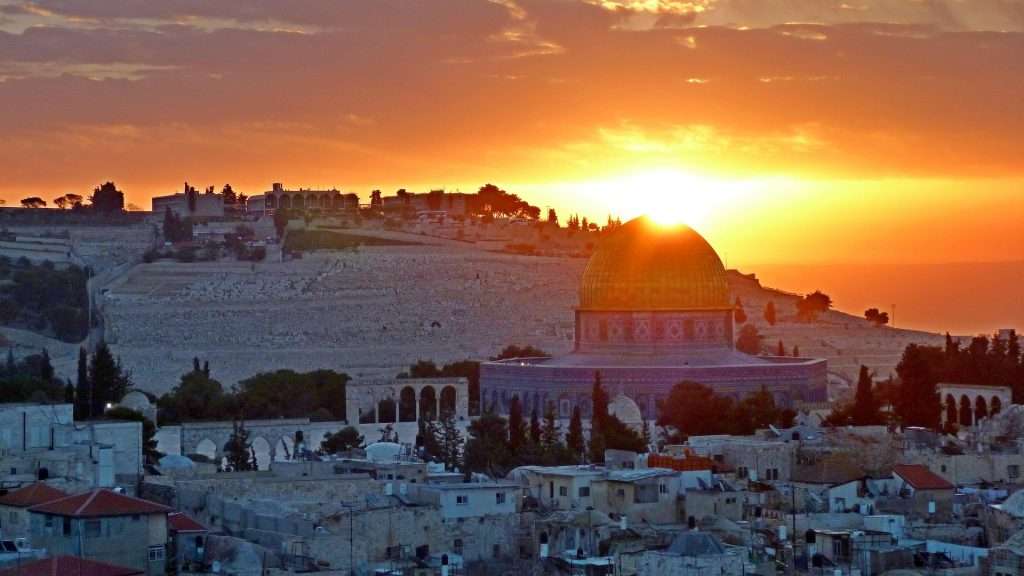
The Old City covers about 0.35 square miles (0.9 square kilometers). Its present walls were constructed under Ottoman Sultan Suleiman the Magnificent during the 16th century. Inside are the four traditional, uneven quarters—Muslim, Christian, Armenian, and Jewish—along with the Temple Mount/Haram al-Sharif compound.
The Western Wall, Church of the Holy Sepulchre, Al-Aqsa Mosque, and Dome of the Rock stand within this compact area. UNESCO inscribed the Old City of Jerusalem and its Walls, a property proposed by Jordan, on the World Heritage List in 1981. It has remained on the List of World Heritage in Danger since 1982.
The Old City lies in East Jerusalem. Israel administers it as part of its municipality and capital, while the United Nations and most governments do not recognize Israeli sovereignty over East Jerusalem.
Ancient and Modern History of Jerusalem
Jerusalem has been inhabited for thousands of years and has served as a royal center, religious focus, imperial city, pilgrimage destination, and modern capital. Its history helps explain both its exceptional sacred importance and the competing national claims surrounding it.
Jerusalem’s ancient origins: From David to the Second Temple
The Hebrew Bible describes King David taking Jerusalem and making it his capital around 1000 BCE. This account is central to Jewish historical tradition. Archaeology shows that settlement existed there long before that period and that Jerusalem later became the established capital of the Kingdom of Judah, although scholars continue to debate the scale and political reach of the 10th-century BCE kingdom.
Biblical tradition attributes the First Temple to David’s son Solomon. Babylonian forces destroyed Jerusalem and its temple in 586 BCE, followed by exile for part of the population. Under Persian rule, Judeans returned and built the Second Temple in the late sixth century BCE.
Herod the Great substantially enlarged the temple complex in the late first century BCE. Roman forces destroyed the Second Temple in 70 CE. The Western Wall is part of the retaining structure surrounding the expanded platform, rather than a surviving wall of the temple building itself.
The city divided (1948–1967)
The 1947 United Nations partition plan proposed placing Jerusalem under a special international regime, but that arrangement was never implemented. After the 1948 Arab–Israeli War and the 1949 Armistice Agreements, Israel controlled West Jerusalem, while Jordan controlled East Jerusalem, including the Old City.
Fortified lines, barriers, and no-man’s-land divided neighborhoods. The Mandelbaum Gate provided the main controlled crossing, and Jews could not reach the Western Wall during the Jordanian period. The war uprooted communities on both sides: many Palestinians were displaced from western Jerusalem and nearby villages, while residents of the Old City’s Jewish Quarter were expelled after its surrender to Jordanian forces.
During the Six-Day War in June 1967, Israel captured East Jerusalem from Jordan. Israel then expanded the municipal boundary and applied Israeli law, jurisdiction, and administration to the enlarged area. Israel describes this as reunification; the United Nations and most governments regard East Jerusalem as occupied territory and do not recognize its annexation. The 1980 Basic Law later formalized Israel’s claim to the complete and united city as its capital.
Religious Significance to the Three Faiths
Jerusalem’s identity is inseparable from Judaism, Christianity, and Islam. Within a short walk, people encounter places connected to the ancient Jewish Temples, the final days of Jesus, and the Prophet Muhammad’s Night Journey.
These are active places of worship, not simply historic attractions. Modest clothing, quiet conduct, and respect for designated prayer areas are expected. Security controls, ceremonies, religious holidays, and local conditions can alter access with little notice.
Judaism: The Eternal Holy City
For Jews, Jerusalem—Yerushalayim—is the center of religious memory and prayer. The Temple Mount is Judaism’s holiest site because it is traditionally identified with the location of the First and Second Temples. The Western Wall, part of the platform’s ancient retaining structure, is the principal site of regular Jewish prayer beside the compound.
Jewish prayers traditionally face Jerusalem; within the city, worshippers orient themselves toward the Temple Mount. The city also occupies a central place in Jewish liturgy, festivals, mourning practices, and hopes of return.
Christianity: Sites of the Passion
For Christians, Jerusalem is closely associated with the final days, crucifixion, burial, and resurrection of Jesus. Pilgrims follow the Via Dolorosa through the Old City, recalling the Stations of the Cross.
The Church of the Holy Sepulchre contains sites traditionally identified as Golgotha and the tomb of Jesus. Several ancient Christian denominations share responsibility for the church under a detailed arrangement governing its spaces and ceremonies.
Islam: Al-Quds and the Night Journey
Jerusalem—Al-Quds—is widely regarded as Islam’s third-holiest city after Mecca and Medina. The Al-Aqsa Mosque compound, also called Haram al-Sharif, includes Al-Aqsa Mosque and the seventh-century Dome of the Rock shrine.
Islamic tradition associates the place with the Prophet Muhammad’s Night Journey to the “farthest mosque” and his ascent to heaven. The compound remains an active center of daily prayer and major gatherings, especially during Ramadan.
People, Languages, and Daily Life (Demographics & Society)
Jerusalem is Israel’s largest municipality by population. The Israel Central Bureau of Statistics reported that its population passed one million by Jerusalem Day 2024. Its detailed end-of-2023 breakdown classified 60.5% of residents as “Jews and Others” and 39.5% as Arabs.
“Jews and Others” is a CBS statistical category that includes Jews as well as non-Arab Christians and people not classified by religion. The Arab category includes Muslim and Christian Arab residents. These categories do not fully describe citizenship, national identity, religious practice, or the legal residency differences among the city’s communities.
How to read the population figure
The one-million figure follows the municipal boundary used by Israeli authorities, which includes East Jerusalem. It is therefore a count of people living within the municipality administered by Israel—not an international decision about sovereignty. It is also a municipal figure, not a metropolitan-area estimate.
Hebrew and Arabic are both common in daily life, and English is widely used in tourism, universities, and international institutions. Many signs and public-transport displays appear in all three languages.
Jerusalem has a relatively young population, particularly in its Haredi Jewish and Arab neighborhoods. The Hebrew University’s Mount Scopus and Giv’at Ram campuses, Hadassah medical centers, government employment, religious institutions, cultural organizations, and technology centers such as Har Hotzvim add modern economic functions to the city’s historic role.
Politics & International Recognition (What the World Does)
Jerusalem’s status becomes easier to understand when three questions are separated:
- What city does Israel designate as its capital?
- Where do Israel’s national institutions operate?
- What territory in Jerusalem does another government recognize as Israeli sovereignty?
The first two answers are Jerusalem. The third depends on the government and frequently distinguishes West Jerusalem from East Jerusalem or leaves final boundaries unresolved.
Recognition in practice
The United States recognized Jerusalem as Israel’s capital in December 2017 and opened its embassy there on May 14, 2018. The recognition statement did not define the final boundaries of Israeli sovereignty in the city.
As of July 31, 2026, embassies representing the United States, Guatemala, Honduras, Kosovo, Papua New Guinea, Paraguay, Fiji, and Somaliland operated in Jerusalem. Israel recognizes Somaliland as a sovereign state, while the United Nations and most governments regard it as part of Somalia; embassy totals may therefore be described differently. Colombia and Nauru had announced plans to open embassies but had not yet opened them. Most foreign embassies remained in the Tel Aviv metropolitan area, while some governments maintained consular or representative offices in Jerusalem.
UN Security Council Resolution 478 determined that Israel’s 1980 Basic Law and related measures seeking to alter Jerusalem’s character and status were null and void, and it called on states with diplomatic missions in Jerusalem to withdraw them.
Palestinians claim East Jerusalem as the capital of the State of Palestine. The United Nations position treats Jerusalem as a final-status issue and supports a negotiated outcome in which the city serves as the capital of Israel and Palestine.
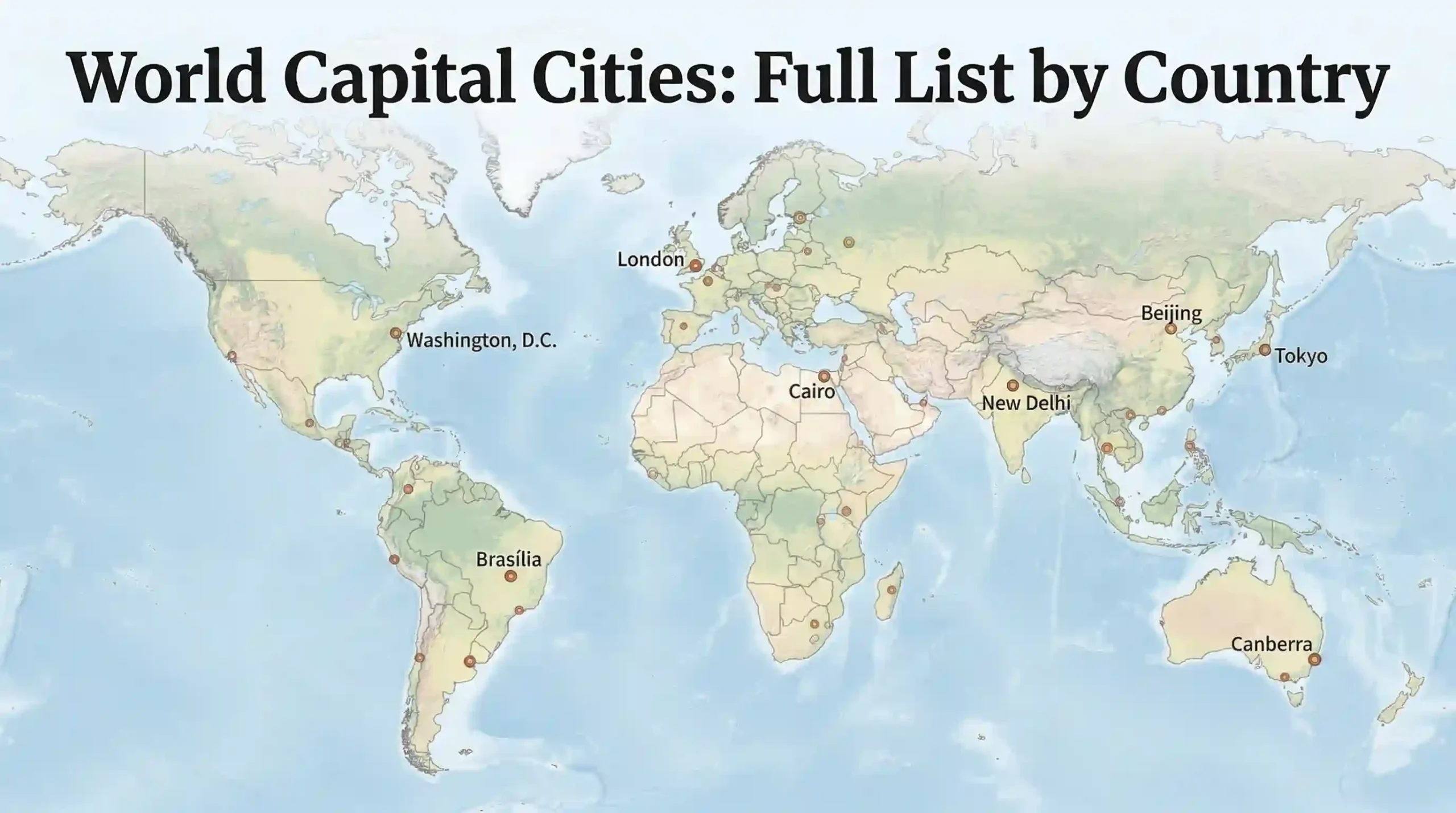
This is why a careful world capital cities list can identify Jerusalem as Israel’s capital while also noting the Palestinian claim and unresolved sovereignty dispute.
Visiting Jerusalem (Practical Geography & Travel Tips)
Getting there and moving around
Ben Gurion Airport is approximately 33–35 miles (53–56 kilometers) from central Jerusalem by road. Direct trains connect the airport with Jerusalem–Yitzhak Navon Station, with the rail portion of the journey commonly taking about half an hour. Timetables and security-related service changes should be checked before departure.
- Light rail: The Red Line runs through Jaffa Road and serves Central Station, City Hall, Damascus Gate, and neighborhoods between Neve Yaakov and Hadassah Ein Kerem.
- Walking: Central sights are often close in horizontal distance, but steep streets, stone steps, and uneven Old City paving can make walks slower than expected.
- Shabbat: Most Israeli public transportation pauses from Friday afternoon until Saturday evening. Exact service varies, and taxis and some East Jerusalem bus services follow different schedules.
- Driving: Parking near the Old City and central districts is limited. Park-and-ride facilities and public transport are often more practical.
When to go and what to see
Spring and autumn generally provide mild conditions, although Jewish, Christian, and Muslim holidays can bring large crowds and access controls. Summers are warm and dry; winters are cooler and rainier, with occasional snow.
Major places include the Old City and its holy sites, Mount of Olives viewpoints, the Israel Museum and Shrine of the Book, Machane Yehuda Market, Yad Vashem, and the civic architecture around the Knesset and Supreme Court.
Highway 1 connects Jerusalem with Tel Aviv and continues east toward the Dead Sea corridor. Highway 60 runs north and south through the central highlands, although travel toward Bethlehem, Hebron, or other West Bank destinations may involve checkpoints and separate entry conditions. Travelers considering an onward trip can compare practical options in the Dead Sea Israel versus Jordan guide.
Before traveling: Check current government travel advisories, transport notices, border requirements, and access information for holy sites. Security conditions and opening arrangements can change quickly.
Key Facts & Figures (Table)
These figures describe Jerusalem under the municipal boundaries used by Israeli authorities. Rounded elevations, distances, and travel times can vary by neighborhood, route, station, and current operating conditions.
| Metric | Value |
|---|---|
| Status under Israeli law | Capital under Basic Law: Jerusalem, Capital of Israel (1980) |
| International status | Recognition varies; sovereignty over East Jerusalem remains disputed |
| Typical central elevation | Approximately 2,490–2,660 ft (760–810 m), depending on location |
| Municipal area | Approximately 48.3 sq mi (125.2 km²) under Israeli municipal boundaries |
| Population | Passed one million by Jerusalem Day 2024; Israel’s largest municipality by population |
| End-2023 population categories | 60.5% Jews and Others; 39.5% Arabs (Israel CBS) |
| Languages in daily use | Hebrew and Arabic; English commonly used in tourism and academia |
| Currency | Israeli new shekel (ILS) |
| Time zone | UTC+2 in standard time; UTC+3 during daylight saving time |
| Old City UNESCO status | World Heritage property since 1981; on the List of World Heritage in Danger since 1982 |
| Route or service | Approximate figure |
|---|---|
| Ben Gurion Airport to central Jerusalem | 33–35 mi (53–56 km) by road; direct rail to Yitzhak Navon Station |
| Old City from central hubs | Roughly 0.6–1.2 mi (1–2 km), depending on the gate and starting point |
| Jerusalem Red Line | Neve Yaakov to Hadassah Ein Kerem via Jaffa Road and central Jerusalem |
| Jerusalem to central Tel Aviv | About 34 mi (55 km) by road; approximately 35–45 minutes by direct train, depending on station and service |
| Jerusalem to northern Dead Sea destinations | Roughly 25–35 mi (40–55 km), depending on the destination and route |
| Main road links | Highway 1 toward Tel Aviv and the Dead Sea; Highway 60 through the central highlands |
| Period or feature | Typical pattern |
|---|---|
| Climate type | Mediterranean-type climate with dry summers and cooler, wetter winters |
| Summer | Warm to hot and dry, with lower nighttime humidity than the coast |
| Winter | Cool and rainier; frost and snowfall are possible |
| Accumulating snow | Intermittent rather than annual; roughly five or six occasions per decade (Israel Meteorological Service) |
Table downloads (4)
- Principal Israeli national institutions in Jerusalem (5 × 3)View tableDownload CSV
- Jerusalem capital and city facts (11 × 2)View tableDownload CSV
- Getting around and approximate distances (7 × 2)View tableDownload CSV
- Climate summary (5 × 2)View tableDownload CSV
Frequently Asked Questions
Is Jerusalem internationally recognized as Israel’s capital?
Recognition varies. A small group of governments maintain embassies in Jerusalem, while most keep their embassies in the Tel Aviv area and regard the city’s final status or boundaries as unresolved.
Is Tel Aviv the capital of Israel?
No. Israel designates Jerusalem as its capital and locates its principal national institutions there. Tel Aviv is Israel’s leading economic center and hosts many foreign embassies.
Is East Jerusalem part of Israel?
Israel administers East Jerusalem as part of its municipality and claims sovereignty over it. Palestinians claim it as their capital, while the United Nations and most governments consider it occupied territory whose final status remains unresolved.
Why is Jerusalem important to three religions?
It contains sites connected to the Jewish Temples, the crucifixion and resurrection of Jesus, and the Islamic tradition of Muhammad’s Night Journey and ascent.
How high is Jerusalem, and does it snow?
Much of central Jerusalem stands around 2,490–2,660 feet (760–810 meters) above sea level. Snow can fall and occasionally accumulate, but it does not occur reliably every winter.
What Did We Learn Today?
Jerusalem is Israel’s legal and functioning capital, housing the Knesset, Supreme Court, presidency, and central government offices. Its Old City, mountain setting, diverse population, and sacred importance give it an unusual concentration of political and religious meaning, while competing claims to East Jerusalem keep the city’s final international status unresolved.
Sources & Data Notes
Legal and diplomatic status was checked against the Knesset’s Basic Law, United Nations records, U.S. government material, and current Israeli Ministry of Foreign Affairs notices. Heritage, population, geography, climate, history, and transport details were checked against UNESCO, Israel’s Central Bureau of Statistics, the Jerusalem Institute for Policy Research, the Jerusalem Municipality, the Israel Meteorological Service, the Israel Nature and Parks Authority, the Library of Congress, Israel Railways, and Jerusalem transport-planning sources. Population and area figures follow Israeli municipal boundaries that include East Jerusalem and do not determine sovereignty; distances and elevations are rounded. This article was prepared and editorially reviewed by Zurab Koniashvili (Z.K. Atlas), who completed the final factual checks and publication approval. AI tools may have assisted during the editorial process, including with language refinement and the creation or editing of visual materials.