Countries
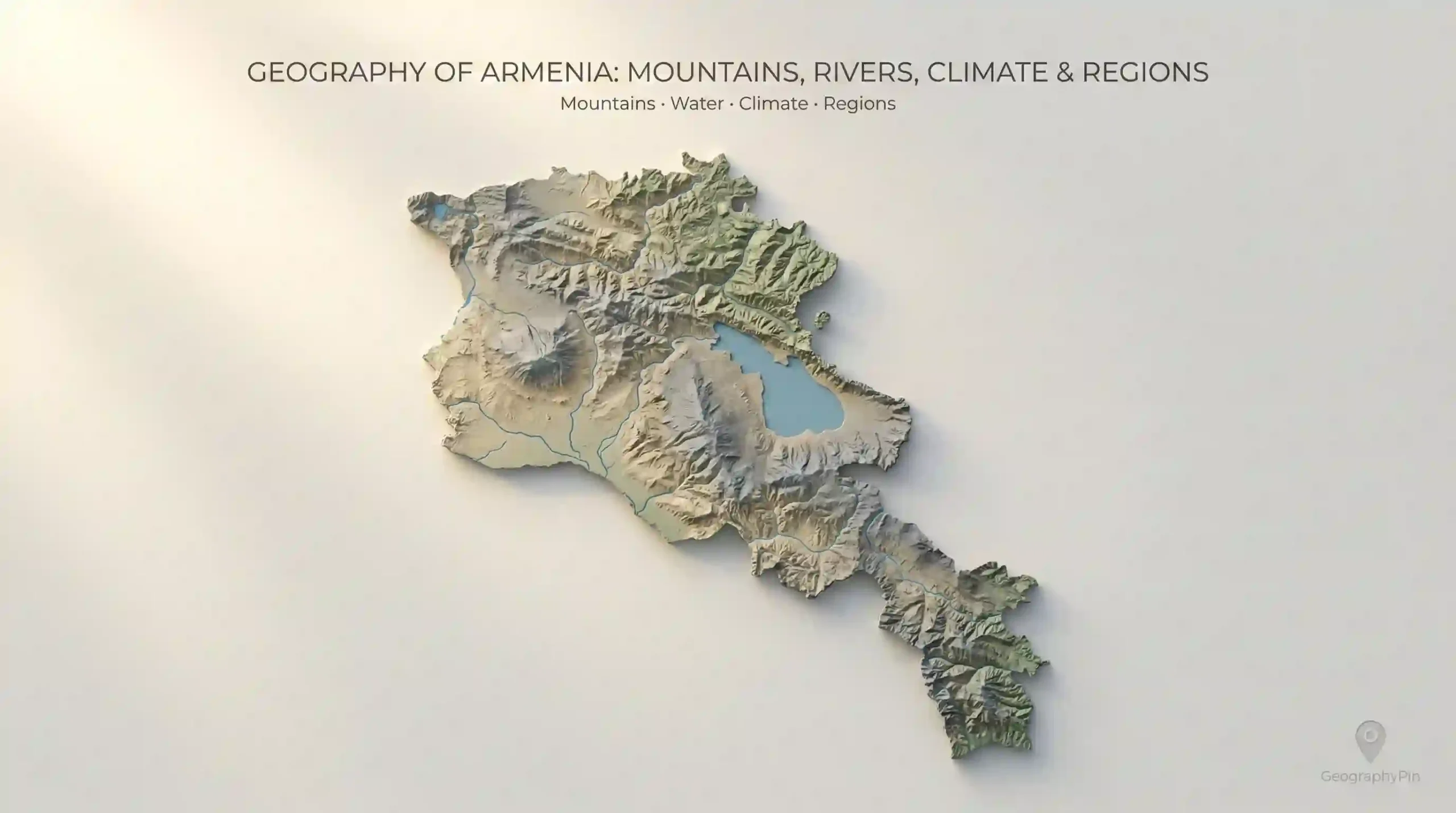
Geography of Armenia: Mountains, Rivers, Climate & Regions
Armenia (the modern Republic of Armenia in the South Caucasus) is compact on a world map—about 11,484 square miles (29,743 square kilometers)—but it behaves like a much larger…
Learn geography
Explore Earth’s physical systems—from mountains and rivers to climate patterns and fragile ecosystems. This hub organizes our best guides to landforms and water, weather and climate, biodiversity, and today’s pressing environmental issues. Start here, then dive into focused subtopics or explore places by continent, country, and city.
Armenia (the modern Republic of Armenia in the South Caucasus) is compact on a world map—about 11,484 square miles (29,743 square kilometers)—but it behaves like a much larger…
Iran is easiest to understand as a high interior “roof” (the Iranian Plateau) with strong edges: mountains that act like walls, deserts that act like sinks, and coastlines…
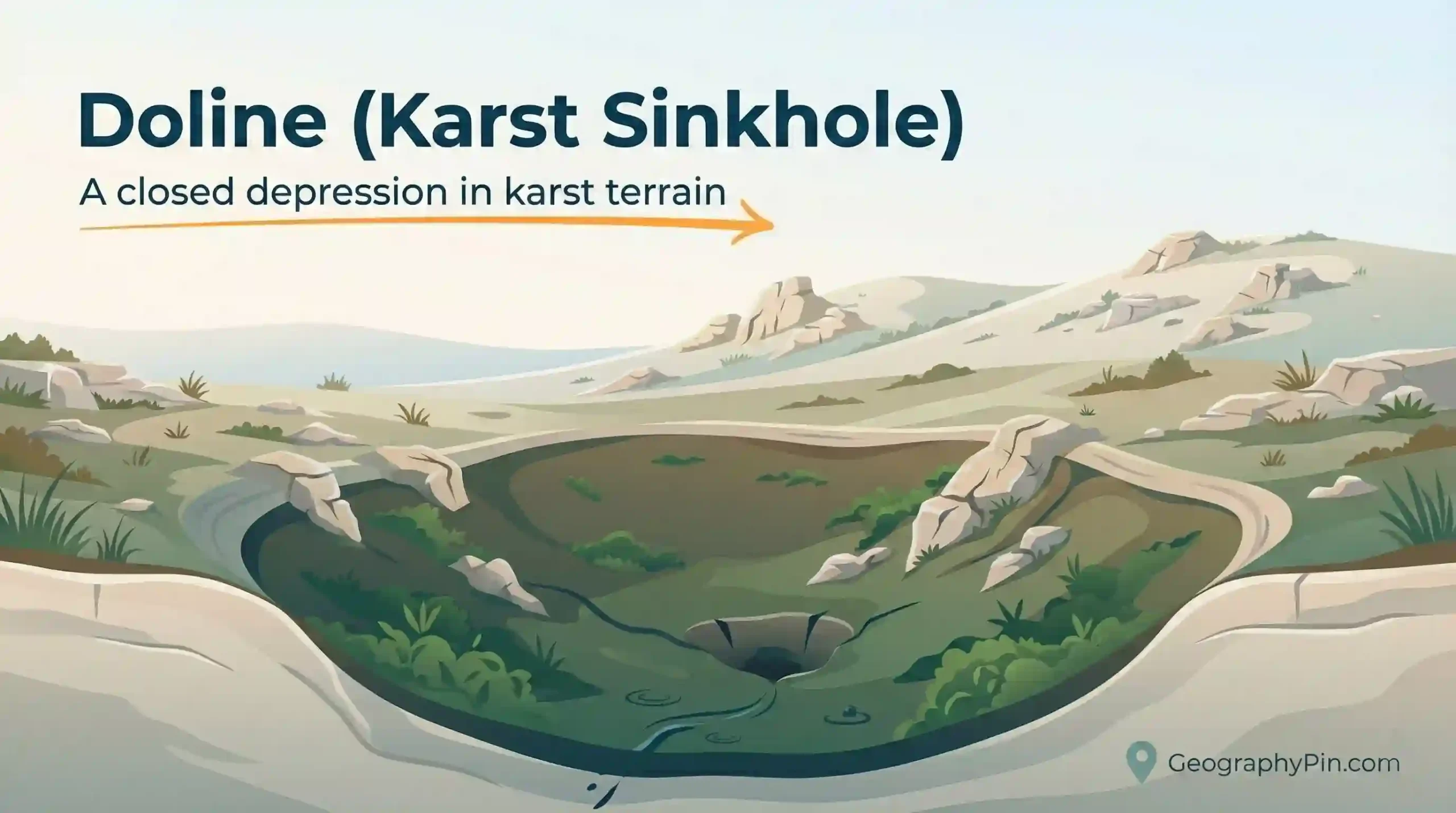
A doline (also seen as “dolina”) is one of the most recognizable features of karst terrain: a closed depression that pulls water inward and often sends it underground.…
A ventifact is one of the clearest “signatures” of wind erosion: a rock face worn smooth, faceted, or pitted by airborne sand. They’re common in dry, open landscapes…
A deflation hollow is a shallow ground depression formed when wind lifts and carries away loose sediment from the surface (a process called deflation). You’ll see them most…
Glacial erosion landforms are bedrock shapes carved by moving glacier ice. The trick is that ice erodes valley floors and walls at the same time, leaving signatures that…
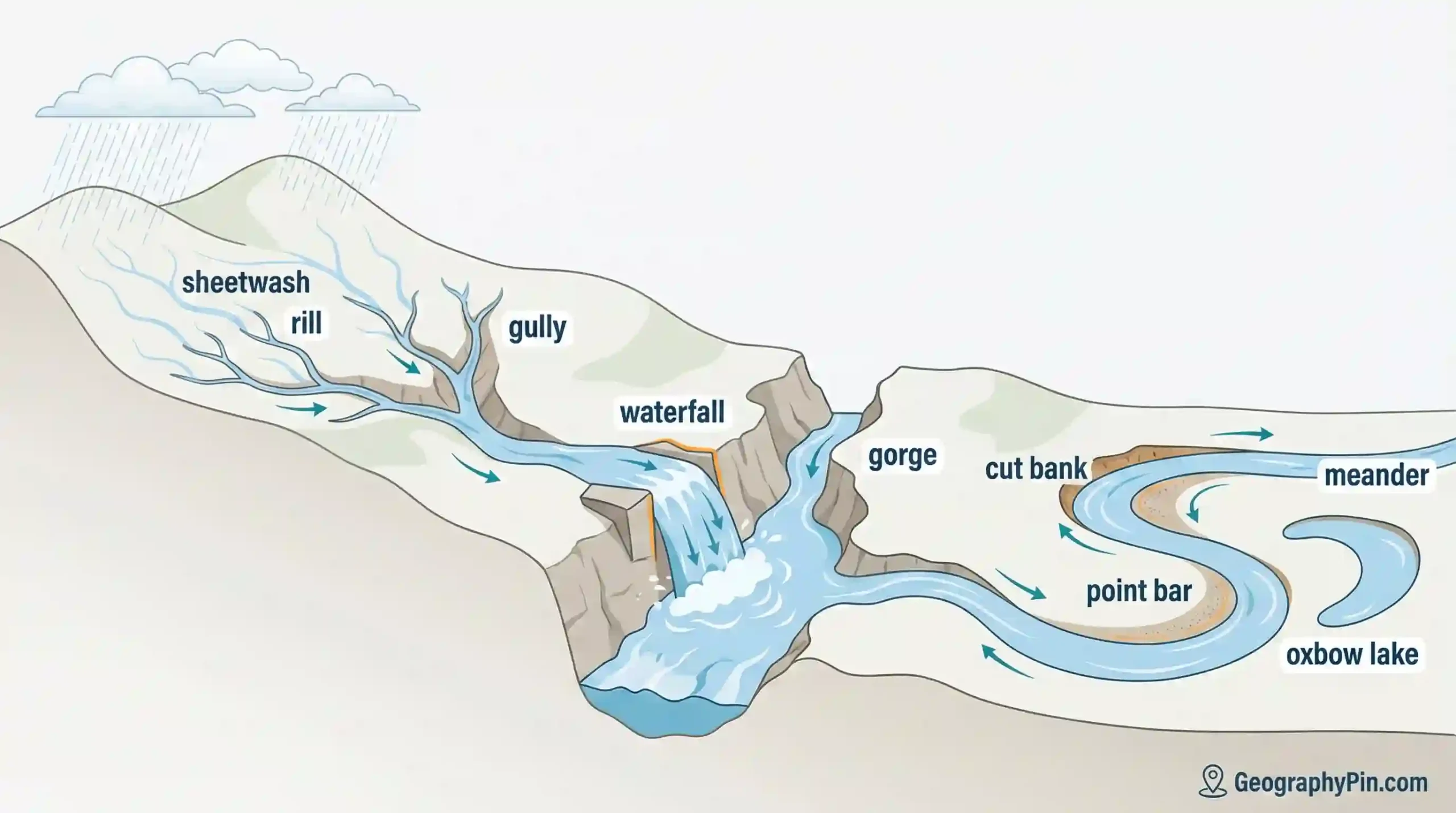
Water erosion landforms are the shapes made when moving water removes rock or soil and carries it away. Rivers carve valleys and gorges. Storm runoff cuts rills and…
Wind erosion landforms are the shapes left behind when moving air becomes a cutting tool—sand as sandpaper, dust as cargo, and bare ground as the workbench. This is…
A cliff face that looks freshly cut, a valley narrowed into a gorge, a desert ridge shaped like it’s been sanded into alignment—erosion leaves signatures you can read…
Imagine palm-like forests and crocodile relatives living far closer to the poles than today—and seas warm enough to reshape currents worldwide. That’s the Eocene: a long stretch of…