Political Geography
Enclave vs Exclave: The Difference, With Examples
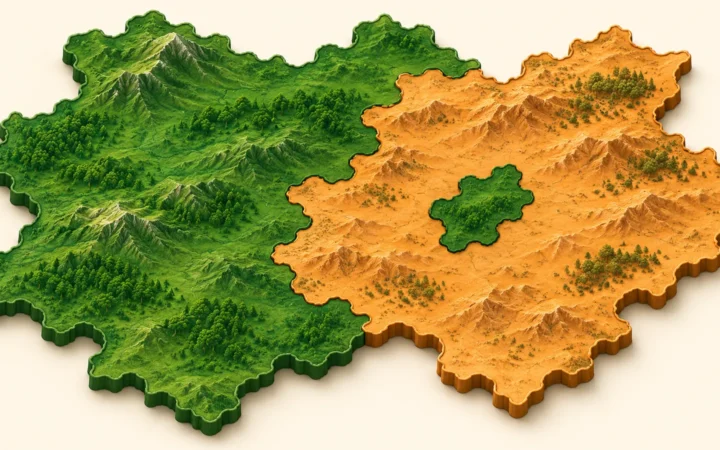
An enclave is a territory completely surrounded by one other territory. An exclave is a part of a state separated from that state’s main…
Learn geography
Browse geography by subject. Start with Physical Geography (landforms, climate, ecosystems) or Human Geography (people, cities, cultures, economies). You’ll also find Explainers for common questions, practical Travel Guides, and quick Quizzes. Use this hub to jump into any topic, then filter by continent, country, or city when you need local detail.
An enclave is a territory completely surrounded by one other territory. An exclave is a part of a state separated from that state’s main…
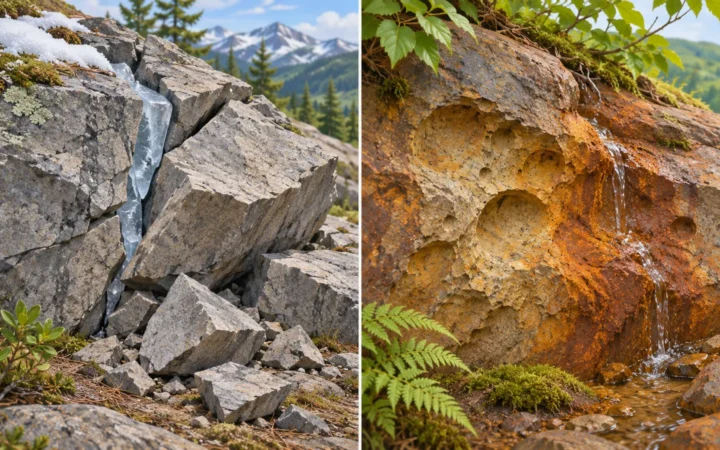
Physical weathering breaks rock into smaller fragments without changing the chemical composition of its minerals. Chemical weathering alters or dissolves minerals through reactions with…
Remote sensing measures objects or areas from a distance, without direct contact. Passive sensors detect energy reflected or emitted by the scene; active sensors…
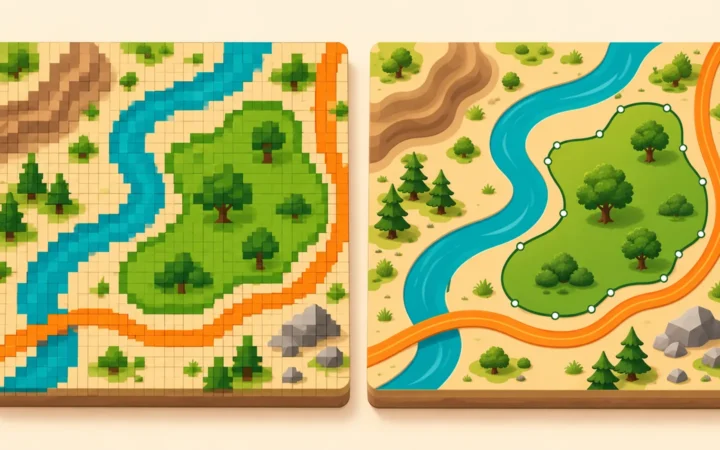
Raster data divide space into rows and columns of cells, each holding a value. Vector data represent features with coordinate-based geometry, commonly points, lines…
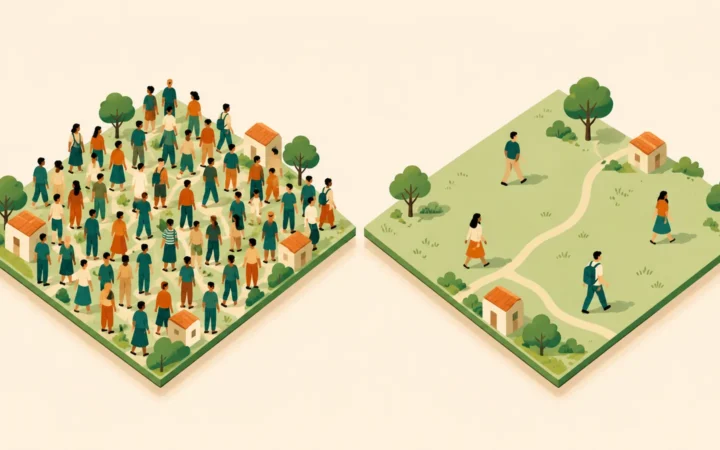
Arithmetic density divides total population by the chosen area; physiological density divides total population by arable land; agricultural density divides farmers, or a defined…
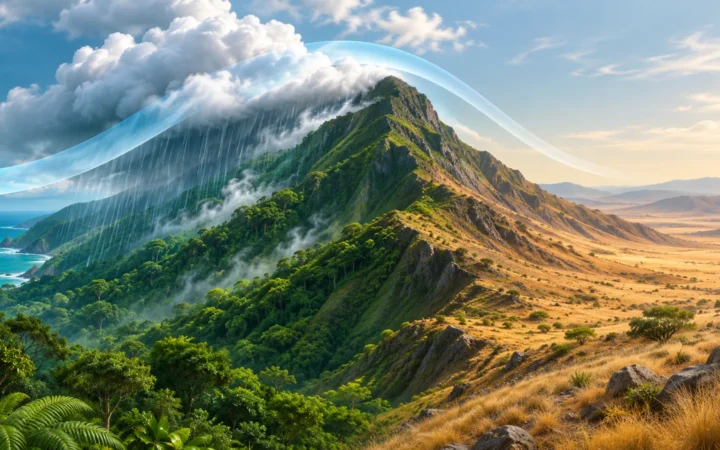
A rain-shadow explanation is supported when mountains intercept moisture-bearing winds and comparable long-term records show a wetter windward side and drier leeward side. Windward…
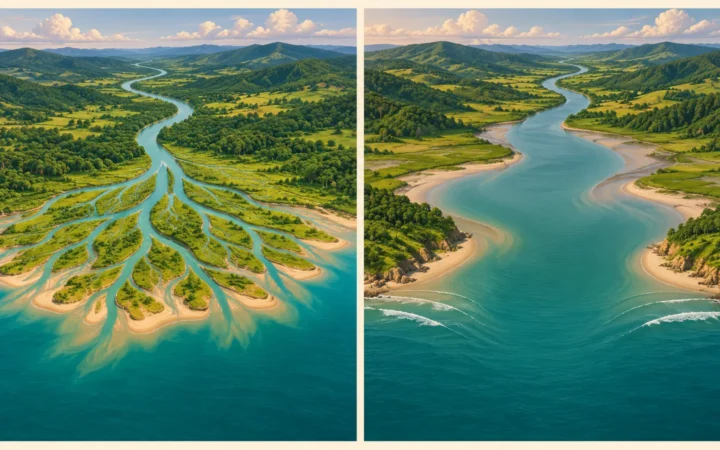
A delta is a landform built by sediment deposited at a river mouth, while an estuary is a partly enclosed water system where river…
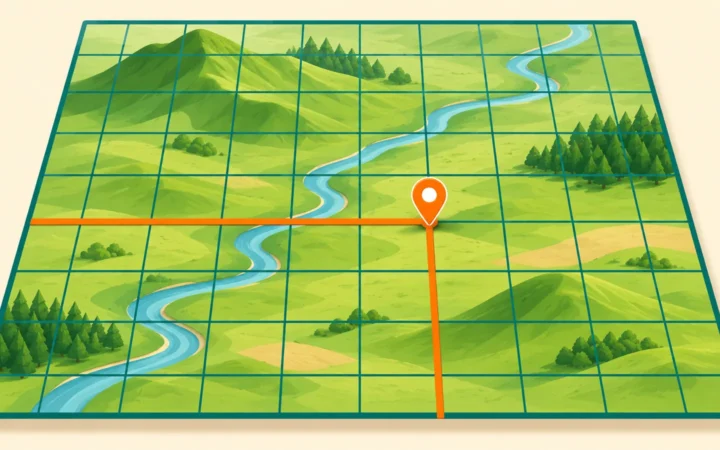
UTM coordinates identify a position using a numbered zone, a hemisphere, an easting and a northing, with both grid values expressed in meters. The…
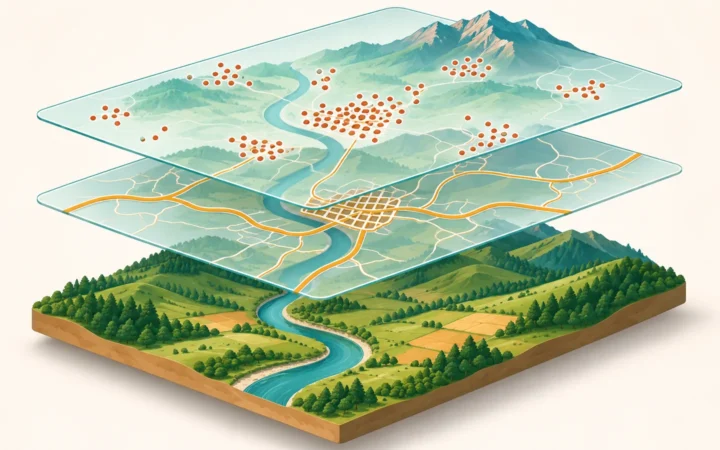
GIS stands for geographic information system. It combines location-based data with tools for storing, checking, analyzing and displaying that information. A map is one…
Choose a Georgia route by season and interest, compare regional bases, and plan realistic seven-, ten- or fourteen-day trips with time for transfers.