195 countries · One world to explore
Explore country flags on the map or browse the gallery. Search by country, compare similar flags and discover the stories behind their colors and symbols.
Find a flag by appearance
Colors and symbols describe the main design; small details in coats of arms may be omitted.
Preparing your world map…
Select a country or a small-country dot. Drag to move; use + / − to zoom. On touch screens, use two fingers to move the map.
Flags are cropped inside country borders. Open a country to see its complete flag. Areas outside this collection are muted.
Country flags with names and meanings
 AfghanistanAsia
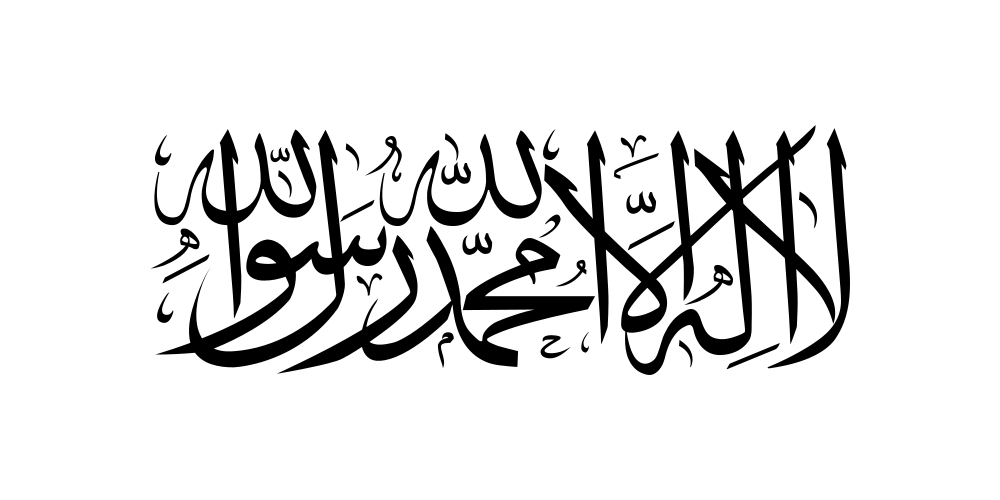
A white field bearing the Shahada, the Islamic declaration of faith, in black Arabic calligraphy.
What the flag means
The inscription is the Islamic declaration of faith. This white-and-black design is used by Afghanistan’s de facto authorities.
The displayed flag is used by Afghanistan’s de facto authorities. The former Islamic Republic’s black-red-green tricolor remains in international use, including UN representation. Flag use varies by context.
Other flag in use
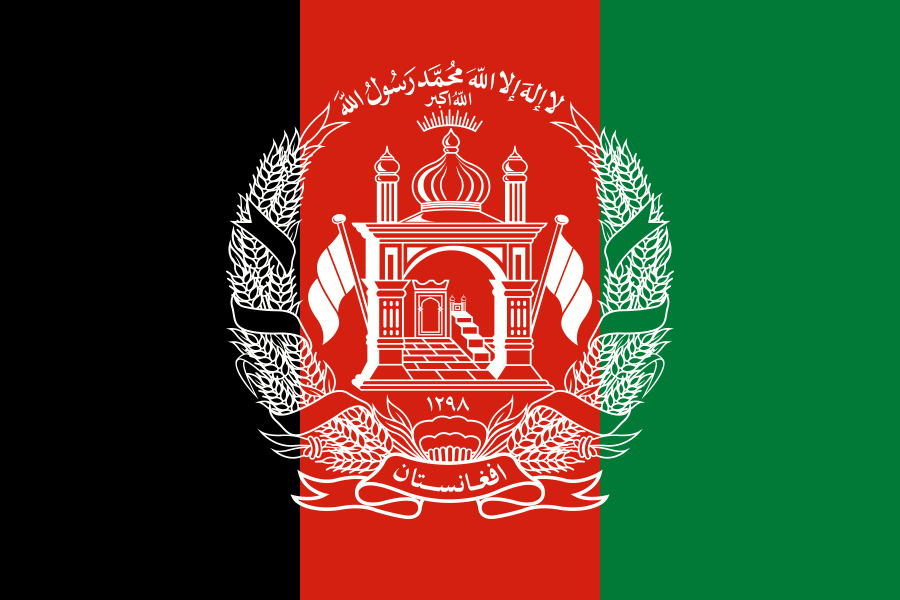
Source: Wikimedia Commons — Flag of the Islamic Emirate of Afghanistan
AlbaniaEurope
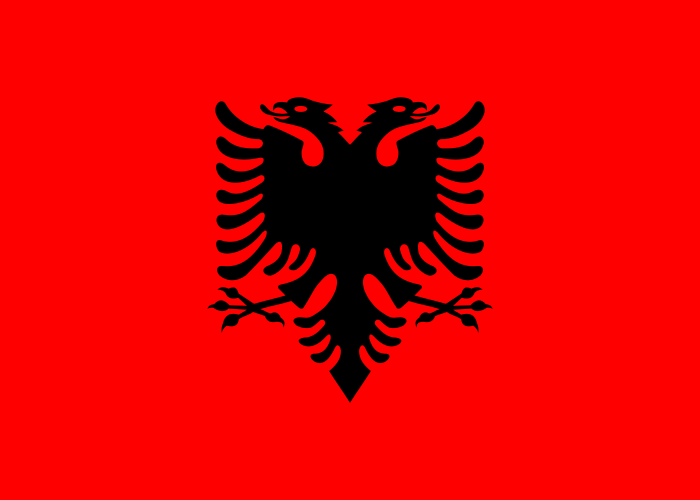
Red with a black two-headed eagle in the center.
What the flag means
Albanians traditionally see themselves as descendants of the eagle; they refer to themselves as "Shqiptare," which translates as "sons of the eagle".
Source: CIA World Factbook (archived)
AlgeriaAfrica
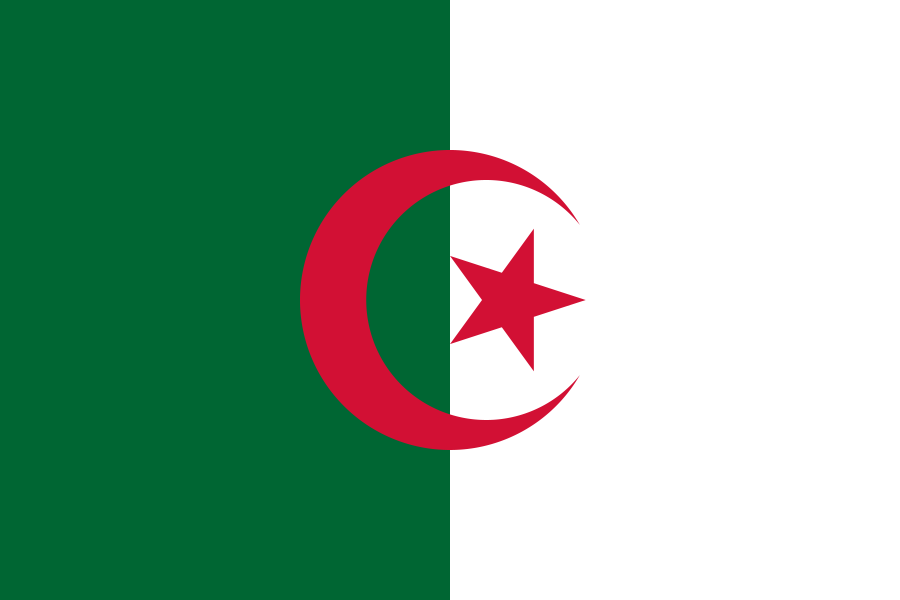
Two equal vertical bands of green (left) and white; a red, five-pointed star inside a red crescent, centered over the two-color boundary.
What the flag means
The colors represent Islam (green), purity and peace (white), and liberty (red); the crescent and star are also Islamic symbols, but the crescent is more closed than those of other Muslim countries because Algerians believe the long crescent horns bring happiness.
Source: CIA World Factbook (archived)
AndorraEurope
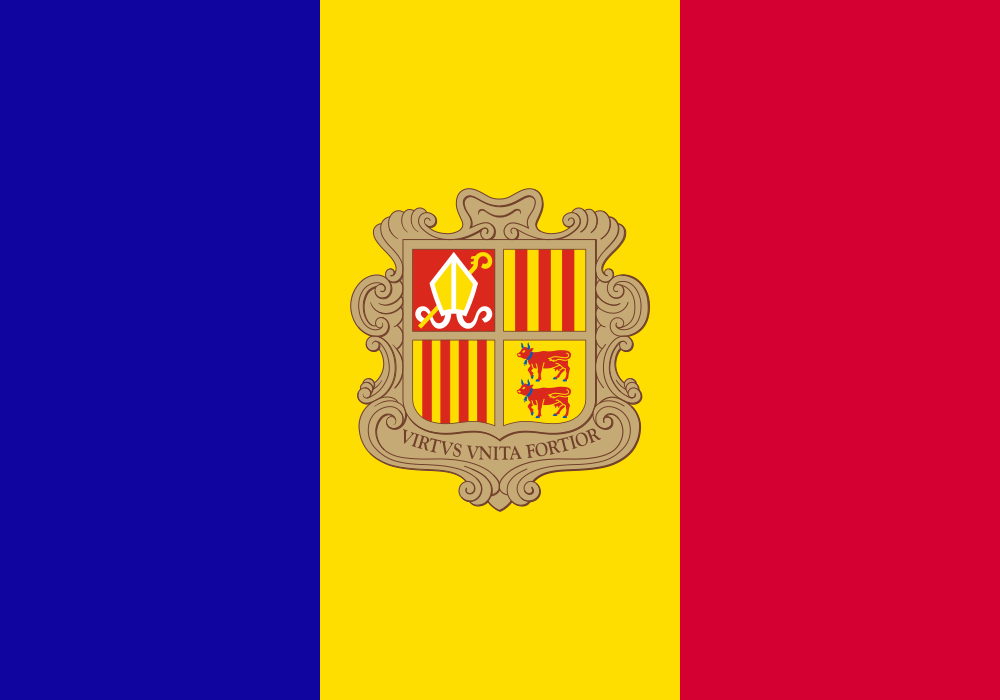
Three vertical bands of blue (left side), yellow, and red, with the national coat of arms centered in the yellow band, which is slightly wider than the other two; the coat of arms features a quartered shield with the emblems of Urgell, Foix, Bearn, and Catalonia; the motto reads Virtus Unita Fortior (Strength United is Stronger).
What the flag means
The flag combines the blue and red French colors with the red and yellow of Spain to symbolize Franco-Spanish protection.
Source: CIA World Factbook (archived)
AngolaAfrica
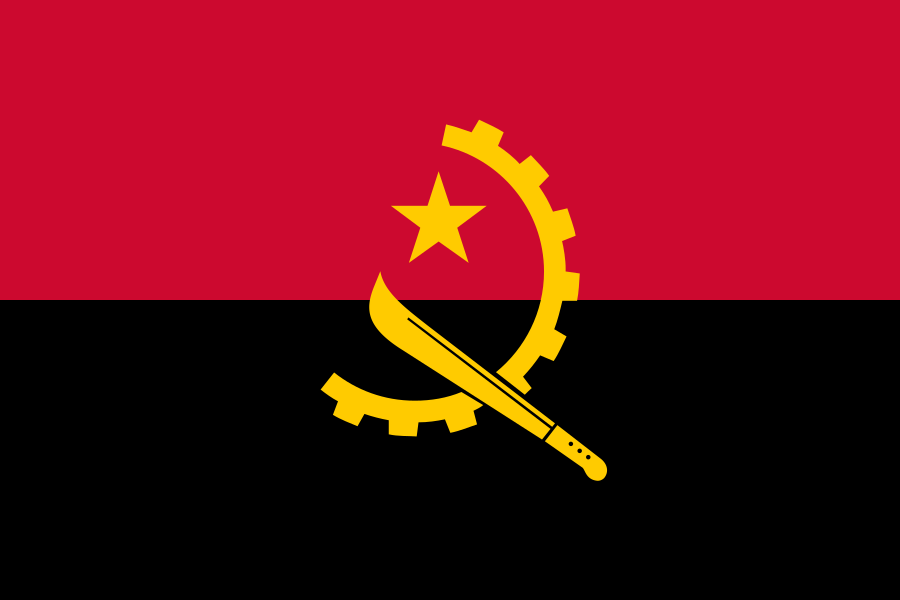
Two equal horizontal bands of red (top) and black with a centered yellow emblem of a five-pointed star inside half a cogwheel, crossed by a machete (in the style of a hammer and sickle).
What the flag means
Red stands for liberty and black for the African continent; the emblem symbolizes workers and peasants.
Source: CIA World Factbook (archived)
Antigua and BarbudaNorth America
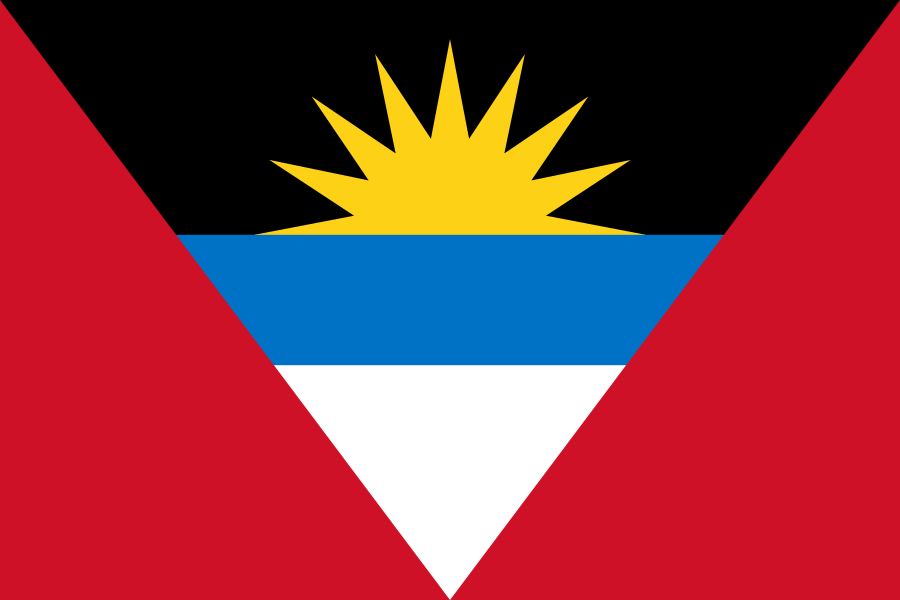
Red, with an inverted isosceles triangle in the center that spans the flag from top to bottom; the triangle contains three horizontal bands of black (top), light blue, and white, with a yellow rising sun in the black band.
What the flag means
The sun stands for the dawn of a new era, black for the African heritage of most of the population, blue for hope, and red for the dynamism of the people; the "V" shape of the triangle stands for victory; the yellow, blue, and white colors are also meant to evoke the country's tourist attractions of sun, sea, and sand.
Source: CIA World Factbook (archived)
ArgentinaSouth America
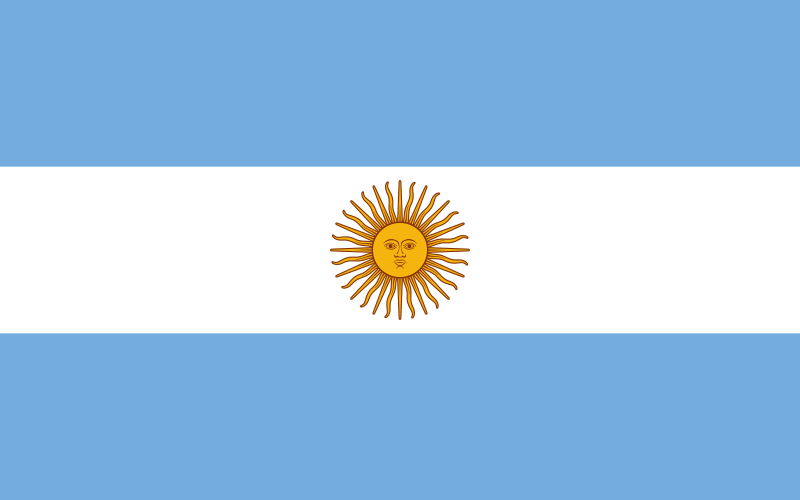
Three equal horizontal bands of sky blue (top), white, and sky blue; centered in the white band is a radiant yellow sun with a human face that is known as the Sun of May.
What the flag means
The colors represent the clear skies and snow of the Andes Mountains; the sun commemorates the first mass demonstration in favor of independence on 25 May 1810, when the sun broke through the clouds; the sun is designed to look like Inti, the Incan god of the sun.
Source: CIA World Factbook (archived)
ArmeniaAsia
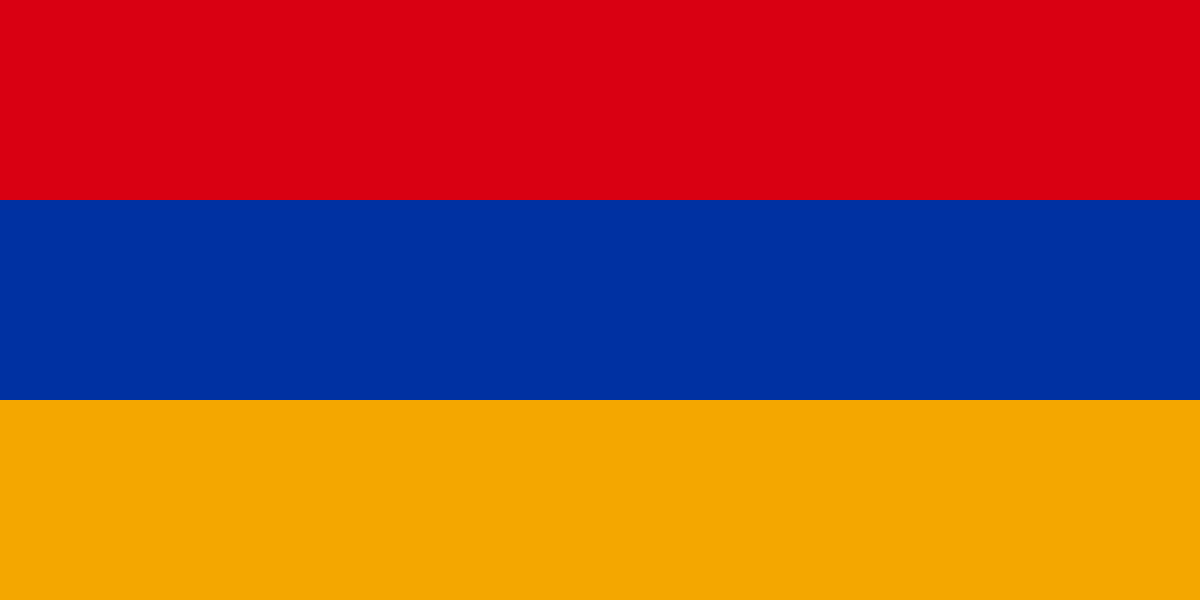
Three equal horizontal bands of red (top), blue, and orange.
What the flag means
Red recalls the Armenian Highland, the people’s struggle for survival, Christian faith, independence and freedom. Blue expresses the wish to live under peaceful skies; orange represents creative talent and diligence.
AustraliaOceania
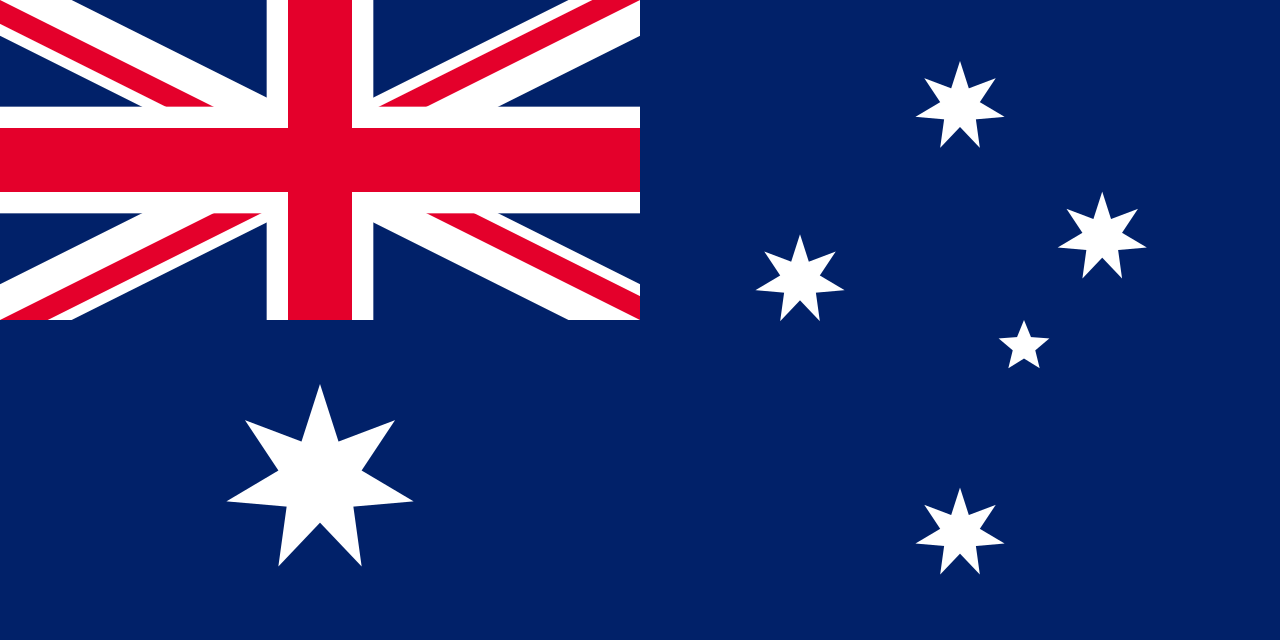
Blue, with the UK flag in the upper-left quadrant and a large seven-pointed star in the lower-left quadrant; on the right half is a representation of the Southern Cross constellation in white, with one small five-pointed star and four larger seven-pointed stars.
What the flag means
The largest star is known as the Commonwealth or Federation Star and represents the federation of the Australian colonies in 1901; the star has one point for each of the six original states, plus one representing all of Australia's internal and external territories.
Source: CIA World Factbook (archived)
AustriaEurope
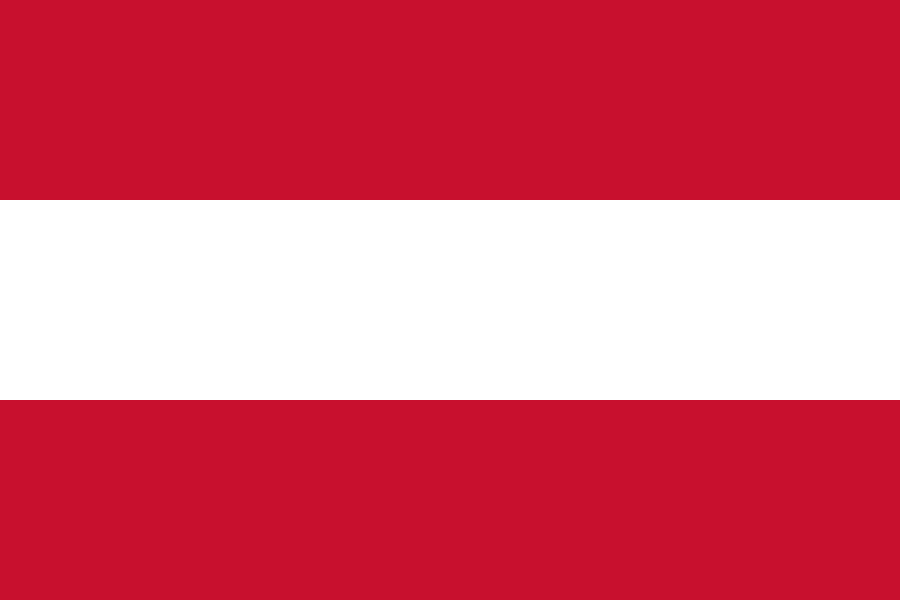
Three equal horizontal bands of red (top), white, and red.
What the flag means
The red-white-red combination is a historic Austrian emblem. A well-known story links it to Duke Leopold V’s bloodstained tunic in the Third Crusade, but that account is a traditional legend.
Source: CIA World Factbook (archived)
AzerbaijanAsia
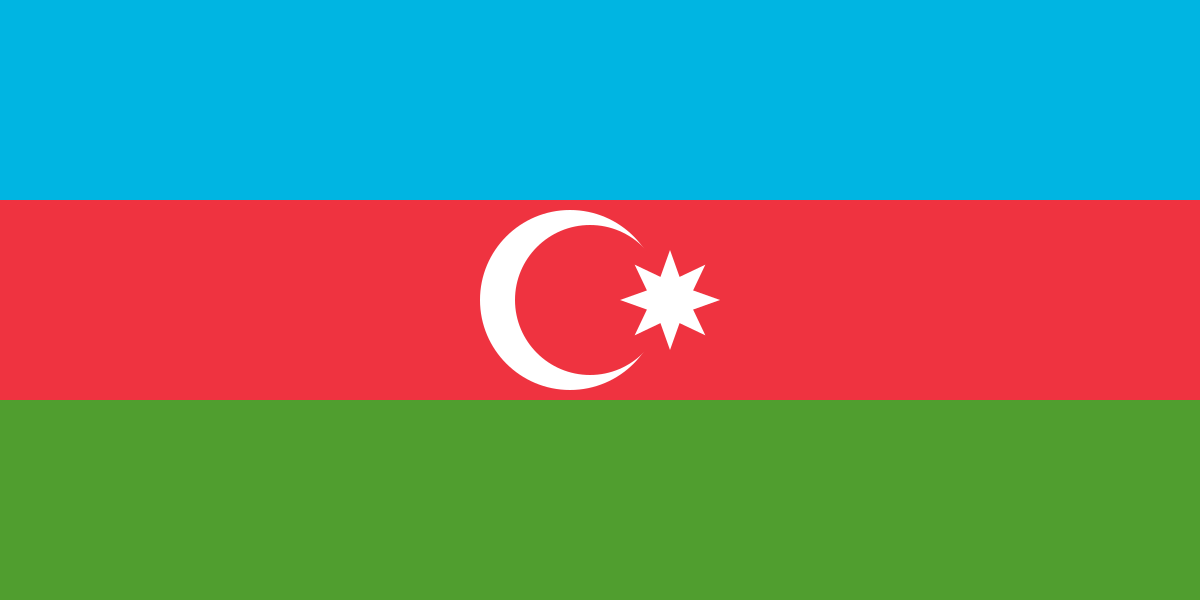
Three equal horizontal bands of sky blue (top), red, and green; a vertical crescent moon and an eight-pointed star in white are centered in the red band.
What the flag means
The blue band stands for Azerbaijan's Turkic heritage, red for modernization and progress, and green for Islam; the crescent moon and star are a Turkic insignia; the eight star points represent the eight Turkic peoples of the world.
Source: CIA World Factbook (archived)
BahamasNorth America
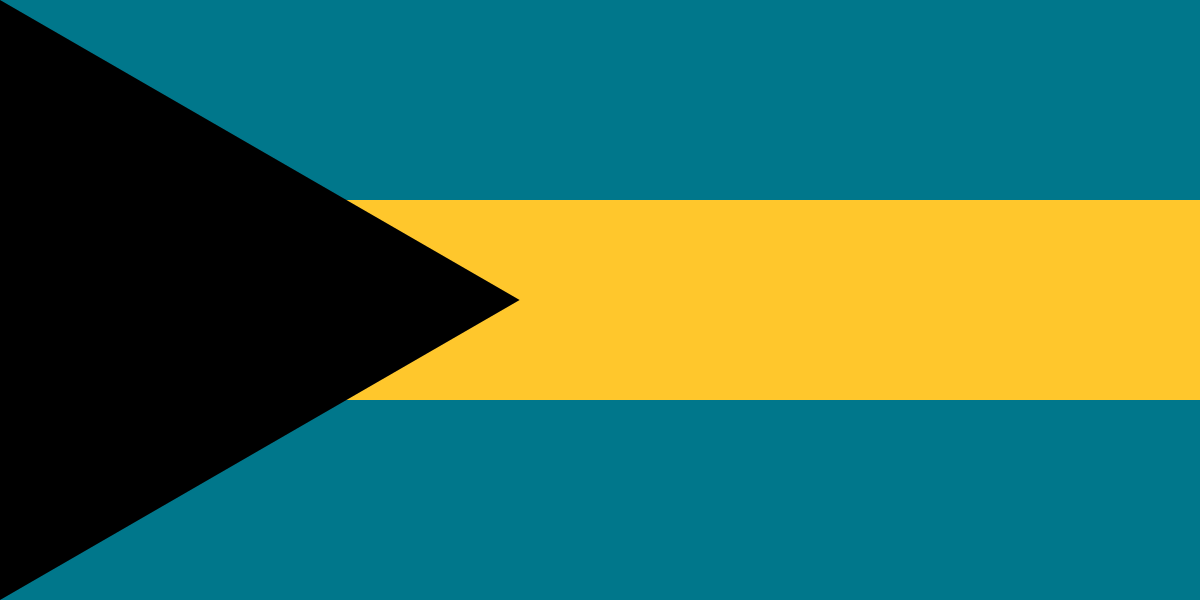
Three equal horizontal bands of aquamarine (top), gold, and aquamarine, with a black equilateral triangle based on the left side.
What the flag means
The band colors represent the islands' golden beaches surrounded by the aquamarine sea; black stands for the vigor and force of a united people, and the triangle for the people's enterprise and determination.
Source: CIA World Factbook (archived)
BahrainAsia
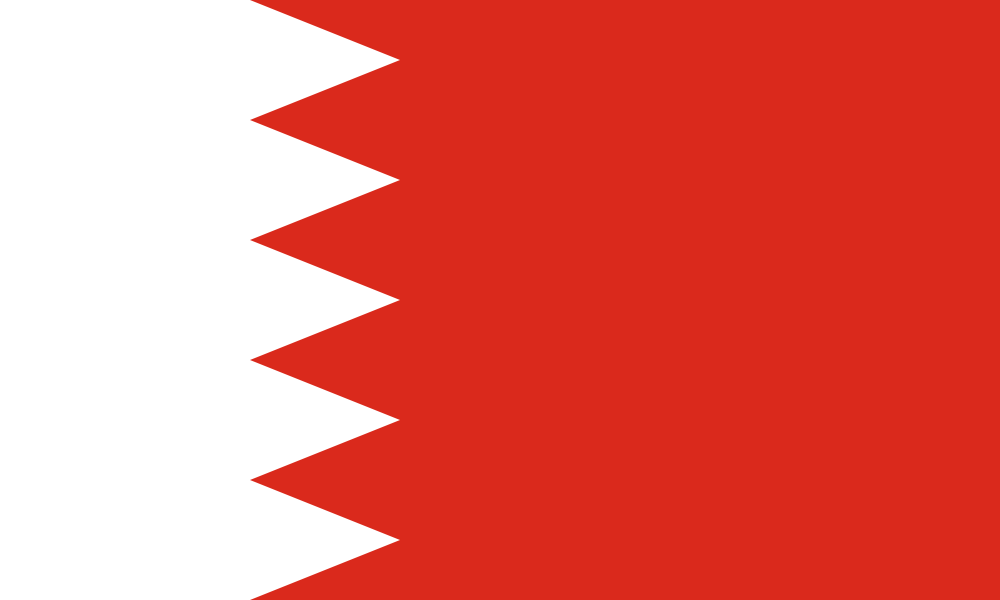
Red, with a white serrated band of five white points on the left side.
What the flag means
Red is the traditional color for flags of Persian Gulf states; the five points represent the five pillars of Islam.
Source: CIA World Factbook (archived)
BangladeshAsia

Green field with a large red disk shifted slightly to the left.
What the flag means
The red disk represents the rising sun and the sacrifice to achieve independence; the green field symbolizes the lush vegetation of Bangladesh.
Source: CIA World Factbook (archived)
BarbadosNorth America
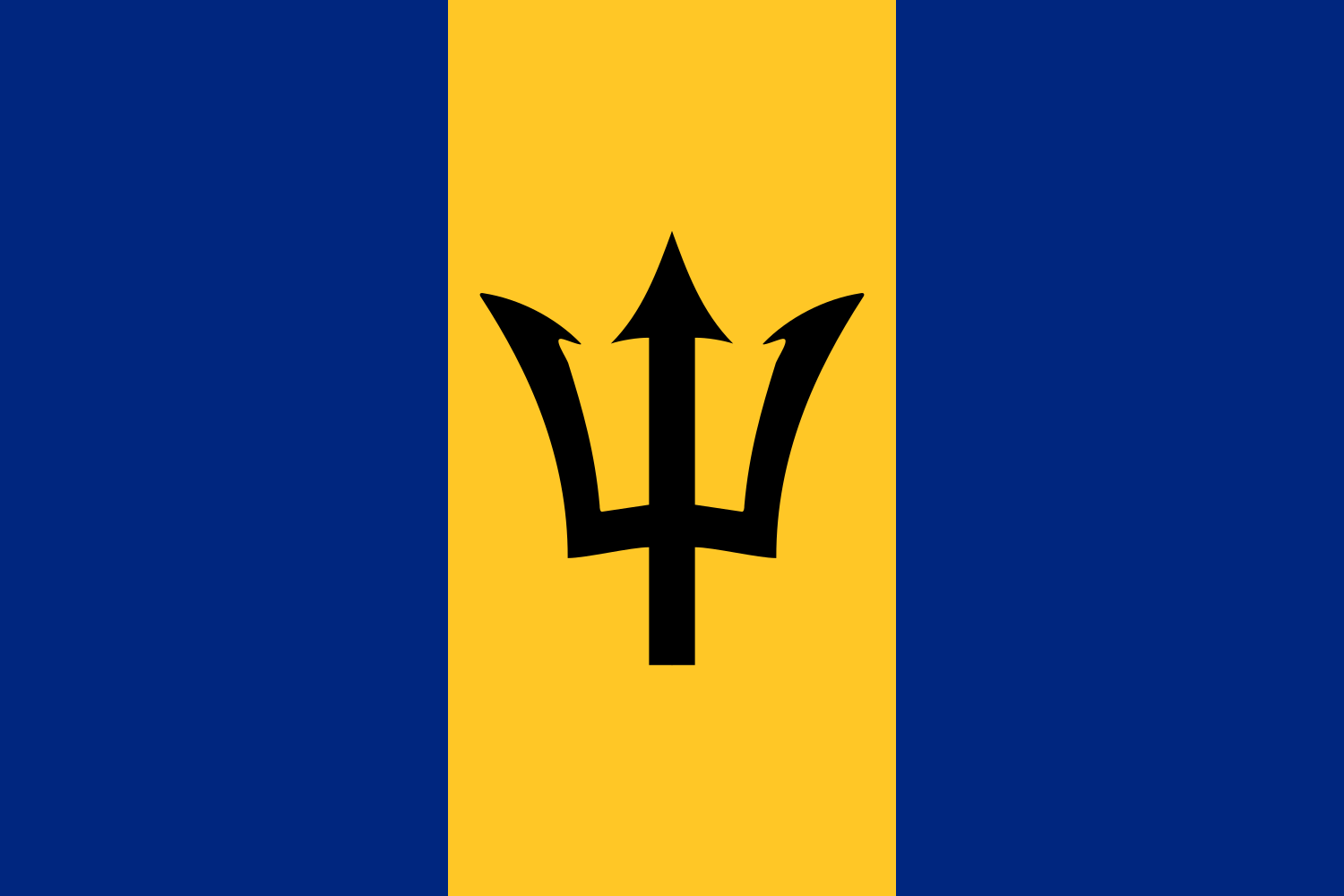
Three equal vertical bands of ultramarine blue (left side), gold, and ultramarine blue with a black trident head centered on the gold band.
What the flag means
Blue stands for the sea and sky, and gold for the beaches; the trident head represents independence and a break with the past.
Source: CIA World Factbook (archived)
BelarusEurope
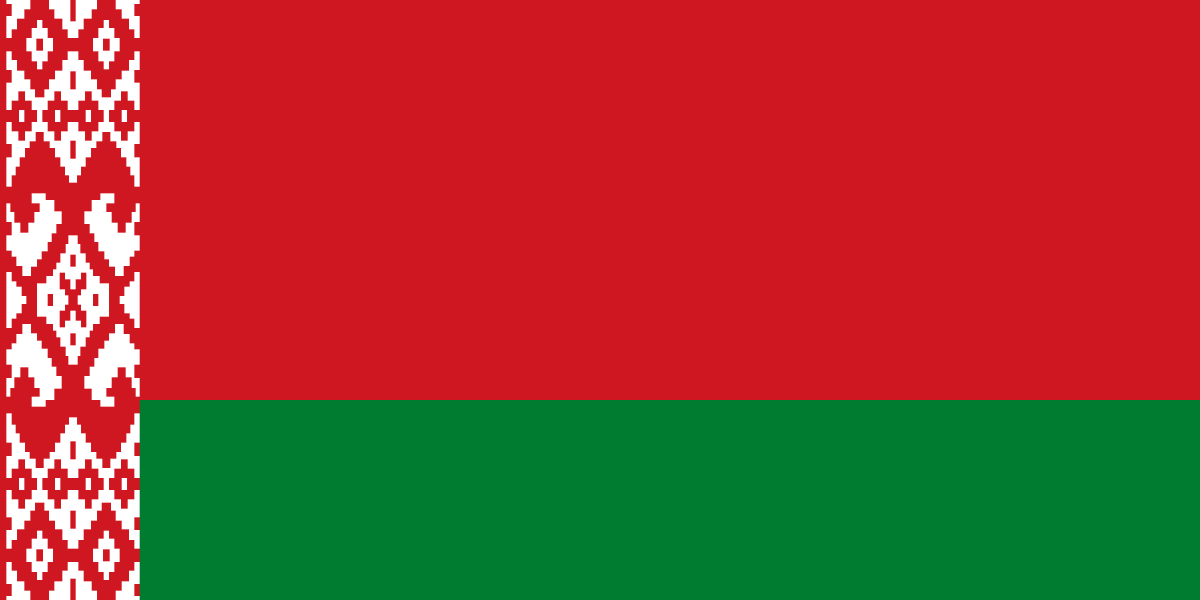
Red horizontal band (top), with a green horizontal band below that is half the width of the red band; a white vertical stripe on the left side has traditional Belarusian designs in red.
What the flag means
The red stands for past struggles to escape oppression, and the green for hope and the country's forests.
Source: CIA World Factbook (archived)
BelgiumEurope
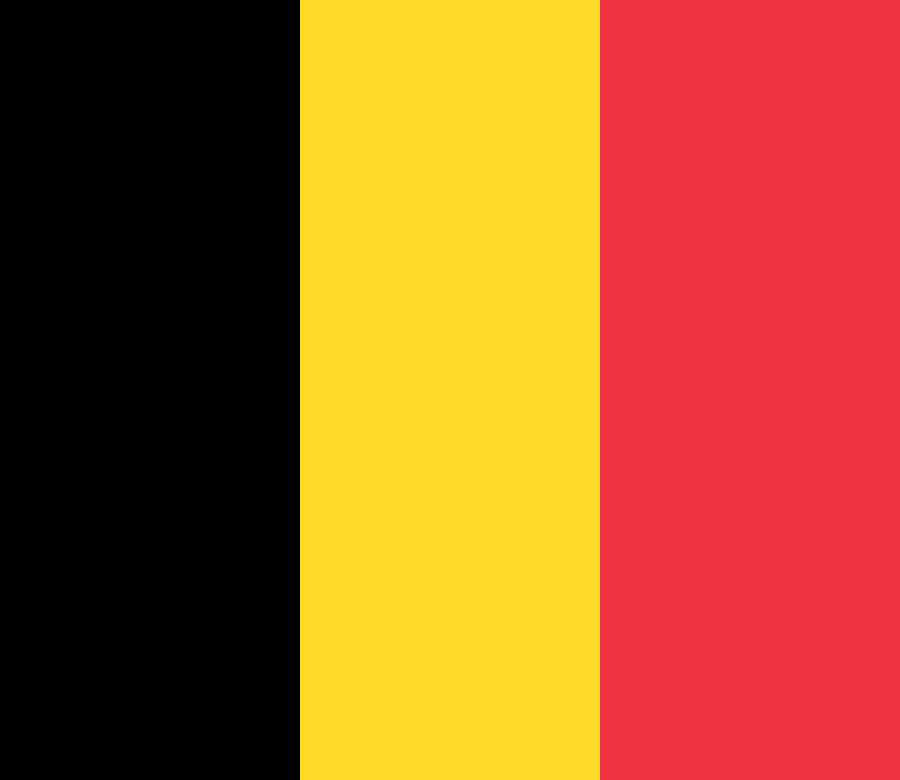
Three equal vertical bands of black (left side), yellow, and red.
What the flag means
The black, yellow and red come from the arms of the Duchy of Brabant: a yellow lion with red claws and tongue on a black field. The vertical arrangement was influenced by the French tricolor.
Source: CIA World Factbook (archived)
BelizeNorth America
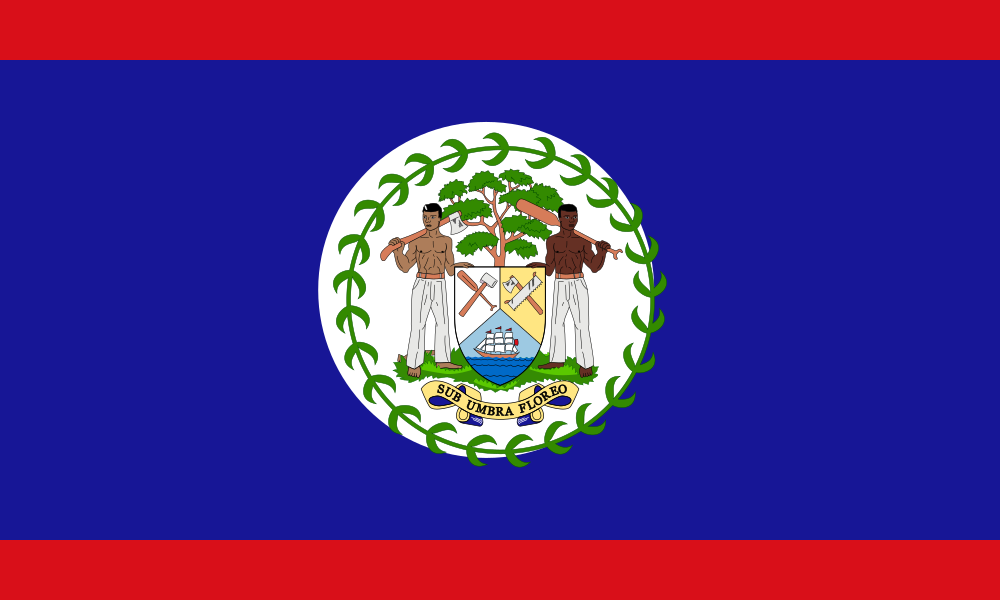
Royal blue with a narrow red stripe along the top and the bottom edges; the coat of arms is on a large white disk at the center and shows a shield flanked by two workers in front of a mahogany tree, with the motto Sub Umbra Floreo (I Flourish in the Shade) on a scroll at the bottom; a green garland of 50 mahogany leaves rings the coat of arms.
What the flag means
The figures, the mahogany tree, and the garland refer to the logging industry that led the British to settle Belize; blue and red are the colors of the two main political parties.
Source: CIA World Factbook (archived)
BeninAfrica
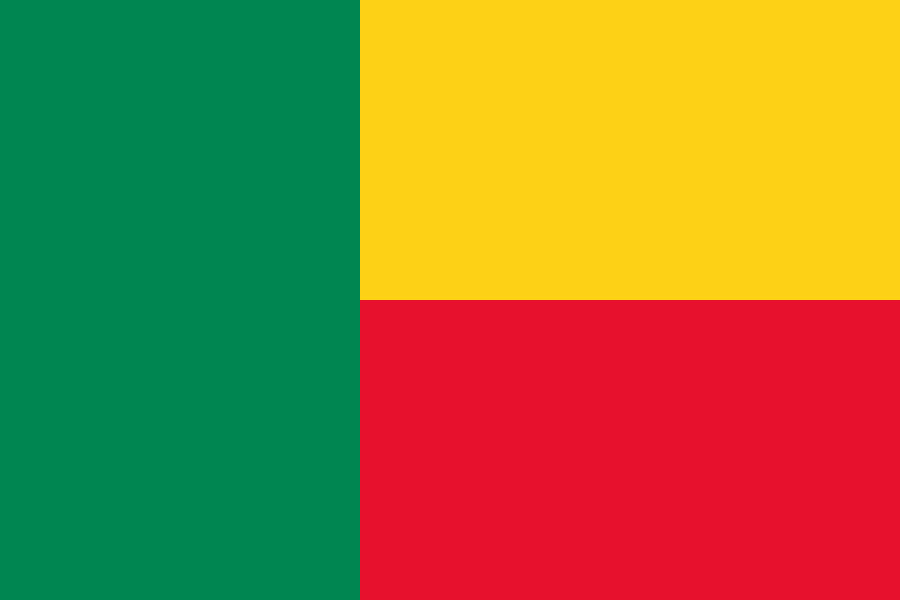
Two equal horizontal bands of yellow (top) and red (bottom) to the right, with a vertical green band on the left side.
What the flag means
Green stands for hope and revival, yellow for wealth, and red for courage.
Source: CIA World Factbook (archived)
BhutanAsia
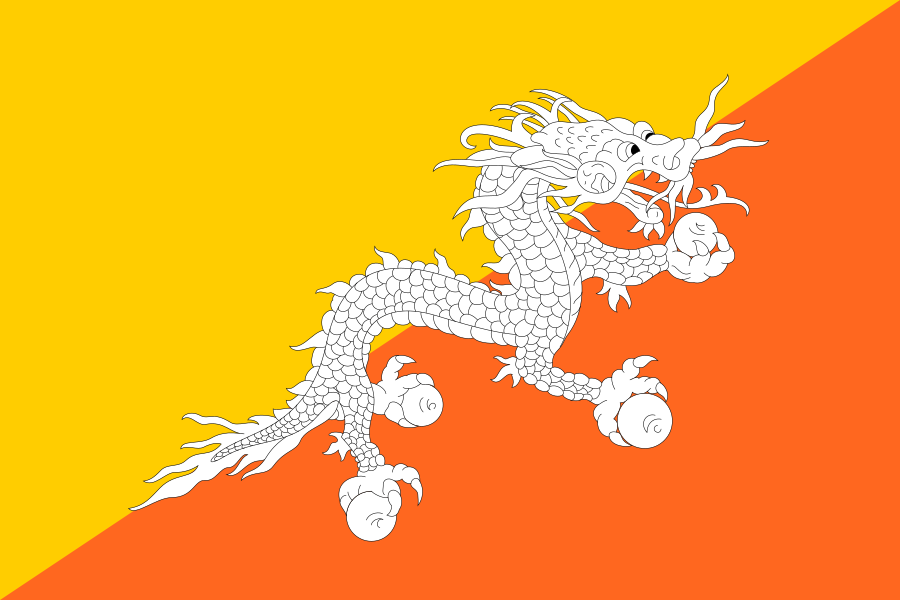
Divided diagonally from the lower-left corner to the upper-right corner; the upper triangle is yellow, and the lower triangle is dark orange; centered along the dividing line is a large, stylized black-and-white dragon facing to the right; the dragon is called the Druk (Thunder Dragon) and is the national emblem.
What the flag means
White stands for purity, and the jewels in the dragon's claws symbolize wealth; the background colors represent the spiritual and secular powers in Bhutan, with orange standing for Buddhism and yellow for the ruling dynasty.
Source: CIA World Factbook (archived)
BoliviaSouth America
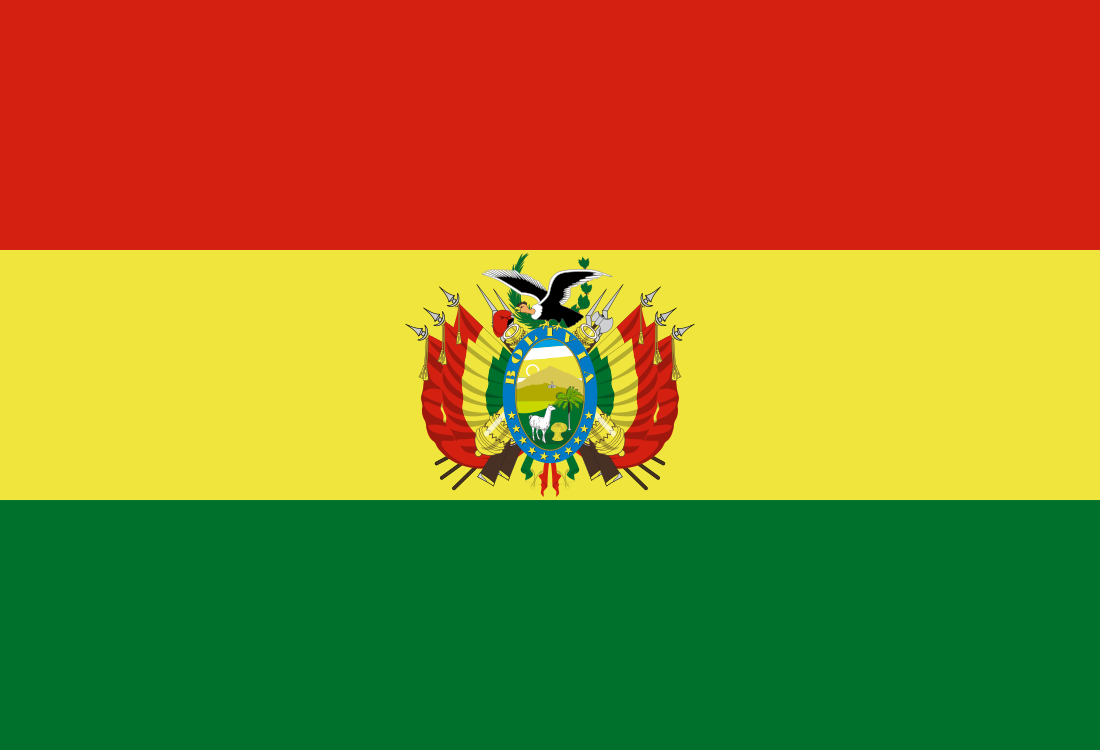
Three equal horizontal bands of red (top), yellow, and green, with the coat of arms centered on the yellow band.
What the flag means
Red stands for bravery and the blood of national heroes, yellow for the nation's mineral resources, and green for the land's fertility.
The catalogue shows the state flag with the coat of arms. A plain red-yellow-green civil flag is also used.
Source: CIA World Factbook (archived)
Bosnia and HerzegovinaEurope
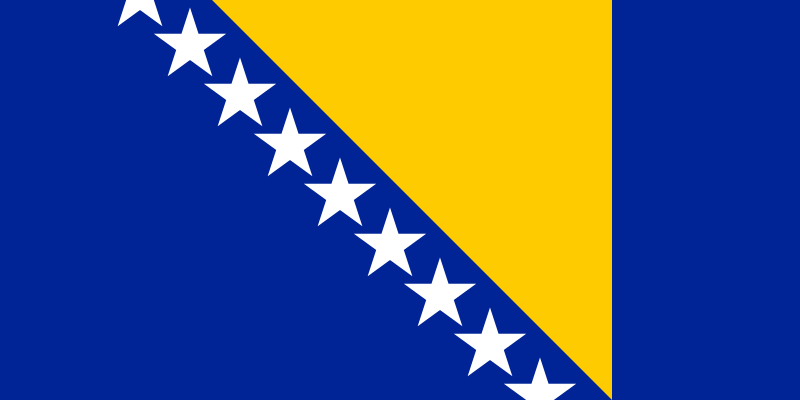
A wide blue vertical band on the right side, with a large yellow isosceles triangle in the middle of the flag, based at the top; the rest of the flag is blue, with seven five-pointed white stars and two half-stars along the triangle's hypotenuse.
What the flag means
The triangle approximates the country's shape, and its three points stand for the Bosniaks, Croats, and Serbs; the stars represent Europe; the colors (white, blue, and yellow) are traditional and are also associated with neutrality and peace.
Source: CIA World Factbook (archived)
BotswanaAfrica
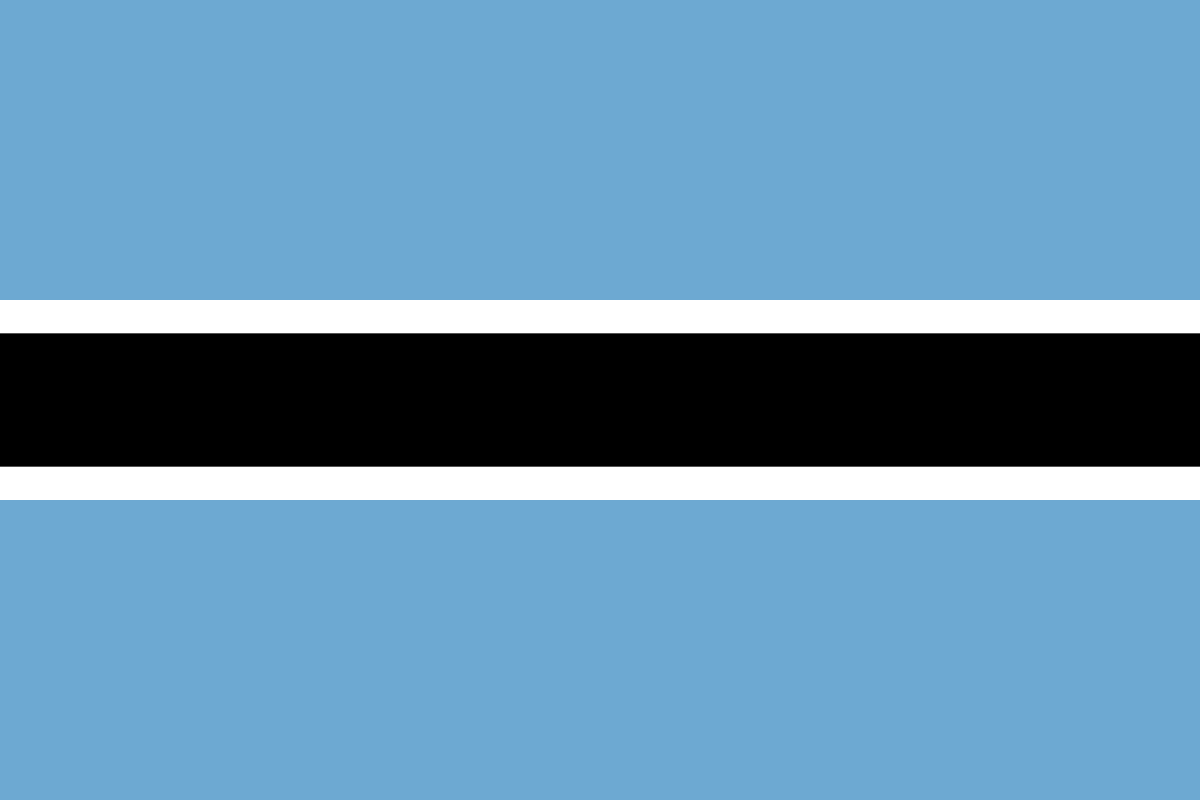
Light blue with a horizontal white-edged black stripe across the middle.
What the flag means
The blue symbolizes rainwater, and the black and white bands represent racial harmony.
Source: CIA World Factbook (archived)
BrazilSouth America
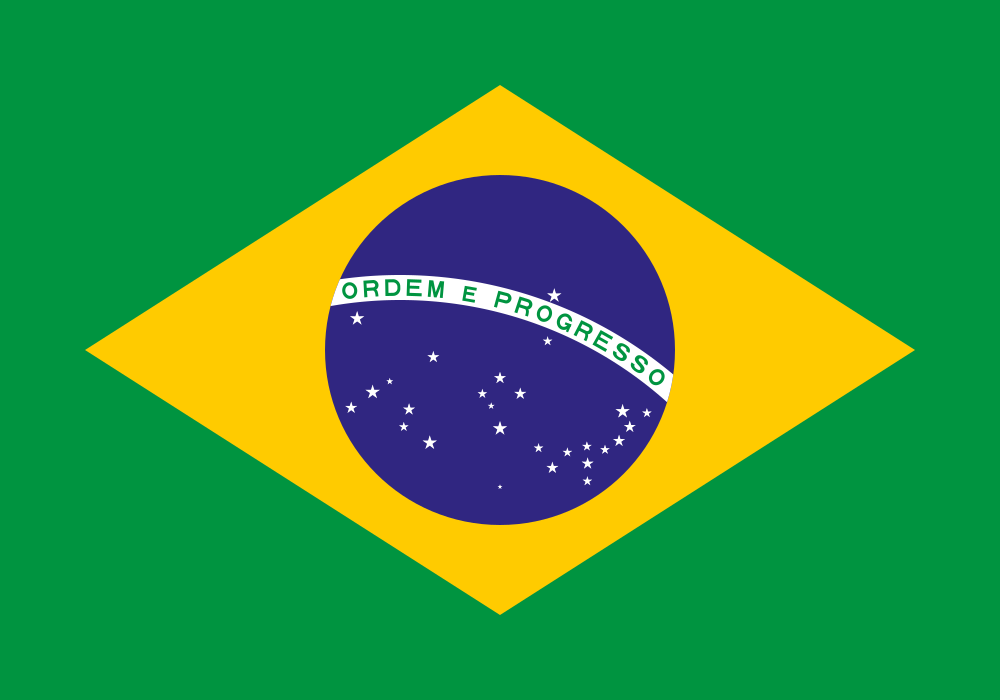
Green with a large yellow diamond in the center, showing a blue celestial globe with 27 five-pointed white stars; the globe has a white equatorial band with the motto Ordem E Progresso (Order and Progress).
What the flag means
Green stands for the country's forests, and yellow for its mineral wealth, with the diamond representing the country's shape; the blue globe and stars depict the sky over Rio de Janeiro on the morning of 15 November 1889, the day the Republic of Brazil was declared; the number of stars has risen with the creation of new states, from 21 to 27 (one for each state and the Federal District).
Source: CIA World Factbook (archived)
BruneiAsia
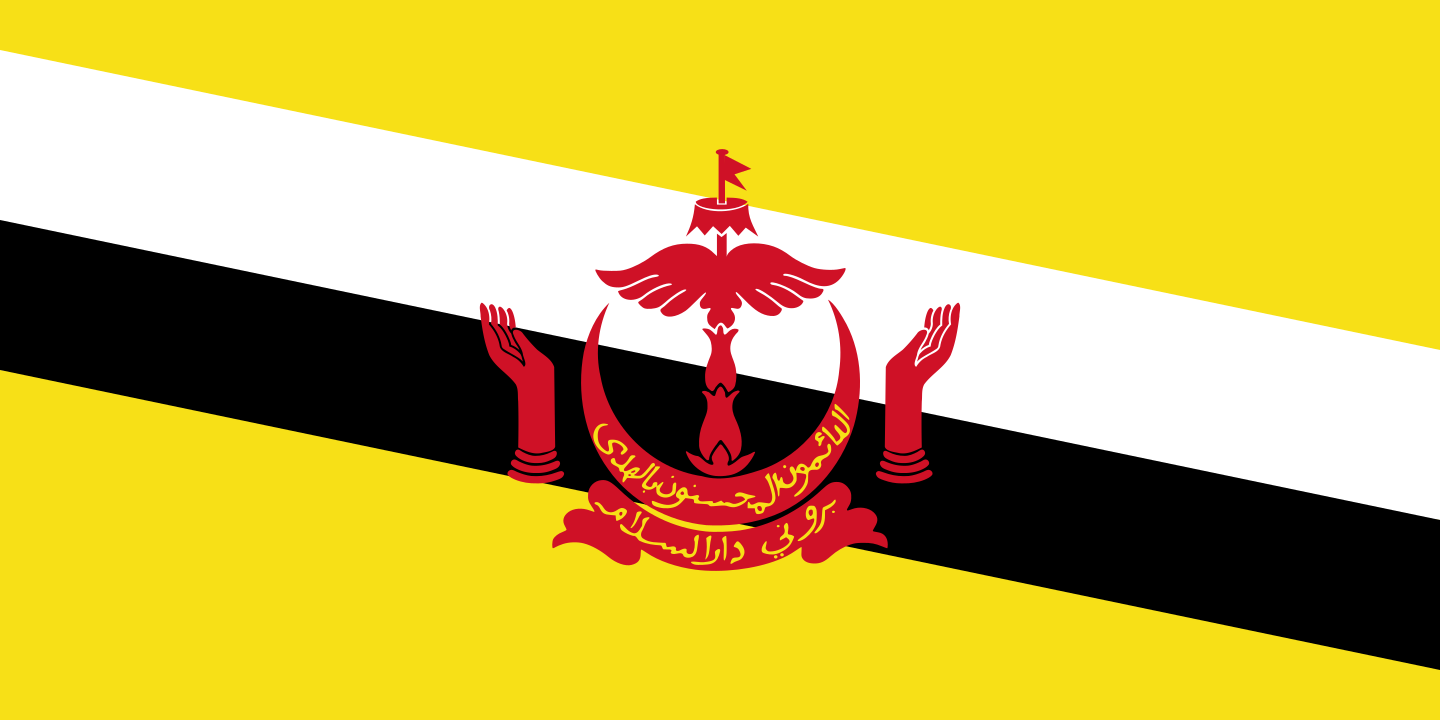
Yellow with a diagonal white band and second below it in black, both starting from the upper left; the national emblem in red is at the center; the state motto, "Always render service with God's guidance," appears in yellow Arabic script on the emblem's crescent; a ribbon below the crescent reads "Brunei, the Abode of Peace".
What the flag means
Yellow symbolizes the sultanate, and the white and black bands stand for the chief ministers; the emblem includes a royal umbrella (the monarchy), two wings with four feathers (justice, tranquility, prosperity, and peace), two upraised hands (the government's pledge to preserve and promote the people's welfare), and the crescent moon of Islam (the state religion).
Source: CIA World Factbook (archived)
BulgariaEurope
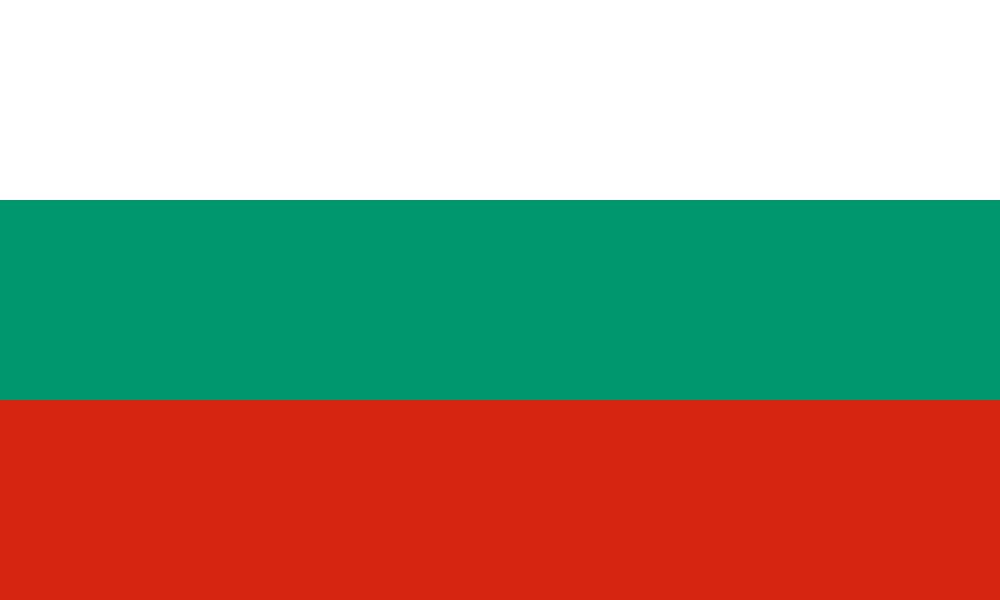
Three equal horizontal bands of white (top), green, and red.
What the flag means
White stands for peace, love, and freedom; green for the country's agricultural wealth; red for the independence struggle and military courage.
Source: CIA World Factbook (archived)
Burkina FasoAfrica
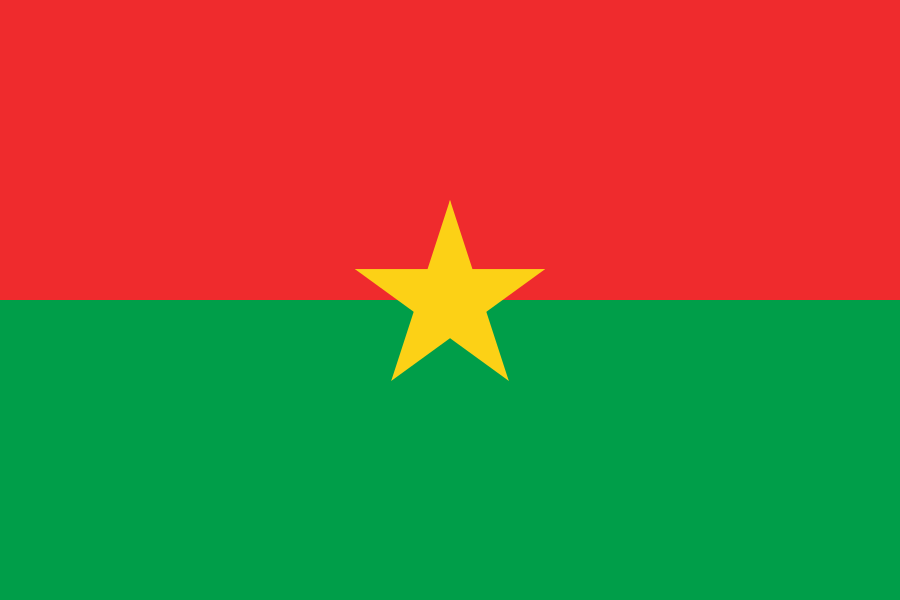
Two equal horizontal bands of red (top) and green, with a five-pointed yellow star in the center.
What the flag means
Red stands for the country's struggle for independence, green for hope and abundance, and yellow for the country's mineral wealth.
Source: CIA World Factbook (archived)
BurundiAfrica
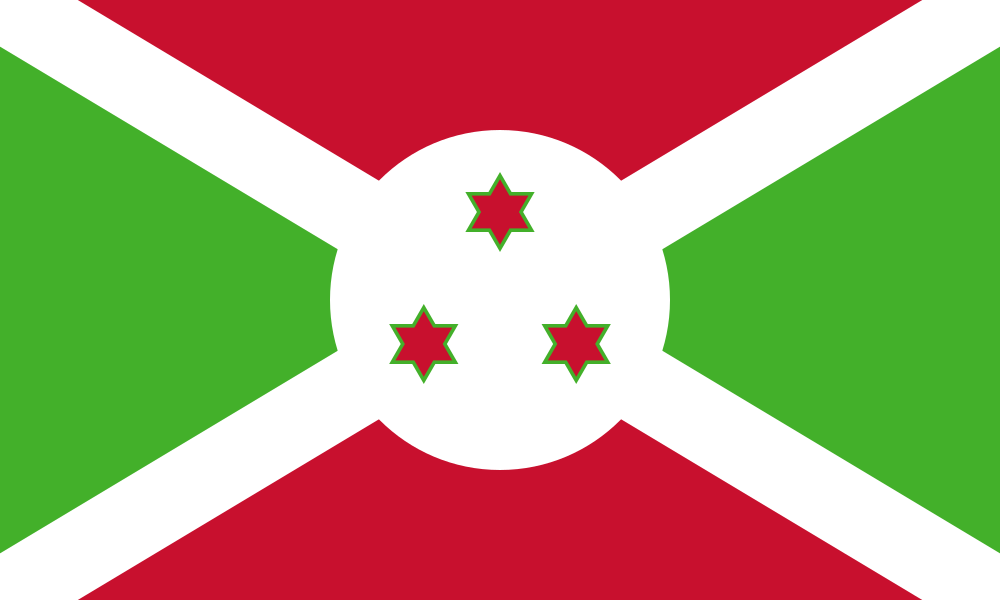
Divided by a white diagonal cross into red triangles (top and bottom) and green triangles (on each side) with a white disk at the center bearing three six-pointed red stars outlined in green and arranged in a triangular design.
What the flag means
Green stands for hope and optimism, white for purity and peace, and red for the blood shed in the struggle for independence; the three stars represent the major ethnic groups (Hutu, Twa, Tutsi), as well as unity, work, and progress.
Source: CIA World Factbook (archived)
Cabo VerdeAfrica
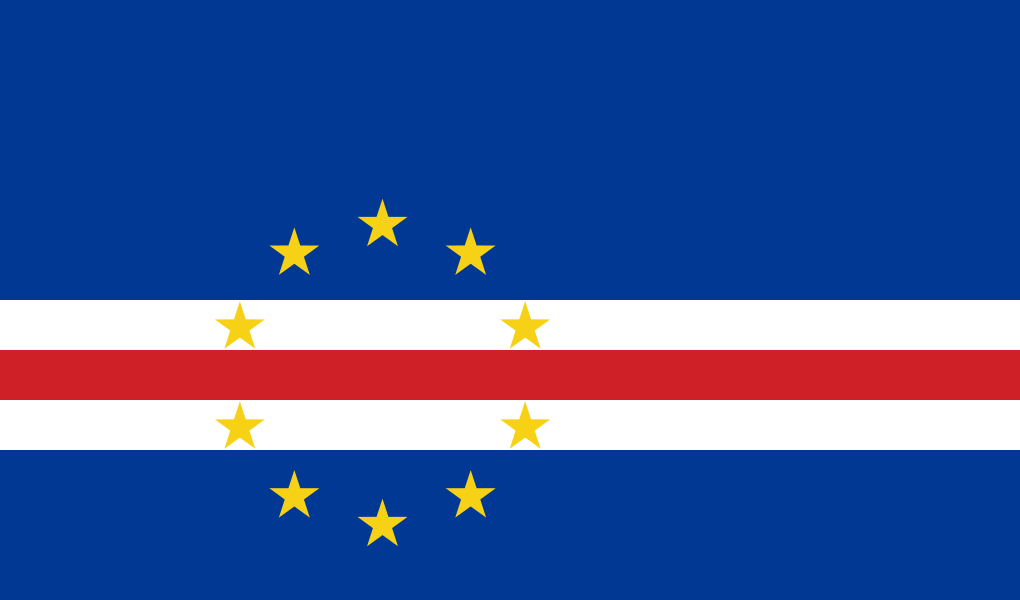
Five unequal horizontal bands; the top band of blue is half the height of the flag; under it are three narrow bands of white, red, and white, and a bottom stripe of blue; a circle of 10 five-pointed yellow stars is centered on the red stripe and sits toward the left side of the flag.
What the flag means
Blue stands for the sea and sky; the stripes symbolize the country's formation through peace (white) and effort (red); the stars represent the 10 major islands.
Source: CIA World Factbook (archived)
CambodiaAsia
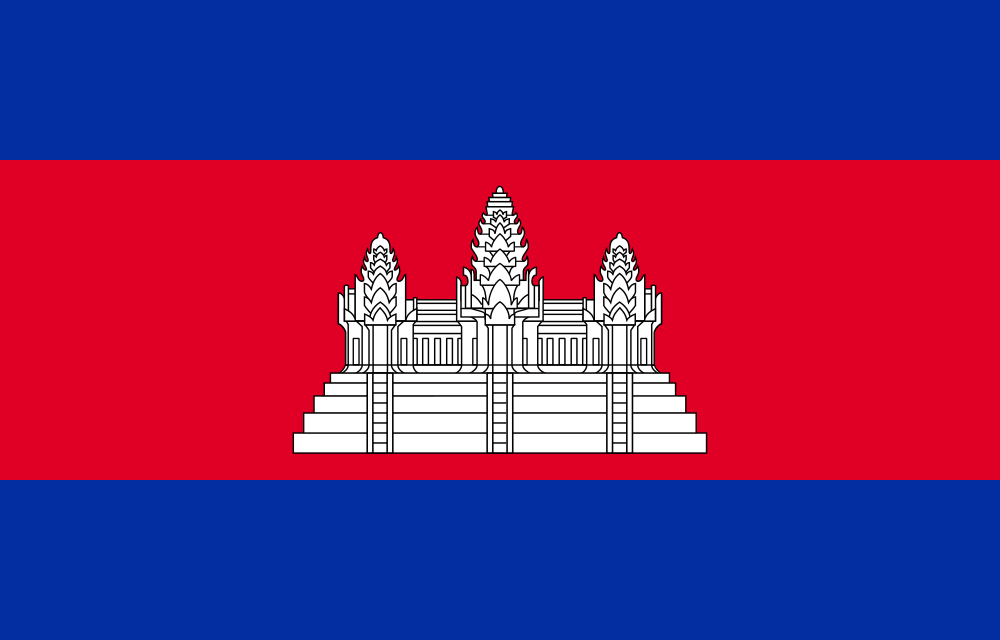
Three horizontal bands of blue (top), red (double-width), and blue; a three-towered, stylized white temple outlined in black is in the center of the red band, representing Angkor Wat.
What the flag means
Red and blue are traditional Cambodian colors.
Source: CIA World Factbook (archived)
CameroonAfrica
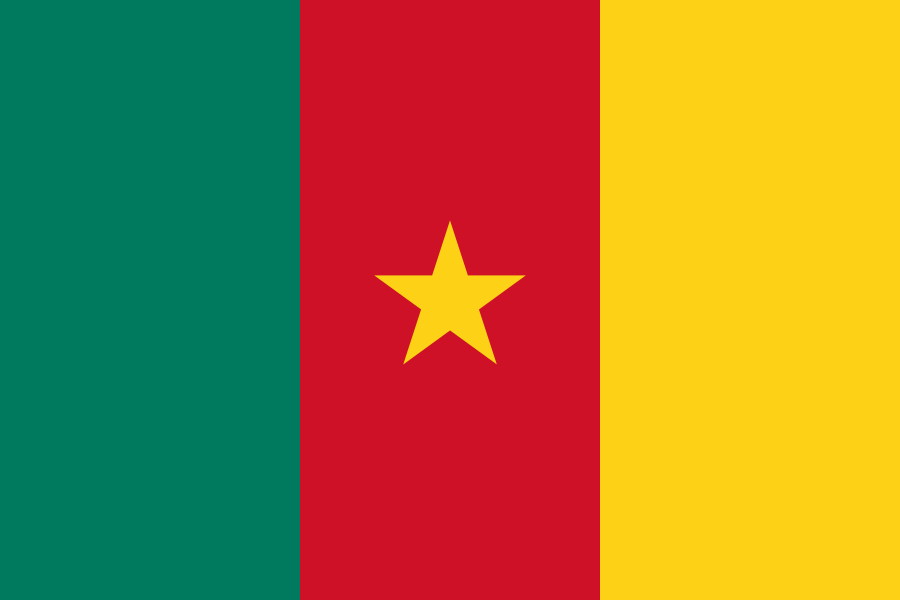
Three equal vertical bands of green (left side), red, and yellow, with a small five-pointed yellow star centered in the red band.
What the flag means
Red stands for unity; yellow for the sun, happiness, and the northern savannahs; green for hope and the southern forests; the star is called the "star of unity;" the vertical tricolor design is similar to the French flag.
Source: CIA World Factbook (archived)
CanadaNorth America
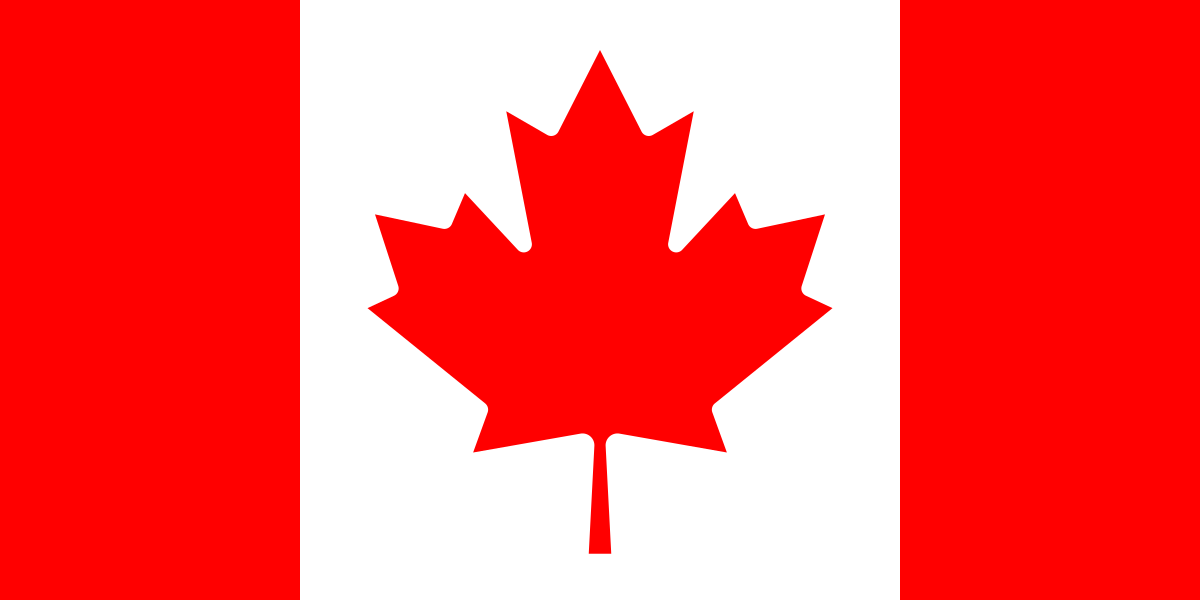
Two vertical bands of red on each side, with a white square between them; a large 11-pointed red maple leaf is centered in the white square.
What the flag means
The maple leaf has represented Canadian identity since the nineteenth century. Red and white are the colors of the national flag; its eleven-point leaf was designed for clarity rather than to represent a count of provinces.
Source: Canadian Heritage — Description of the National Flag
Central African RepublicAfrica
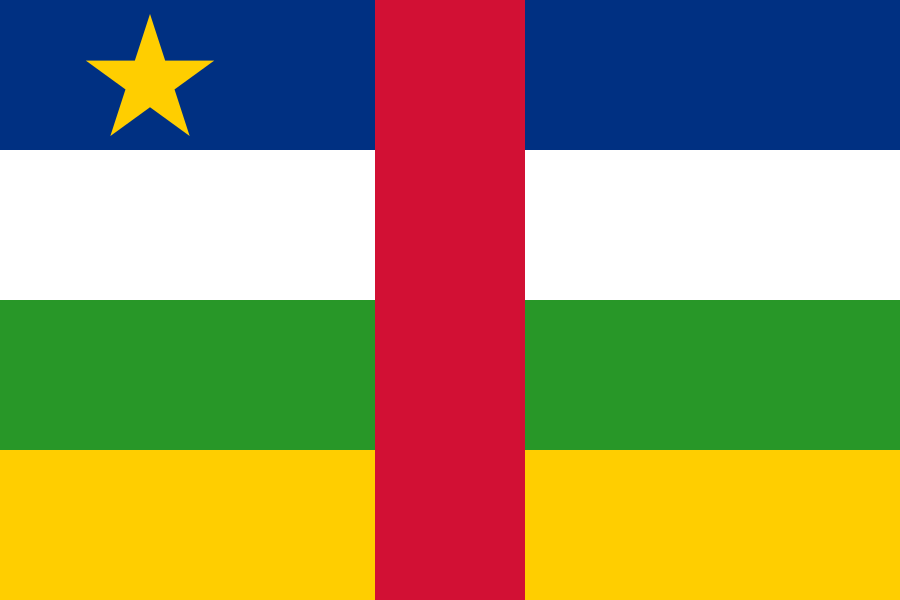
Four equal horizontal bands of blue (top), white, green, and yellow with a vertical red band in the center; a five-pointed yellow star sits in the top left corner of the flag, on the blue band.
What the flag means
Combines the pan-African and French flag colors; red stands for blood spilled in the struggle for independence, blue for the sky and freedom, white for peace and dignity, green for hope and faith, and yellow for tolerance; the star represents aspiring to a vibrant future.
Source: CIA World Factbook (archived)
ChadAfrica
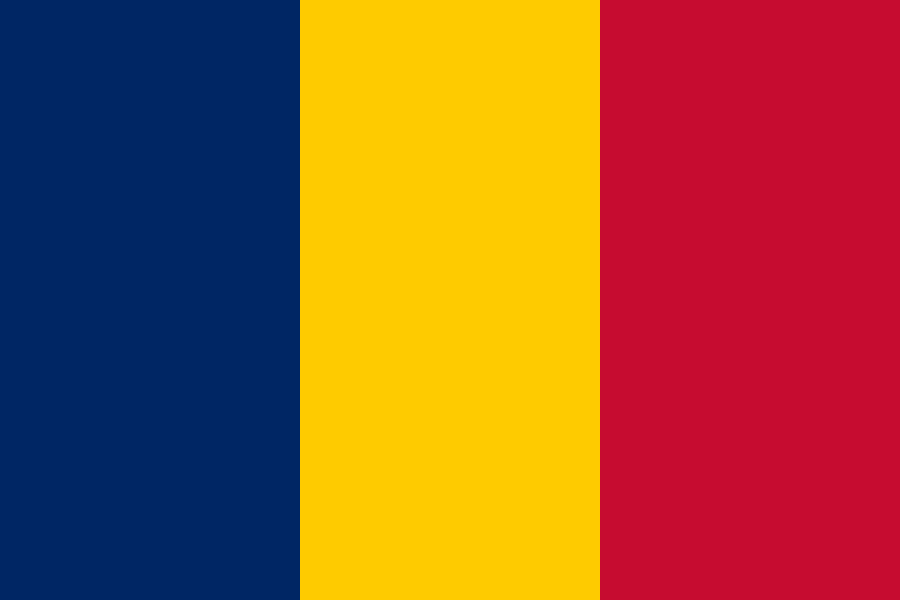
Three equal vertical bands of blue (left side), gold, and red.
What the flag means
Combines the blue and red French (former colonial) colors with the red and yellow Pan-African colors; blue stands for the sky, hope, and the south of the country; gold for the sun and the desert in the north; red for progress, unity, and sacrifice.
Source: CIA World Factbook (archived)
ChileSouth America
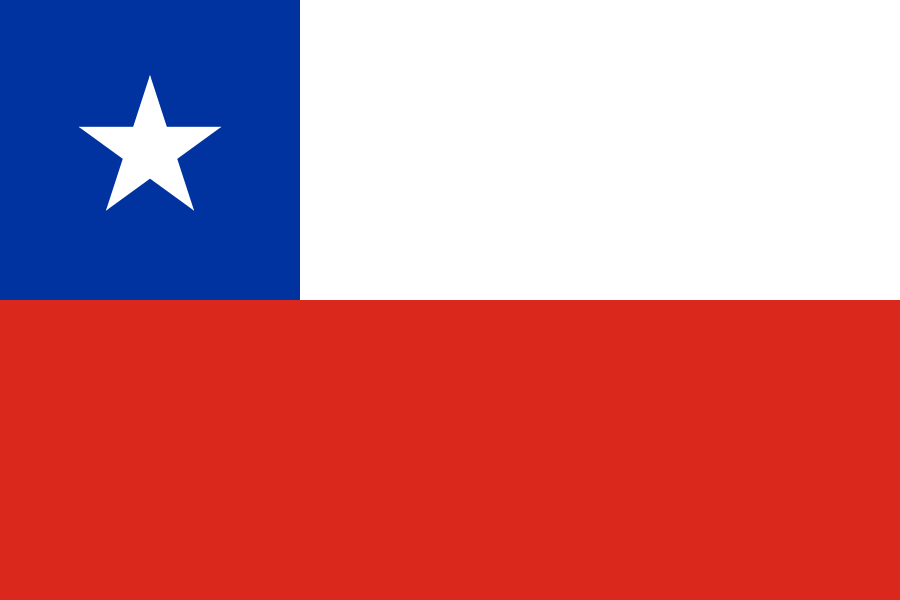
Two equal horizontal bands of white (top) and red; a blue square sits in the top left corner of the flag, the same height as the white band; the square has a five-pointed white star in the center.
What the flag means
The star represents a guide to progress and honor; blue stands for the sky, white for the Andes Mountains, and red for the blood spilled to achieve independence.
Source: CIA World Factbook (archived)
ChinaAsia
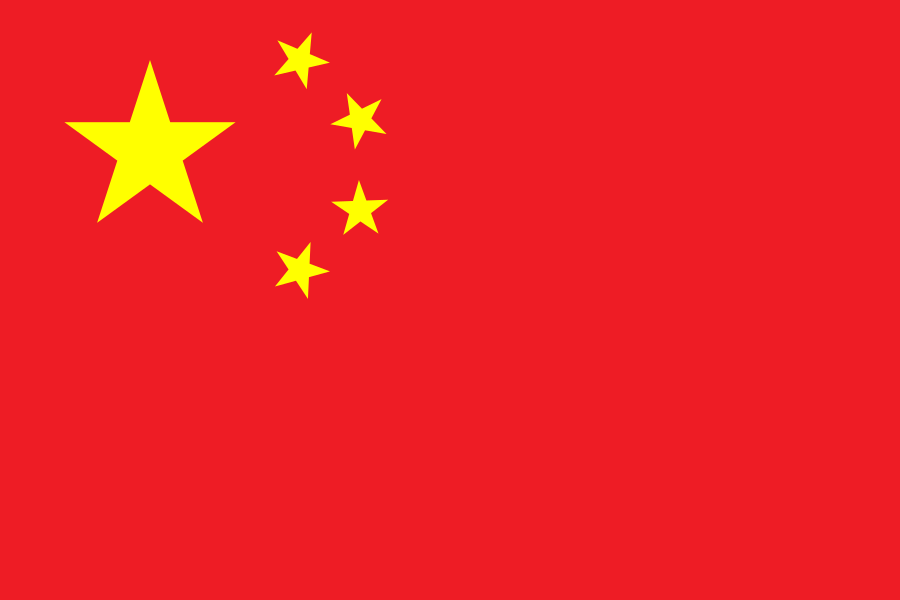
Red with a large five-pointed yellow star and four smaller ones in the upper-left corner; the small stars are arranged in a vertical arc around the large one.
What the flag means
Red represents revolution; the stars symbolize the four social classes — the working class, the peasantry, the urban petty bourgeoisie, and the national bourgeoisie (capitalists) — united under the Communist Party of China.
Source: CIA World Factbook (archived)
ColombiaSouth America
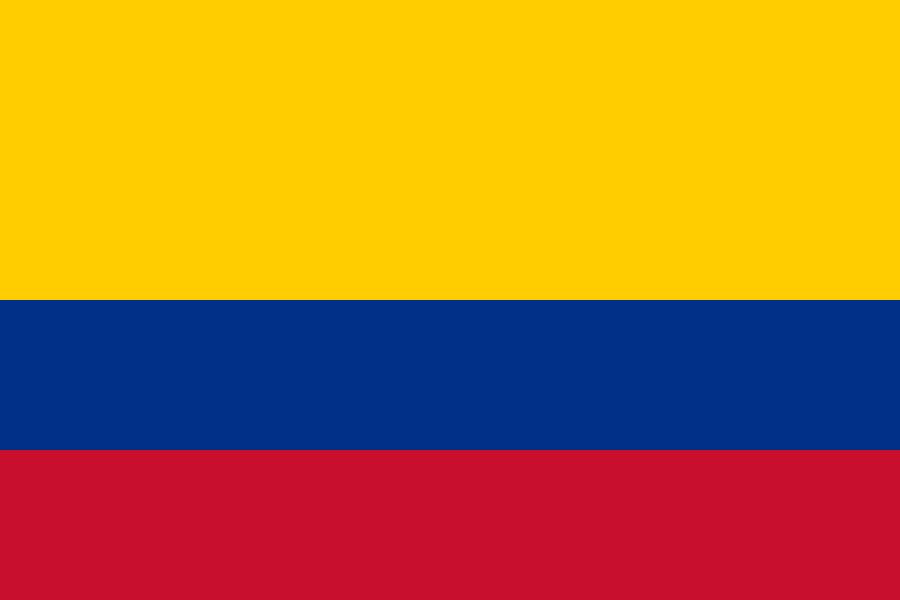
Three horizontal bands of yellow (top, double-width), blue, and red.
What the flag means
Various interpretations of the colors exist; one has yellow for the gold in Colombia's land, blue for the sea, and red for the blood spilled in attaining freedom; another describes them as representing sovereignty and justice (yellow), loyalty and vigilance (blue), and valor and generosity (red); another has the colors standing for liberty, equality, and fraternity.
Source: CIA World Factbook (archived)
ComorosAfrica
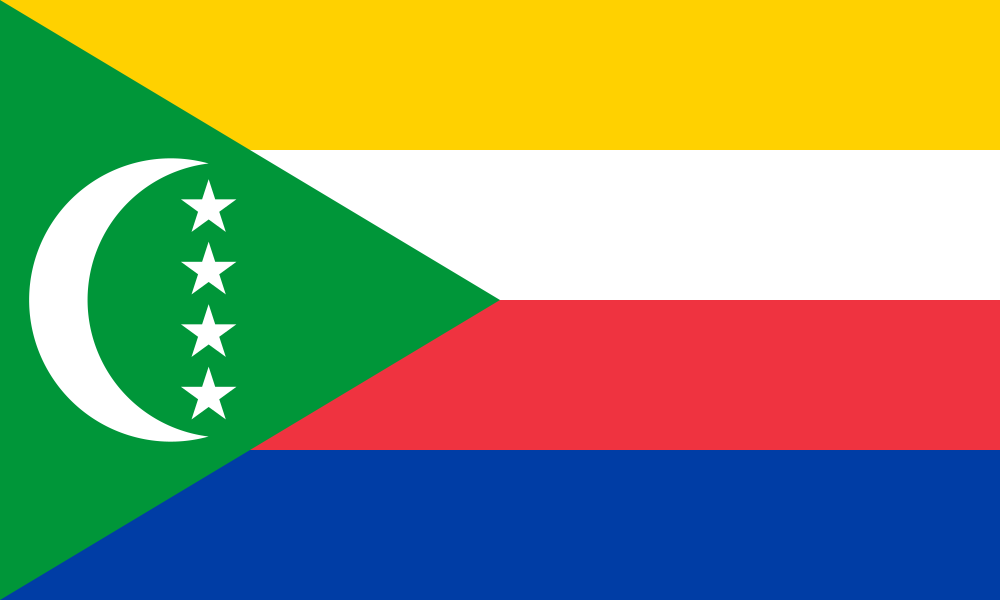
Four equal horizontal bands of yellow (top), white, red, and blue, with a green isosceles triangle based on the left; a vertical white crescent moon is centered in the triangle, with four five-pointed white stars placed vertically in a line between the points of the crescent.
What the flag means
The horizontal bands and the stars represent the four main islands of the archipelago — Mwali, N'gazidja, Ndzuwani, and Mahore (Mayotte is a department of France, but claimed by Comoros).
Source: CIA World Factbook (archived)
Costa RicaNorth America
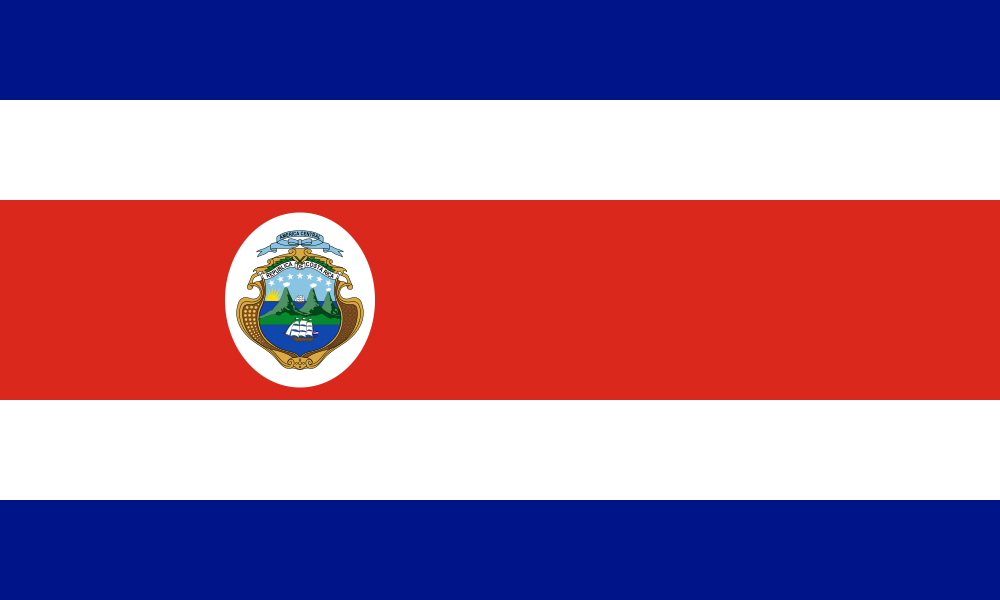
Five horizontal bands of blue (top), white, red (double-width), white, and blue, with the coat of arms in a white elliptical disk placed toward the left side of the red band.
What the flag means
The blue is said to stand for the sky, opportunity, and perseverance; the white for peace, happiness, and wisdom; and the red for the blood shed for freedom, as well as Costa Ricans' generosity and vibrancy.
The catalogue shows the state flag with the coat of arms. A plain blue-white-red-white-blue civil flag is also used.
Source: CIA World Factbook (archived)
CroatiaEurope
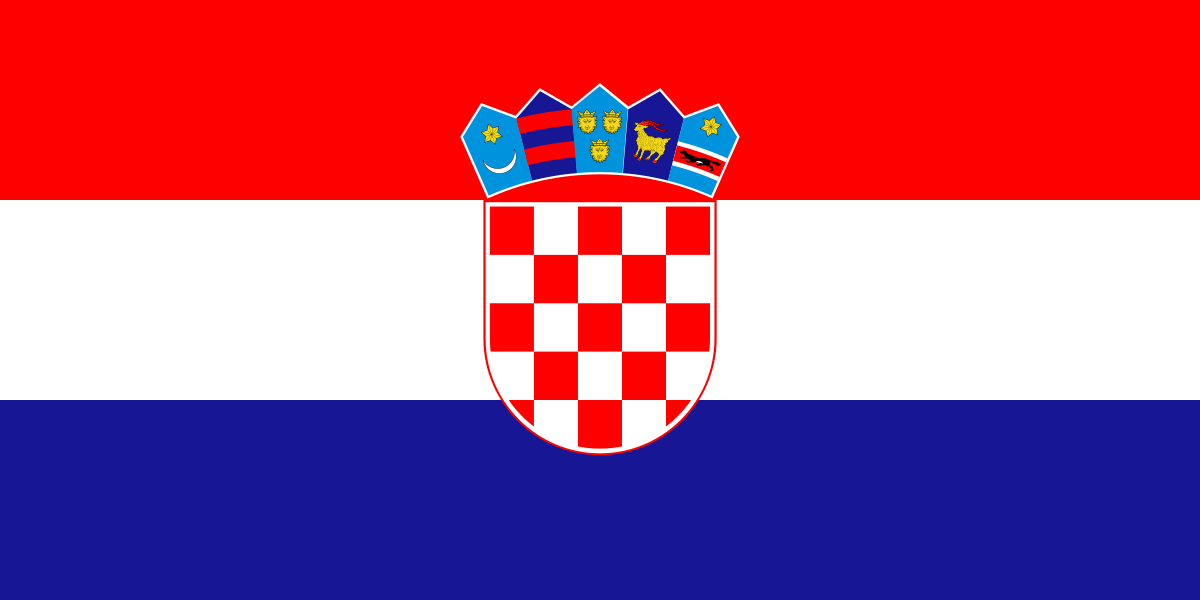
Three equal horizontal bands of red (top), white, and blue — the pan-Slav colors — with the Croatian coat of arms in the center, which consists of a main shield (a checkerboard of 13 red and 12 silver fields) with five smaller shields that form a crown over the main shield.
What the flag means
The small shields represent the five historic regions (from left to right): Croatia, Dubrovnik, Dalmatia, Istria, and Slavonia.
Source: CIA World Factbook (archived)
CubaNorth America
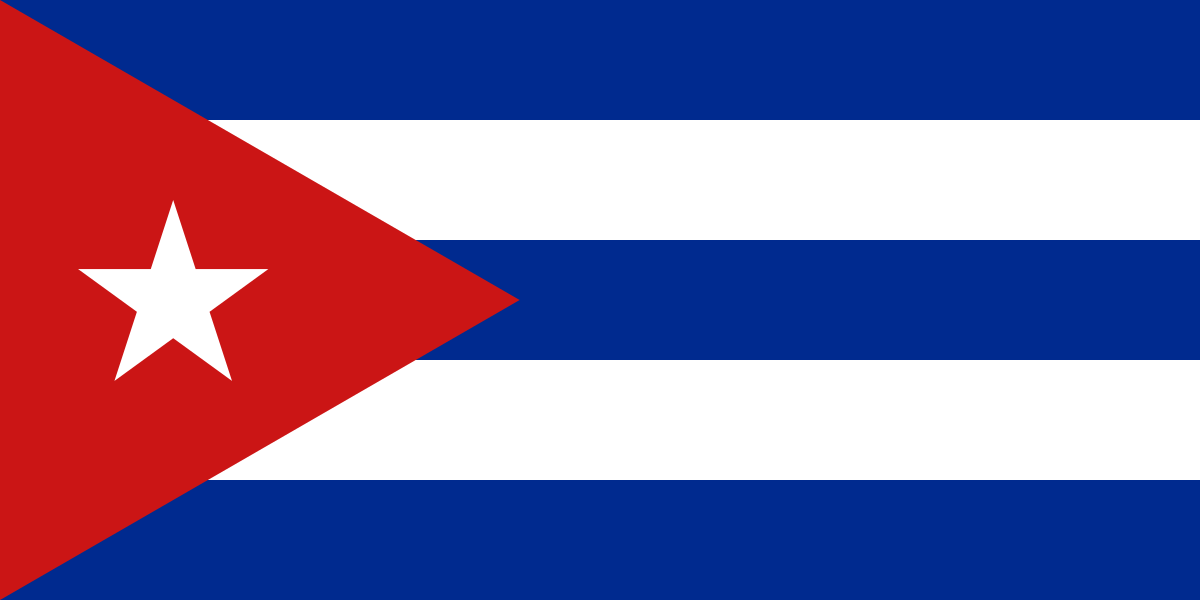
Five equal horizontal bands of blue (top, center, and bottom) alternating with white; a red equilateral triangle based on the left side has a five-pointed white star in the center.
What the flag means
The blue bands stand for the islands' three former departments: Central, Occidental, and Oriental; the white bands for the purity of the independence ideal; the triangle for liberty, equality, and fraternity; the red color for the blood shed in the independence struggle; the white star, called "La Estrella Solitaria" (the Lone Star), lights the way to freedom and was inspired by the state flag of Texas.
Source: CIA World Factbook (archived)
CyprusEurope
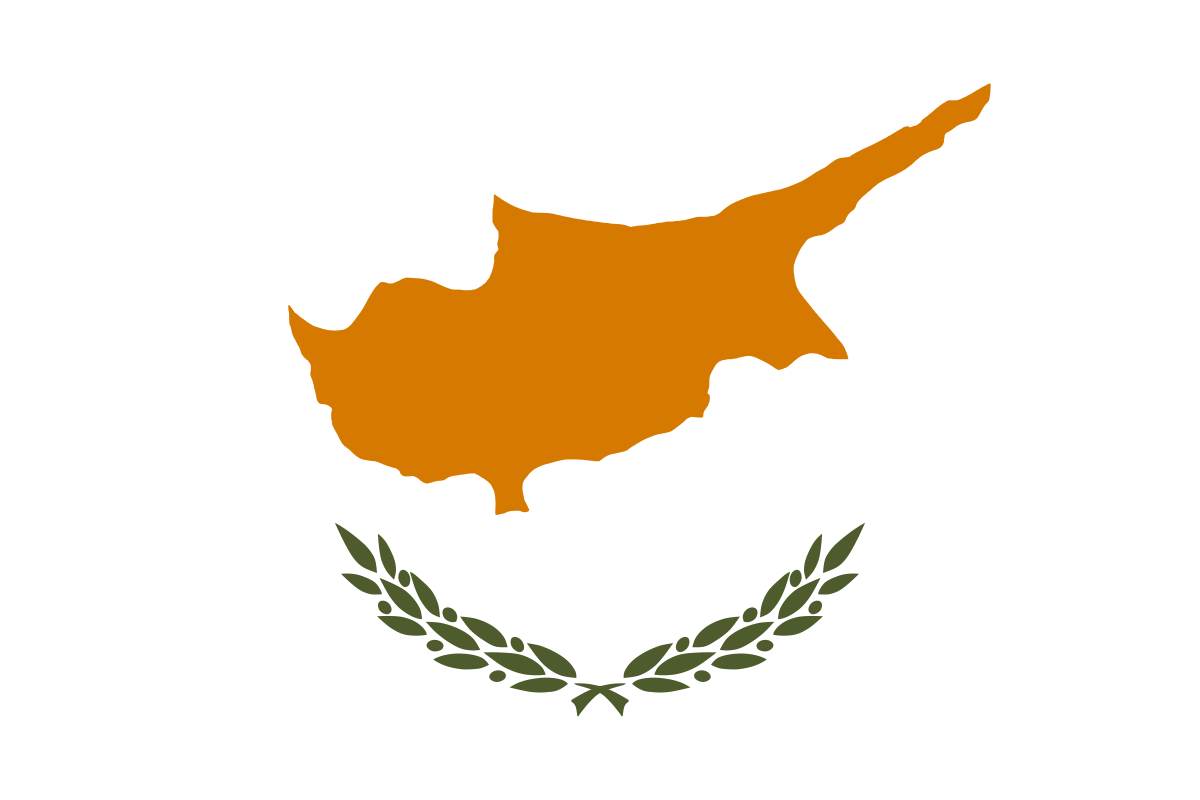
A copper-colored silhouette of the island is centered on a white field above two crossed green olive branches.
What the flag means
The olive branches symbolize hope for peace and reconciliation between the Greek and Turkish communities.
Source: CIA World Factbook (archived)
CzechiaEurope
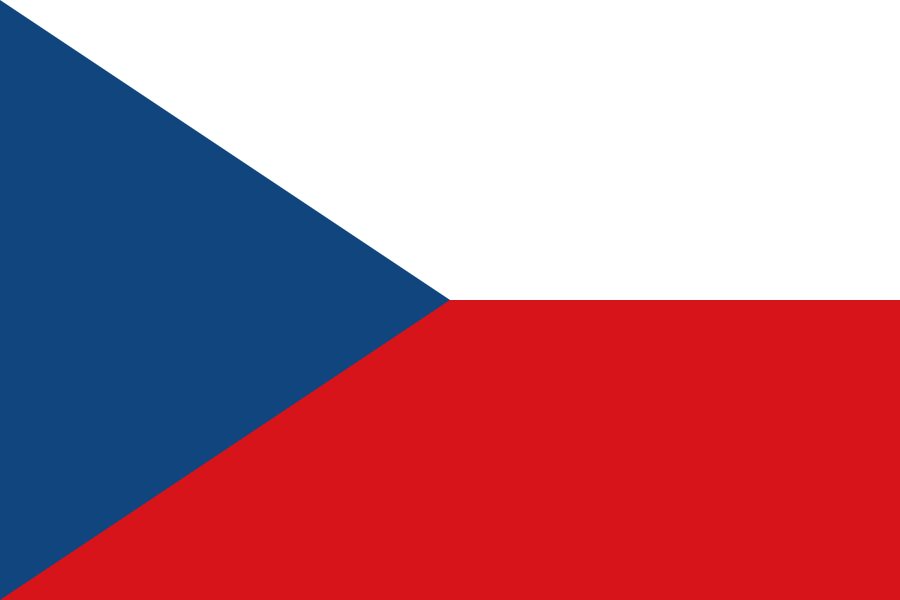
Two equal horizontal bands of white (top) and red with a blue isosceles triangle based on the left side.
What the flag means
The white and red horizontal bands and blue triangle are inherited from the Czechoslovak flag. Czechia retained that design after Czechoslovakia split in 1993.
Côte d’IvoireAfrica
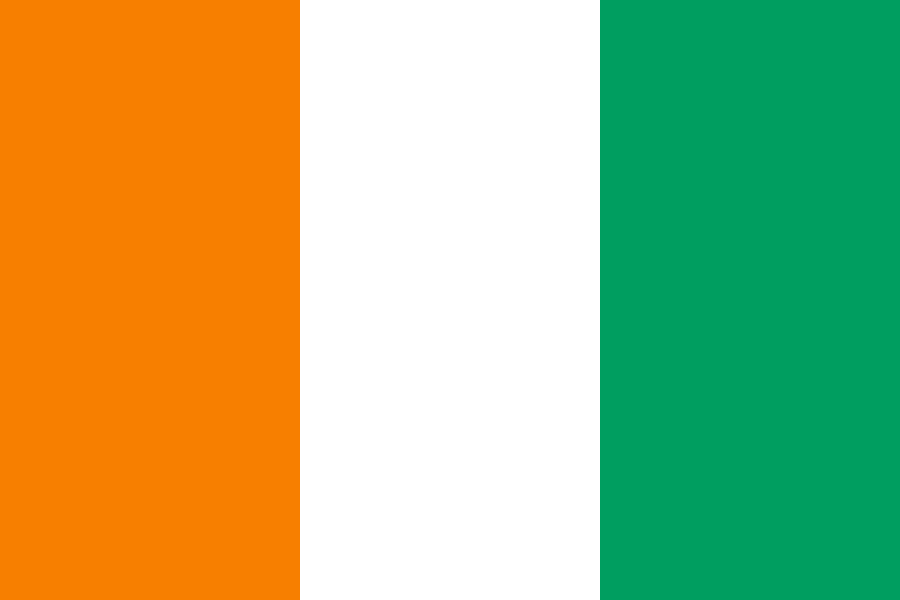
Three equal vertical bands of orange (left side), white, and green.
What the flag means
Orange stands for the savannah and fertility, white for peace and unity, green for the forests of the south and the hope for a bright future; design based on France's flag.
Source: CIA World Factbook (archived)
Democratic Republic of the CongoAfrica
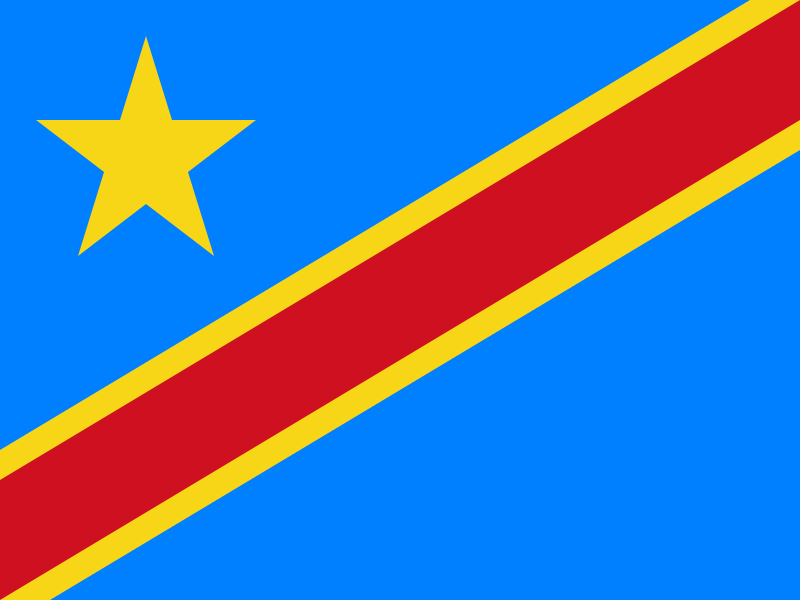
Sky-blue field divided diagonally from the lower-left corner to the upper-right corner by a red stripe bordered with two narrow yellow stripes; a five-pointed yellow star is in the upper-left corner.
What the flag means
Blue stands for peace and hope, red for the blood of the country's martyrs, and yellow for the country's wealth and prosperity; the star symbolizes unity and a brilliant future for the country.
Source: CIA World Factbook (archived)
DenmarkEurope

Red field with a white cross that extends to the edges of the flag; the vertical part of the cross is shifted to the left.
What the flag means
Known as the Dannebrog, the flag uses the Christian cross in a Scandinavian cross arrangement. Its early history is uncertain; the story that it fell from the sky in battle is a legend.
Source: CIA World Factbook (archived)
DjiboutiAfrica
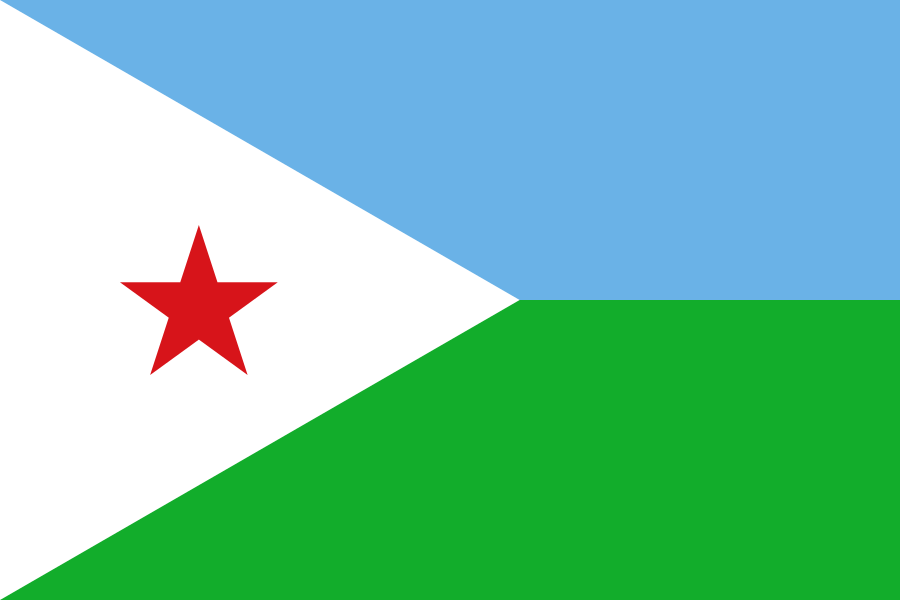
Two equal horizontal bands of light blue (top) and light green, with a white isosceles triangle based on the left side that has a five-pointed red star in the center.
What the flag means
Blue stands for sea, sky, and the Issa Somali people, green for earth and the Afar people, and white for peace; the red star stands for the struggle for independence and unity.
Source: CIA World Factbook (archived)
DominicaNorth America
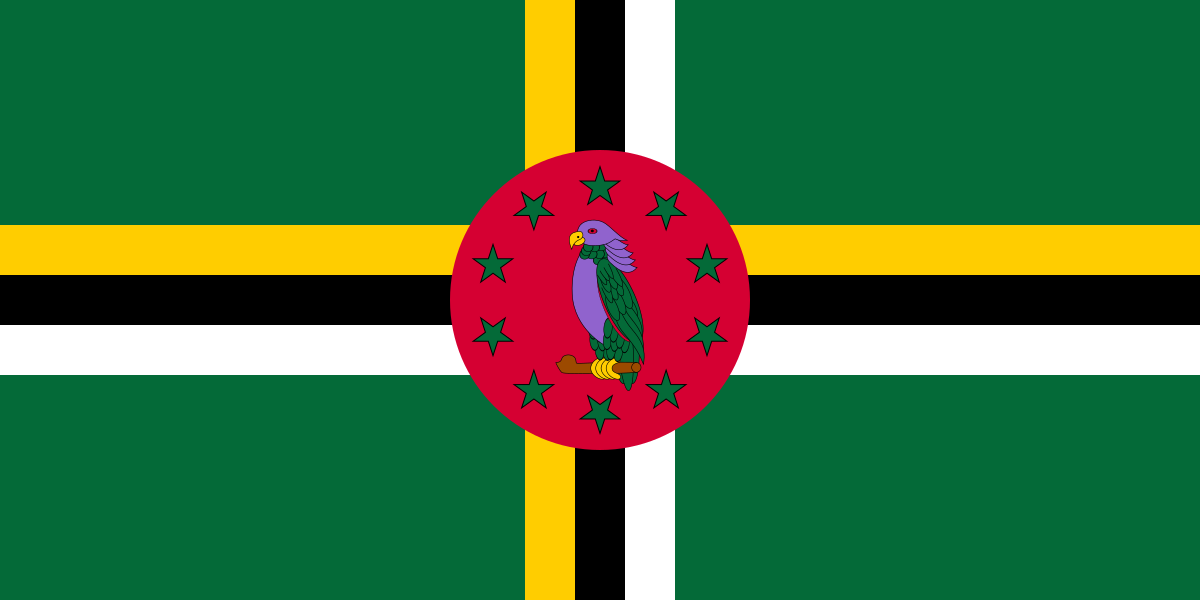
Green with a centered cross of three equal bands in yellow, black, and white; in the center of the cross is a red disk with a Sisserou parrot surrounded by 10 five-pointed green stars edged in yellow.
What the flag means
The stars represent the 10 administrative divisions (parishes); green symbolizes the island's lush vegetation; the tricolor cross represents the Christian Trinity; yellow stands for sunshine, the primary agricultural products (citrus and bananas), and the Carib people; black for the rich soil and the African heritage of most citizens; white for rivers, waterfalls, and the purity of aspirations; the red disc for social justice.
Source: CIA World Factbook (archived)
Dominican RepublicNorth America
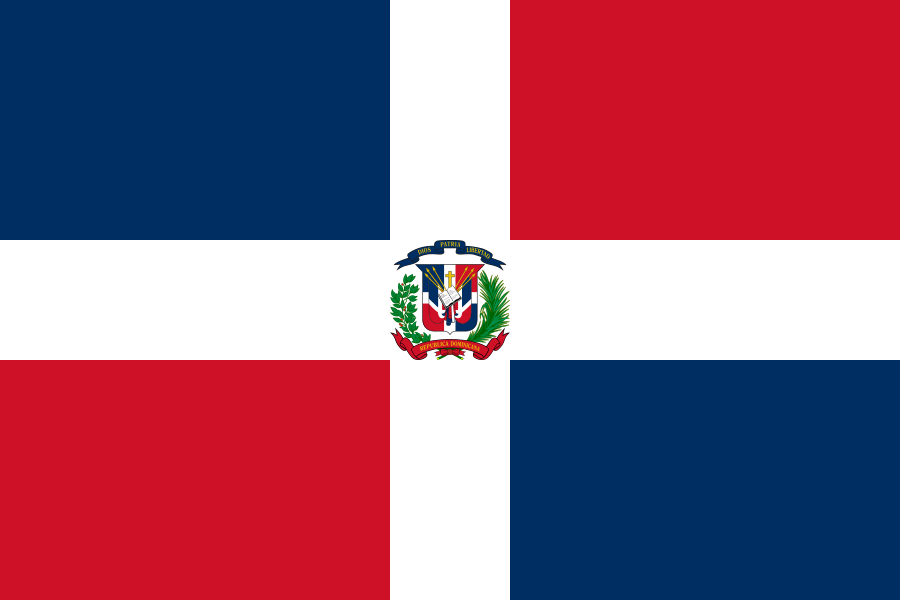
A centered white cross extends to the edges and divides the flag into four rectangles; the top ones are ultramarine blue (left side) and vermilion red, and the bottom ones are vermilion red (left side) and ultramarine blue; a small coat of arms with a shield supported by a laurel branch and a palm branch is at the center of the cross; above the shield, a blue ribbon displays the motto Dios, Patria, Libertad (God, Fatherland, Liberty); below the shield, Republica Dominicana is on a red ribbon; on the shield, a Bible is opened to a verse that reads "Y la verdad nos hara libre" (And the truth shall set you free).
What the flag means
Blue stands for liberty, white for salvation, and red for the blood of heroes.
Source: CIA World Factbook (archived)
EcuadorSouth America
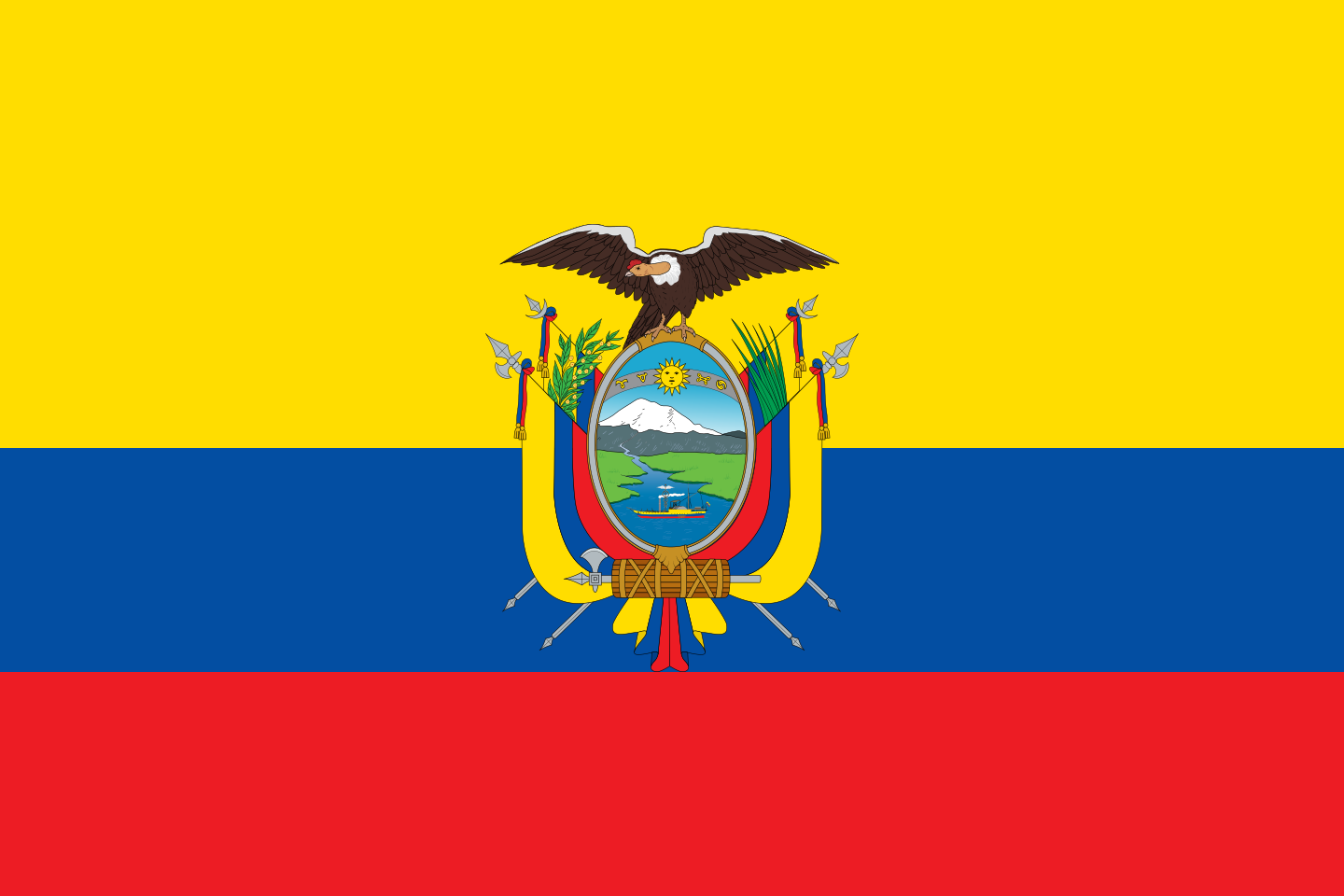
Three horizontal bands of yellow (top, double-width), blue, and red, with the coat of arms at the center of the flag.
What the flag means
Yellow stands for sunshine, grain, and mineral wealth; blue for the sky, sea, and rivers; red for patriots' blood spilled in the struggle for freedom and justice.
The catalogue shows the national flag with the coat of arms, distinguishing it from Colombia’s similar tricolor.
Source: CIA World Factbook (archived)
EgyptAfrica
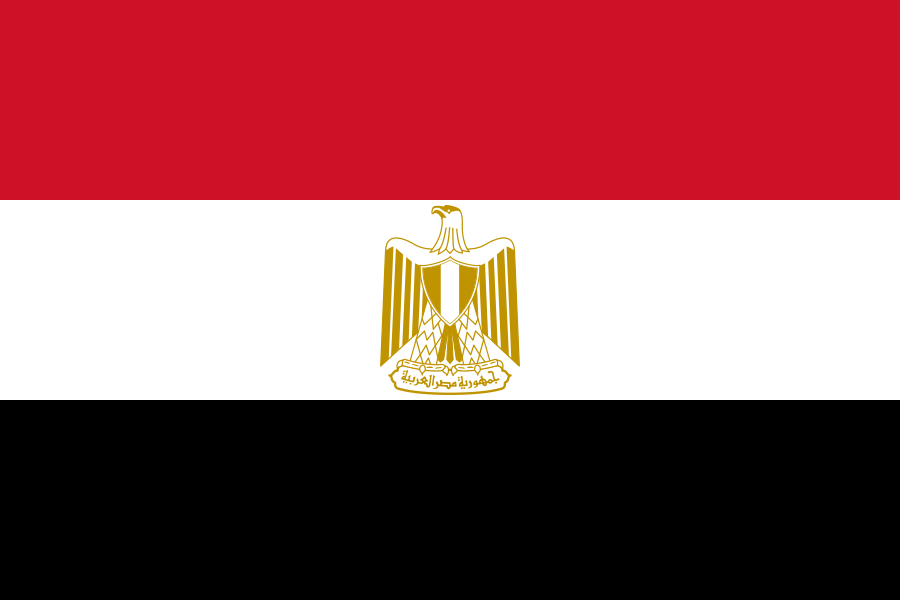
Three equal horizontal bands of red (top), white, and black; centered in the white band is the national emblem, a gold Eagle of Saladin; it faces the left side, with a shield on its chest, above a scroll with the country's name in Arabic.
What the flag means
The band colors derive from the Arab Liberation flag and represent oppression (black) overcome through bloody struggle (red), to be replaced by a bright future (white).
Source: CIA World Factbook (archived)
El SalvadorNorth America
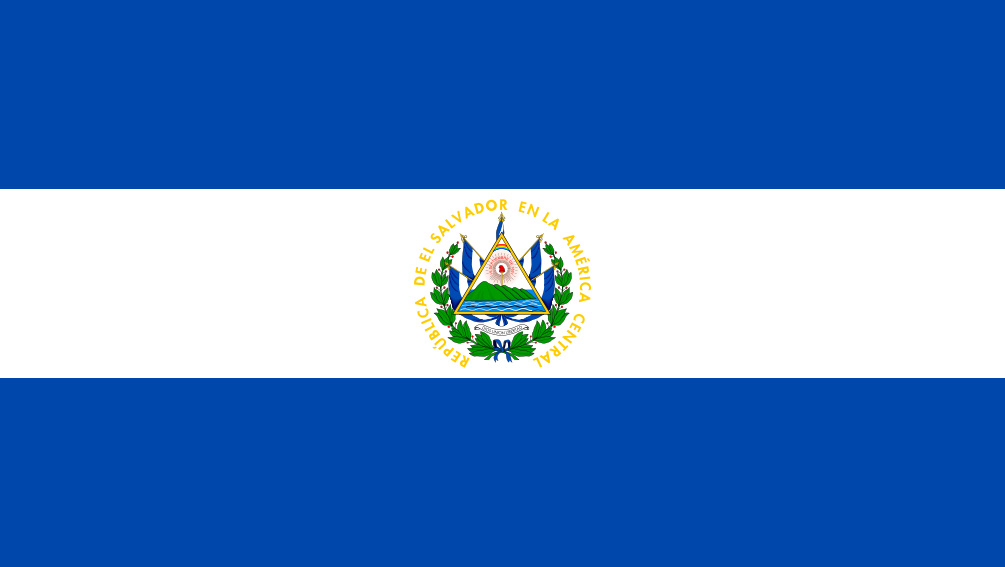
Three equal horizontal bands of cobalt blue (top), white, and cobalt blue, with the national coat of arms centered in the white band; the coat of arms has a round emblem with the words Republica DE EL Salvador EN LA America Central around it.
What the flag means
The blue bands stand for the Pacific Ocean and the Caribbean Sea, and the white for the land, as well as peace and prosperity.
Source: CIA World Factbook (archived)
Equatorial GuineaAfrica
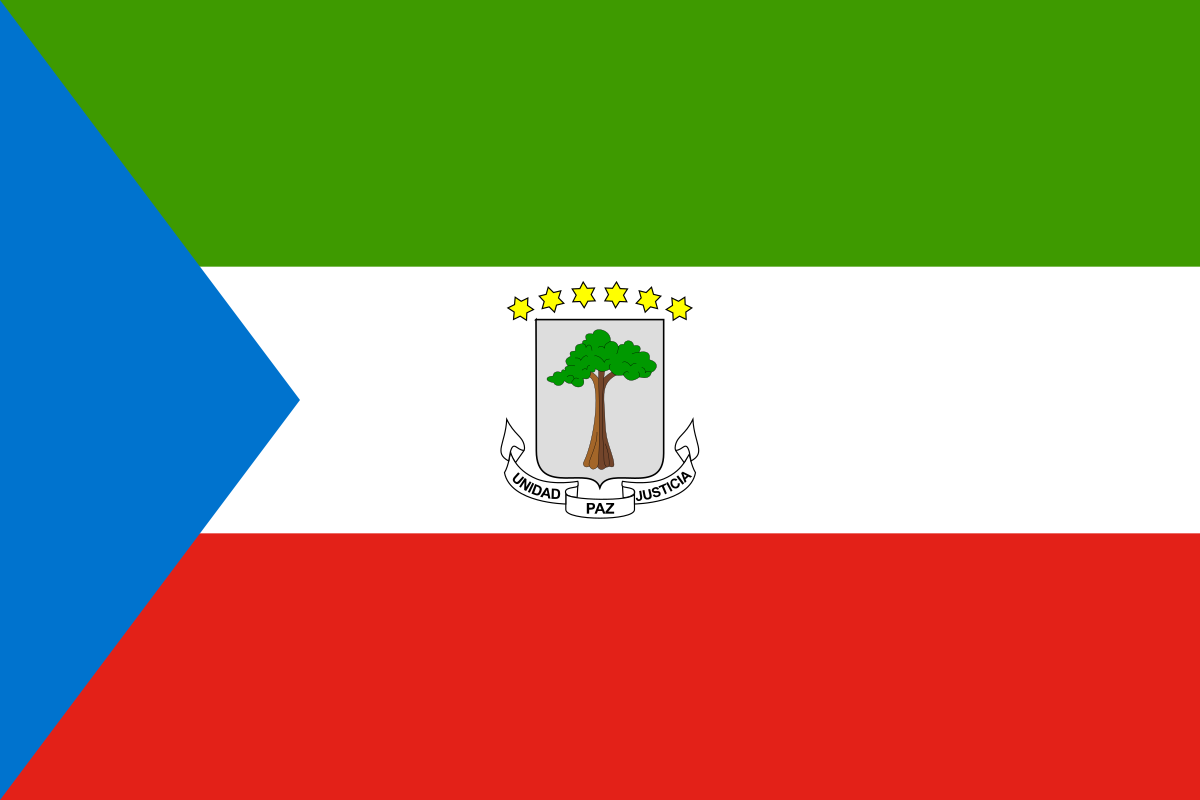
Three equal horizontal bands of green (top), white, and red, with a blue isosceles triangle based on the left side and the coat of arms centered in the white band; the coat of arms has six six-pointed yellow stars (representing the mainland and five offshore islands) above a gray shield with a silk-cotton tree; below is a scroll with the motto Unidad, Paz, Justicia (Unity, Peace, Justice).
What the flag means
Green stands for the jungle and natural resources, blue for the sea, white for peace, and red for the fight for independence.
Source: CIA World Factbook (archived)
EritreaAfrica
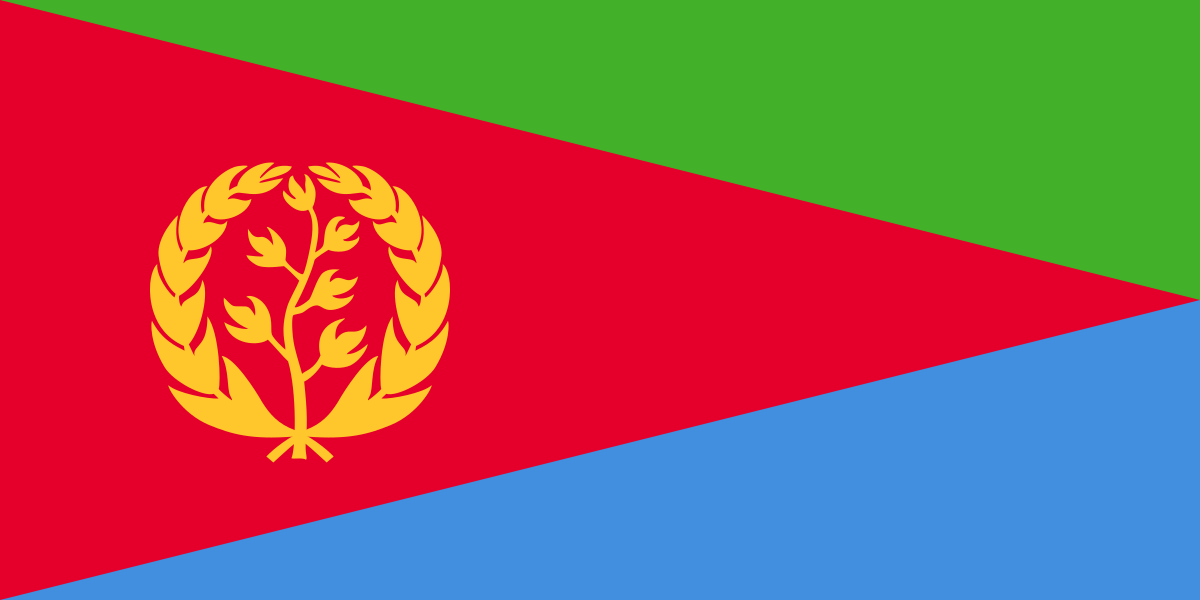
A red isosceles triangle (based on the left side) divides the flag into two right triangles; the upper triangle is green, the lower is blue; a gold wreath around a gold olive branch is on the left side of the red triangle.
What the flag means
Green stands for the country's agriculture economy, red for the blood shed in the fight for freedom, and blue for the sea's bounty; the shape of the red triangle mimics the country's shape.
Source: CIA World Factbook (archived)
EstoniaEurope
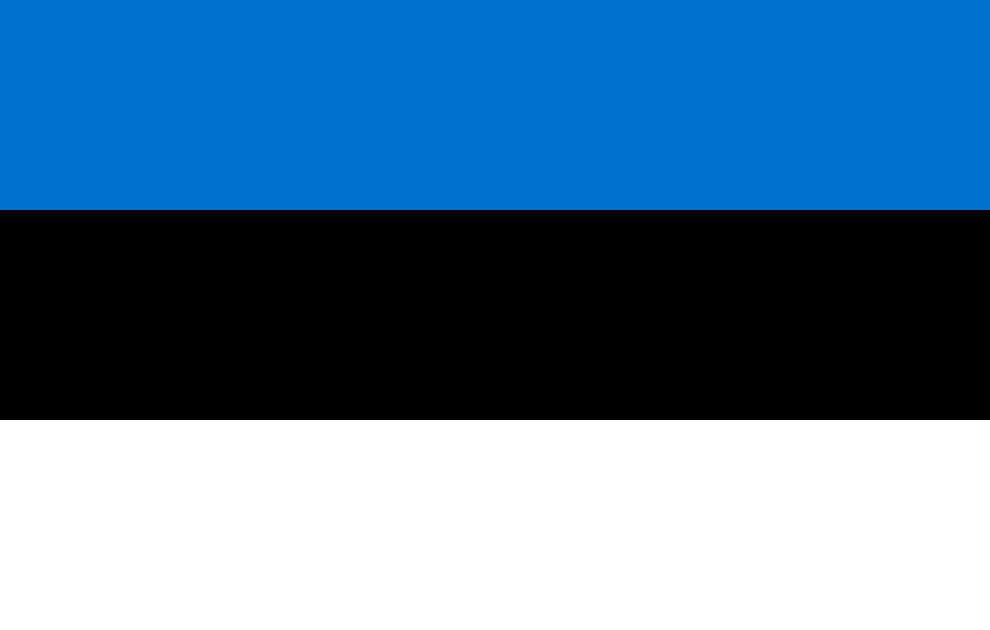
Three equal horizontal bands of blue (top), black, and white.
What the flag means
Blue stands for faith, loyalty, and devotion, and also the sky, sea, and lakes; black for the country's soil and the Estonian people's past suffering; white for striving for enlightenment and virtue and also for birch bark, snow, and summer nights illuminated by the midnight sun.
Source: CIA World Factbook (archived)
EswatiniAfrica
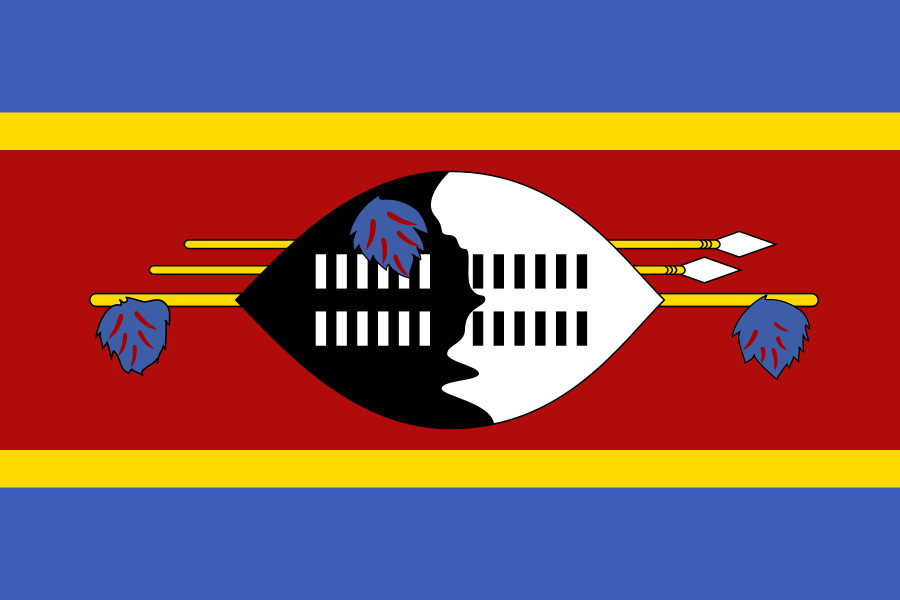
Three horizontal bands of blue (top), red (triple-width), and blue; the red band is edged in yellow, with a large black-and-white shield in the center that covers two horizontal spears and a staff with feather tassels.
What the flag means
Blue stands for peace and stability, red for past struggles, and yellow for the mineral resources of the country; the shield, spears, and staff symbolize protection from enemies, and the shield colors stand for ethnic groups living in peaceful coexistence.
Source: CIA World Factbook (archived)
EthiopiaAfrica
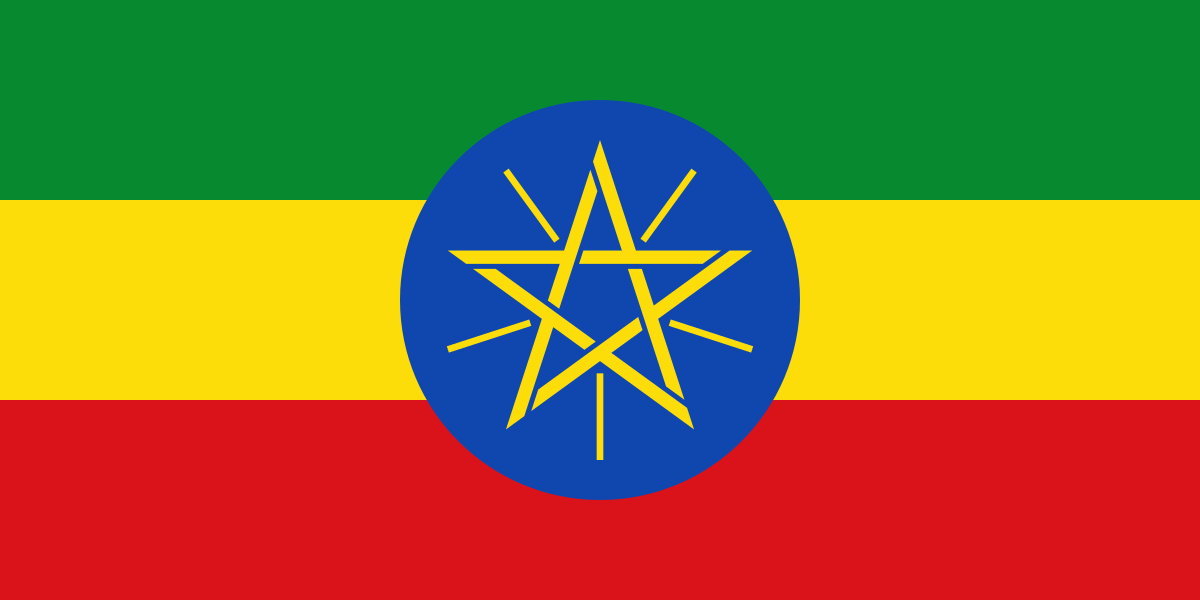
Three equal horizontal bands of green (top), yellow, and red, with a light blue disk centered on the three bands; on the disk is a yellow pentagram with single yellow rays emanating from the angles between the points.
What the flag means
Green stands for hope and the land's fertility, yellow for justice and harmony, and red for sacrifice and heroism; the blue of the disk symbolizes peace, and the pentagram represents the Ethiopian people's unity and equality.
Source: CIA World Factbook (archived)
FijiOceania
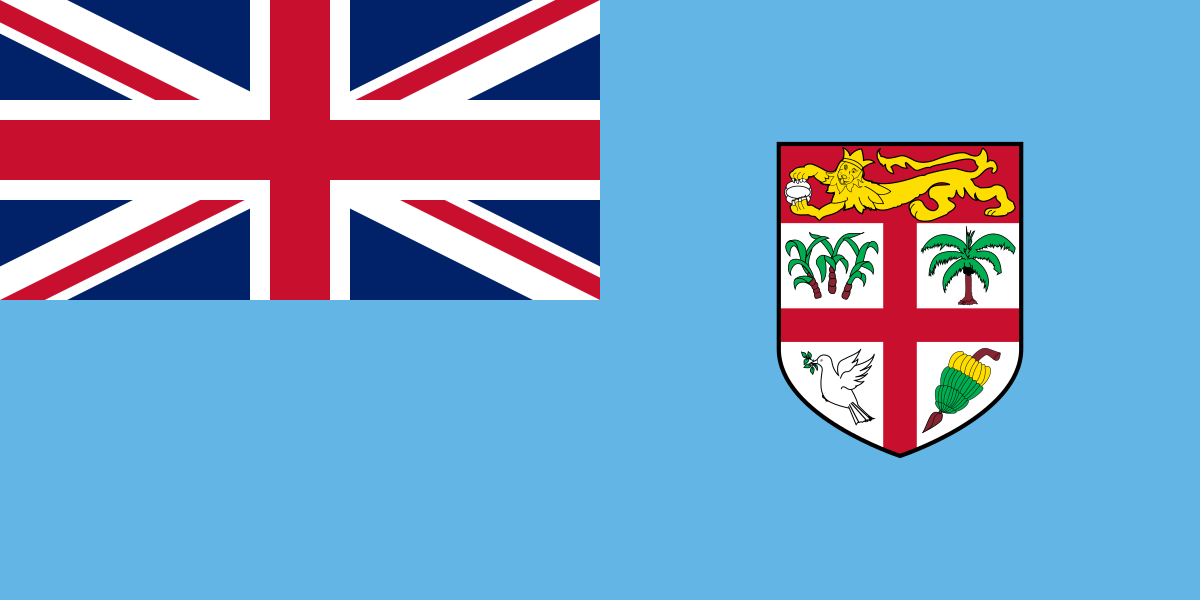
Light blue with the UK flag in the upper-left quadrant and the Fijian shield centered on the right half of the flag; the shield shows a yellow lion holding a coconut above a white field quartered by the cross of Saint George; the four quarters depict sugarcane, a palm tree, a banana bunch, and a white dove.
What the flag means
Blue symbolizes the Pacific Ocean.
Source: CIA World Factbook (archived)
FinlandEurope
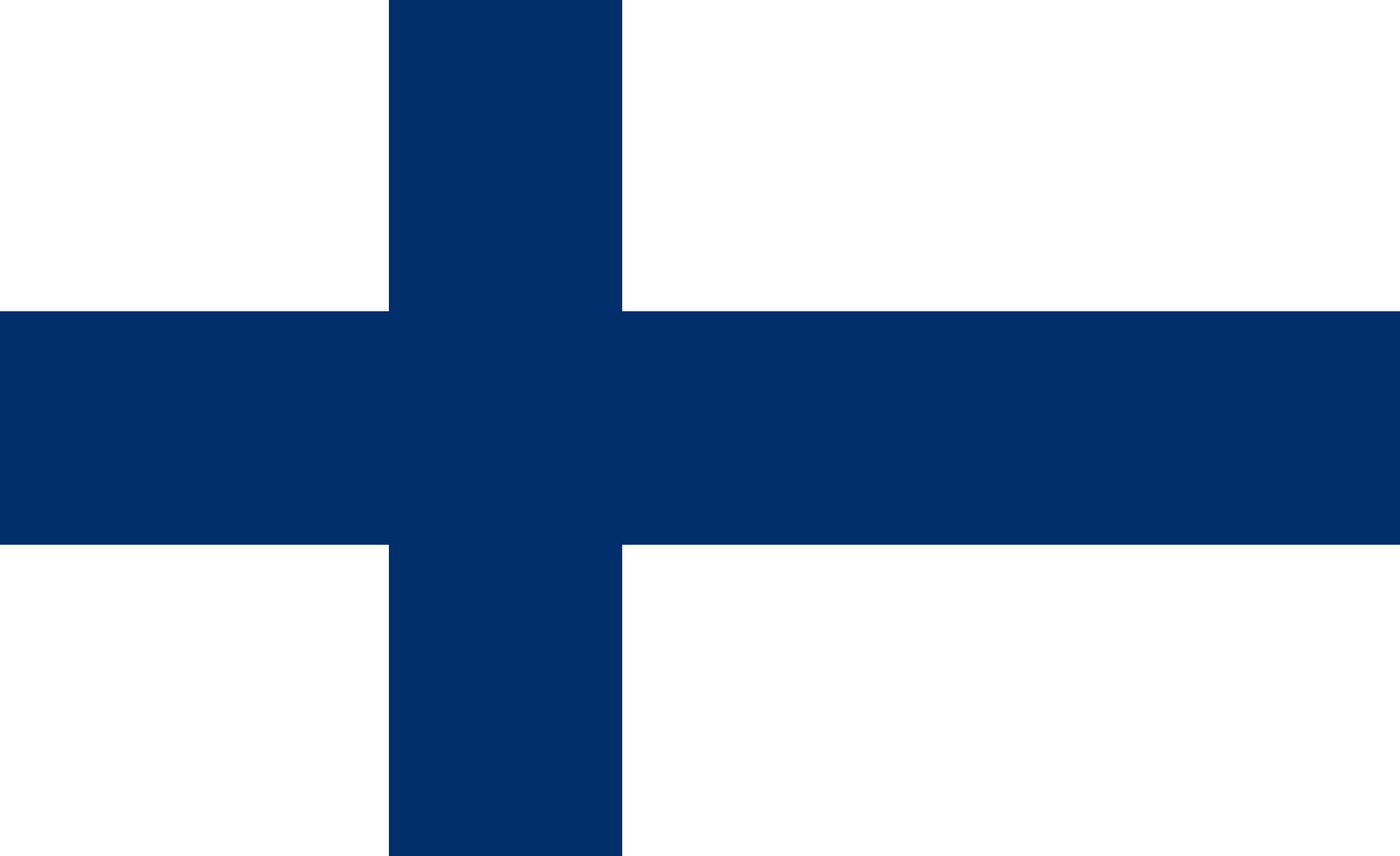
White with a blue cross extending to the edges of the flag; the cross is shifted to the left in the style of the Dannebrog (Danish flag).
What the flag means
The blue stands for the country's thousands of lakes, and the white for snow.
Source: CIA World Factbook (archived)
FranceEurope
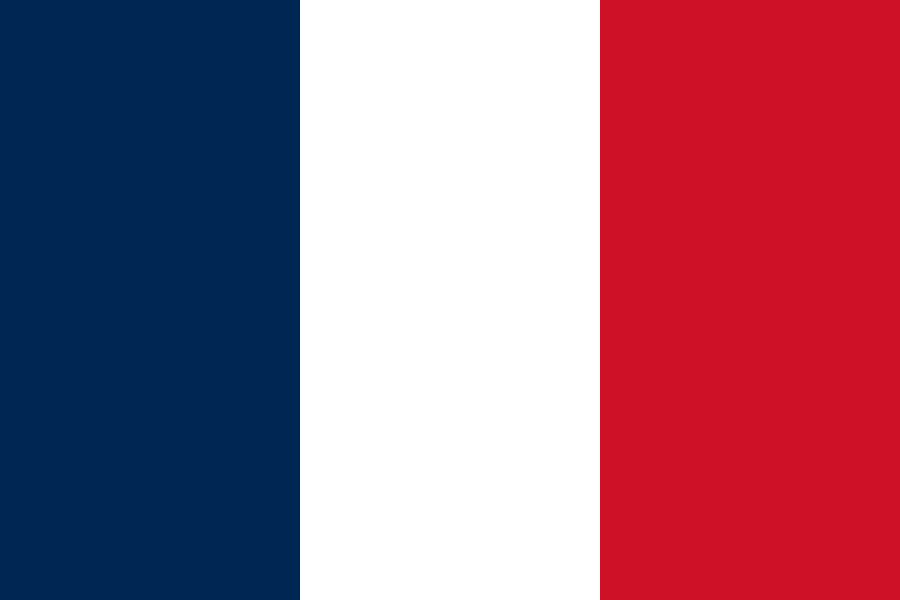
Three equal vertical bands of blue (left side), white, and red.
What the flag means
The tricolor grew out of the French Revolution: Paris’s blue and red were combined with white, a color traditionally associated with the monarchy. Its modern vertical arrangement developed in the revolutionary period.
Source: CIA World Factbook (archived)
GabonAfrica
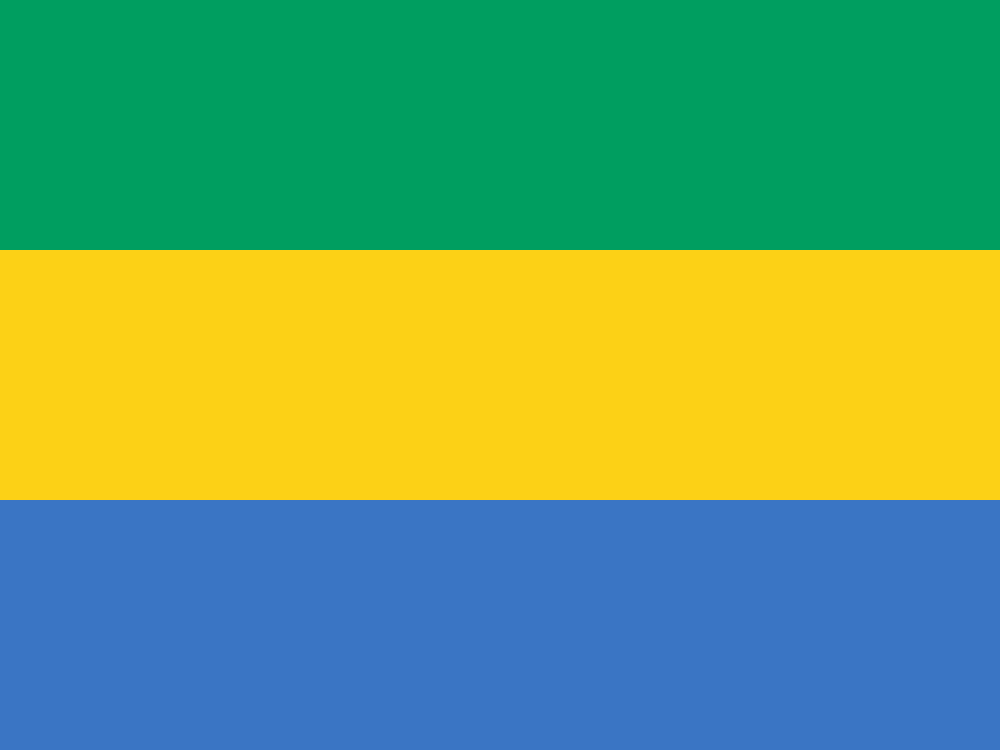
Three equal horizontal bands of green (top), yellow, and blue.
What the flag means
Green stands for the country's forests and natural resources, gold for the equator and the sun, and blue for the sea.
Source: CIA World Factbook (archived)
GambiaAfrica
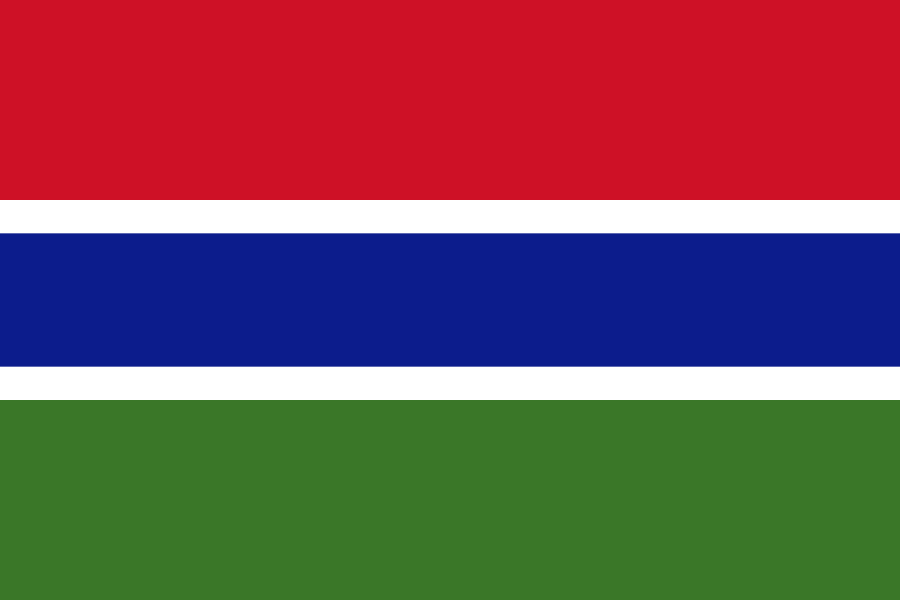
Three equal horizontal bands of red (top), blue with white edges, and green.
What the flag means
Red stands for the sun and the savannah, blue for the Gambia River, and green for forests and agriculture; the white stripes denote unity and peace.
Source: CIA World Factbook (archived)
GeorgiaAsia
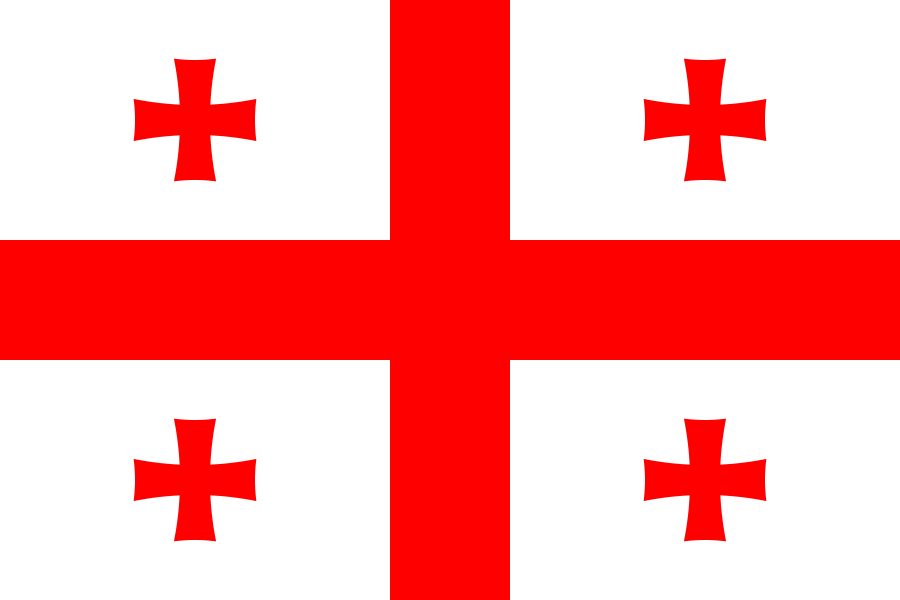
White rectangle with a central red cross extending to all four sides of the flag; each of the four quadrants displays a small red bolnur-katskhuri cross (also known as Bolnisi cross), which has equal-length arms that are slightly wider at the end than in the center.
What the flag means
Known as the Five-Cross Flag, this design recalls the medieval flag of the Kingdom of Georgia. The crosses connect it with Georgia’s Christian heritage.
Source: CIA World Factbook (archived)
GermanyEurope
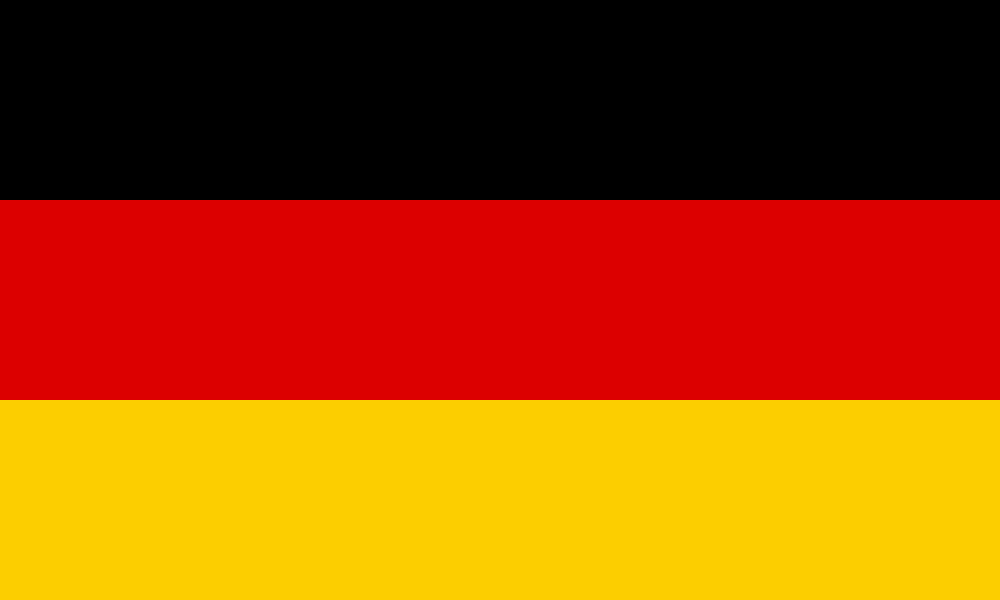
Three equal horizontal bands of black (top), red, and gold.
What the flag means
Black, red and gold have a long heraldic history and became colors of the German national movement. The archived source traces an earlier combination to the black eagle with red claws and beak on a gold field of the Holy Roman Emperor.
Source: CIA World Factbook (archived)
GhanaAfrica
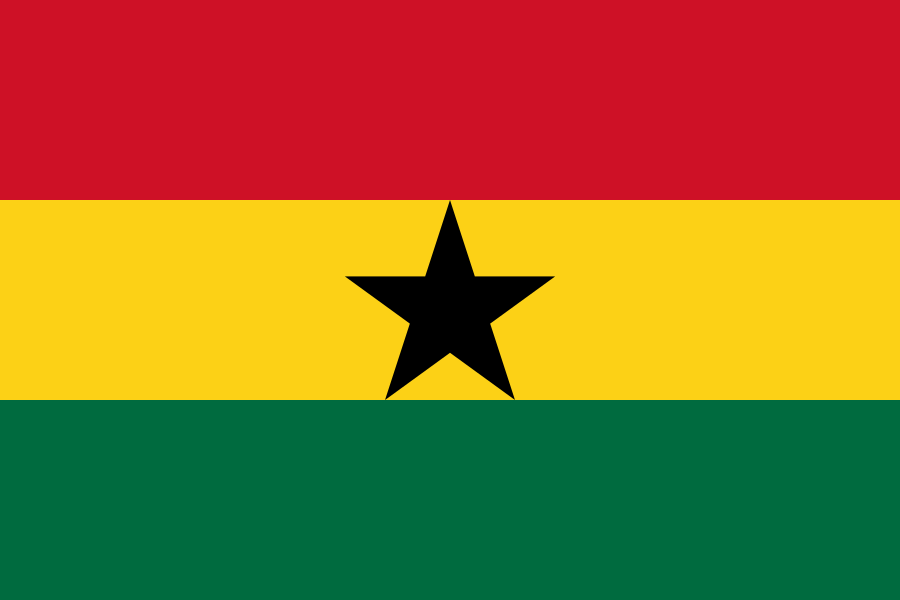
Three equal horizontal bands of red (top), yellow, and green, with a large five-pointed black star centered in the yellow band.
What the flag means
Red stands for the blood shed for independence, yellow for the country's mineral wealth, and green for its forests and natural wealth; the black star is said to be the lodestar of African freedom.
Source: CIA World Factbook (archived)
GreeceEurope
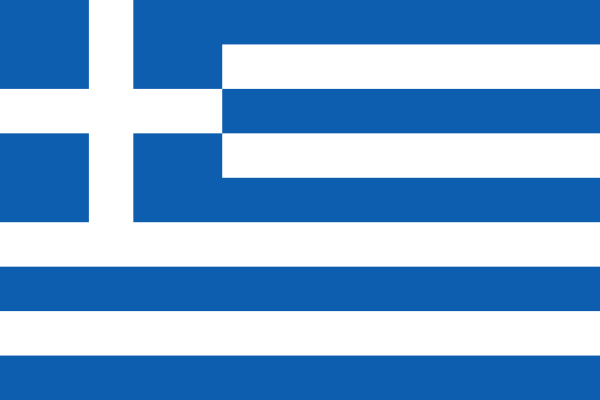
Nine equal horizontal stripes of blue alternating with white; a blue square with a white cross is in the upper-left corner.
What the flag means
The cross symbolizes Greek Orthodoxy, the established religion; there is no set meaning for the stripes and colors.
Source: CIA World Factbook (archived)
GrenadaNorth America
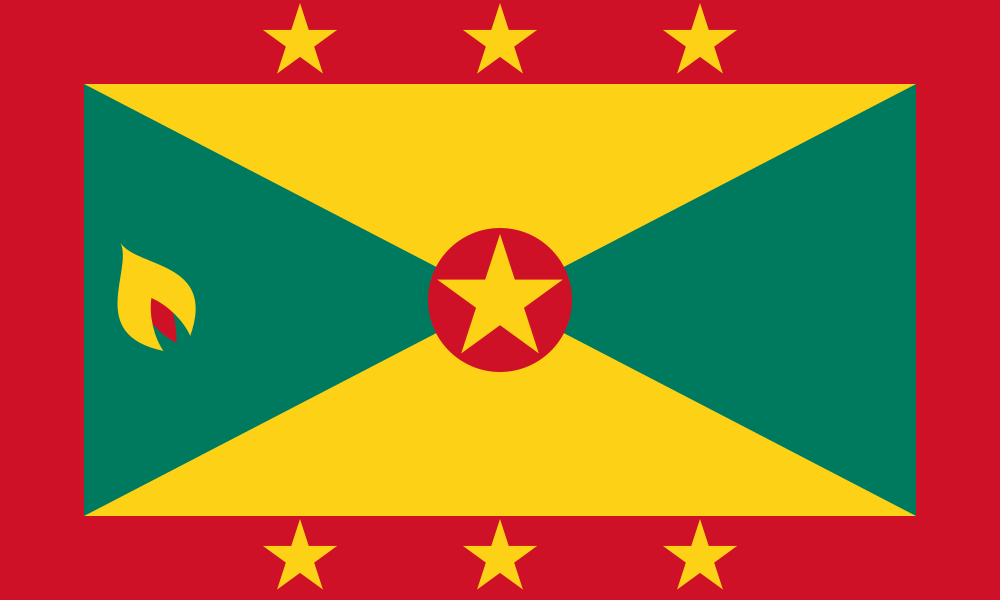
A rectangle divided diagonally into yellow triangles (top and bottom) and green triangles (left and right), with a wide red border around the flag; three five-pointed yellow stars are centered on the top and bottom of the red border, with one larger yellow star on a red disk at the center of the flag; a small yellow-and-red nutmeg pod is on the left triangle.
What the flag means
The seven stars stand for the country's administrative divisions, with the central star symbolizing the capital, St. George's; yellow stands for the sun and the warmth of the people, green for vegetation and agriculture, and red for harmony, unity, and courage.
Source: CIA World Factbook (archived)
GuatemalaNorth America
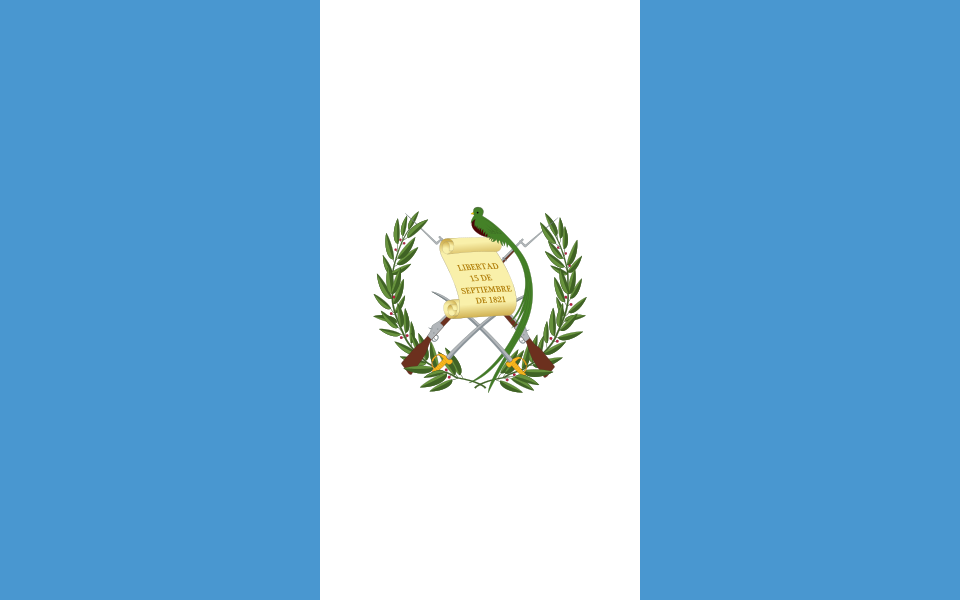
Three equal vertical bands of light blue (left side), white, and light blue, with the coat of arms centered in the white band; the coat of arms includes a green-and-red quetzal (the national bird), a scroll with the inscription Libertad 15 DE Septiembre DE 1821 (the original date of independence from Spain), a pair of crossed rifles, and a pair of crossed swords; a laurel wreath frames the objects.
What the flag means
The rifles stand for Guatemala's willingness to defend itself, the swords for honor, and the laurel wreath for victory; blue stands for the Pacific Ocean and Caribbean Sea, and white for peace and purity.
Source: CIA World Factbook (archived)
GuineaAfrica
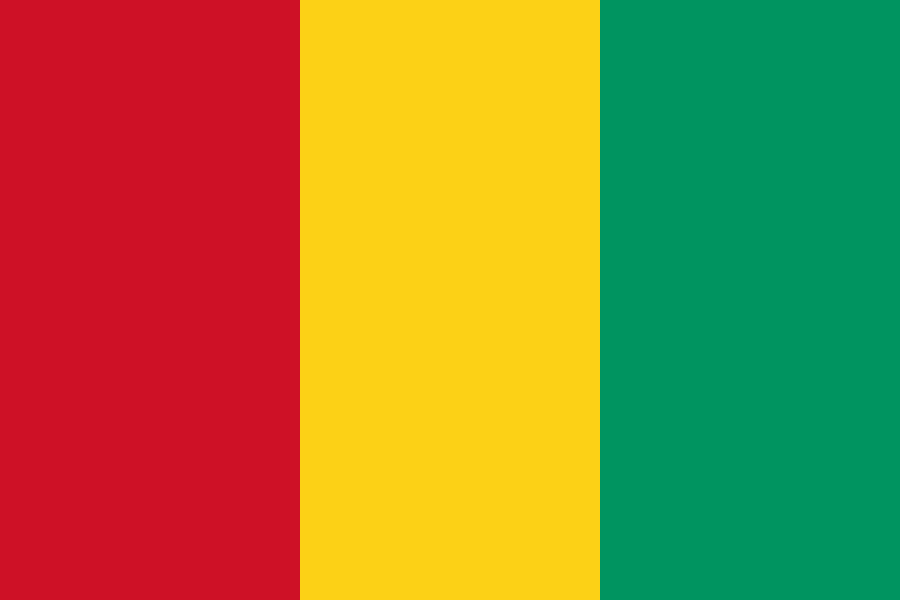
Three equal vertical bands of red (left side), yellow, and green.
What the flag means
Red stands for the people's sacrifice for liberation and work; yellow for the sun, the riches of the earth, and justice; green for the country's vegetation and unity.
Source: CIA World Factbook (archived)
Guinea-BissauAfrica
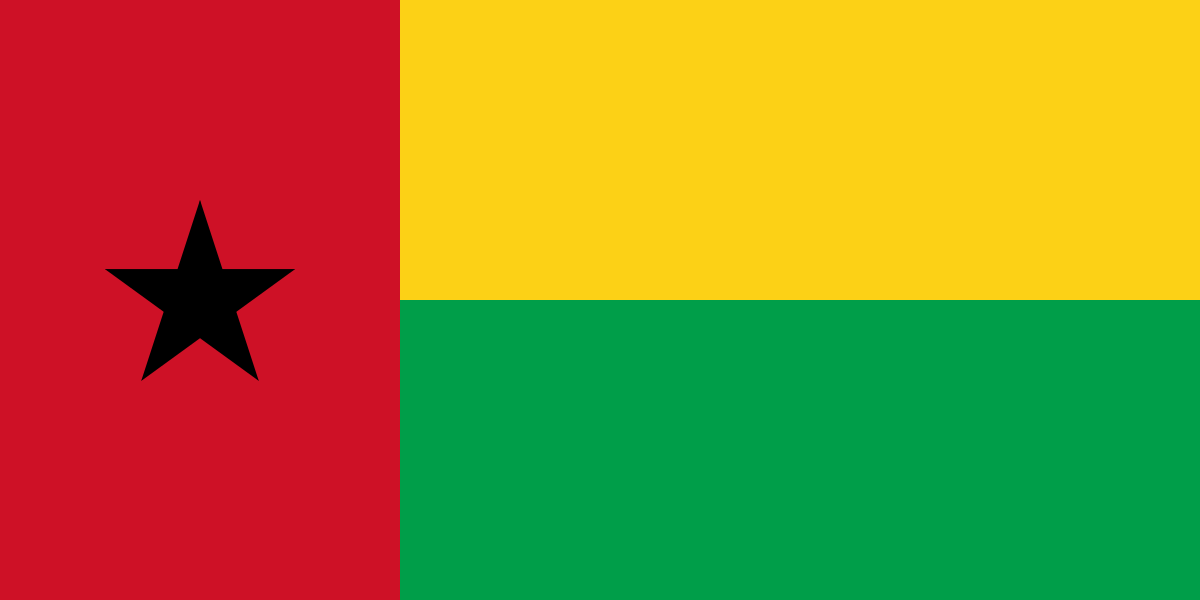
Two equal horizontal bands of yellow (top) and green, with a vertical red band on the left side; a five-pointed black star is centered in the red band.
What the flag means
Yellow stands for the sun, green for hope, red for blood shed during the struggle for independence; the black star stands for African unity.
Source: CIA World Factbook (archived)
GuyanaSouth America
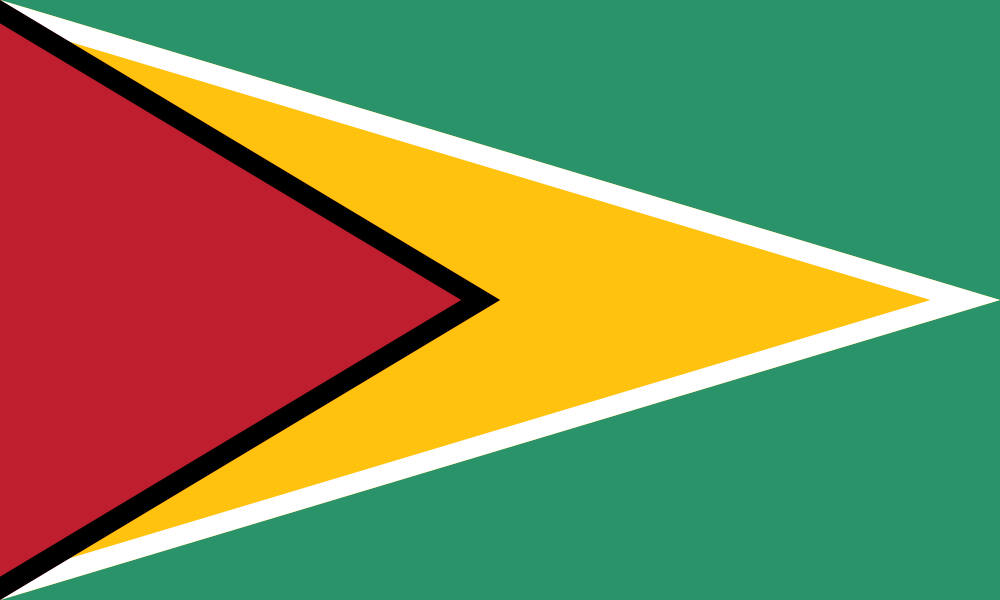
Green with a red isosceles triangle (based on the left side) on top of a long yellow arrowhead shape that extends to the opposite side of the flag; a narrow black border sits between the red and yellow, and a narrow white border between the yellow and green.
What the flag means
Green stands for forest and foliage, yellow for mineral resources and a bright future, white for the rivers, red for zeal and the people's sacrifice, and black for perseverance.
Source: CIA World Factbook (archived)
HaitiNorth America
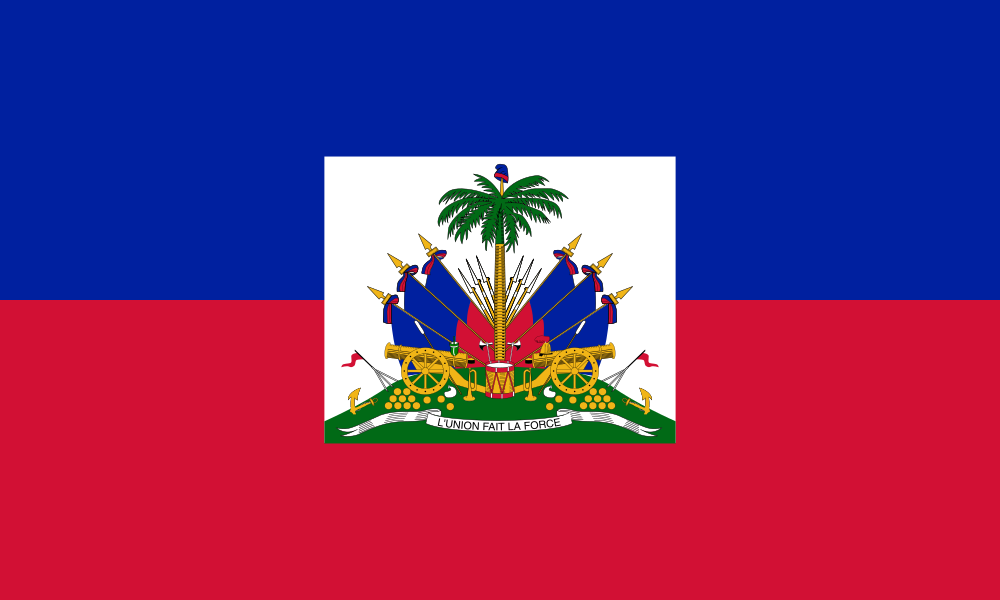
Two equal horizontal bands of blue (top) and red; a centered white rectangle bears the coat of arms, which has a palm tree flanked by flags and two cannons above a scroll with the motto L'Union Fait LA Force (Union Makes Strength).
What the flag means
The colors are taken from the French flag and represent the union of ethnic groups.
Source: CIA World Factbook (archived)
HondurasNorth America
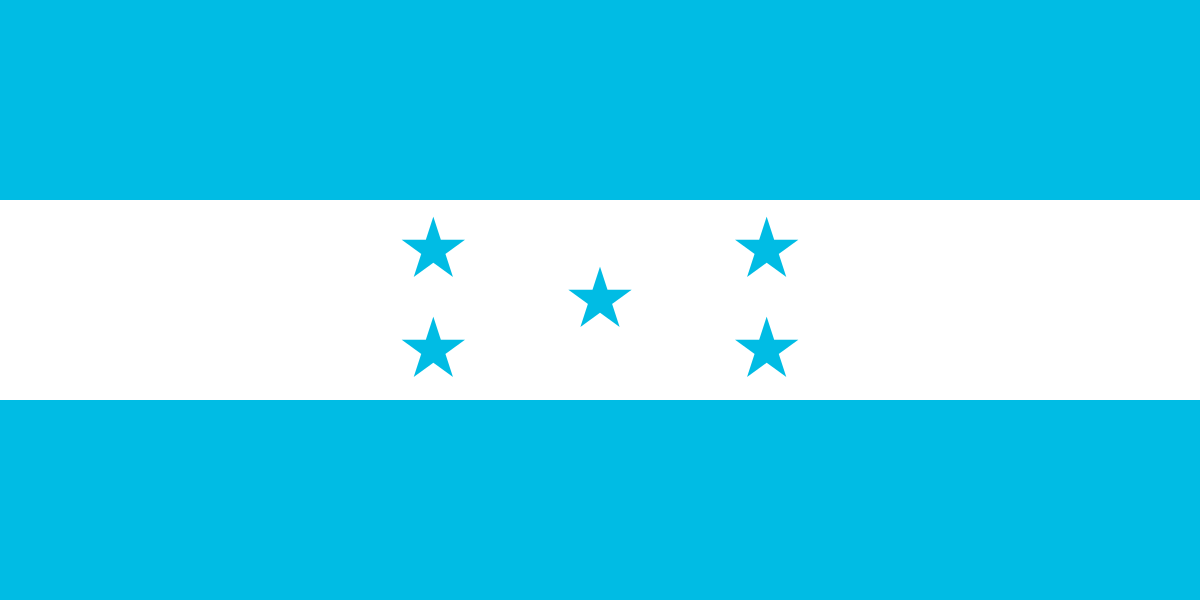
Three equal horizontal bands of cerulean blue (top), white, and cerulean blue, with five five-pointed cerulean stars arranged in an "X" pattern and centered in the white band.
What the flag means
The stars represent the members of the former Federal Republic of Central America: Costa Rica, El Salvador, Guatemala, Honduras, and Nicaragua; blue stands for the Pacific Ocean and the Caribbean Sea, and white for the land and the people's peace and prosperity.
Source: CIA World Factbook (archived)
HungaryEurope
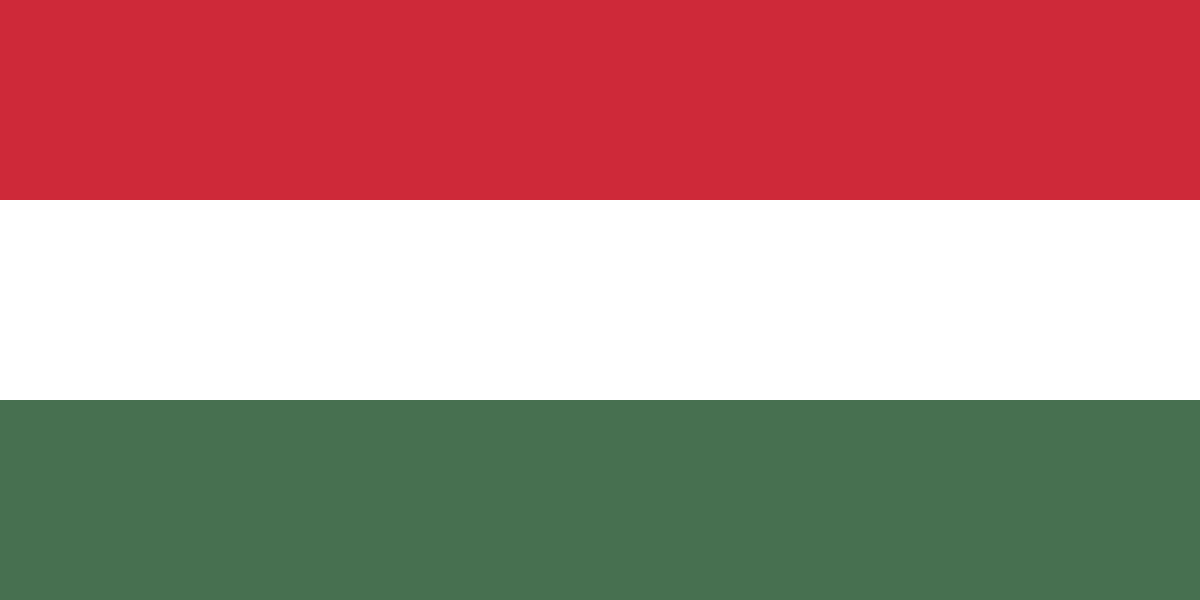
Three equal horizontal bands of red (top), white, and green.
What the flag means
Folklore attributes virtues to the colors: red for strength, white for faithfulness, and green for hope; alternatively, the red can stand for the blood spilled in defense of the land, white for freedom, and green for pasturelands.
Source: CIA World Factbook (archived)
IcelandEurope
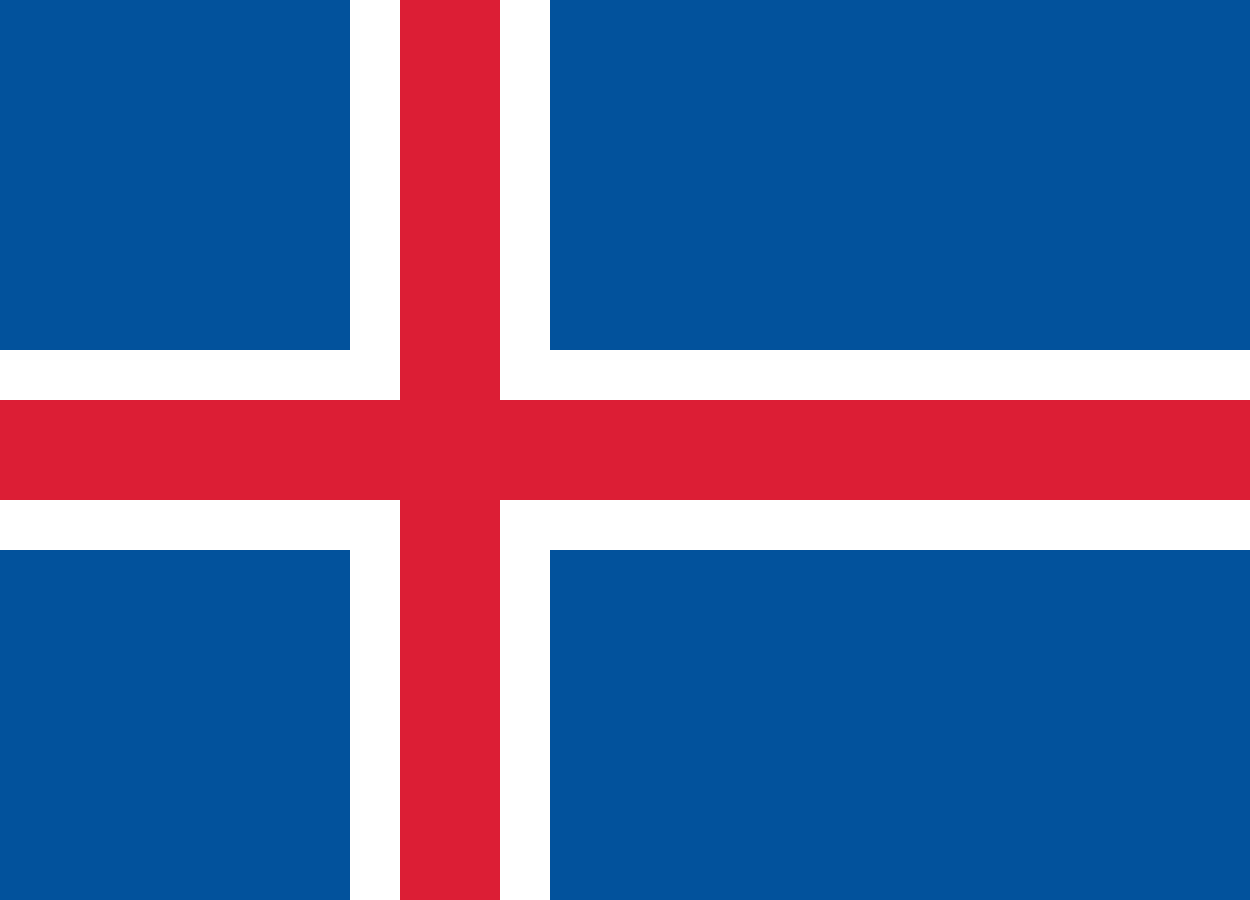
Blue with a red cross outlined in white extending to the edges of the flag; the cross is shifted to the left in the style of the Dannebrog (Danish flag).
What the flag means
Red stands for the island's volcanic fires, white for the snow and ice fields, and blue for the ocean.
Source: CIA World Factbook (archived)
IndiaAsia
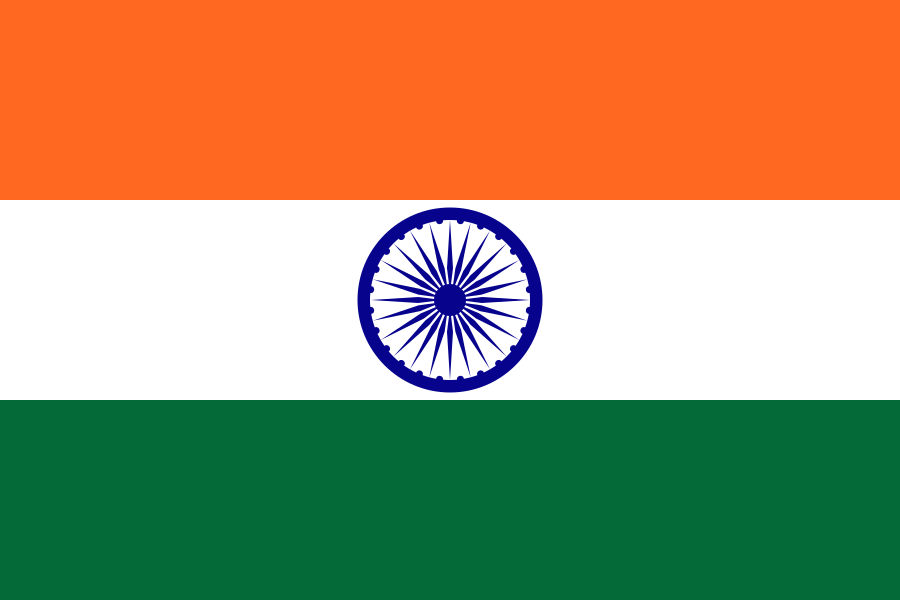
Three equal horizontal bands of saffron (top), white, and green, with a blue chakra (24-spoked wheel) centered in the white band.
What the flag means
Saffron stands for courage, sacrifice, and the spirit of renunciation; white for purity and truth; green for faith and fertility; the chakra symbolizes the wheel of life in movement and death in stagnation.
Source: CIA World Factbook (archived)
IndonesiaAsia
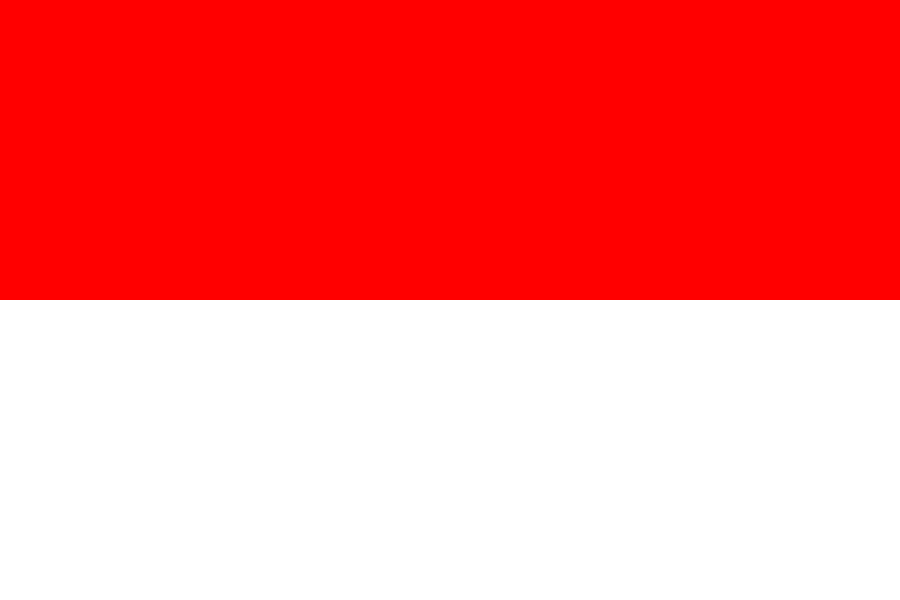
Two equal horizontal bands of red (top) and white.
What the flag means
Red stands for courage and white for purity.
Source: CIA World Factbook (archived)
IranAsia
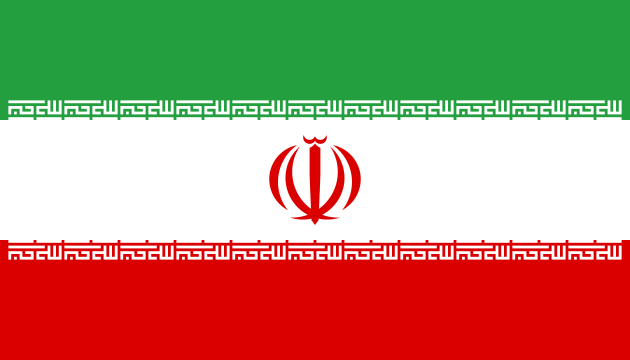
Three equal horizontal bands of green (top), white, and red; centered in the white band is the red national emblem, a stylization of the word Allah in the shape of a tulip (a symbol of martyrdom); Allah Akbar (God is Great) in white Arabic script is repeated 11 times along the bottom edge of the green band and 11 times along the top edge of the red band.
What the flag means
Green is the color of Islam and also represents growth, white stands for honesty and peace, and red for bravery and martyrdom.
Source: CIA World Factbook (archived)
IraqAsia
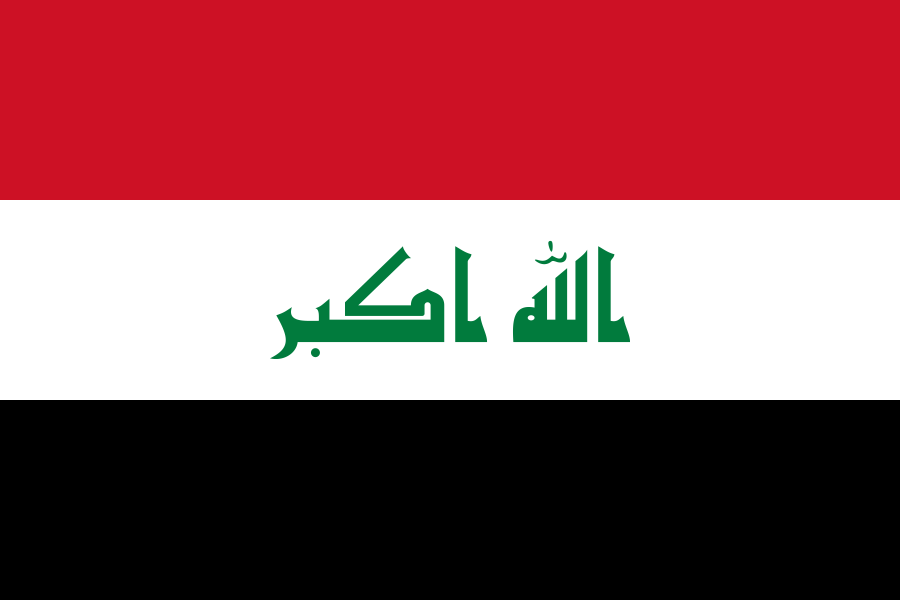
Three equal horizontal bands of red (top), white, and black; the Takbir (Arabic phrase meaning "God is great") in green Arabic script is centered in the white band.
What the flag means
The colors come from the Arab Liberation flag and stand for oppression (black) overcome through bloody struggle (red), to be replaced by a bright future (white).
Source: CIA World Factbook (archived)
IrelandEurope
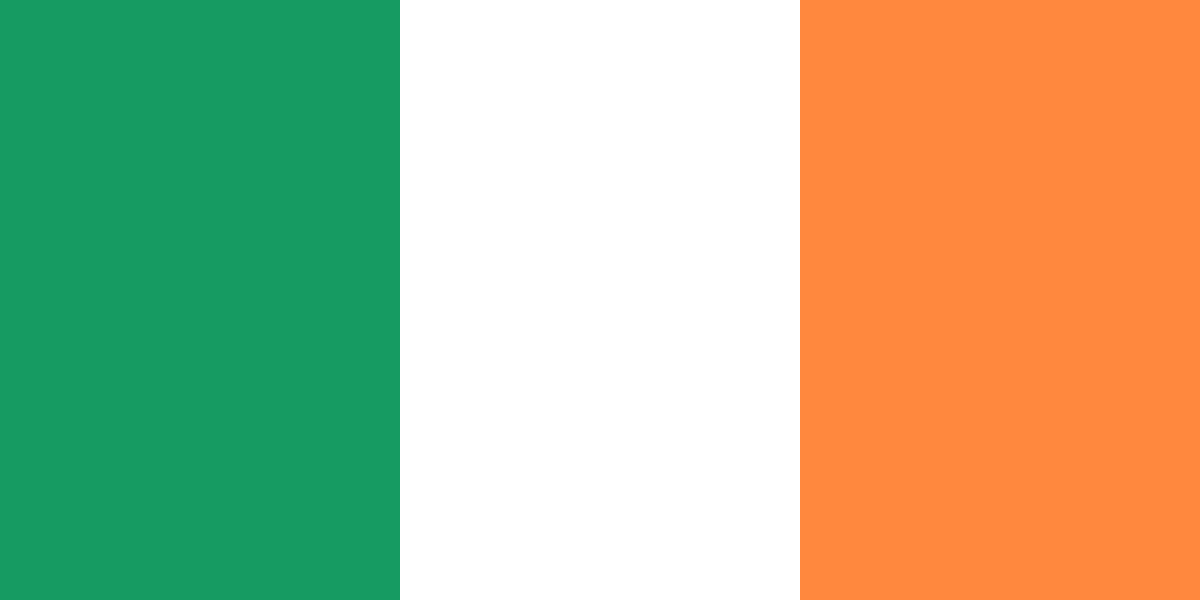
Three equal vertical bands of green (left side), white, and orange.
What the flag means
The flag colors have no official meaning, but a common interpretation is that the green stands for the Irish nationalist tradition, orange for the Orange tradition (minority supporters of William of Orange), and white for peace or a lasting truce between the green and the orange.
Source: CIA World Factbook (archived)
IsraelAsia
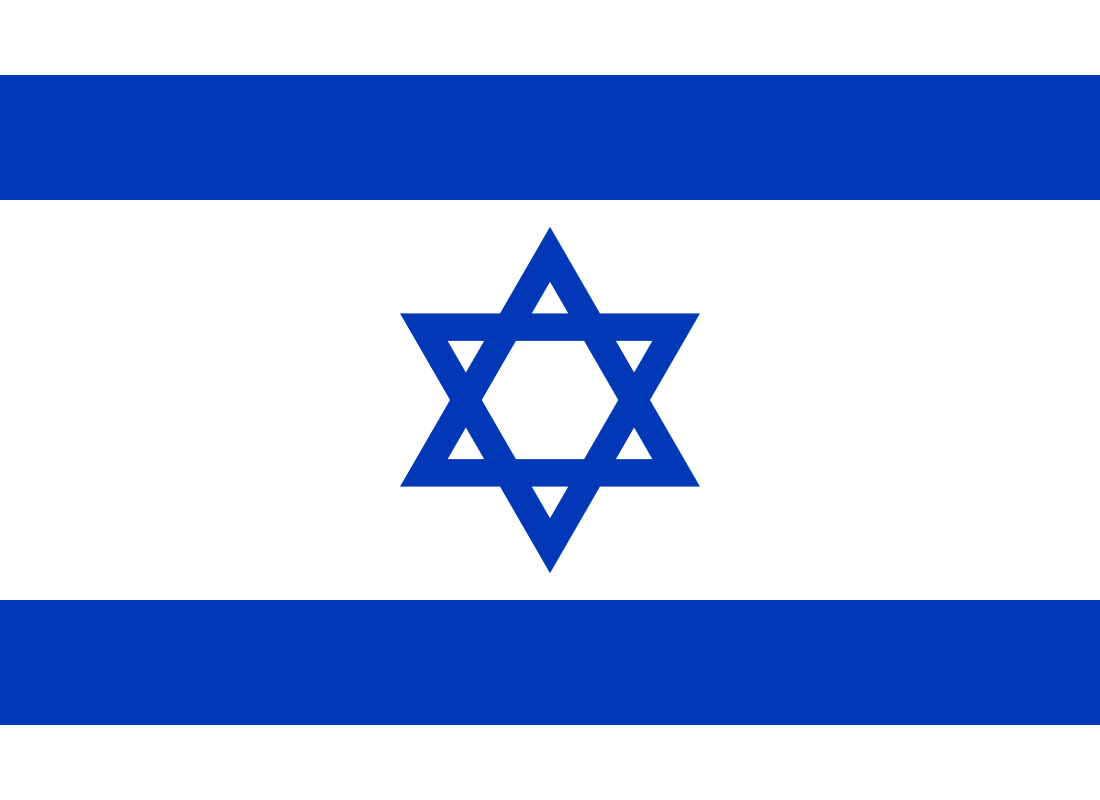
White with a blue hexagram (six-pointed linear star) known as the Magen David (Star of David or Shield of David) centered between two equal horizontal blue bands near the top and bottom edges of the flag.
What the flag means
The blue stripes recall the stripes of a Jewish prayer shawl, or tallit. The central Magen David, or Star of David, is a longstanding symbol of Jewish identity.
Source: CIA World Factbook (archived)
ItalyEurope
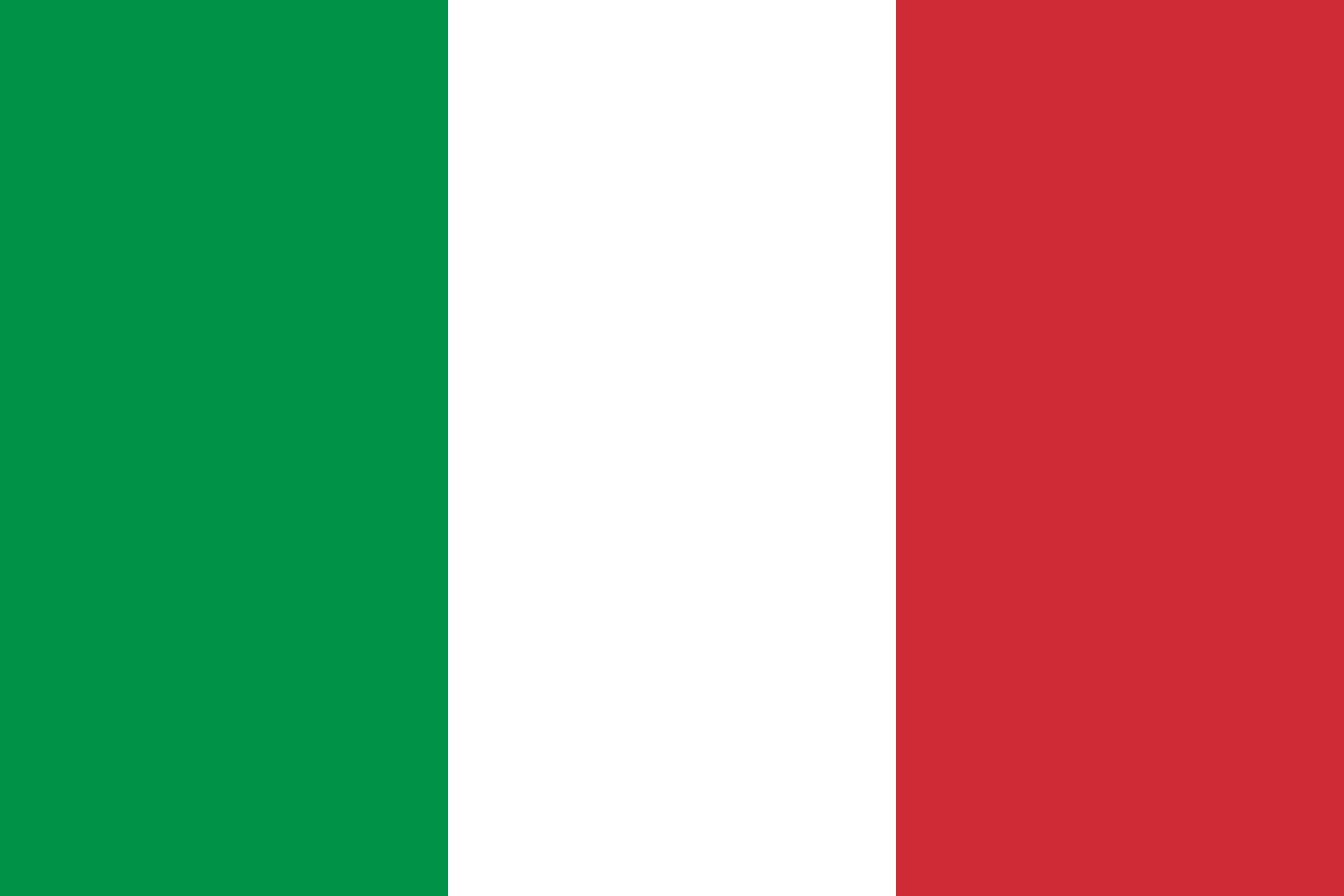
Three equal vertical bands of green (left side), white, and red.
What the flag means
Colors are those of Milan (red and white) combined with the green uniform color of the Milanese civic guard.
Source: CIA World Factbook (archived)
JamaicaNorth America
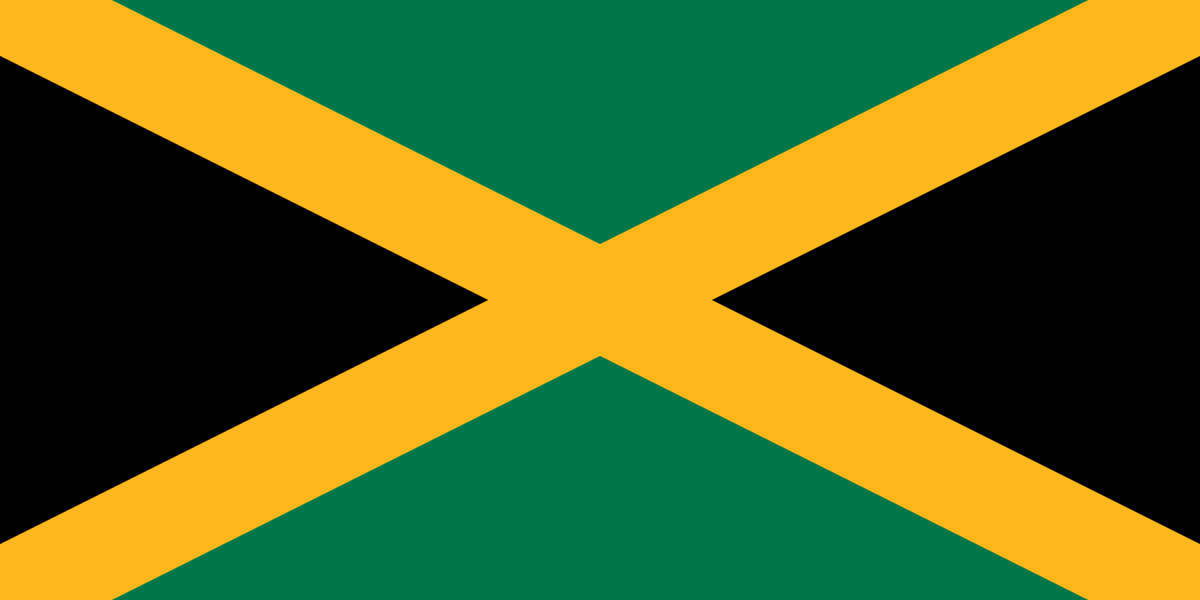
Diagonal yellow cross divides the flag into four triangles, two green (top and bottom) and two black (left and right).
What the flag means
Green stands for hope, vegetation, and agriculture; black for hardships overcome and to be faced; and yellow for sunshine and natural resources.
Source: CIA World Factbook (archived)
JapanAsia
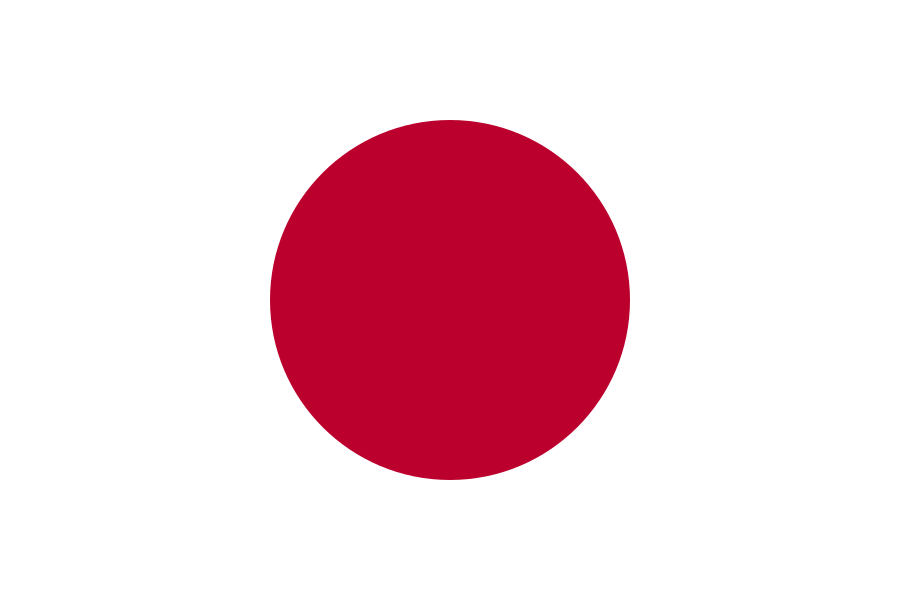
White with a large red disk that symbolizes the sun without rays, in the center.
What the flag means
The red disc represents the sun. The flag is commonly called Hinomaru, meaning “sun disc”; the sun has long been an important symbol of Japan.
Source: CIA World Factbook (archived)
JordanAsia
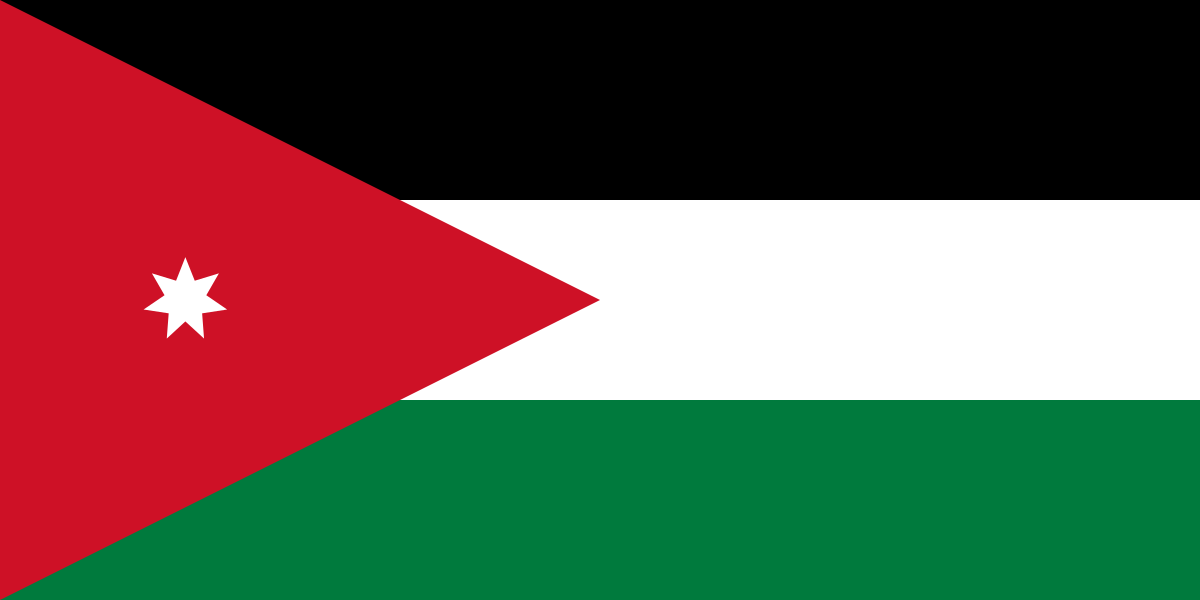
Three equal horizontal bands of black (top), white, and green; a red isosceles triangle is on the left side, with a small white seven-pointed star in the center.
What the flag means
Black stands for the Abbassid Caliphate, white for the Ummayyad Caliphate, and green for the Fatimid Caliphate; the triangle stands for the Great Arab Revolt of 1916, and the star's points for the seven verses of the opening Sura (Al-Fatiha) of the Quran, as well as faith in One God, humanity, national spirit, humility, social justice, virtue, and aspirations.
Source: CIA World Factbook (archived)
KazakhstanAsia
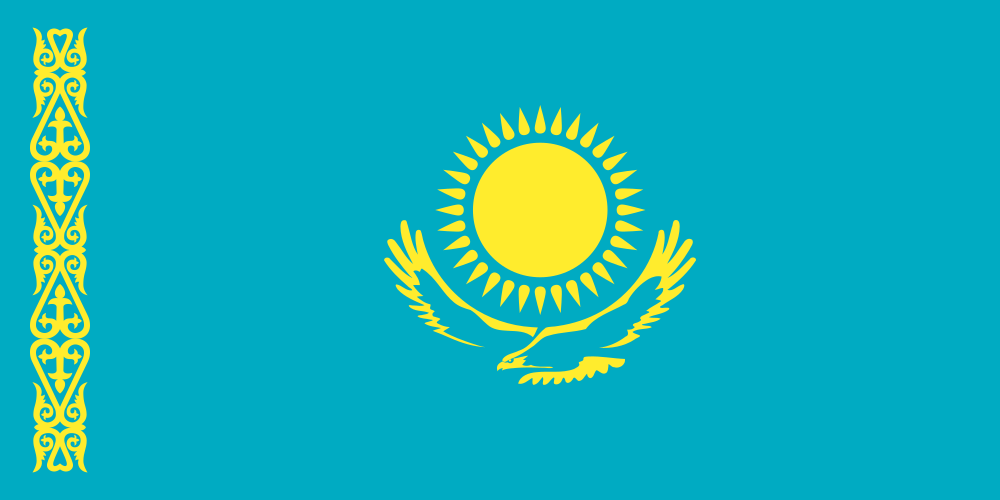
A gold sun with 32 rays above a soaring golden steppe eagle, both centered on a sky-blue background; the left side displays a national pattern called koshkar-muiz (the horns of the ram) in gold.
What the flag means
The blue color has religious significance for the Turkic peoples and symbolizes cultural and ethnic unity, as well as sky and water; the sun stands for wealth and plenitude, with rays shaped like grain; the eagle has appeared on Kazakh tribal flags for centuries and represents freedom, power, and the flight to the future.
Source: CIA World Factbook (archived)
KenyaAfrica
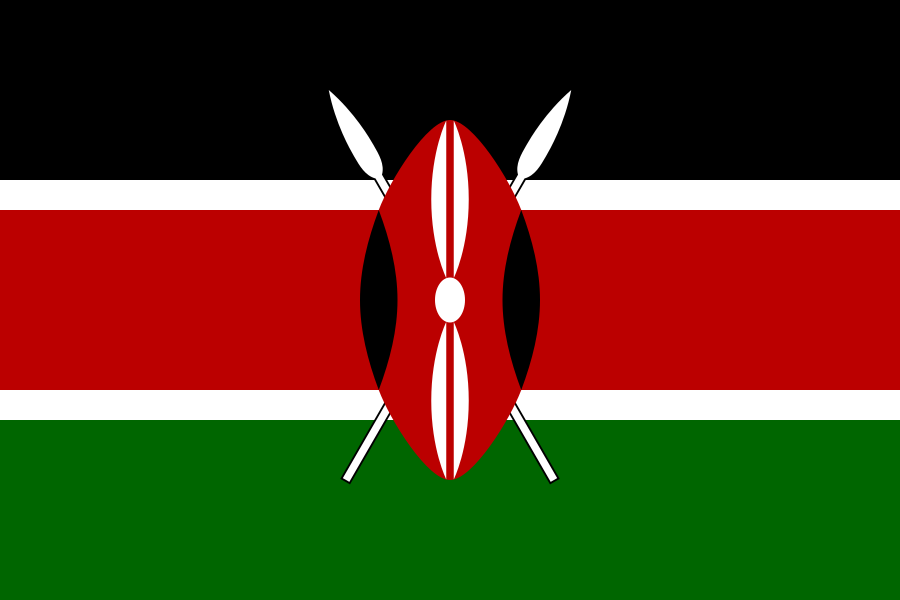
Three equal horizontal bands of black (top), red, and green; the red band is edged in white; a large Maasai warrior's shield covering crossed spears is at the center.
What the flag means
Black stands for the majority population, red for the blood shed in the struggle for freedom, green for natural wealth, and white for peace; the shield and crossed spears symbolize the defense of freedom.
Source: CIA World Factbook (archived)
KiribatiOceania
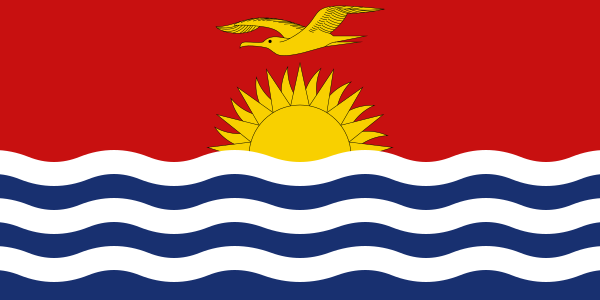
The upper half is red with a yellow frigatebird flying over a yellow rising sun, and the lower half is blue with three wavy horizontal white stripes to represent the Pacific Ocean.
What the flag means
The white stripes represent the Gilbert, Line, and Phoenix island groups; the 17 rays of the sun represent the 16 Gilbert Islands and Banaba (formerly Ocean Island); the frigatebird symbolizes authority and freedom.
Source: CIA World Factbook (archived)
KuwaitAsia
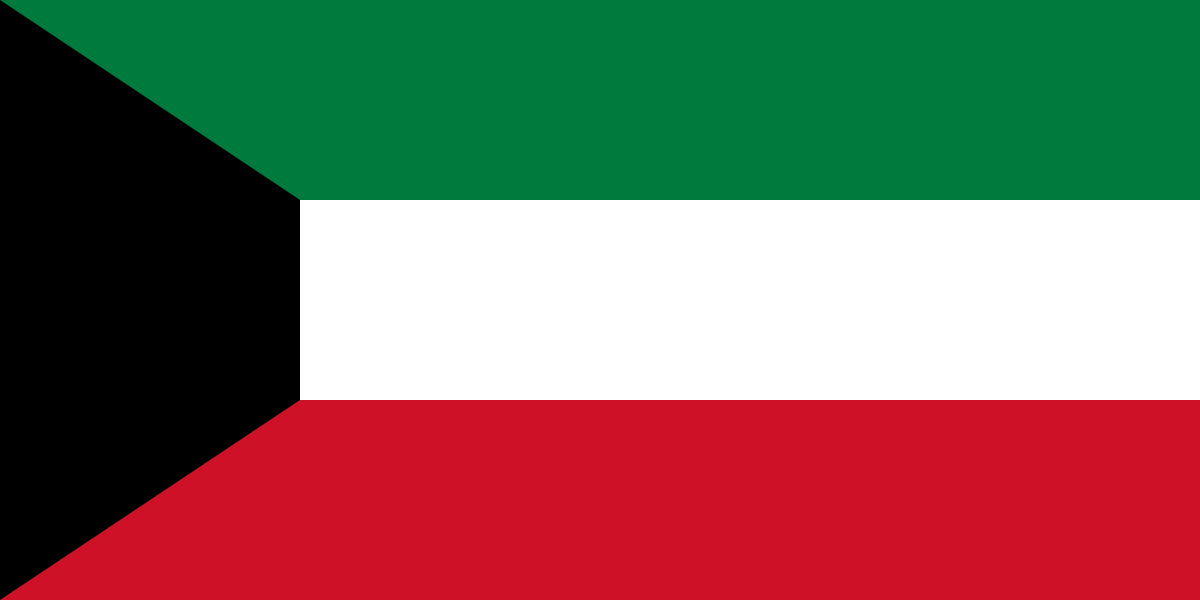
Three equal horizontal bands of green (top), white, and red, with a black trapezoid based on the left side.
What the flag means
Green stands for fertile fields, white for purity, red for blood on Kuwaiti swords, and black for defeating the enemy.
Source: CIA World Factbook (archived)
KyrgyzstanAsia
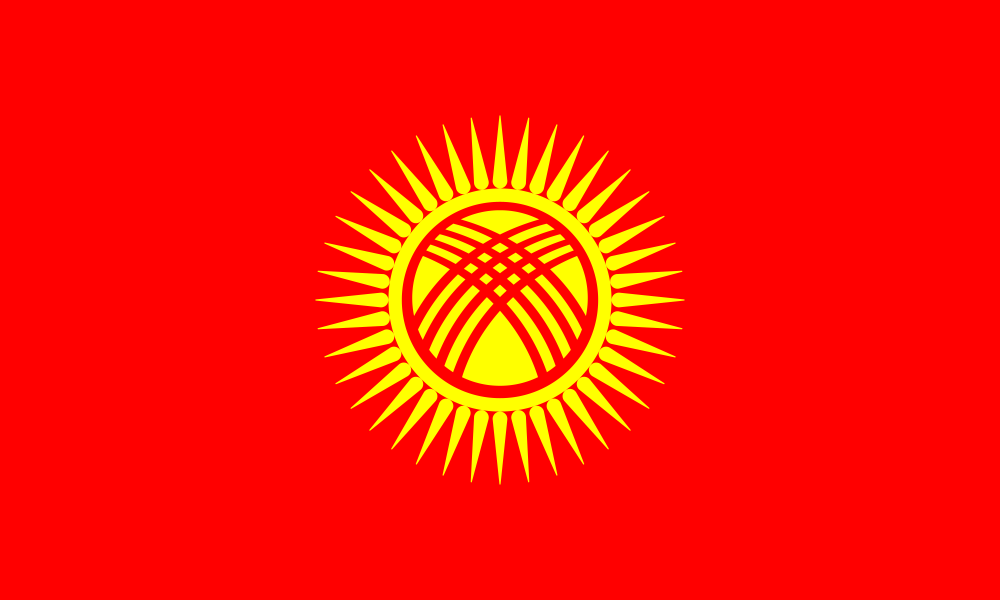
A red field with a golden sun of forty straight rays. Inside the sun is a red tunduk, the circular roof opening of a traditional Kyrgyz yurt.
What the flag means
The forty rays represent the unity of the Kyrgyz tribes. The tunduk evokes the shared home; the sun is associated with peace and prosperity, and red with courage.
The revised design with straight sun rays was approved in December 2023, replacing the earlier wavy-ray design.
LaosAsia
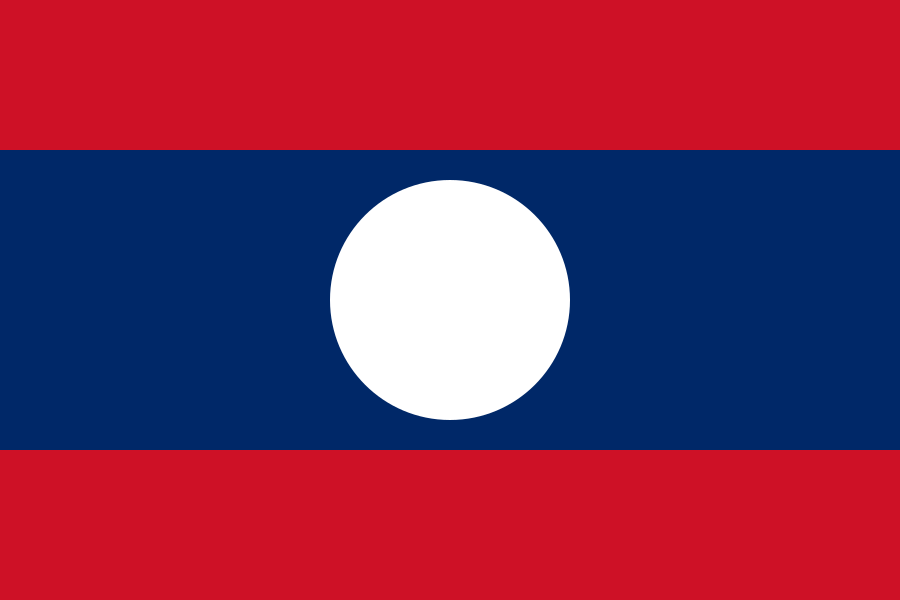
Three horizontal bands of red (top), blue (double-width), and red, with a large white disk centered in the blue band.
What the flag means
Red stands for the blood shed for liberation, and blue for the Mekong River and prosperity; the white disk represents the full moon over the Mekong River and the unity of the people under the Lao People's Revolutionary Party, as well as the country's bright future.
Source: CIA World Factbook (archived)
LatviaEurope
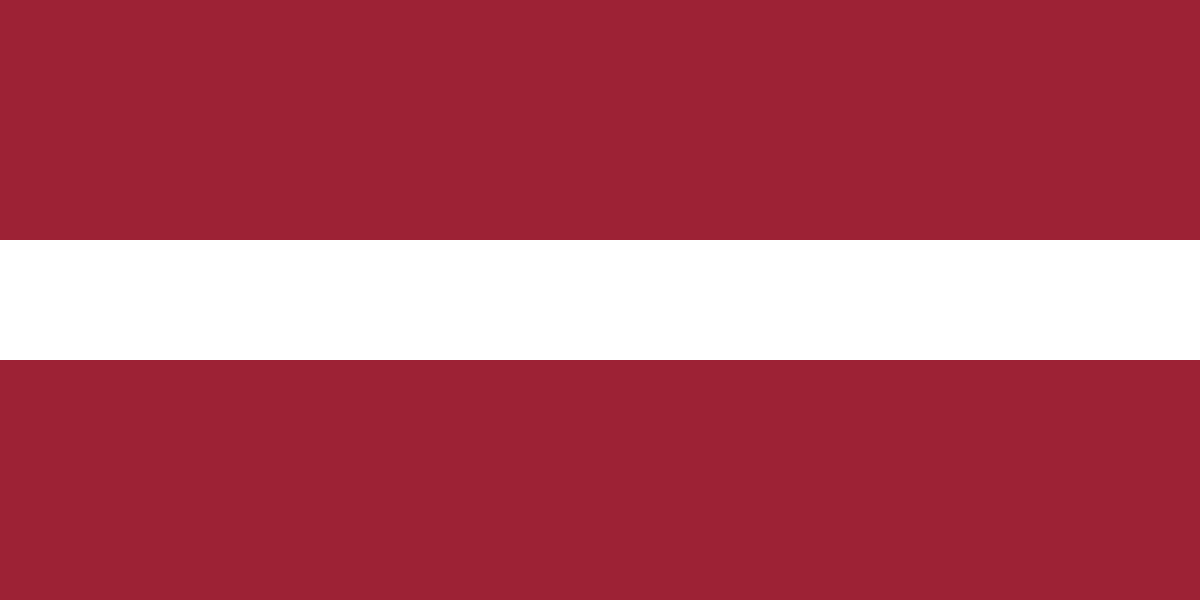
Three horizontal bands of maroon (top), white (half-width), and maroon.
What the flag means
The dark red and white design recalls a medieval Latvian banner recorded around 1280. It is an old national symbol; the bands use a narrower white stripe rather than three equal bands.
Source: CIA World Factbook (archived)
LebanonAsia
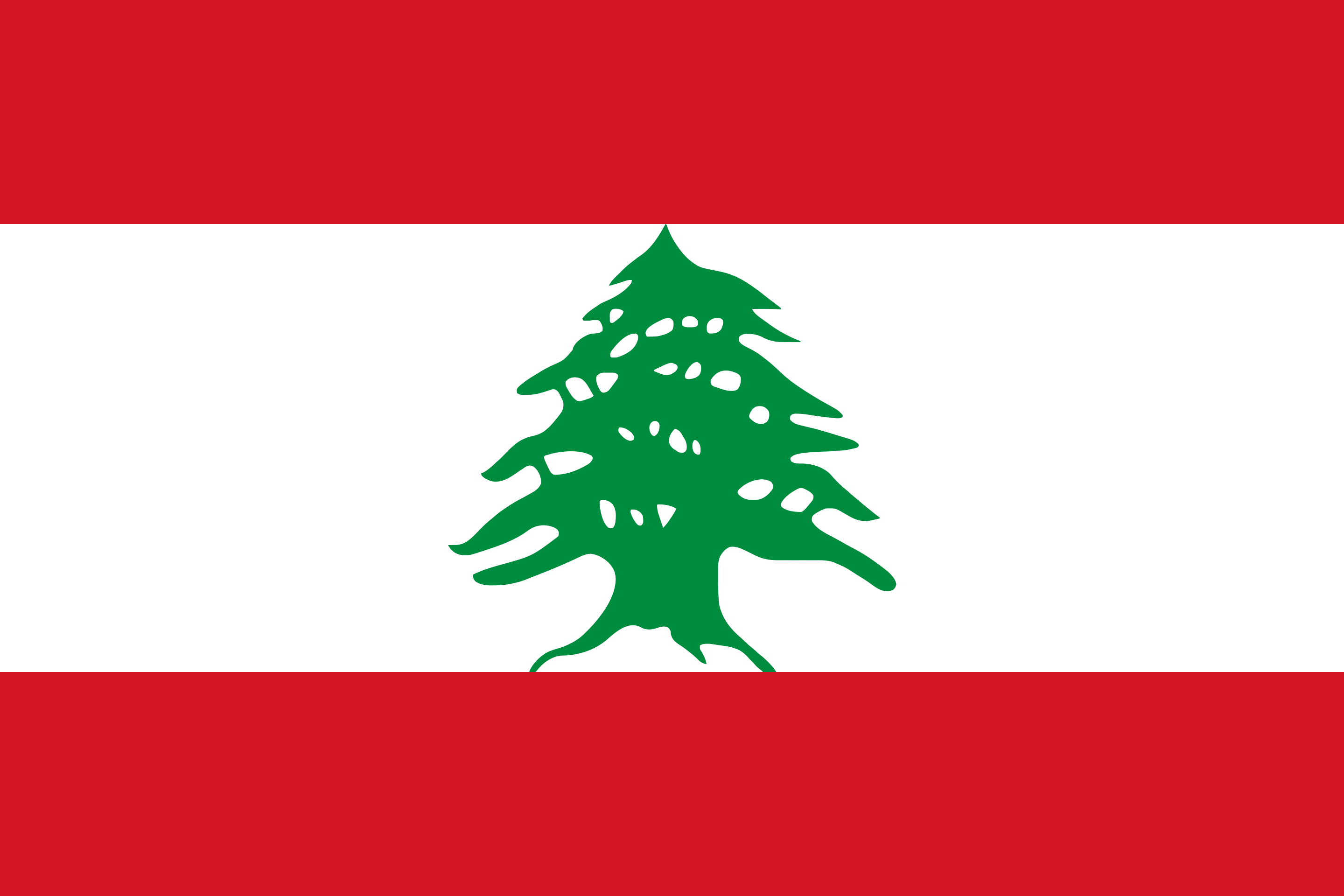
Three horizontal bands consisting of red (top), white (middle, double-width), and red (bottom), with a green cedar tree centered on the white band.
What the flag means
Red stands for blood shed for liberation, and white for peace, the snow of the mountains, and purity; the green cedar tree is the national symbol and represents eternity, steadiness, happiness, and prosperity.
Source: CIA World Factbook (archived)
LesothoAfrica
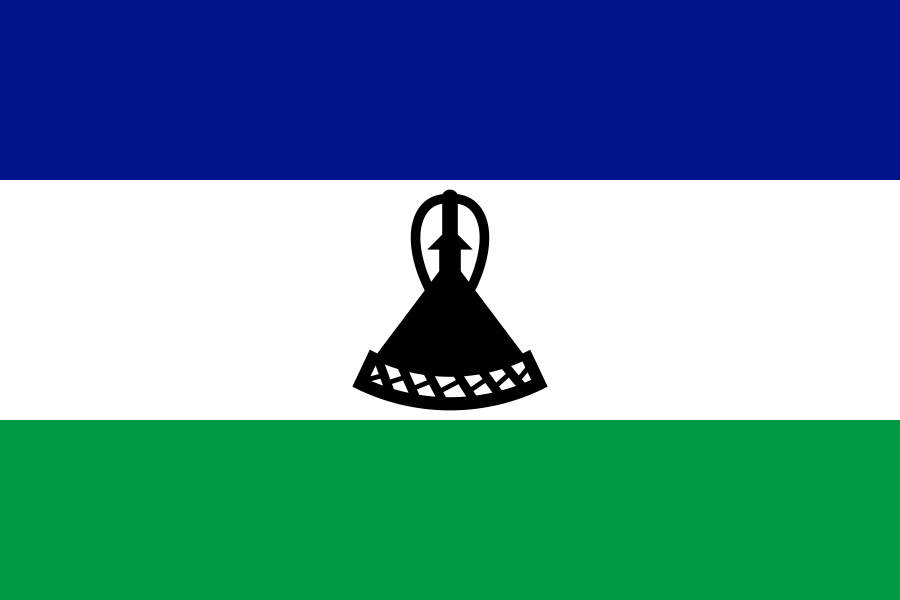
Three horizontal stripes of blue (top), white, and green; centered on the white stripe is a black mokorotlo , a traditional Basotho straw hat and national symbol.
What the flag means
Blue stands for rain, white for peace, and green for prosperity.
Source: CIA World Factbook (archived)
LiberiaAfrica
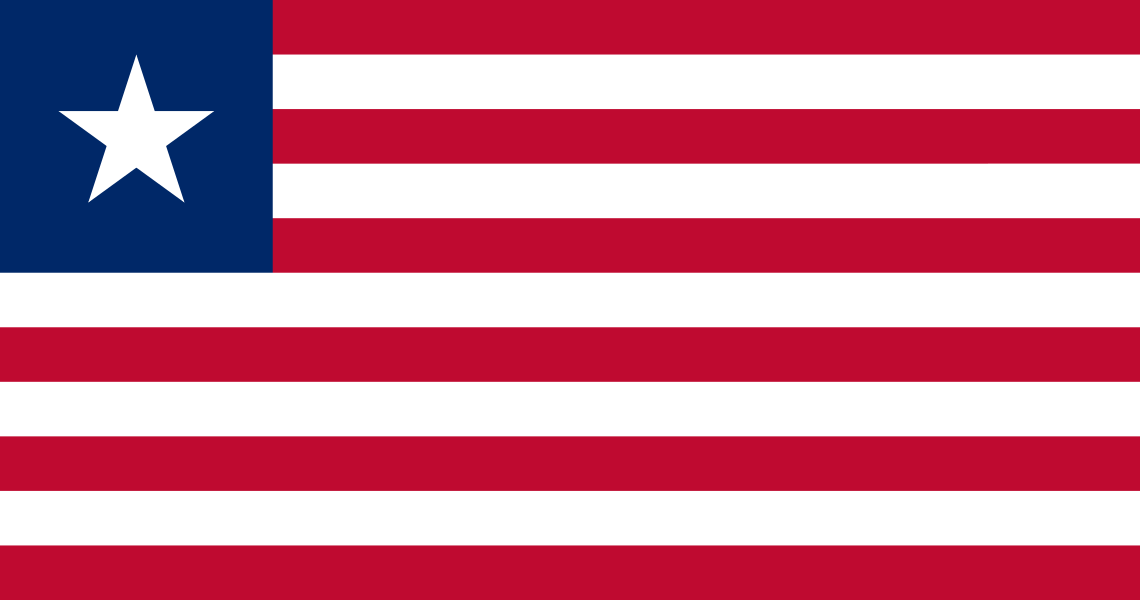
11 equal horizontal stripes of red alternating with white; a five-pointed white star sits on a blue square in the upper-left corner.
What the flag means
The stripes stand for the signatories of the Liberian Declaration of Independence, the blue square for the African mainland, and the star for the freedom granted to ex-slaves; the blue stands for liberty, justice, and fidelity; the white for purity, cleanliness, and guilelessness; the red for steadfastness, valor, and fervor.
Source: CIA World Factbook (archived)
LibyaAfrica
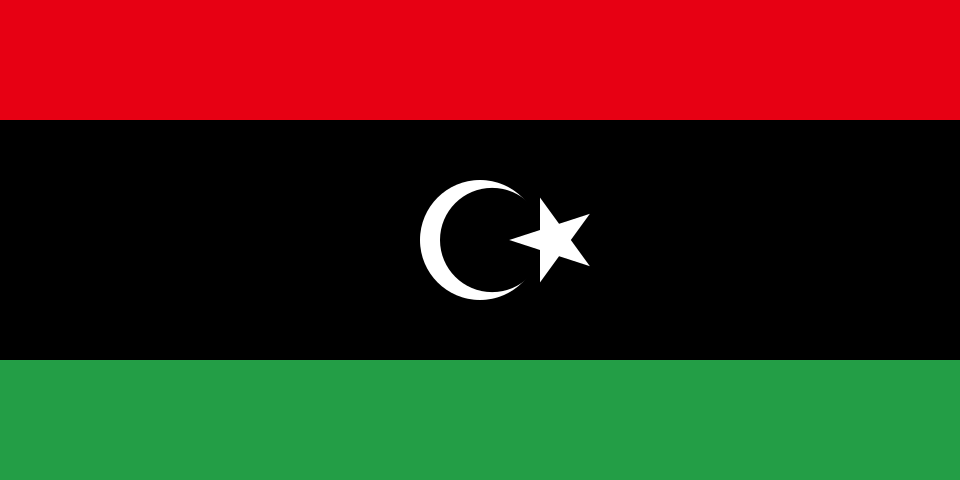
Three horizontal bands of red (top), black (double-width), and green, with a white crescent and star centered on the black stripe.
What the flag means
The colors represent the three major regions of the country: red stands for Fezzan, black for Cyrenaica, and green for Tripolitania; the crescent and star represent Islam.
Source: CIA World Factbook (archived)
LiechtensteinEurope
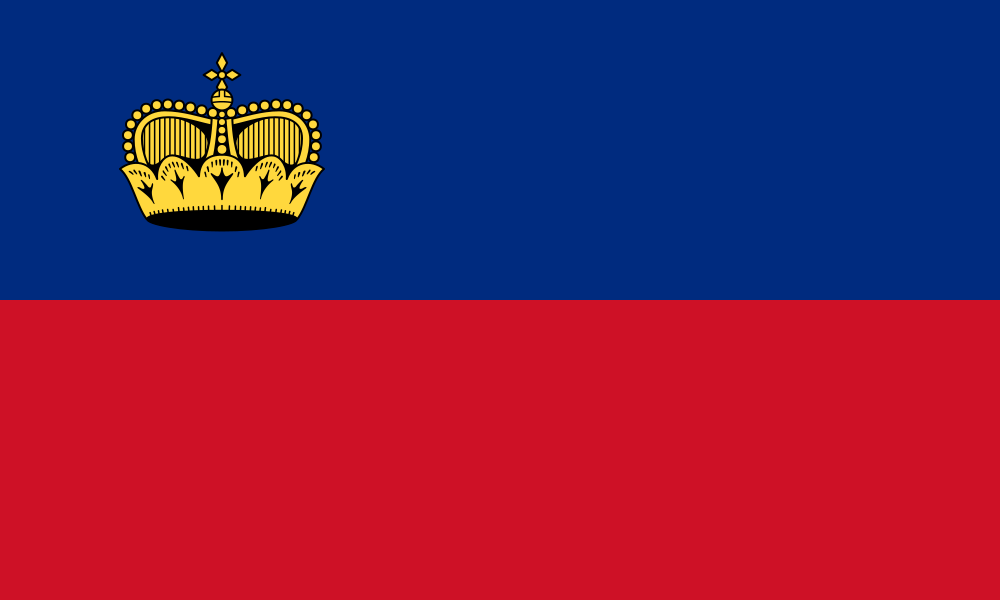
Two equal horizontal bands of blue (top) and red, with a gold crown on the left side of the blue band.
What the flag means
The blue and red may derive from the colors of the princely household. The gold crown was added in 1937 to distinguish the design from Haiti’s flag and represents the principality.
Source: CIA World Factbook (archived)
LithuaniaEurope
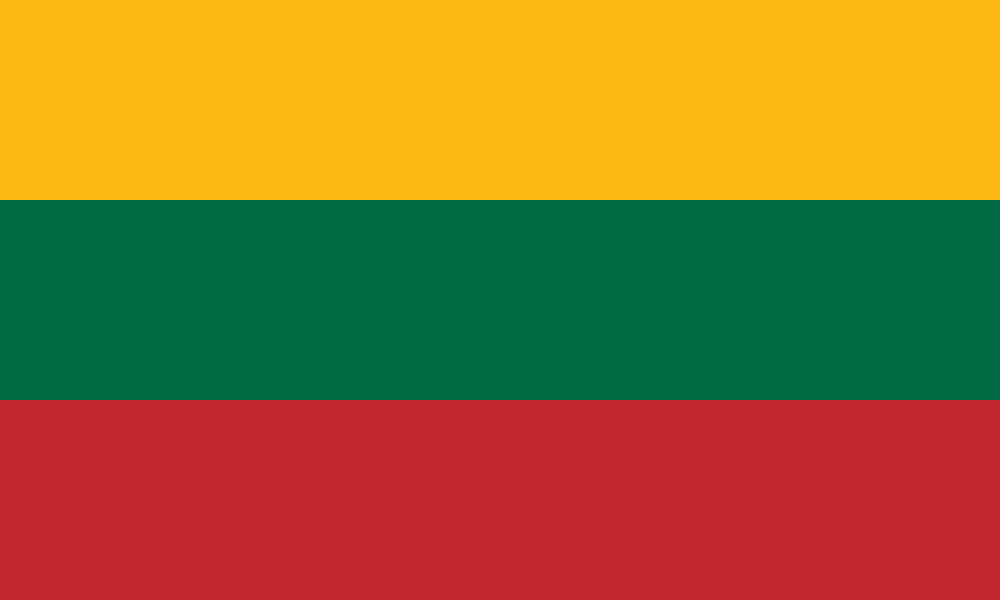
Three equal horizontal bands of yellow (top), green, and red.
What the flag means
Yellow stands for golden fields, the sun, light, and goodness; green for the forests, nature, freedom, and hope; red for courage and the blood spilled in defense of the homeland.
Source: CIA World Factbook (archived)
LuxembourgEurope
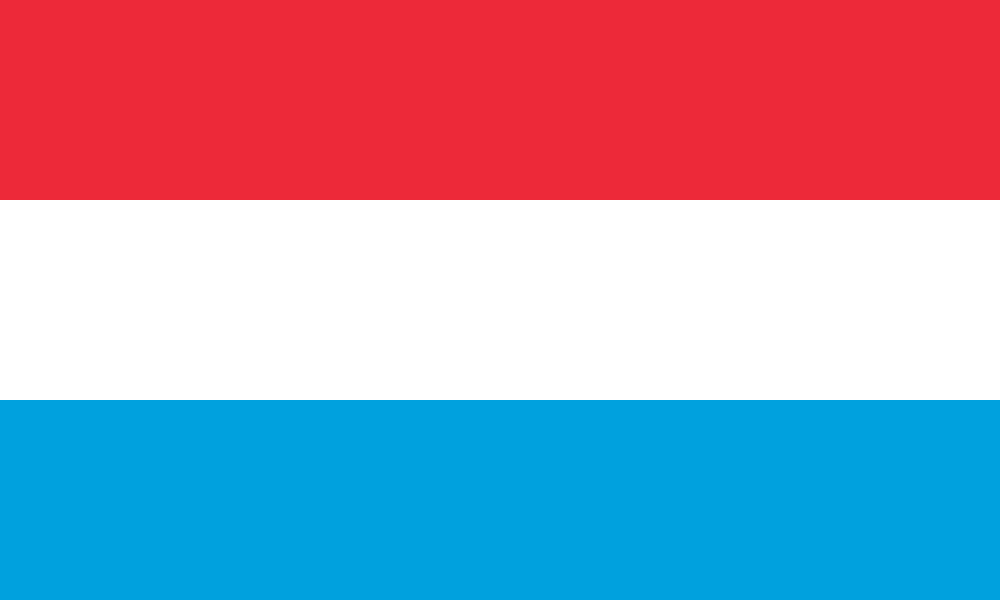
Three equal horizontal bands of red (top), white, and light blue.
What the flag means
The red, white and light blue derive from the Grand Duke’s coat of arms. Luxembourg’s flag resembles that of the Netherlands, but uses a lighter blue and different proportions.
Source: CIA World Factbook (archived)
MadagascarAfrica
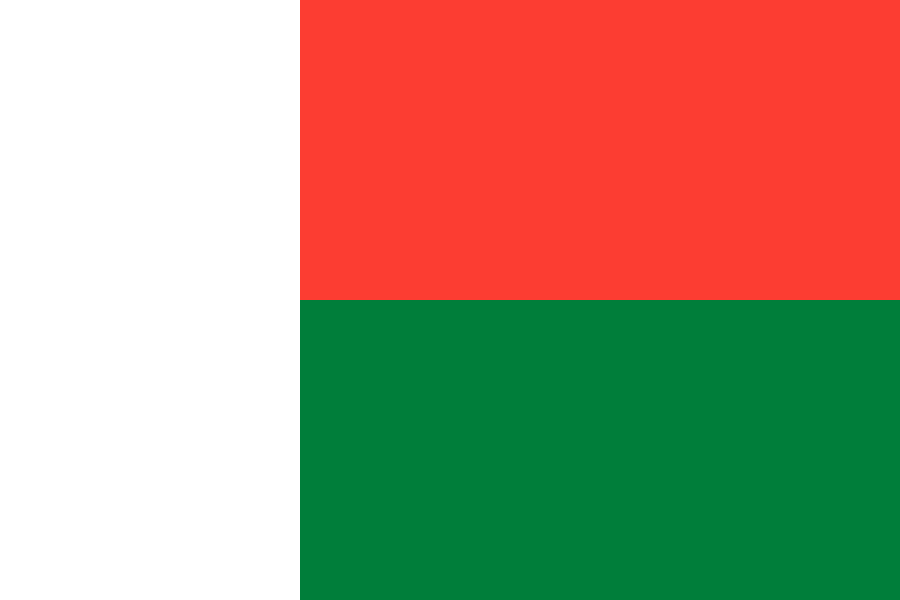
Two equal horizontal bands of red (top) and green, with a vertical white band on the left side.
What the flag means
Red stands for sovereignty, green for hope, and white for purity.
Source: CIA World Factbook (archived)
MalawiAfrica
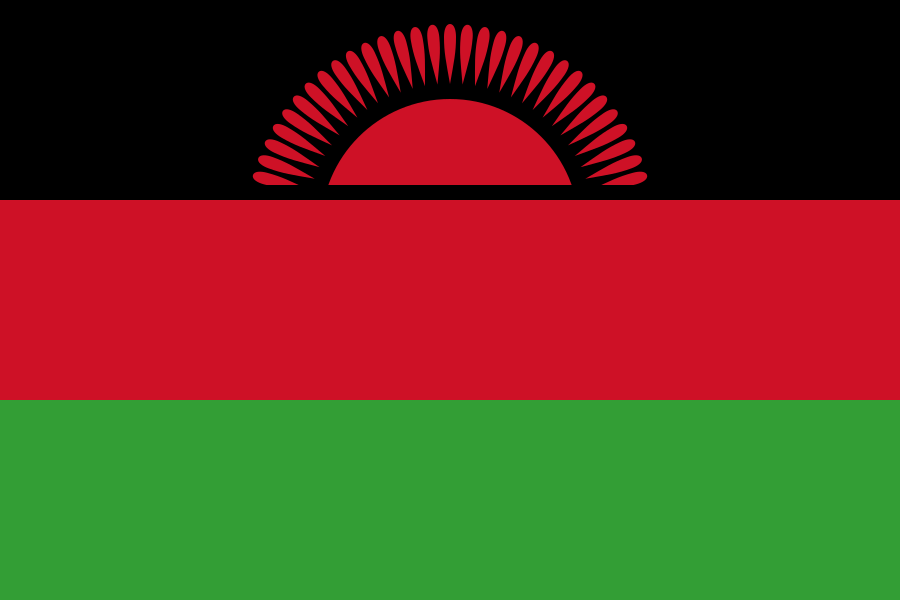
Three equal horizontal bands of black (top), red, and green, with a rising red sun centered on the black band.
What the flag means
Black stands for ethnic groups, red for the blood shed in the struggle for freedom, and green for nature; the sun represents the hope of freedom for the continent of Africa.
Source: CIA World Factbook (archived)
MalaysiaAsia
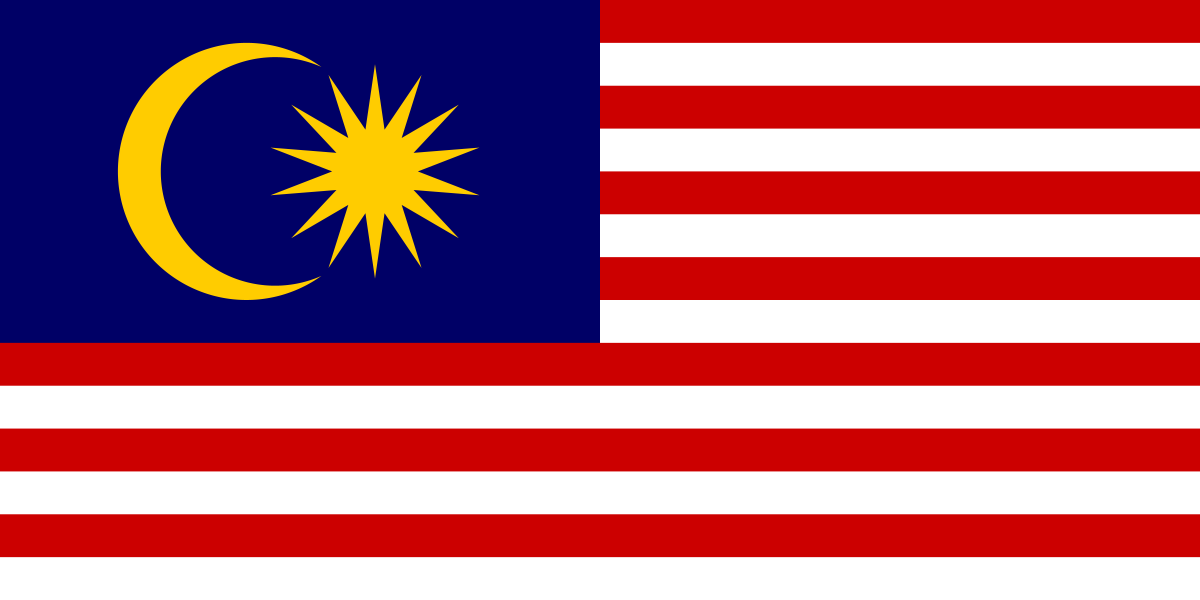
14 equal horizontal stripes of red alternating with white; a dark blue rectangle in the upper-left corner has a yellow crescent and a 14-pointed yellow star.
What the flag means
The flag is often called Jalur Gemilang (Stripes of Glory); the 14 stripes stand for the equal status of the 13 member states and the federal government; the points on the star represent the unity among these entities; the crescent is a traditional symbol of Islam; blue symbolizes the unity of the Malay people, and yellow is the royal color.
Source: CIA World Factbook (archived)
MaldivesAsia
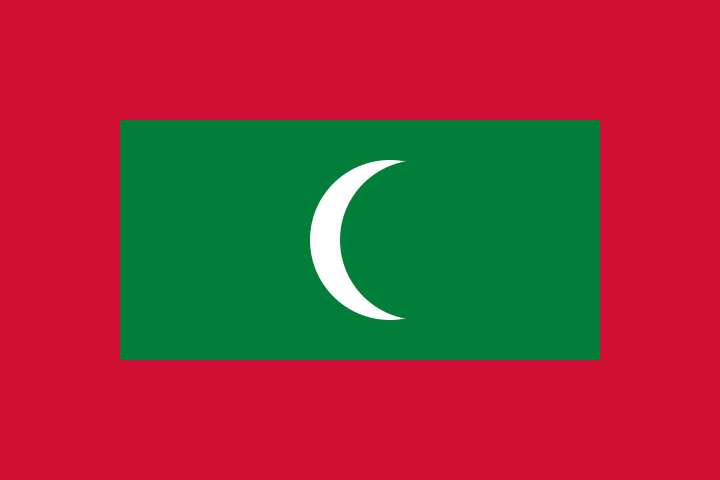
Red with a large green rectangle in the center and a vertical white crescent moon centered on the rectangle.
What the flag means
Red stands for those who have sacrificed their lives to defend the country, green for peace and prosperity, and the white crescent is a symbol of Islam.
Source: CIA World Factbook (archived)
MaliAfrica
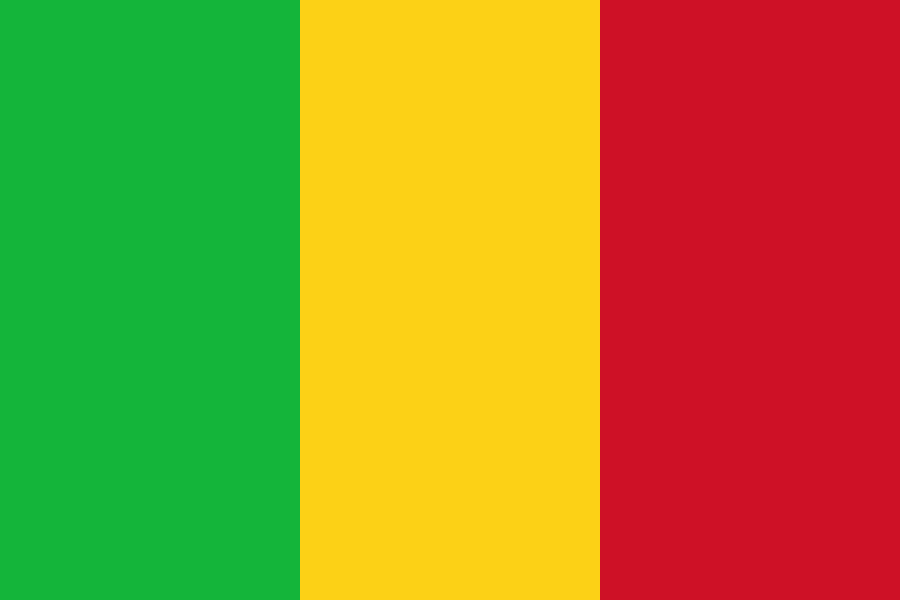
Three equal vertical bands of green (left side), yellow, and red.
What the flag means
Green, yellow and red place the flag in the Pan-African color tradition. The current plain tricolor developed from the flag of the short-lived Mali Federation.
Source: CIA World Factbook (archived)
MaltaEurope
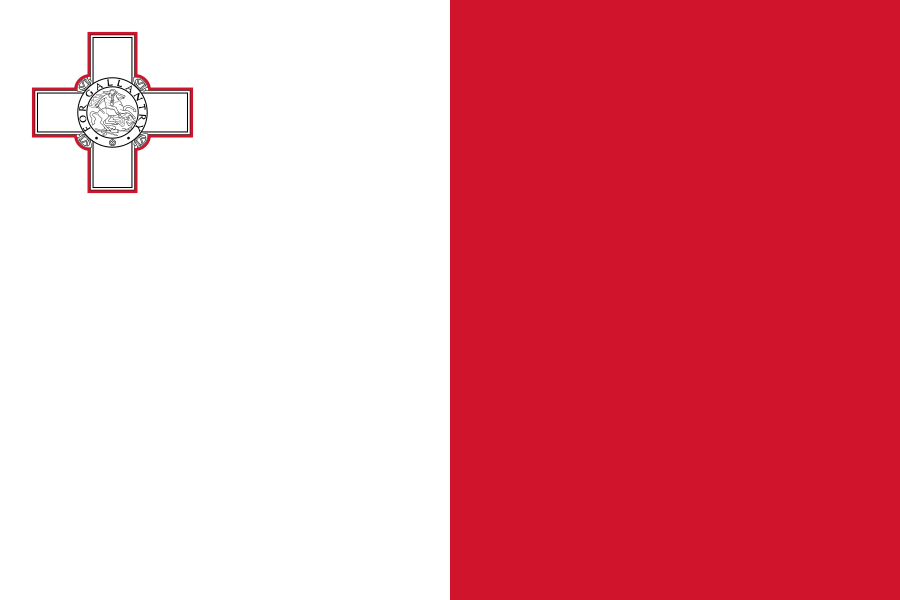
Two equal vertical bands of white (left side) and red; in the upper-left corner is the George Cross, edged in red.
What the flag means
The George Cross records the award given to Malta in 1942 for the islanders’ bravery during the Second World War. The red-and-white colors have an older history; their attribution to Count Roger of Sicily is a legend.
Source: CIA World Factbook (archived)
Marshall IslandsOceania
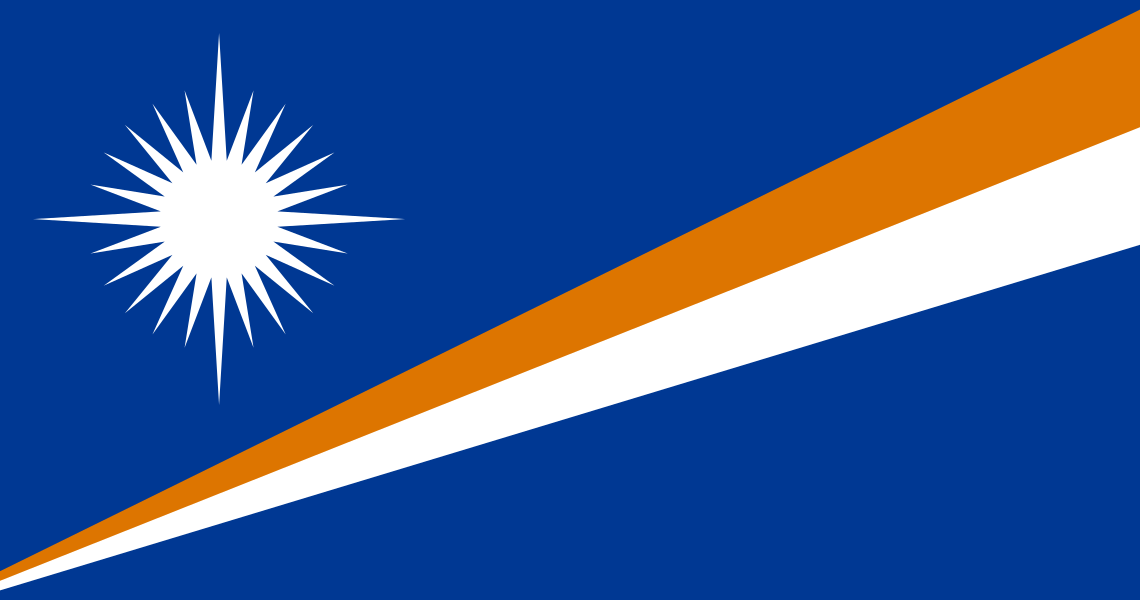
Blue with an orange stripe and a white stripe radiating from the lower-left corner to the upper-right corner; a white star with four large rays and 20 small rays appears on the left side above the two stripes.
What the flag means
Blue stands for the Pacific Ocean, orange for the Ralik Chain (or sunset and courage), and white for the Ratak Chain (or sunrise and peace); the star symbolizes the Christian cross, with a small ray for each electoral district and a larger ray for the principal cultural centers of Majuro, Jaluit, Wotje, and Ebeye; the diagonal stripes can also be interpreted as representing the equator, with the star showing the archipelago's position.
Source: CIA World Factbook (archived)
MauritaniaAfrica
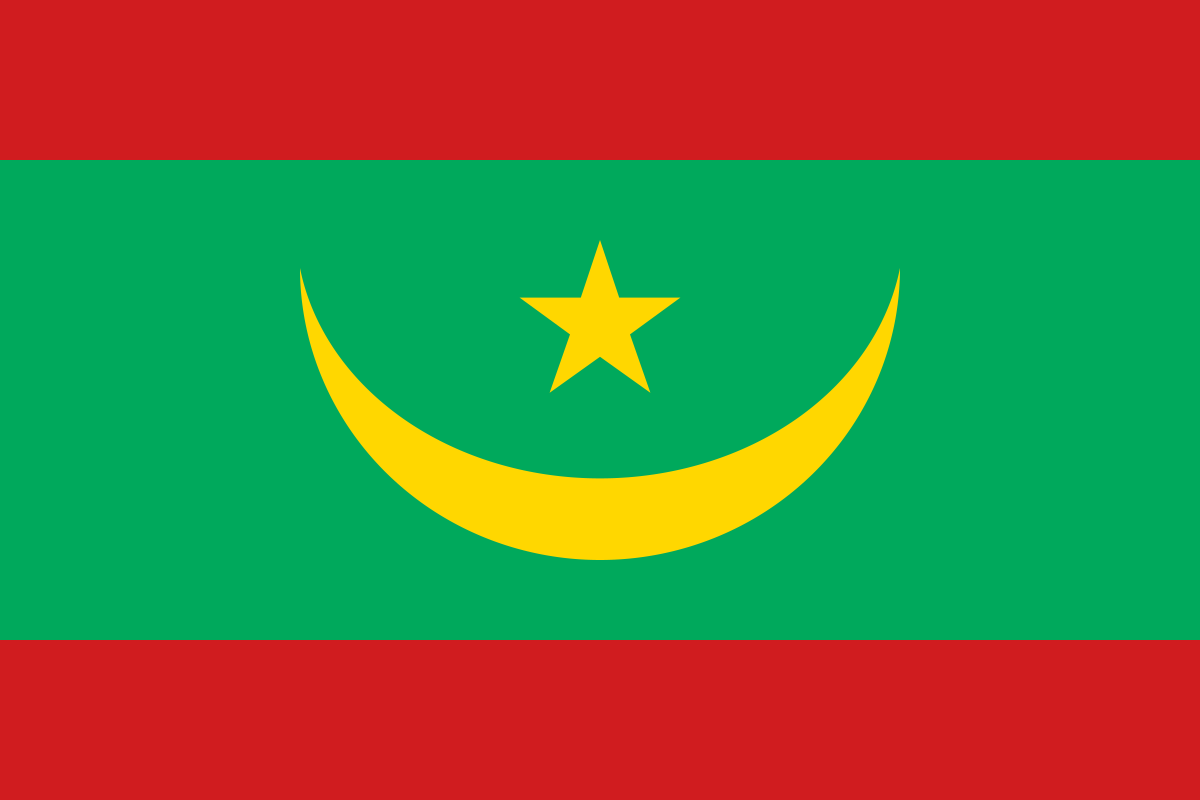
Green with red stripes along the top and bottom edges; on the green field, a five-pointed yellow star is centered over a yellow, upward-pointing crescent moon.
What the flag means
The crescent, star, and color green are traditional symbols of Islam; green also represents hope for a bright future; yellow stands for the sands of the Sahara, and red for blood shed in the fight for independence.
Source: CIA World Factbook (archived)
MauritiusAfrica
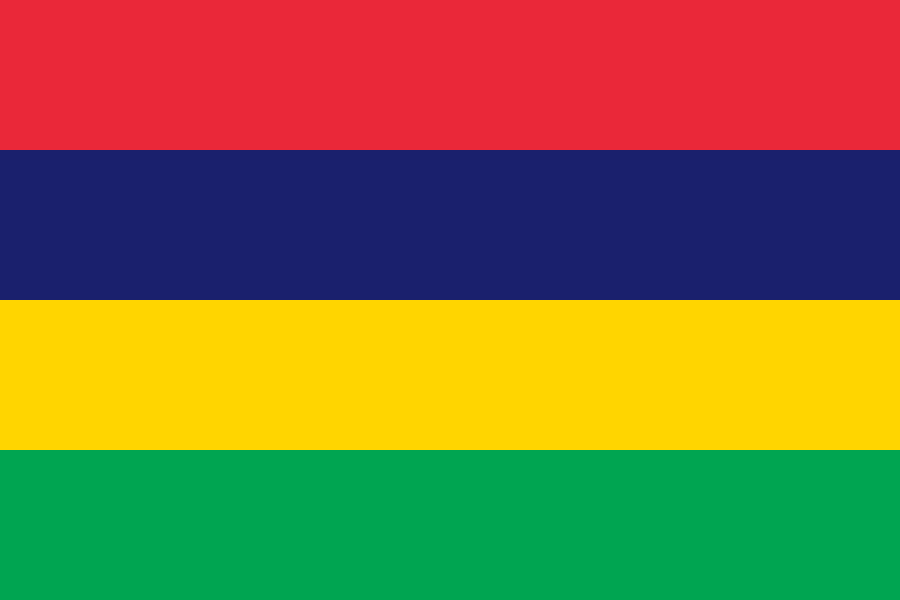
Four equal horizontal bands of red (top), blue, yellow, and green.
What the flag means
Red stands for self-determination and independence; blue for the Indian Ocean; yellow for the new light of independence, golden sunshine, or the bright future; and green for agriculture or the island's lush vegetation.
Source: CIA World Factbook (archived)
MexicoNorth America
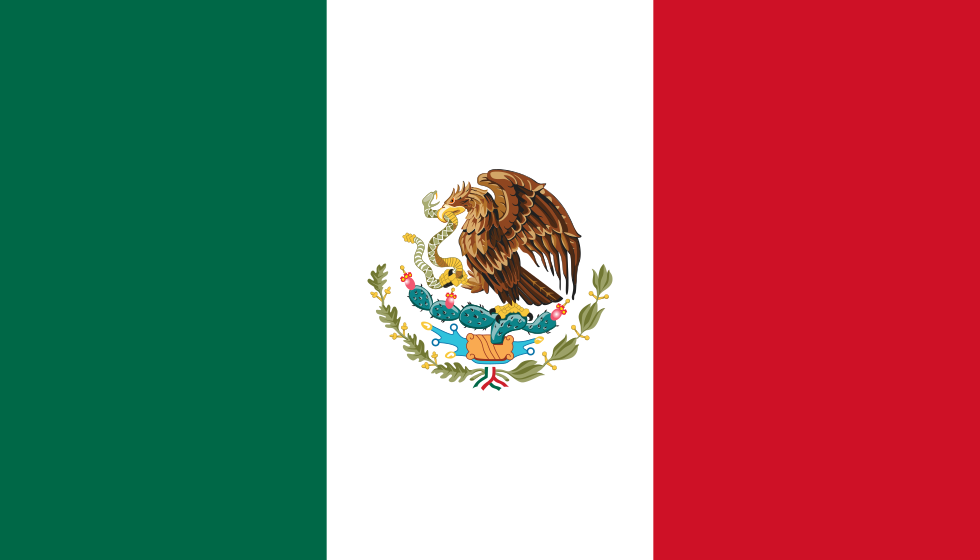
Three equal vertical bands of green (left side), white, and red; Mexico's coat of arms (an eagle with a snake in its beak, perched on a cactus) is centered in the white band.
What the flag means
Green stands for hope, joy, and love; white for peace and honesty; red for hardiness, bravery, strength, and valor.
Source: CIA World Factbook (archived)
MicronesiaOceania
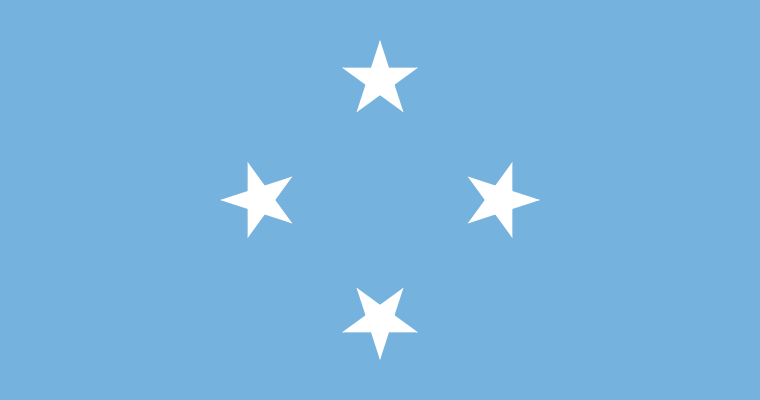
Light blue with four five-pointed white stars centered and arranged in a diamond pattern.
What the flag means
Blue stands for the Pacific Ocean, and the stars for the four island groups of Chuuk, Kosrae, Pohnpei, and Yap.
Source: CIA World Factbook (archived)
MoldovaEurope
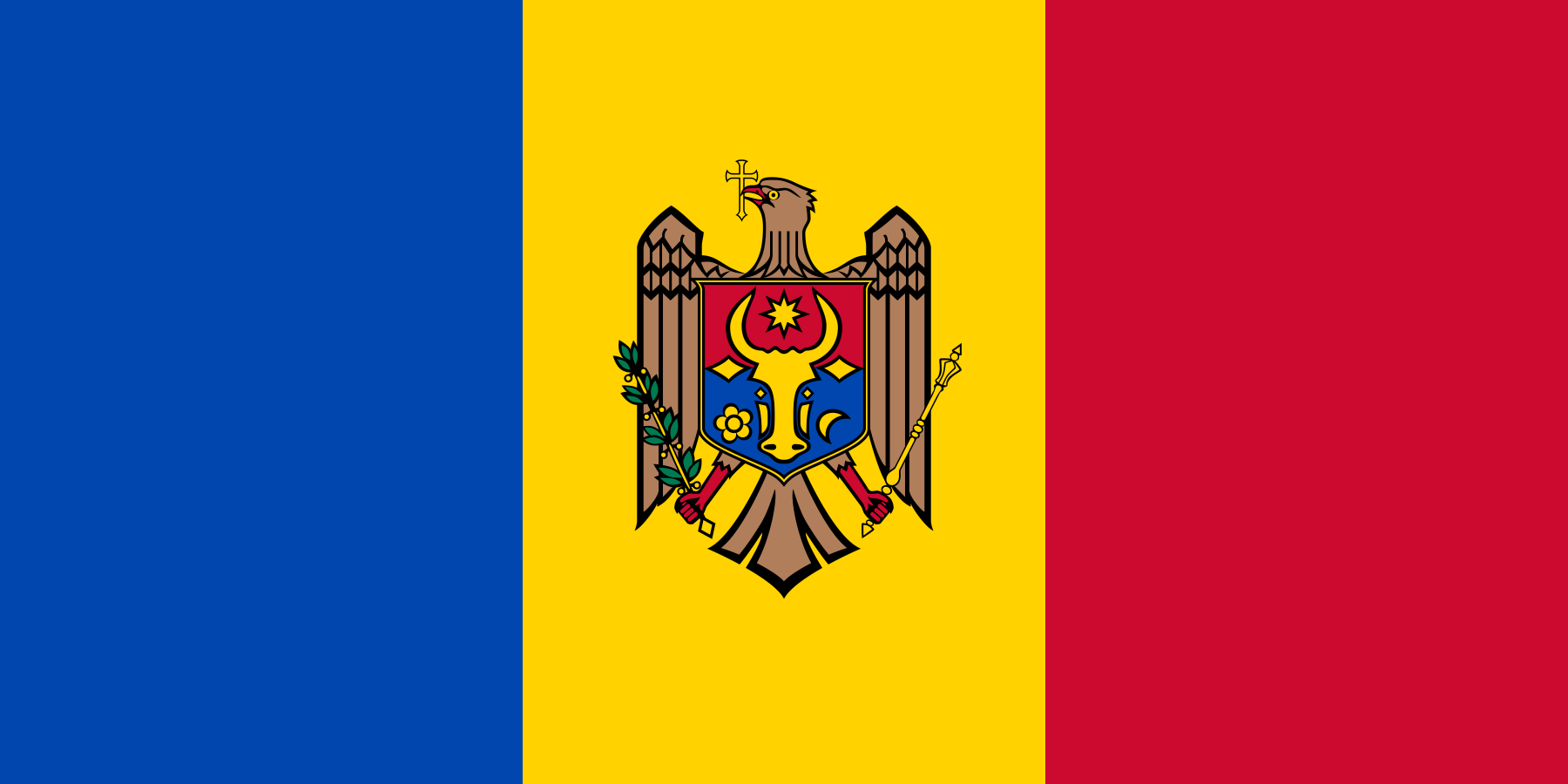
Three equal vertical bands of Prussian blue (left side), chrome yellow, and vermilion red; the Moldavan coat of arms in the center is a dark gold Roman eagle outlined in black, with a red beak and talons; the eagle carries a yellow cross in its beak, a green olive branch in its right talons, and a yellow scepter in its left talons; on the eagle's breast is a red-and-blue shield divided horizontally, with a stylized aurochs head, star, rose, and crescent in black and outlined yellow; the reverse of the flag displays a mirror image of the coat of arms.
What the flag means
The blue-yellow-red tricolor reflects Moldova’s historical and cultural connections with Romania. The arms distinguish it: an eagle bears a shield showing an aurochs head and other traditional symbols.
Source: CIA World Factbook (archived)
MonacoEurope
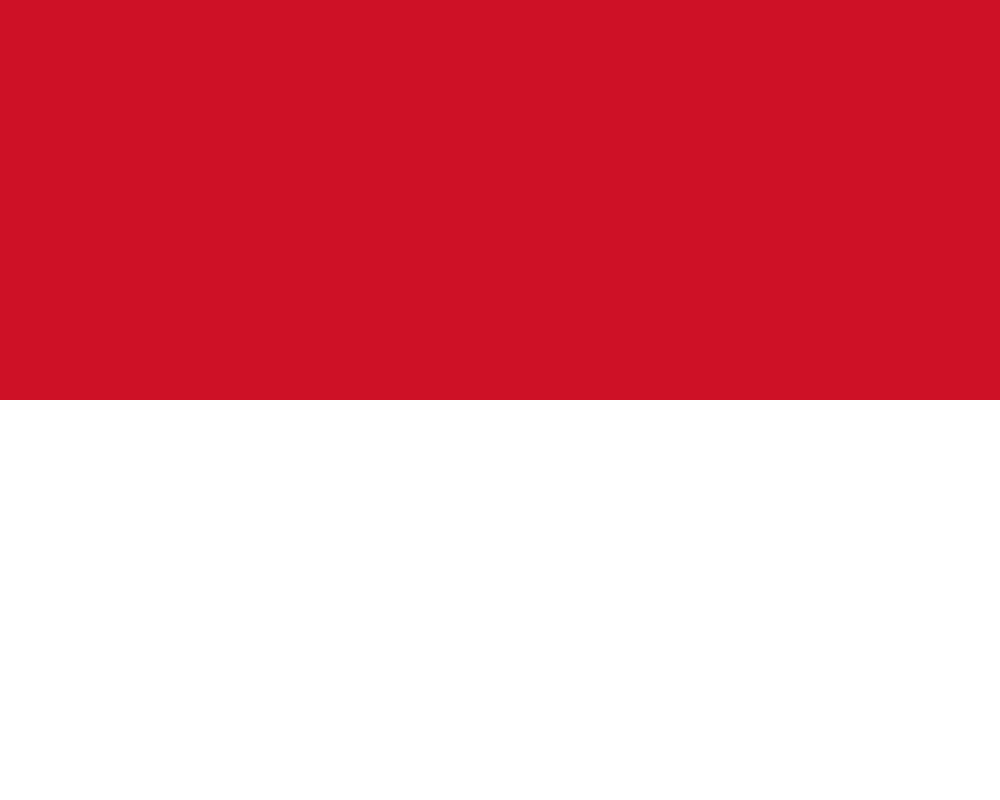
Two equal horizontal bands of red (top) and white.
What the flag means
The red and white are the heraldic colors of the House of Grimaldi, Monaco’s ruling dynasty. Their use reaches back centuries; the flag’s meaning is rooted in that dynastic history.
Source: CIA World Factbook (archived)
MongoliaAsia
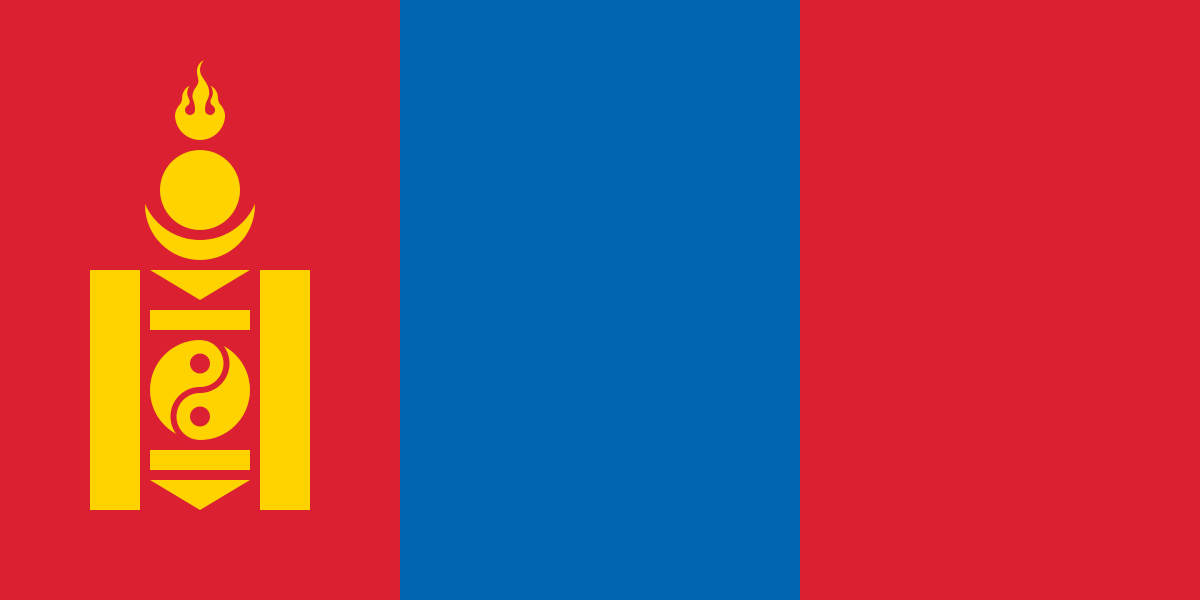
Three equal vertical bands of red (left side), blue, and red; centered on the left-side red band is the national emblem in yellow, the soyombo, which is an abstract representation of fire, sun, moon, earth, water, and the yin-yang symbol.
What the flag means
Blue stands for the sky, and red for progress and prosperity.
Source: CIA World Factbook (archived)
MontenegroEurope
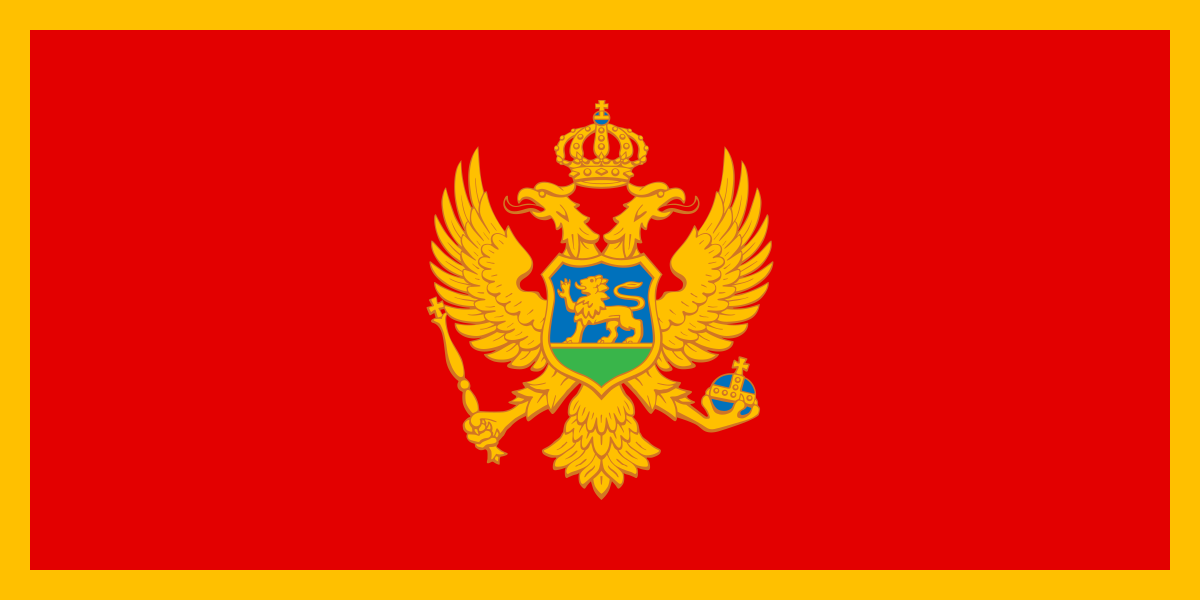
A red field bordered with a narrow golden-yellow stripe; the Montenegrin coat of arms in the center is a double-headed golden eagle, with a crown above; the eagle holds a golden scepter in its right claw and a blue orb in its left; the eagle's breast shield shows a golden lion on a green field in front of a blue sky.
What the flag means
The eagle symbolizes the unity of church and state; the lion is a symbol of episcopal authority, a reference to the three-and-a-half centuries when Montenegro was ruled as a theocracy.
Source: CIA World Factbook (archived)
MoroccoAfrica
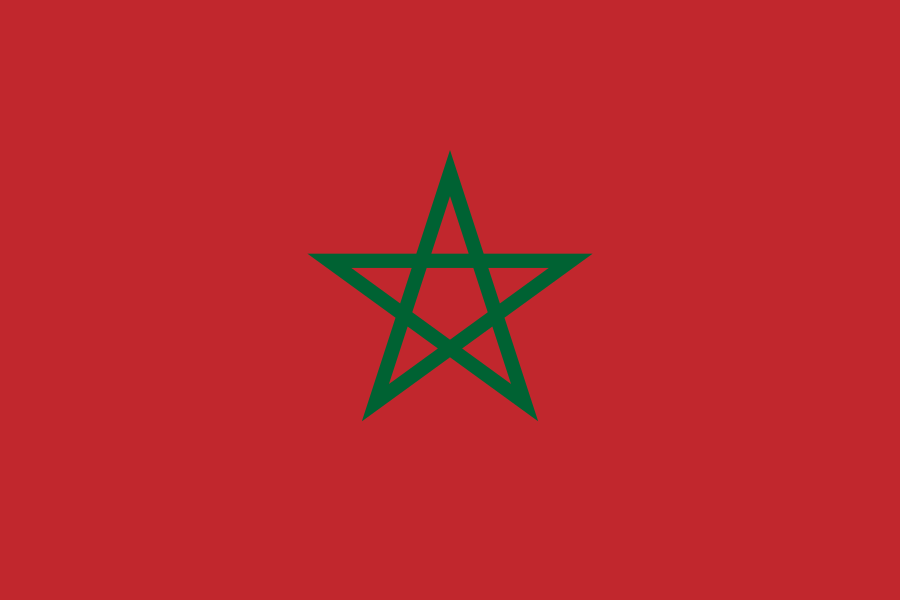
Red with a green pentacle (five-pointed linear star) known as Sulayman's (Solomon's) seal in the center of the flag.
What the flag means
Red and green are traditional colors in Arab flags, although the use of red is more commonly associated with the Arab states of the Persian Gulf; the pentacle represents the five pillars of Islam and the association between God and the nation.
Source: CIA World Factbook (archived)
MozambiqueAfrica
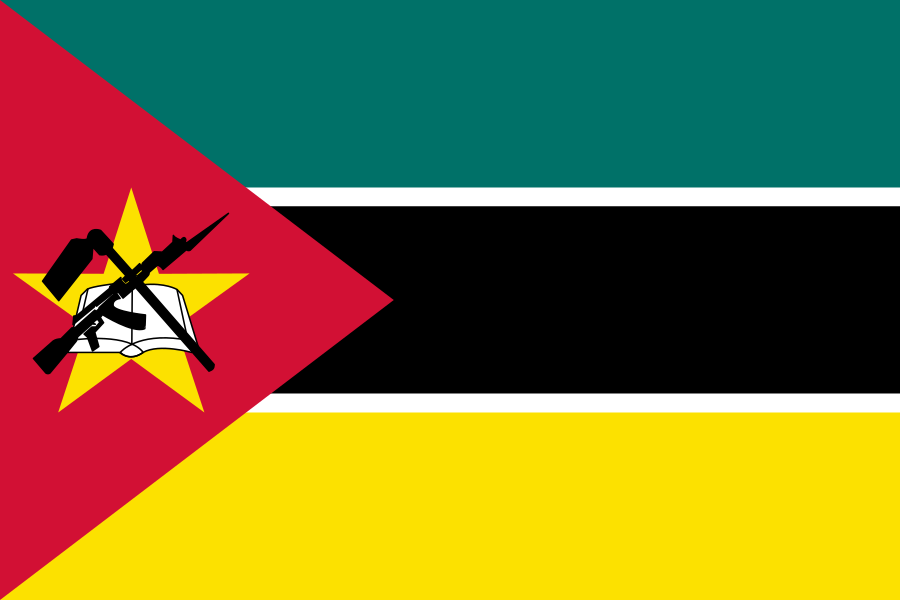
Three equal horizontal bands of green (top), black, and yellow, with a red isosceles triangle based on the left side; the black band is edged in white; centered in the triangle is a five-pointed yellow star with a crossed black-and-white rifle and hoe, on top of an open white book.
What the flag means
Green stands for the riches of the land, white for peace, black for the African continent, yellow for the country's minerals, and red for the fight for independence; the rifle stands for defense and vigilance, the hoe for agriculture, the open book for the importance of education, and the star for Marxism and internationalism.
Source: CIA World Factbook (archived)
MyanmarAsia
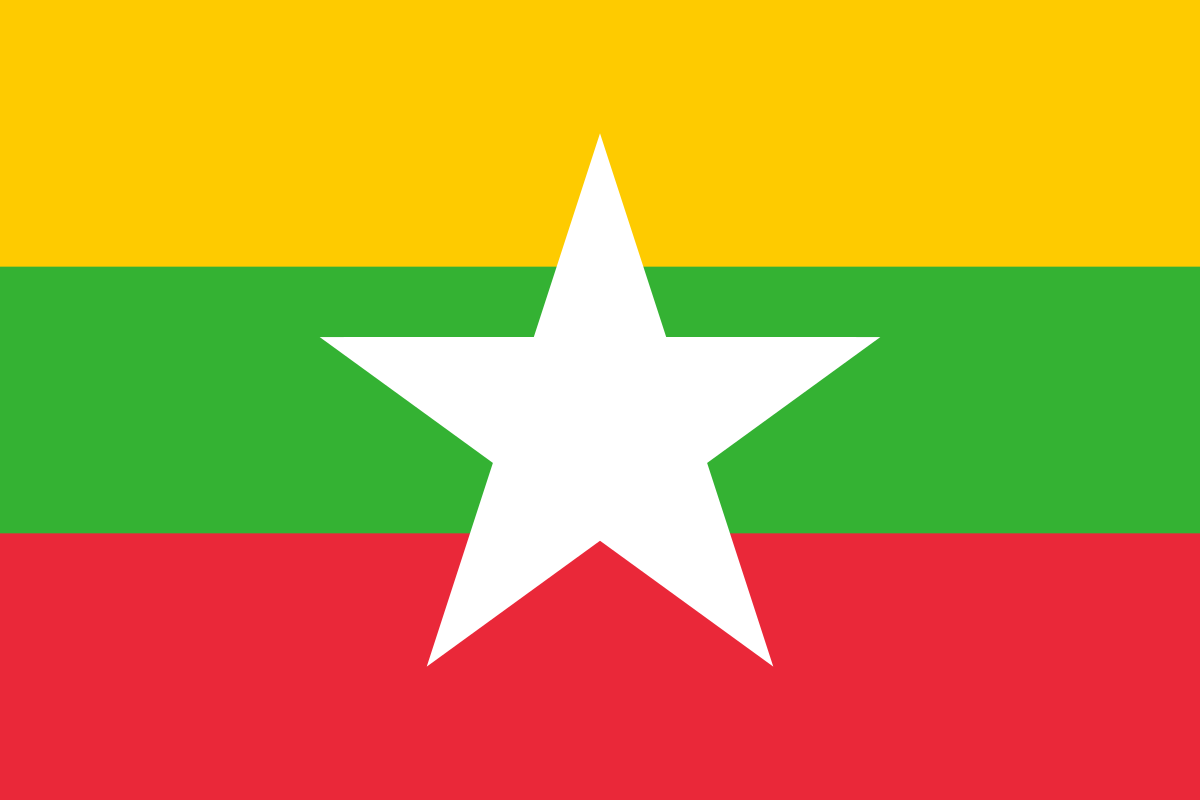
Three equal horizontal stripes of yellow (top), green, and red; centered on the green band is a five-pointed white star that overlaps onto the yellow and red stripes.
What the flag means
The yellow, green and red revive the triband colors used by Burma during 1943–1945. The large white star is the central national emblem in the current design.
Source: CIA World Factbook (archived)
NamibiaAfrica
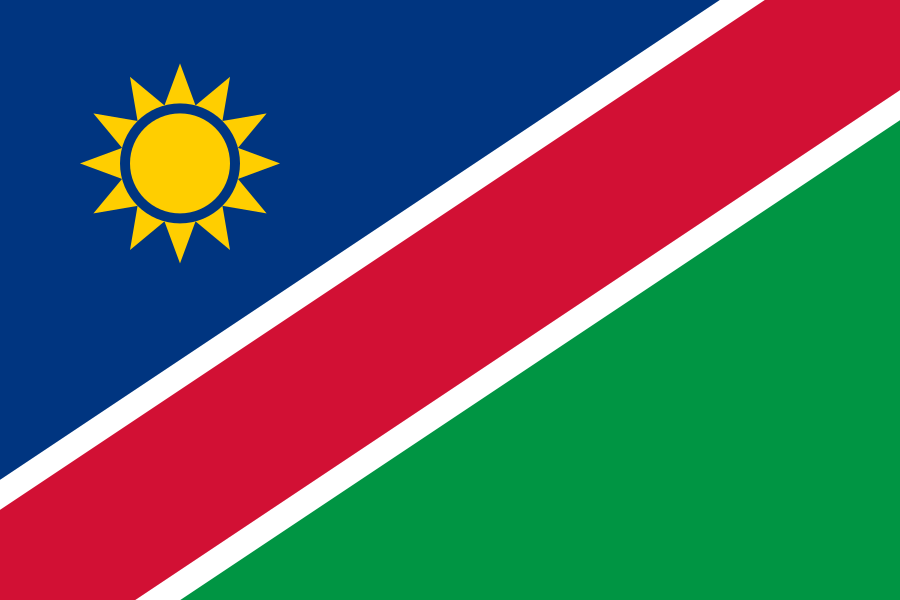
A wide red stripe edged with narrow white stripes divides the flag diagonally from lower-left corner to upper-right corner; the upper triangle is blue and has a golden-yellow, 12-ray sunburst, and the lower triangle is green.
What the flag means
Red stands for the heroism of the people and their determination to build a future of equal opportunity; white stands for peace, unity, tranquility, and harmony; blue stands for the sky and the Atlantic Ocean, the sun for power and existence, and green for vegetation and agricultural resources.
Source: CIA World Factbook (archived)
NauruOceania
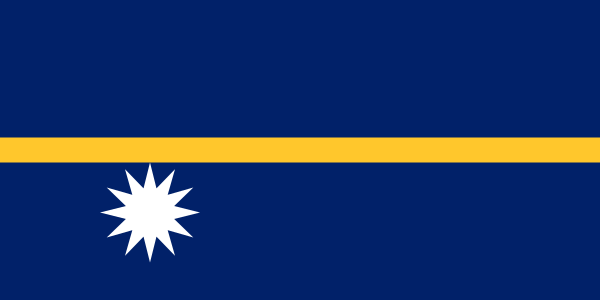
Blue with a narrow horizontal gold stripe across the center and a large white 12-pointed star below the stripe on the left side.
What the flag means
Blue stands for the Pacific Ocean; the star indicates the country's location in relation to the equator (the gold stripe), and the 12 points stand for the original tribes of Nauru; the star's white color represents phosphate, the basis of the island's wealth.
Source: CIA World Factbook (archived)
NepalAsia
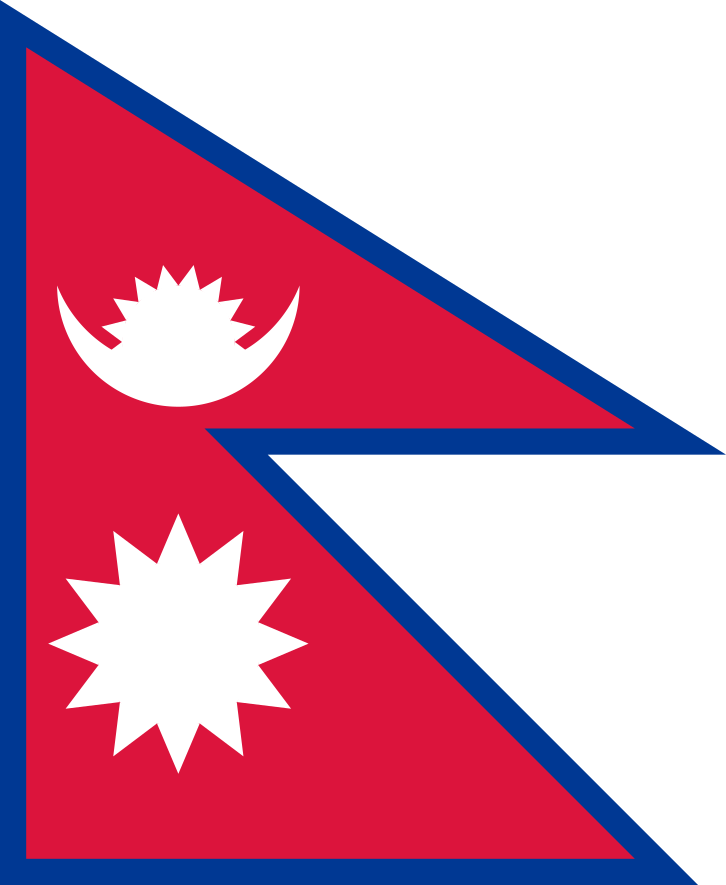
Crimson red with a blue border, in the shape of two overlapping right triangles; the smaller upper triangle has a stylized white moon, and the larger lower triangle has a 12-pointed white sun.
What the flag means
Red stands for the rhododendron (the national flower) and victory and bravery, and the blue border for peace and harmony; the two triangles are a combination of two pennants that originally symbolized the Himalaya Mountains, but today they refer to Hinduism and Buddhism, the country's two main religions; the moon stands for the serenity of the people, as well as Himalayan shade and cool weather, and the sun for the heat and higher temperatures in the rest of the country.
Nepal’s national flag is formed from two joined pennants, rather than a rectangle. Its overall bounding-box ratio is not the ratio of a rectangular flag.
Source: CIA World Factbook (archived)
NetherlandsEurope
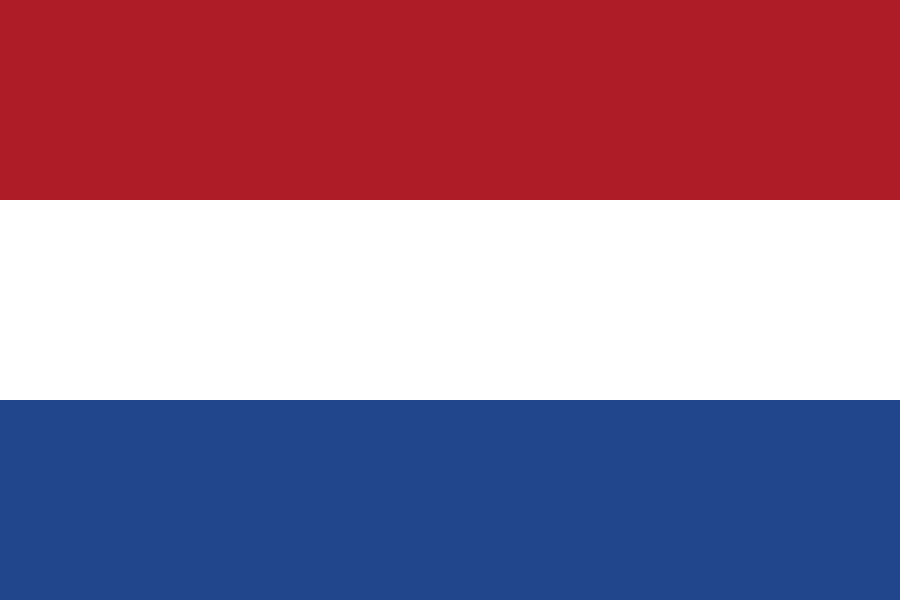
Three equal horizontal bands of bright red (top), white, and cobalt blue.
What the flag means
The design developed from the orange, white and blue associated with William of Orange. Red later replaced orange in the upper stripe. Its historical origin is more firmly established than any single modern meaning assigned to each color.
Source: CIA World Factbook (archived)
New ZealandOceania
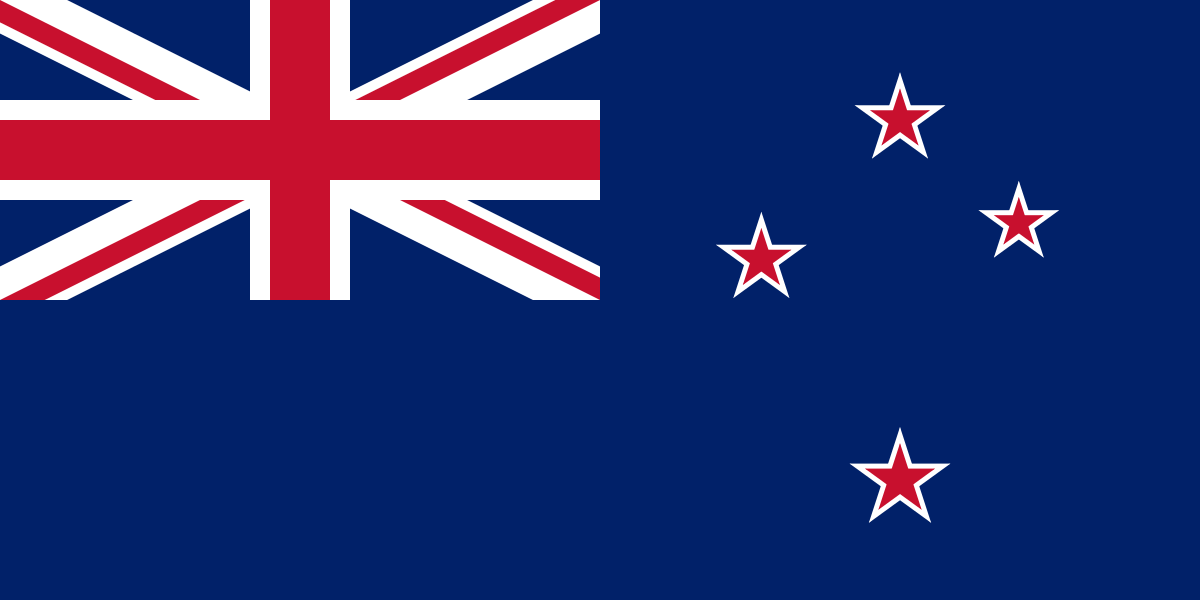
Blue with the UK flag in the upper-left quadrant, with four five-pointed red stars edged in white centered in the right half of the flag.
What the flag means
The stars represent the Southern Cross constellation.
Source: CIA World Factbook (archived)
NicaraguaNorth America
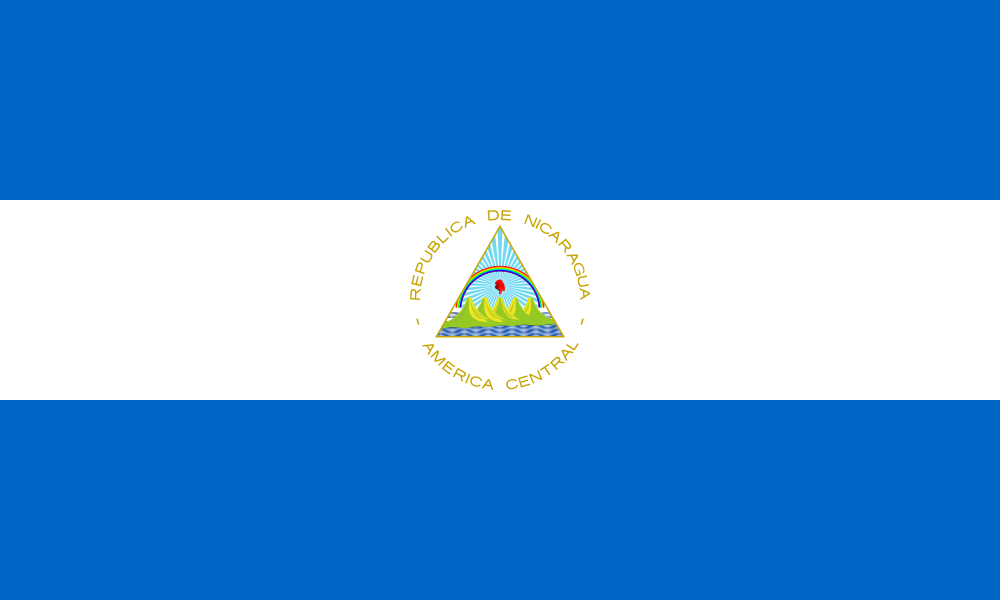
Three equal horizontal bands of blue (top), white, and blue, with the national coat of arms centered in the white band; the coat of arms has a triangle with the words Republica DE Nicaragua in an arc over it and America Central in an arc underneath.
What the flag means
Blue stands for the Pacific Ocean and the Caribbean Sea, and white for the land between the two bodies of water.
Source: CIA World Factbook (archived)
NigerAfrica
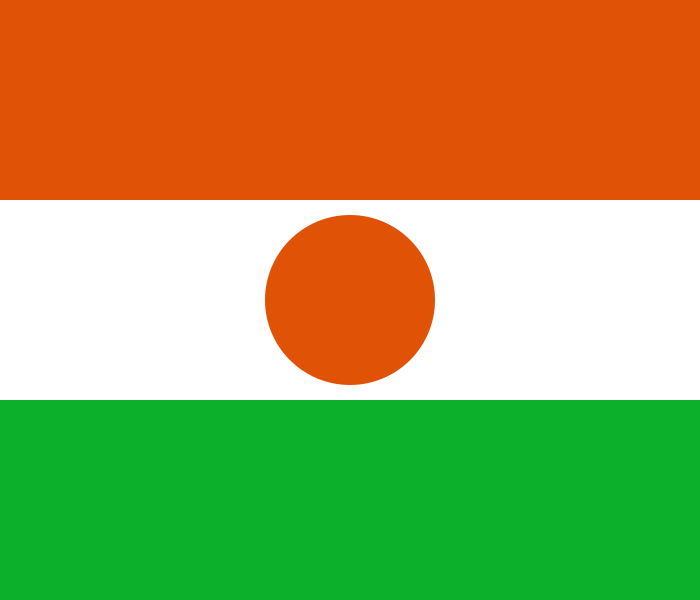
Three equal horizontal bands of orange (top), white, and green, with an orange disk centered on the white band.
What the flag means
Orange stands for the northern Sahara regions, white for purity and innocence, and green for hope and the fertile and productive southern and western areas, as well as the Niger River; the orange disc represents the sun and the people's sacrifices.
Source: CIA World Factbook (archived)
NigeriaAfrica
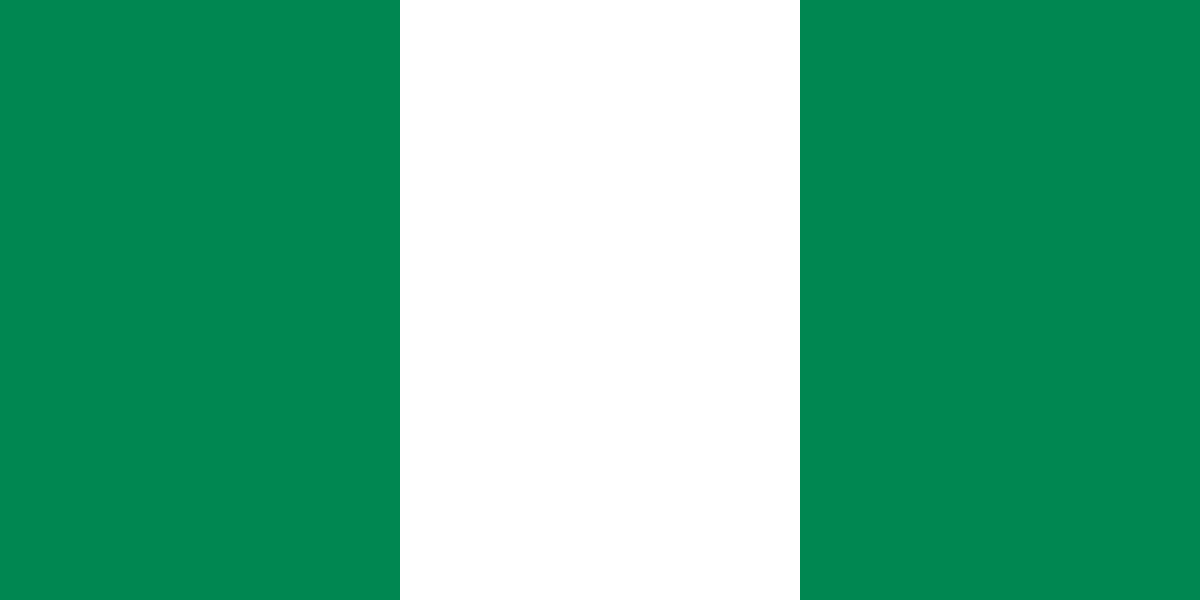
Three equal vertical bands of green (left side), white, and green.
What the flag means
Green stands for the country's forests and natural resources, and white for peace and unity.
Source: CIA World Factbook (archived)
North KoreaAsia
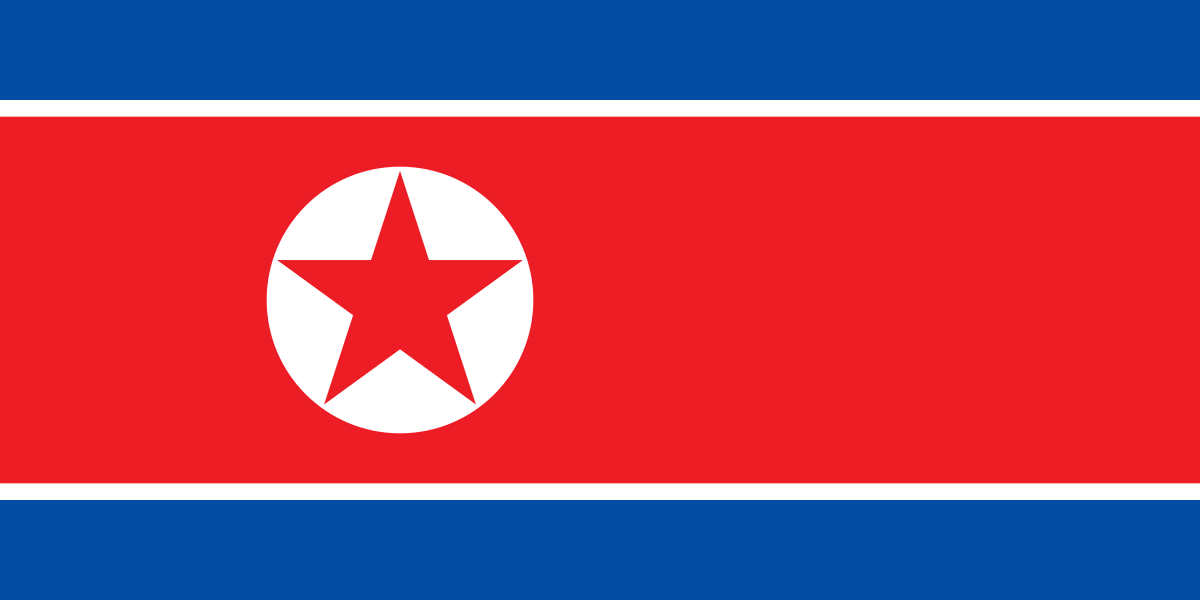
Three horizontal bands of blue (top), red (triple-width), and blue; the red band is edged in white; on the left side of the red band is a white disk with a red five-pointed star.
What the flag means
The red band stands for revolutionary traditions, the white for purity, strength, and dignity; blue for sovereignty, peace, and friendship; the red star represents socialism.
Source: CIA World Factbook (archived)
North MacedoniaEurope
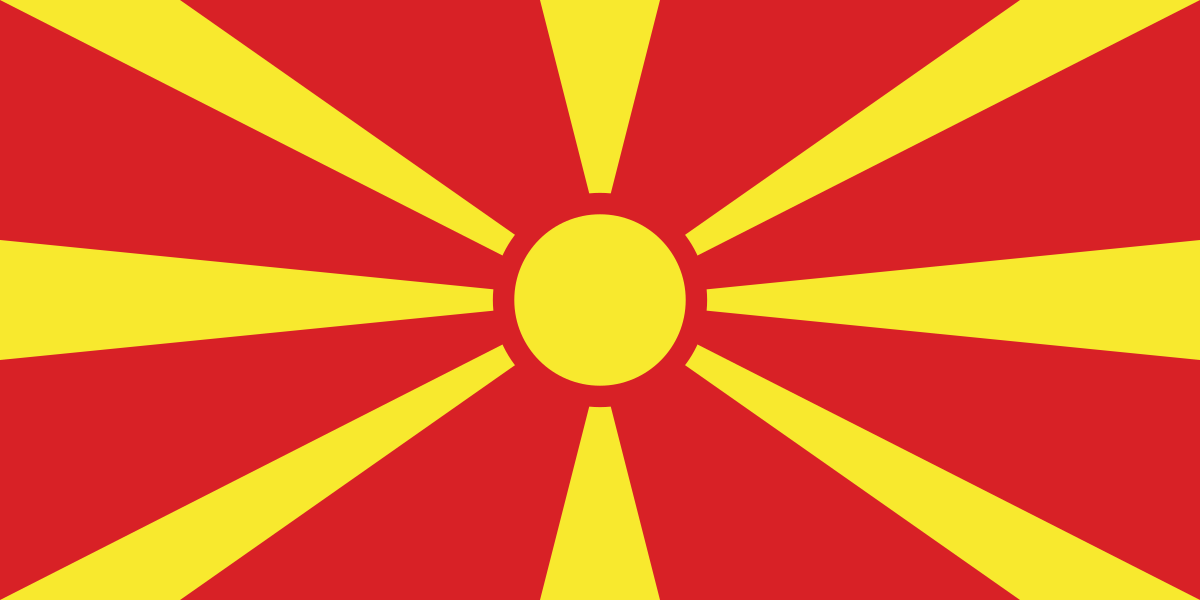
A red field with a yellow sun (the Sun of Liberty) in the center, with eight broadening rays extending to the edges.
What the flag means
The red and yellow colors have long been associated with Macedonia.
Source: CIA World Factbook (archived)
NorwayEurope

Red with a blue cross outlined in white that extends to the edges of the flag; the the cross is shifted to the left side in the style of the Dannebrog (Danish flag).
What the flag means
The colors represent Norway's past political unions with Denmark (red and white) and Sweden (blue).
Source: CIA World Factbook (archived)
OmanAsia
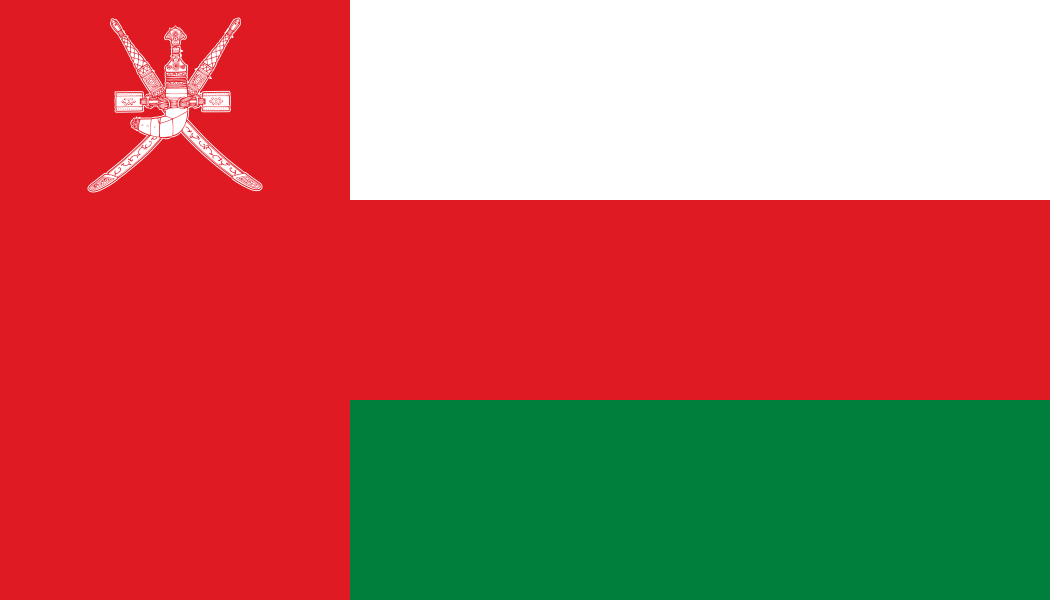
Three equal horizontal bands of white (top), red, and green, with a vertical red band on the left side; the national emblem (a khanjar dagger in its sheath on top of crossed swords in scabbards) in white is centered near the top of the vertical band.
What the flag means
White stands for peace and prosperity, red for battles against foreign invaders, and green for the Jebel al Akhdar (Green Mountains) and fertility.
Source: CIA World Factbook (archived)
PakistanAsia
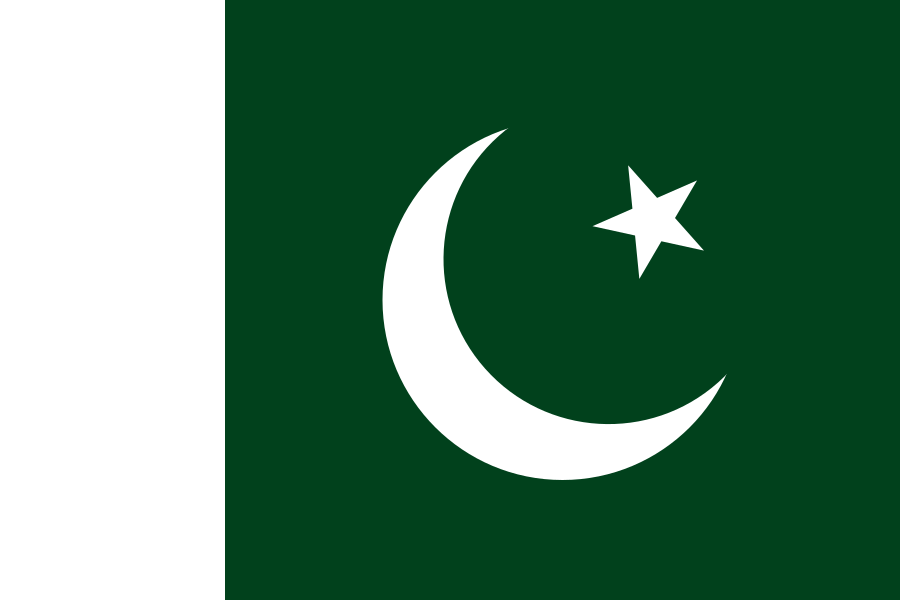
Green with a vertical white band on the left side; a large white crescent and star are centered in the green field.
What the flag means
The crescent, star, and color green are all traditional Islamic symbols; the white band symbolizes the role of religious minorities.
Source: CIA World Factbook (archived)
PalauOceania
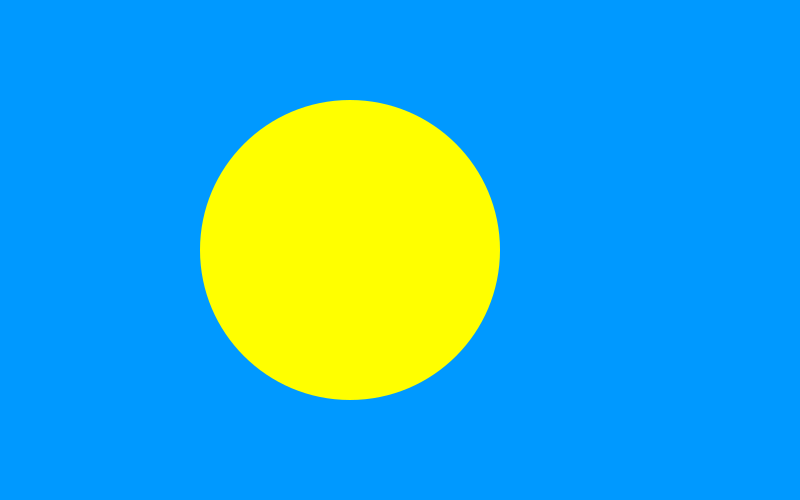
Light blue with a large yellow disk to the left side.
What the flag means
Blue stands for the ocean, and the disk for the moon, which is considered a symbol of peace, love, and tranquility.
Source: CIA World Factbook (archived)
PalestineAsia
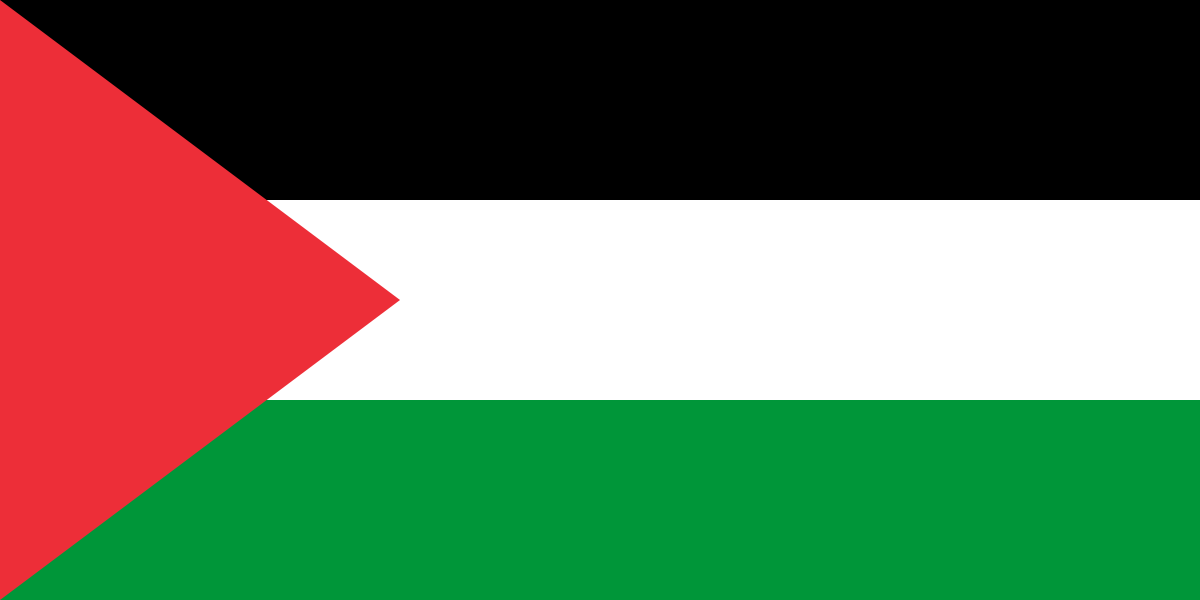
Three equal horizontal bands of black, white and green, with a red triangle at the hoist.
What the flag means
The design belongs to the Arab Revolt flag tradition and uses the Pan-Arab colors. The Palestine Liberation Organization adopted it for the Palestinian people in 1964 and for the State of Palestine in 1988.
Included as the State of Palestine, one of the two UN General Assembly non-member observer states.
Source: Palestinian Ministry of Foreign Affairs — The Palestinian Flag
PanamaNorth America
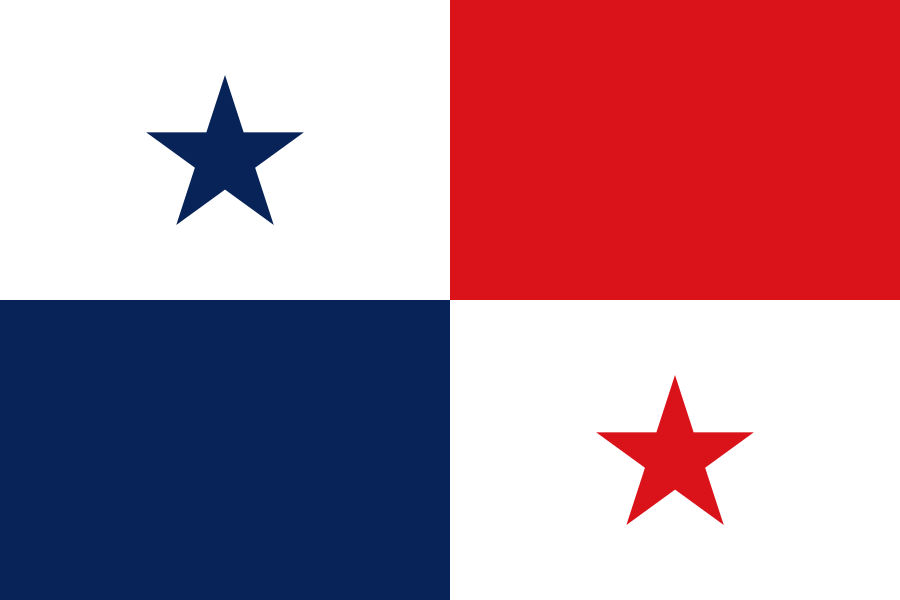
Divided into four equal rectangles; one of the top quadrants is white (left side) with a five-pointed blue star in the center, and the other is plain red; one of the bottom quadrants is plain blue (left side), and the other is white with a five-pointed red star in the center.
What the flag means
Blue and red stand for the main political parties, and white for peace between them; the blue star stands for the civic virtues of purity and honesty, and the red star for authority and law.
Source: CIA World Factbook (archived)
Papua New GuineaOceania
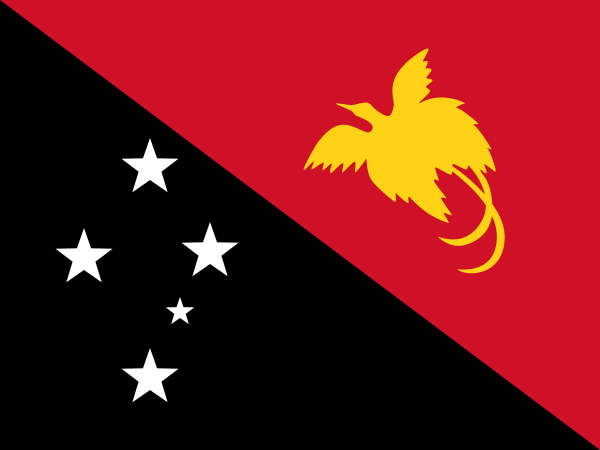
Divided diagonally from upper-left corner; the upper triangle is red and has a soaring yellow bird of paradise in the center; the lower triangle is black with five five-pointed white stars of the Southern Cross constellation.
What the flag means
Red, black, and yellow are the country's traditional colors; the bird of paradise is an emblem of regional tribal culture and represents the emergence of Papua New Guinea as a nation; the Southern Cross symbolizes the country's connection with Australia and several other countries in the South Pacific.
Source: CIA World Factbook (archived)
ParaguaySouth America
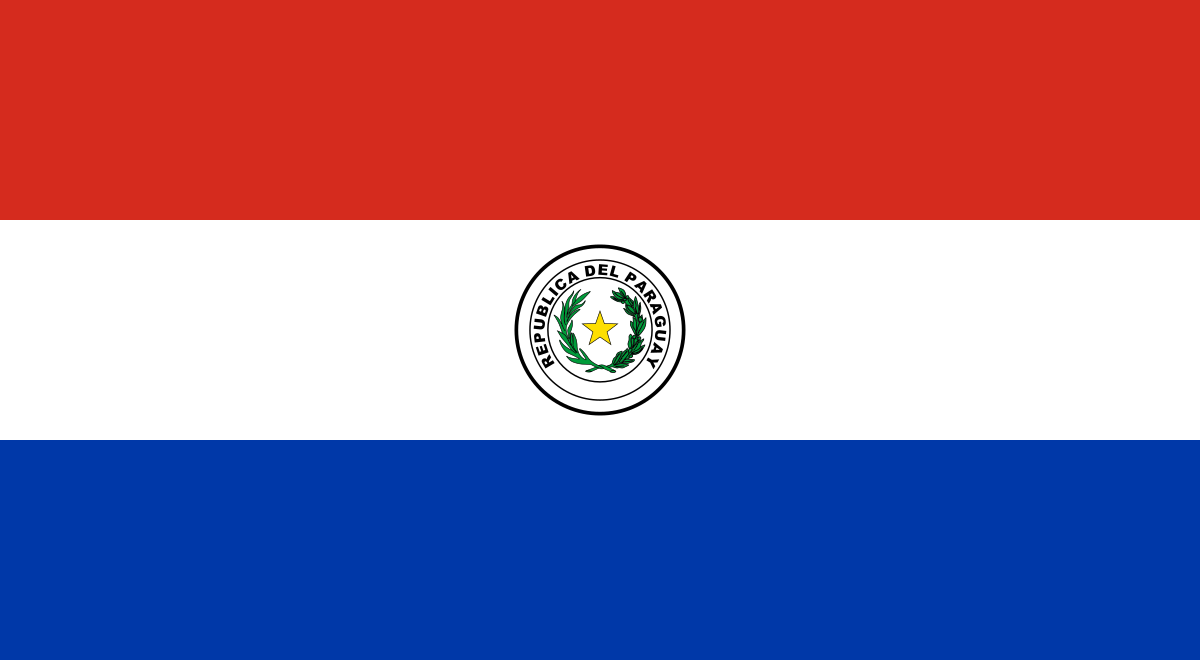
Three equal horizontal bands of red (top), white, and blue, with an emblem centered on the white band; the emblem on one side of the flag is the national coat of arms, which has a five-pointed yellow star in a green wreath with the words Republica Del Paraguay around it, all inside two circles; the other side of the flag has a circular treasury seal (a yellow lion below a red Cap of Liberty and the words Paz Y Justicia).
What the flag means
Red stands for bravery and patriotism, white for integrity and peace, and blue for liberty and generosity.
Paraguay’s flag has different emblems on its front and reverse. The image here shows the front, with the national coat of arms.
Source: CIA World Factbook (archived)
PeruSouth America
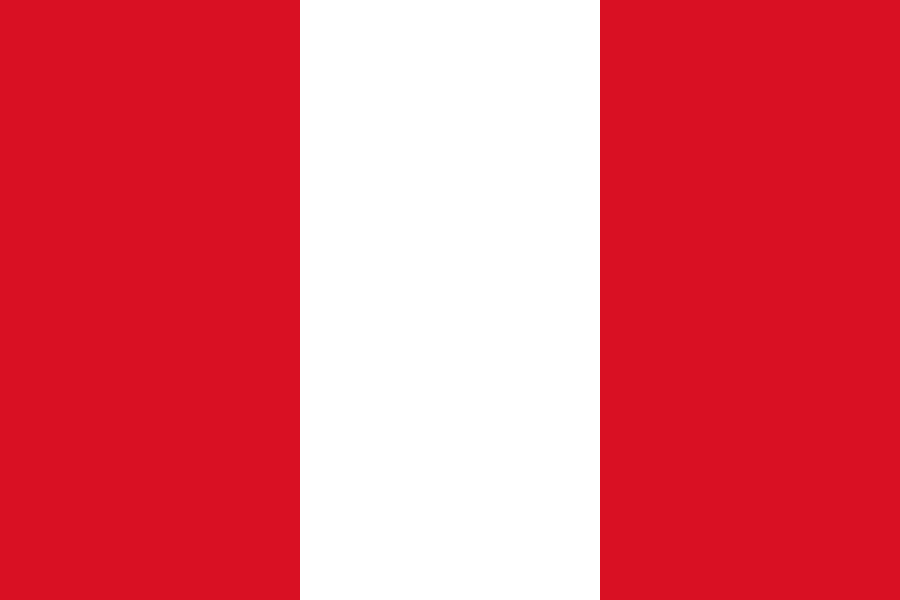
Three equal vertical bands of red, white and red.
What the flag means
Red is traditionally associated with the struggle for independence, and white with peace. The plain civil flag shown here shares its colors with the state flag, which adds a coat of arms.
The catalogue shows the plain civil flag. Peru also uses a state flag bearing its coat of arms.
Source: CIA World Factbook (archived)
PhilippinesAsia
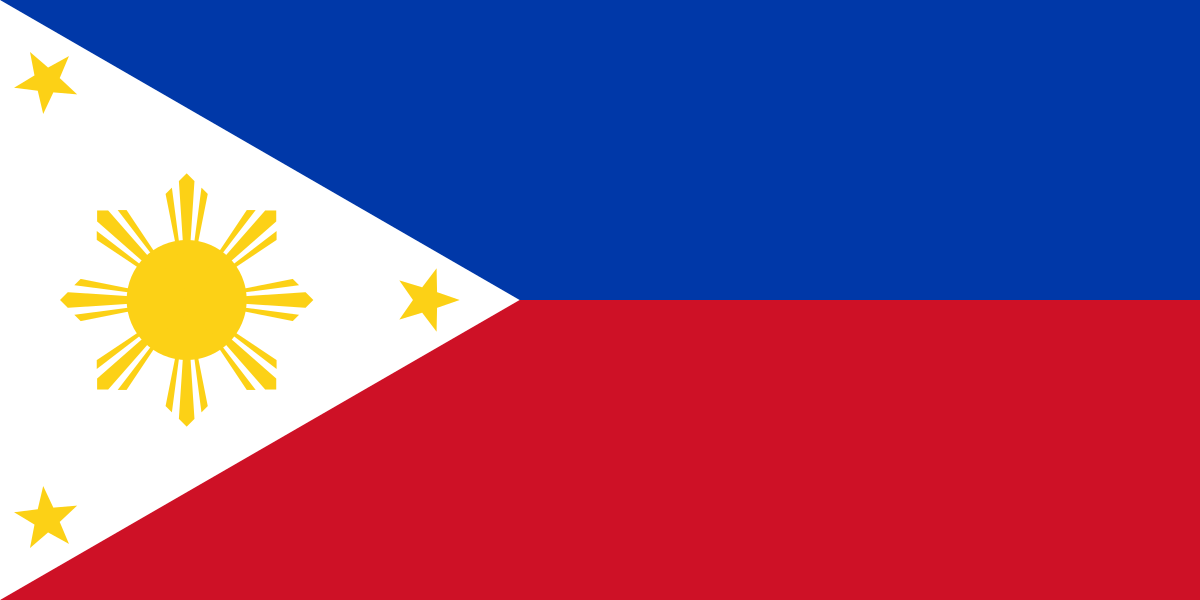
Two equal horizontal bands of blue (top) and red; a white equilateral triangle is based on the left side; the center of the triangle has a yellow sun with eight rays, each split into smaller rays; the triangle's corners each have a small five-pointed yellow star.
What the flag means
Blue stands for peace and justice, red for courage, and the triangle for equality; the rays represent the first eight provinces that sought independence from Spain, and the stars represent the country's three parts: Luzon, Visayas, and Mindanao.
Source: CIA World Factbook (archived)
PolandEurope
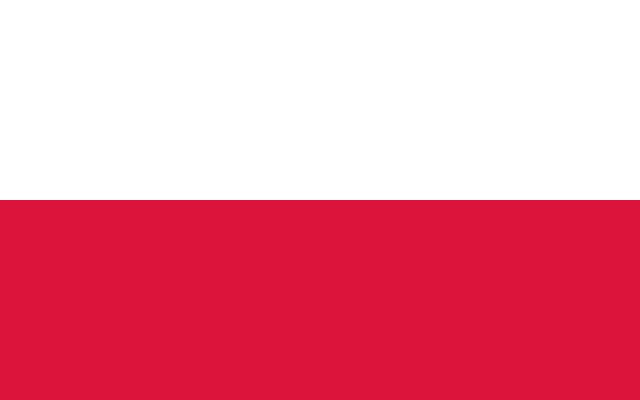
Two equal horizontal bands of white (top) and red.
What the flag means
Colors derive from the Polish emblem, a white eagle on a red field.
Source: CIA World Factbook (archived)
PortugalEurope
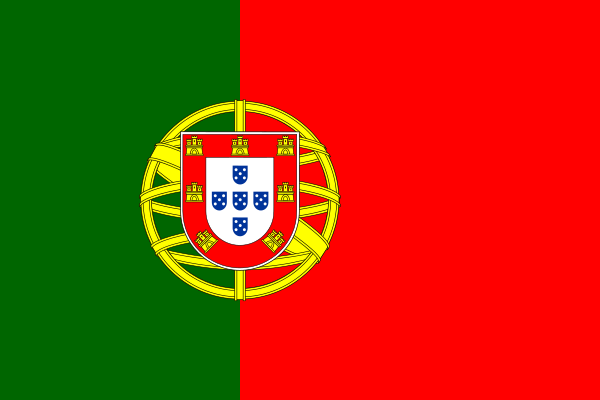
Two vertical bands of green (left side, two-fifths) and red (three-fifths), with the national coat of arms (armillary sphere and national shield) centered on the dividing line.
What the flag means
Explanations for the color meanings are ambiguous, but a popular interpretation says that green symbolizes hope and red the blood of those defending the nation.
Source: CIA World Factbook (archived)
QatarAsia
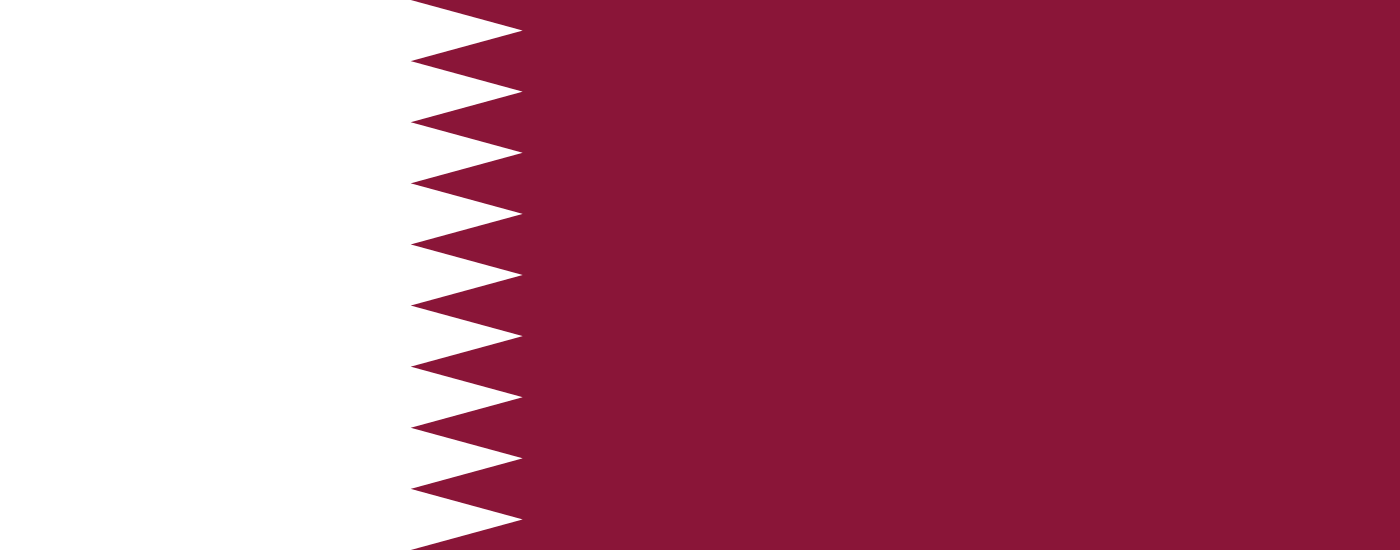
Maroon with a broad, serrated white band on the left side.
What the flag means
Maroon stands for the blood shed in Qatari wars, and white for peace; the nine-pointed serrated edge is a reference to Qatar's status as the ninth member of the "reconciled emirates" after the Qatari-British treaty of 1916 — the other eight members are Bahrain and the seven that make up the UAE.
Source: CIA World Factbook (archived)
Republic of the CongoAfrica
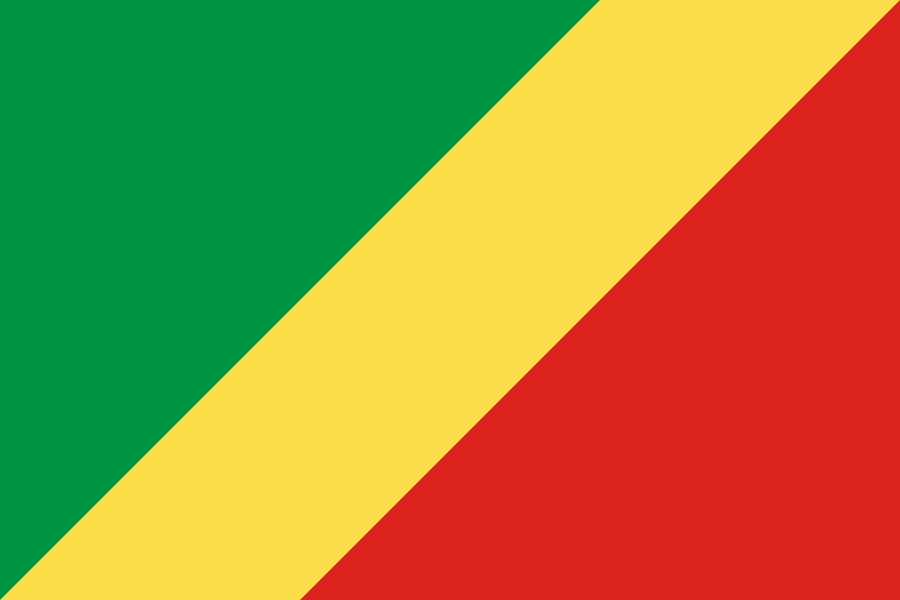
Divided diagonally from the lower-left side by a wide yellow band; the upper triangle (left side) is green, and the lower triangle is red.
What the flag means
Green stands for agriculture and forests, and yellow for the people's friendship and nobility; the meaning of the red color is not noted but has been associated with the struggle for independence.
Source: CIA World Factbook (archived)
RomaniaEurope
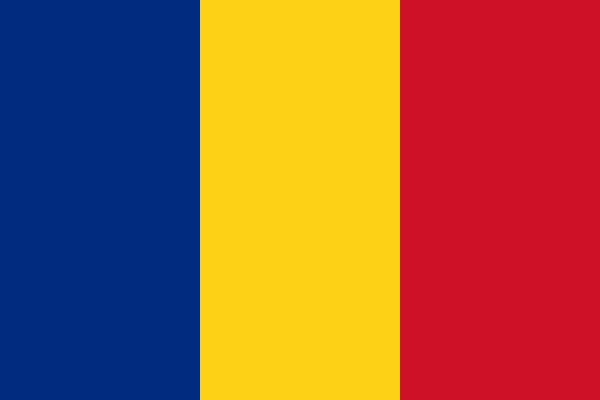
Three equal vertical bands of blue (left side), yellow, and red.
What the flag means
The colors come from the principalities of Walachia (red and yellow) and Moldavia (red and blue), which united in 1862 to form Romania.
Source: CIA World Factbook (archived)
RussiaEurope
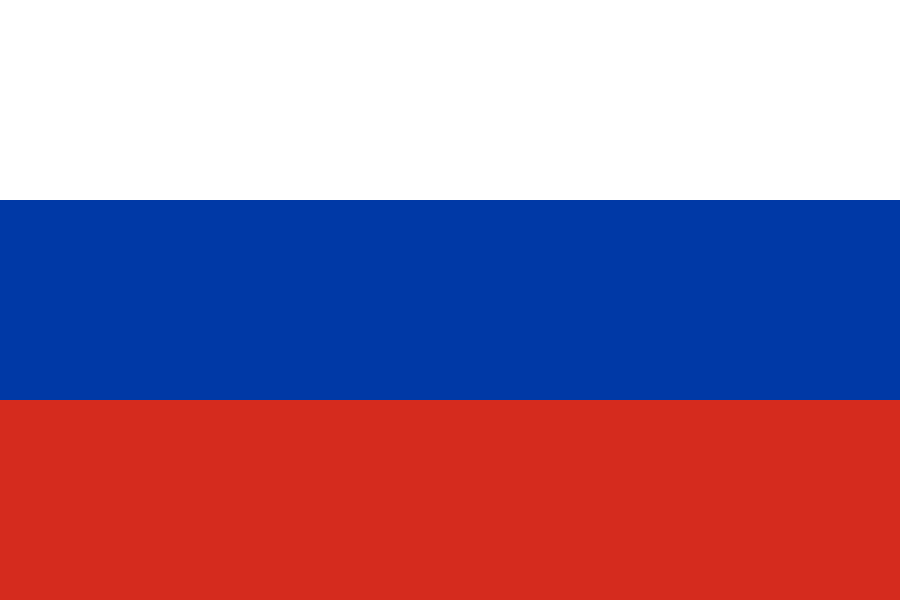
Three equal horizontal bands of white (top), blue, and red.
What the flag means
Colors may have been based on the Dutch flag, but no official meaning is assigned.
Source: CIA World Factbook (archived)
RwandaAfrica
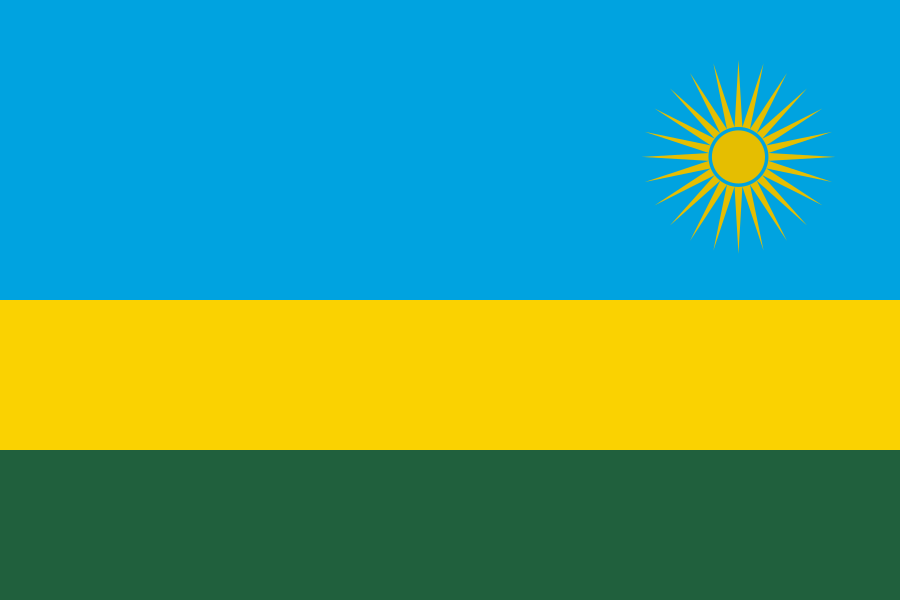
Three horizontal bands of sky blue (top, double-width), yellow, and green, with a golden sun with 24 rays on the right end of the blue band.
What the flag means
Blue stands for happiness and peace, yellow for economic development and mineral wealth, and green for hope for prosperity and natural resources; the sun symbolizes unity and enlightenment.
Source: CIA World Factbook (archived)
Saint Kitts and NevisNorth America
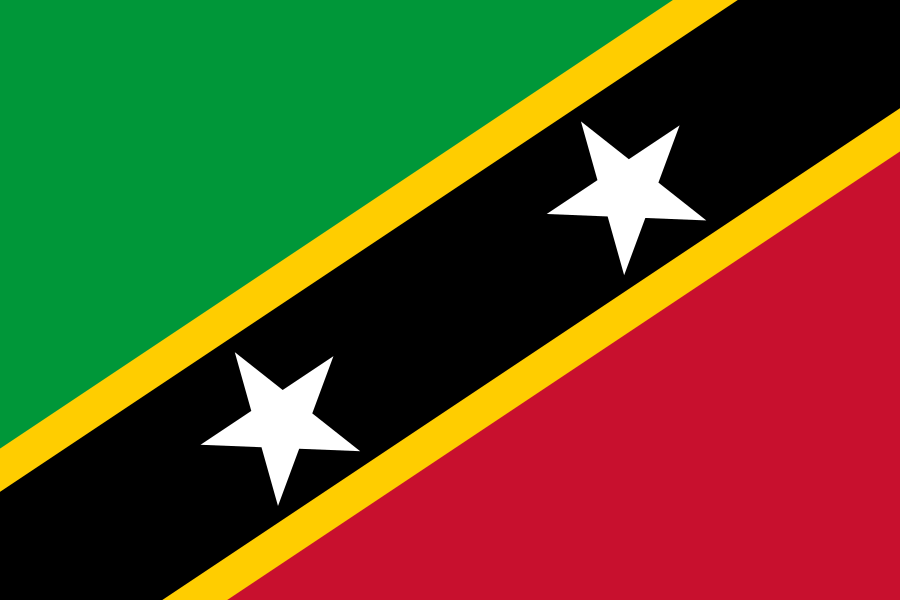
Divided diagonally from the lower left side by a broad black band with two five-pointed white stars; the black band is edged in yellow; the upper triangle is green, and the lower is red.
What the flag means
Green stands for the island's fertility, red for the struggles of the people from slavery, yellow for year-round sunshine, and black for the people's African heritage; the white stars stand for the islands of Saint Kitts and Nevis but can also express hope and liberty, or independence and optimism.
Source: CIA World Factbook (archived)
Saint LuciaNorth America
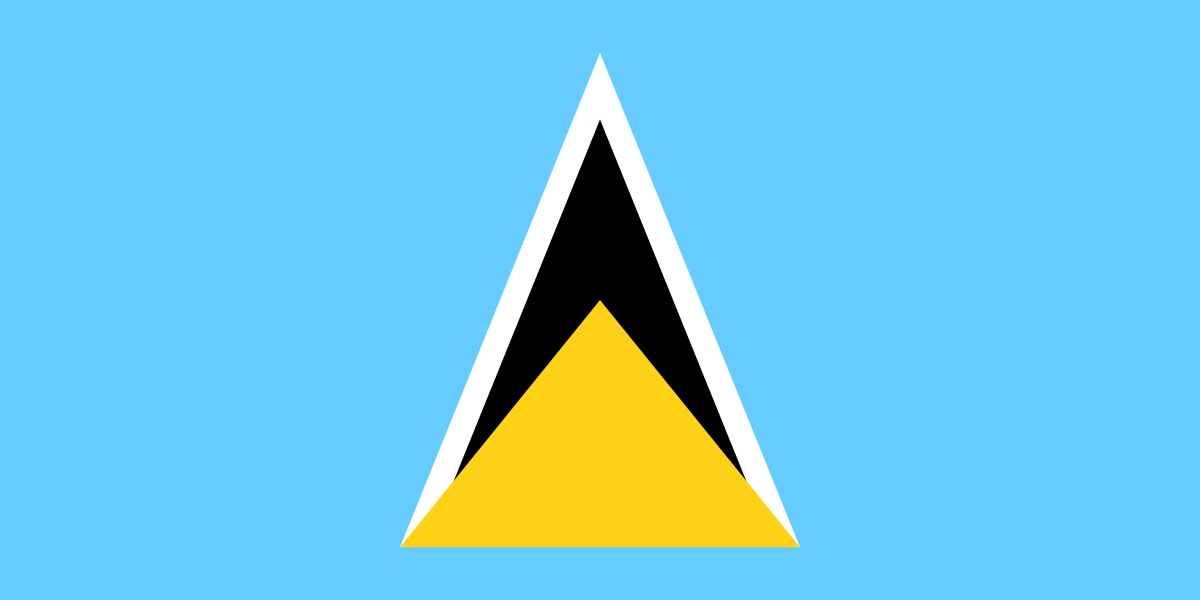
Cerulean blue with a gold isosceles triangle below a black arrowhead; the upper edges of the arrowhead have a white border.
What the flag means
Blue stands for the sky and sea, gold for sunshine and prosperity, and white and black for the ethnic composition of the island; the triangles represent Gros Piton and Petit Piton, the cone-shaped volcanic plugs that are a symbol of the island.
Source: CIA World Factbook (archived)
Saint Vincent and the GrenadinesNorth America
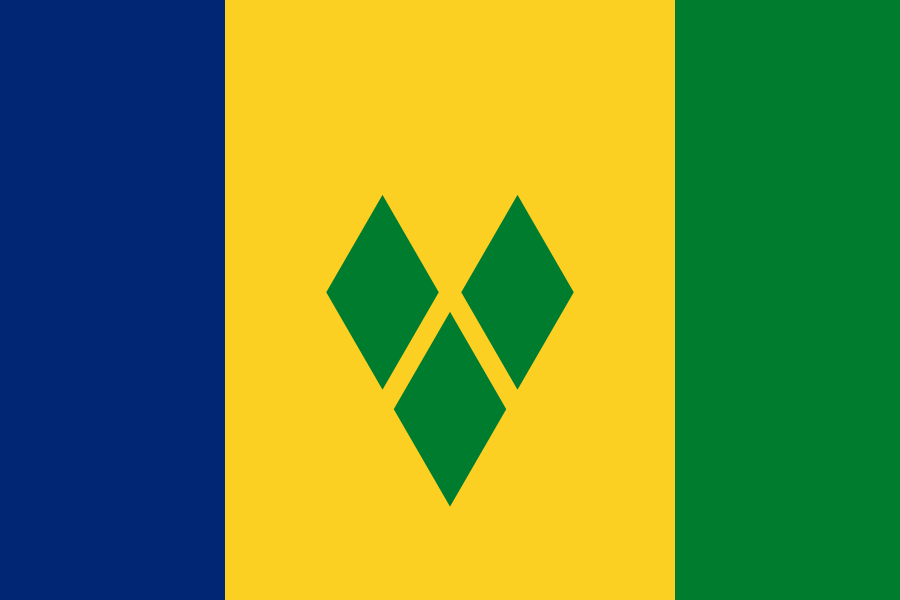
Three vertical bands of blue (left side), gold (double-width), and green; the gold band has three green diamonds arranged in a "V" pattern that stands for "Vincent".
What the flag means
The diamonds represent the islands as "the Gems of the Antilles" and are set slightly lowered in the gold band to reflect the country's position in the Antilles; blue stands for the tropical sky and sea, yellow for the sand, and green for vegetation.
Source: CIA World Factbook (archived)
SamoaOceania
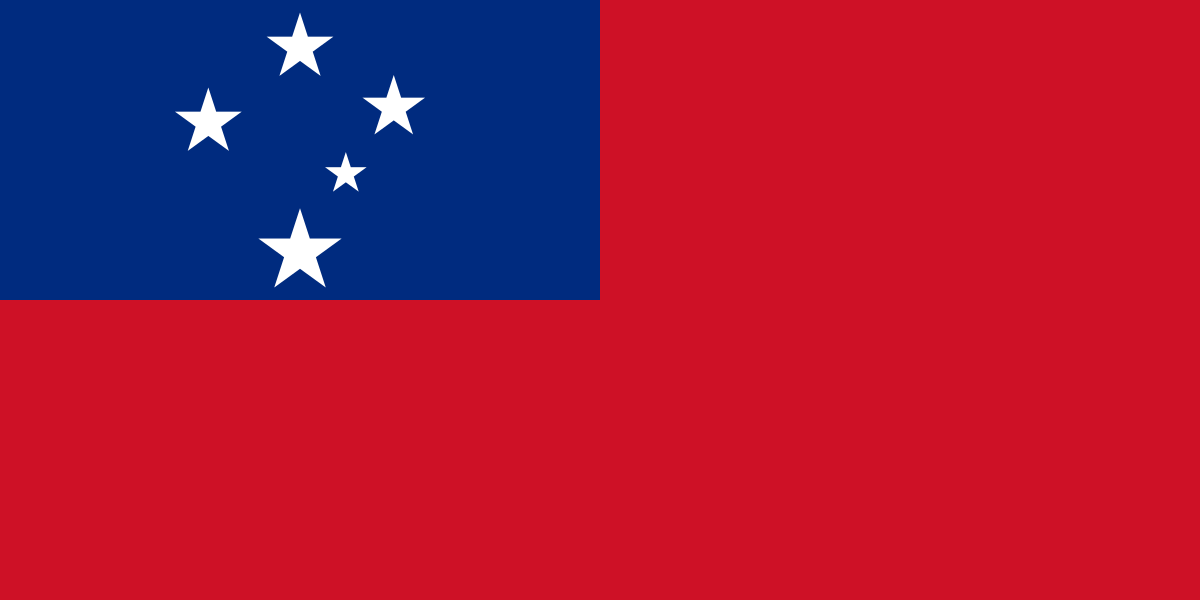
Red with a blue rectangle in the upper-left quadrant; on the rectangle are five five-pointed white stars that represent the Southern Cross constellation.
What the flag means
Red stands for courage, blue for freedom, and white for purity.
Source: CIA World Factbook (archived)
San MarinoEurope
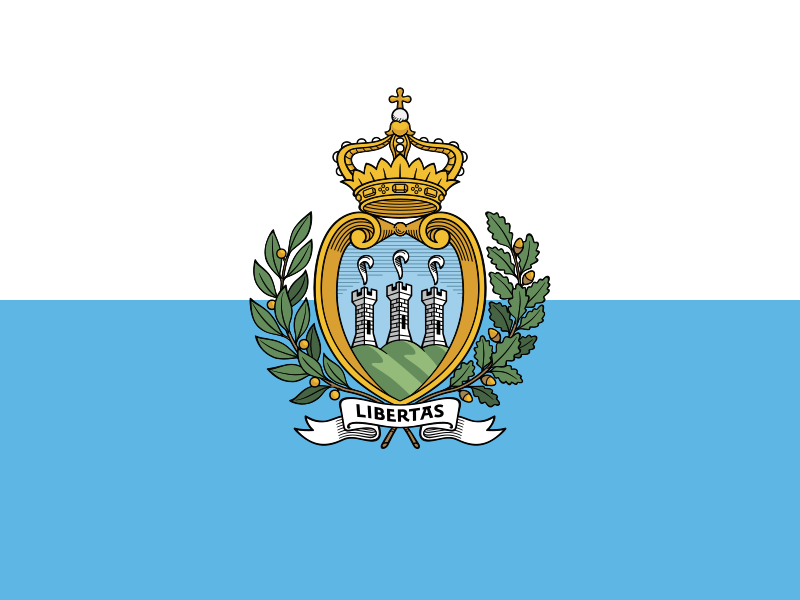
Two equal horizontal bands of white (top) and light blue, with the national coat of arms in the center; the main colors come from the shield on the coat of arms, which features three white towers on mountain peaks on a blue field; a wreath and a crown are around the shield, above a scroll with the word Libertas (Liberty).
What the flag means
The towers represent the Guaita, Cesta, and Montale castles on Mount Titano; white and blue are said to stand for peace and liberty.
Source: CIA World Factbook (archived)
Saudi ArabiaAsia
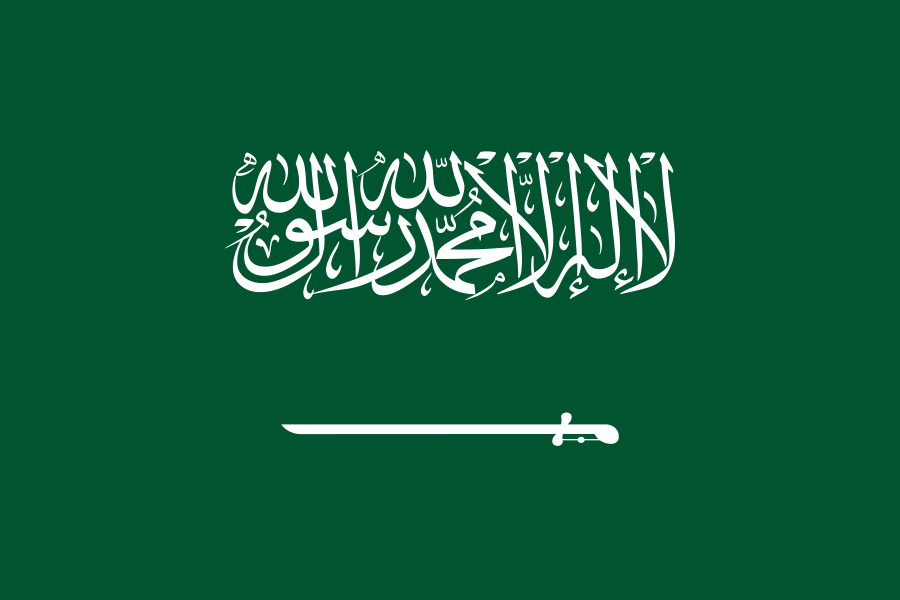
Green (traditional Islamic color) with the Shahada, or Muslim creed, in large white Arabic script that translates as, "There is no god but God; Muhammad is the messenger of God;" the text is above a white horizontal saber pointing to the left.
What the flag means
The Arabic inscription is the Shahada, the Islamic declaration of faith. Green is traditionally associated with Islam; the sword and inscription connect the design with the Saudi state and its religious identity.
Source: CIA World Factbook (archived)
SenegalAfrica
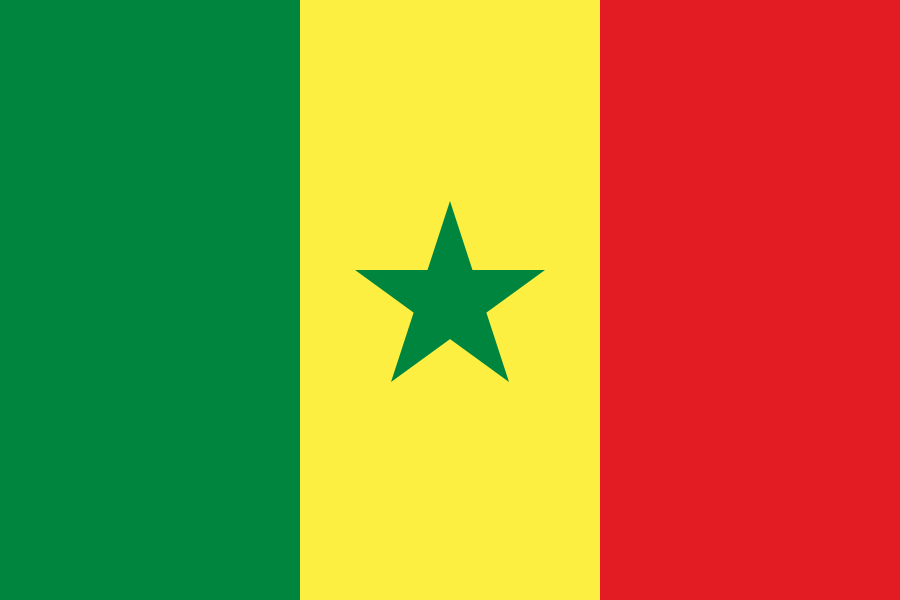
Three equal vertical bands of green (left side), yellow, and red, with a small five-pointed green star centered on the yellow band; green stands for Islam, progress, and hope, yellow for natural wealth and progress, and red for sacrifice and determination; the star represents unity and hope.
What the flag means
The green, yellow and red belong to the Pan-African color tradition. The green star gives Senegal’s vertical tricolor its distinctive central emblem.
Source: CIA World Factbook (archived)
SerbiaEurope
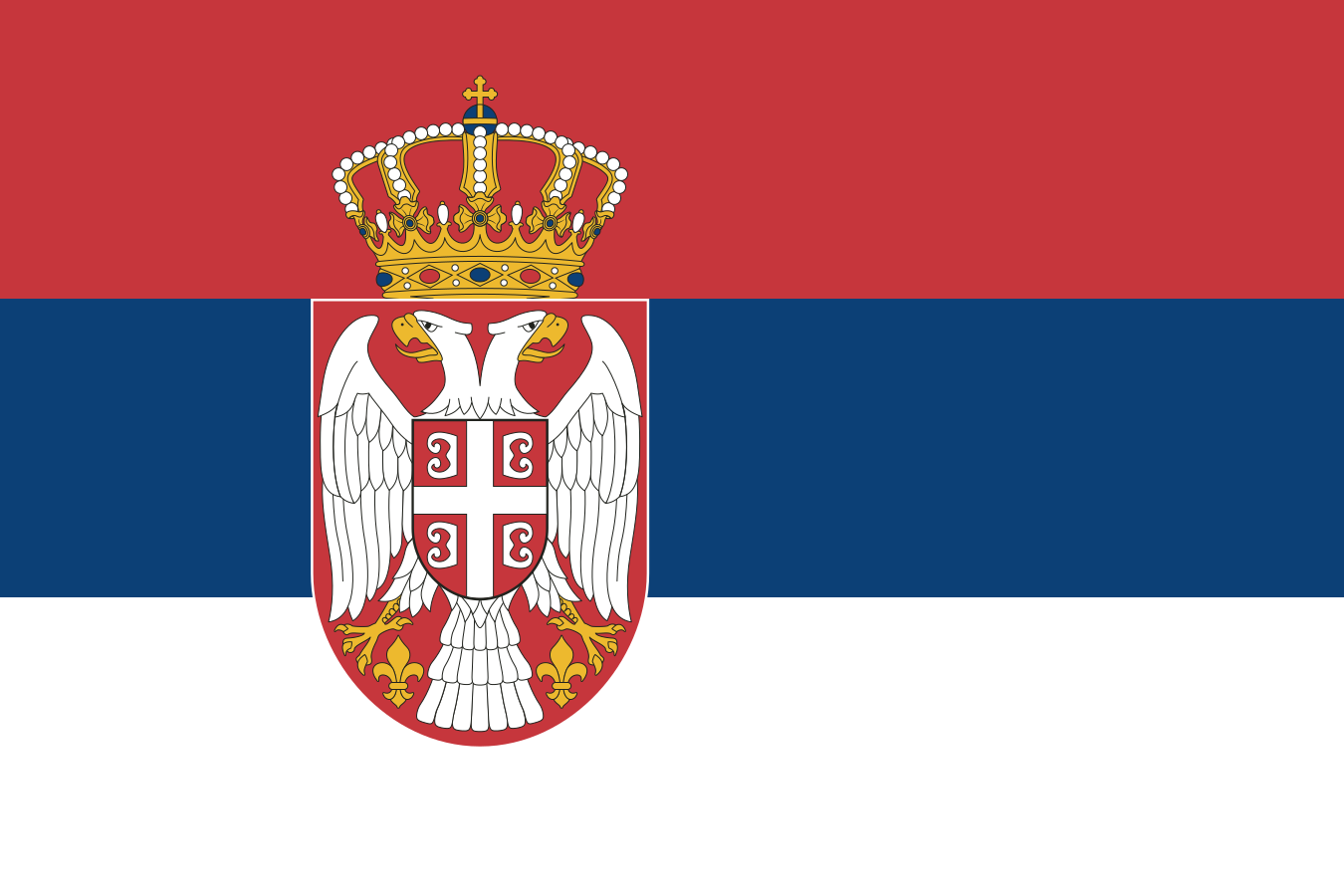
Three equal horizontal stripes of red (top), blue, and white; the national coat of arms is shifted to the left side; the principal field of the coat of arms displays a two-headed white eagle on a red shield; a smaller red shield on the eagle is divided into four quarters by a white cross; a royal crown is on top of the coat of arms.
What the flag means
Red, blue, and white are the pan-Slav colors that represent freedom and revolutionary ideals; the eagle on a red shield represents the government; the smaller shield represents the country; the meaning and origin of the curved white symbols in each quarter are not clear.
The catalogue shows the state flag with the coat of arms. A plain tricolor civil flag is also used.
Source: CIA World Factbook (archived)
SeychellesAfrica
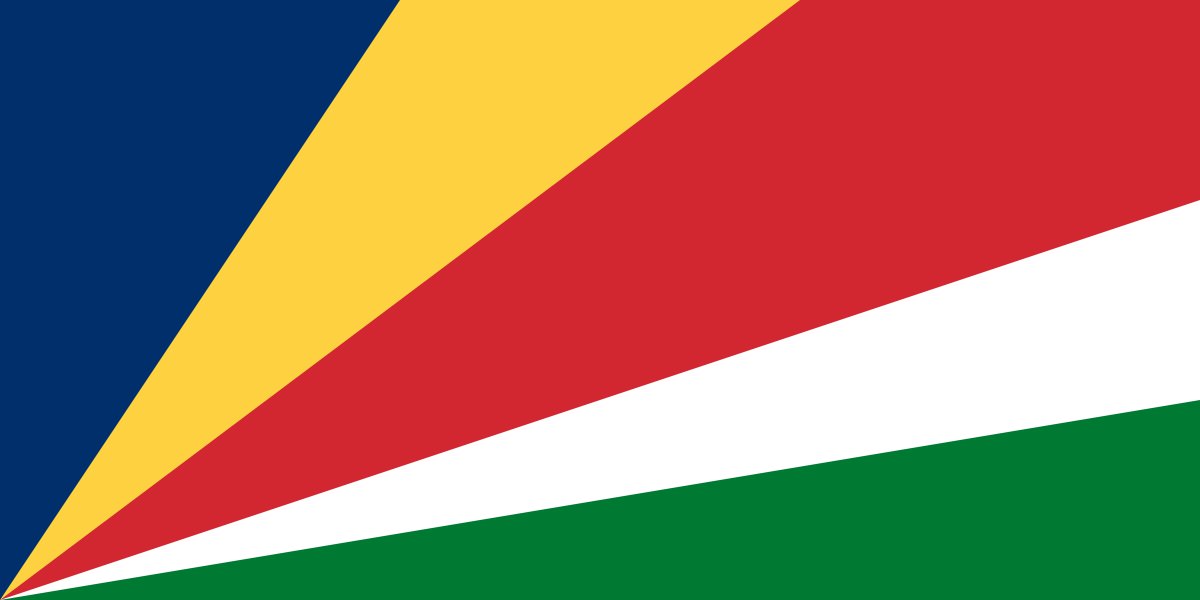
Five expanding bands of blue, yellow, red, white, and green, radiating from the bottom left corner.
What the flag means
The bands symbolize a dynamic new country moving into the future; blue stands for the sky and sea, yellow for the sun giving light and life, red for the people's determination to work for the future in unity and love, white for social justice and harmony, and green for the land and natural environment.
Source: CIA World Factbook (archived)
Sierra LeoneAfrica
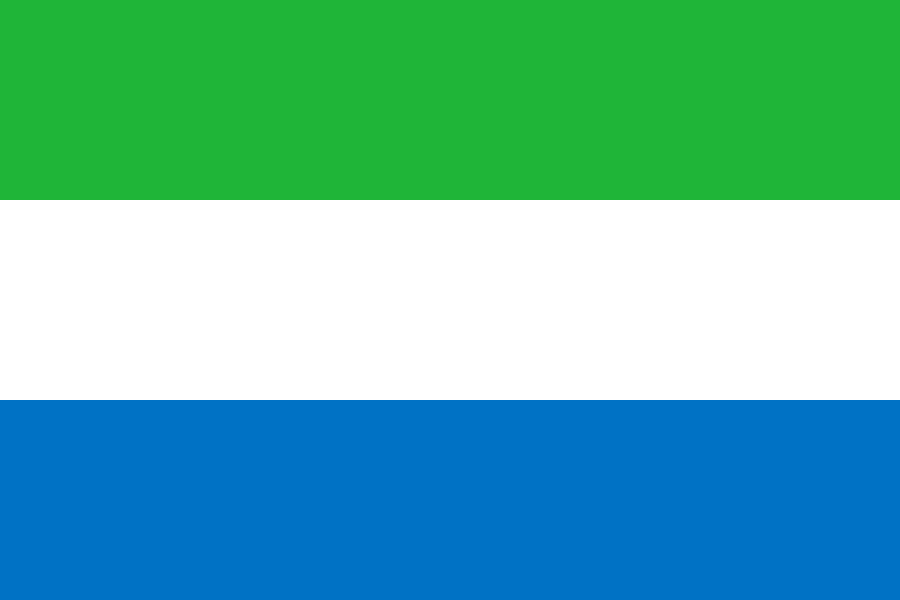
Three equal horizontal bands of light green (top), white, and light blue.
What the flag means
Green stands for agriculture, mountains, and natural resources; white for unity and justice; and blue for the sea and the natural harbor in Freetown.
Source: CIA World Factbook (archived)
SingaporeAsia
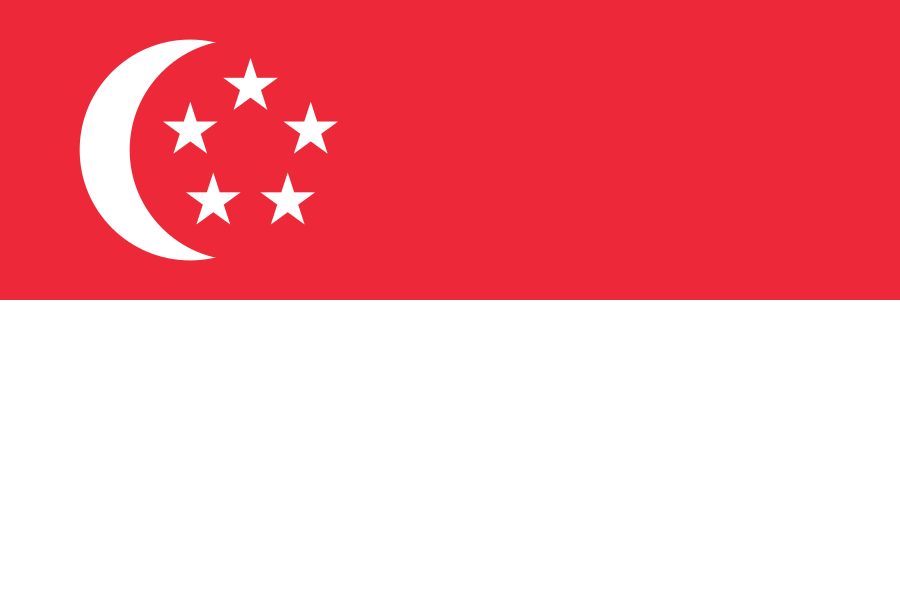
Two equal horizontal bands of red (top) and white; a vertical white crescent is on the left side of the red band, with a circle of five five-pointed white stars to the right of the crescent.
What the flag means
Red stands for brotherhood and equality, and white for purity and virtue; the waxing crescent moon symbolizes a young nation on the ascendancy; the stars represent the national ideals of democracy, peace, progress, justice, and equality.
Source: CIA World Factbook (archived)
SlovakiaEurope
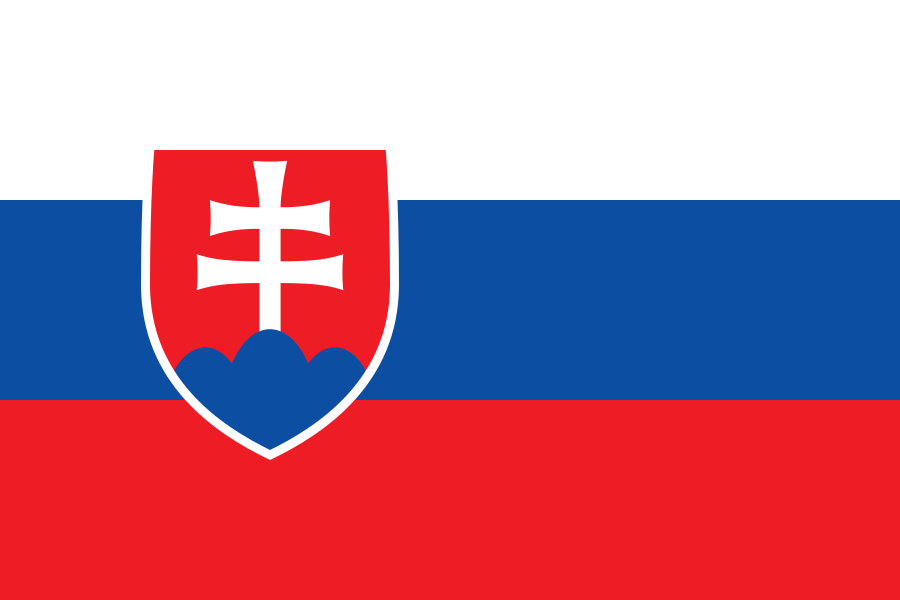
Three equal horizontal bands of white (top), blue, and red; the national coat of arms (a red shield bordered in white, with a white double-barred cross of St. Cyril and St. Methodius on top of three blue hills) is centered over the bands but offset to the left.
What the flag means
White, blue, and red are the pan-Slav colors.
Source: CIA World Factbook (archived)
SloveniaEurope
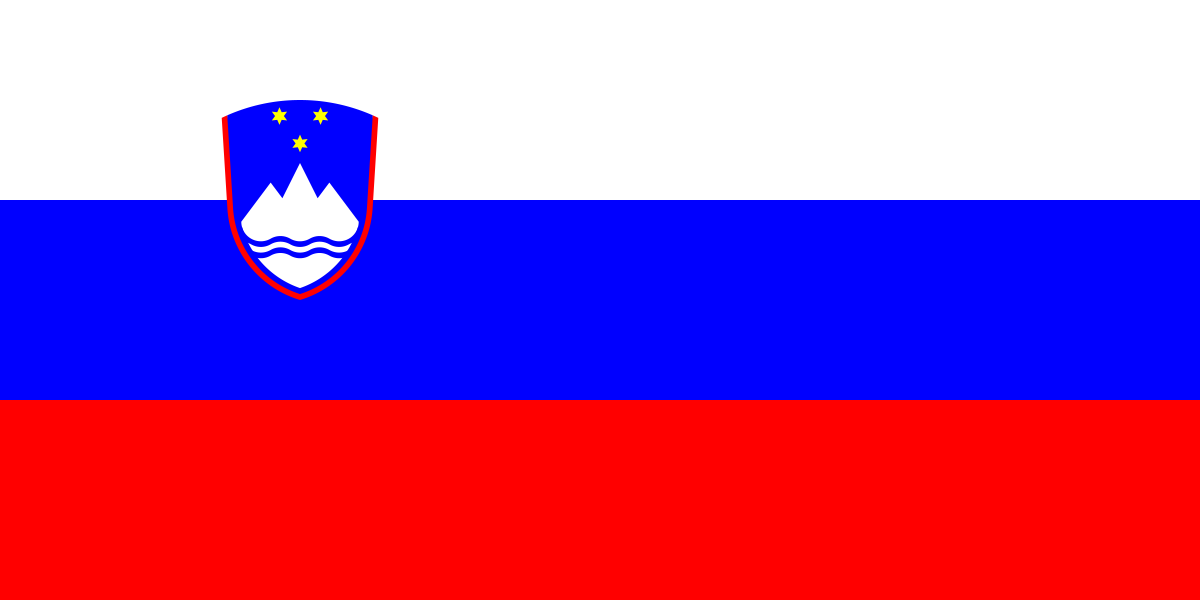
Three equal horizontal bands of white (top), blue, and red; the Slovenian seal (a shield with Triglav, the country's highest peak, in white on a blue background) is at the center, with two wavy blue lines under it; three six-pointed stars in an inverted triangle appear on the upper-left.
What the flag means
The wavy lines represent seas and rivers; the colors come from the medieval coat of arms of the Duchy of Carniola; the stars come from the coat of arms of the Counts of Celje (a Slovene dynastic house).
Source: CIA World Factbook (archived)
Solomon IslandsOceania
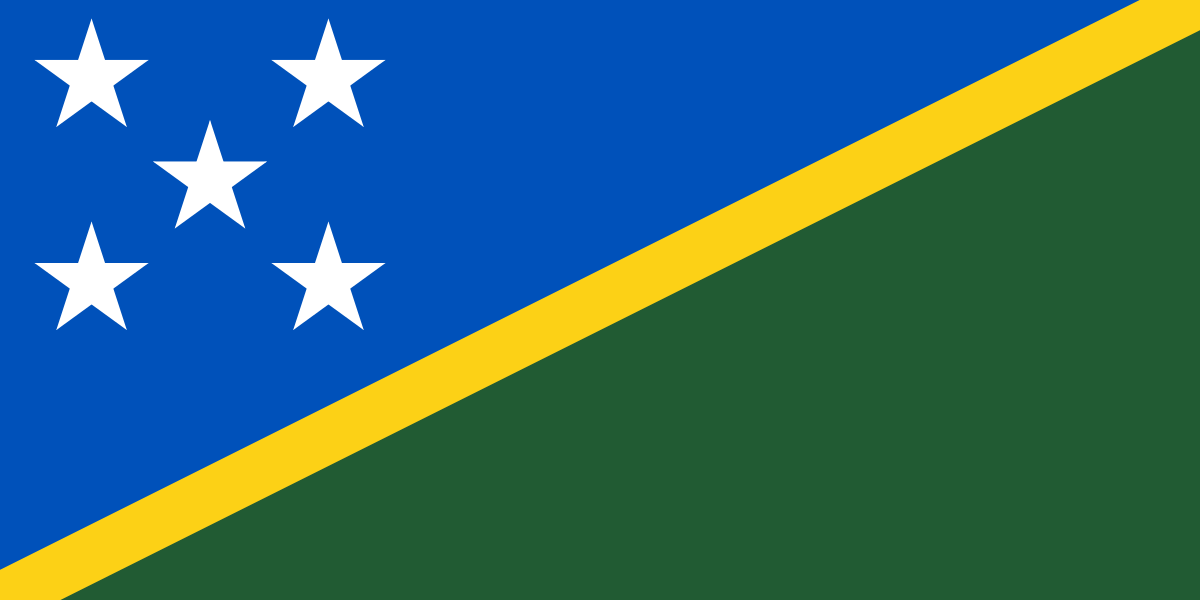
Divided diagonally by a yellow stripe from the lower-left corner; the upper triangle (left side) is blue with five five-pointed white stars in an "X" pattern; the lower triangle is green.
What the flag means
Blue stands for the ocean, green for the land, and yellow for sunshine; the five stars stand for the main island groups.
Source: CIA World Factbook (archived)
SomaliaAfrica
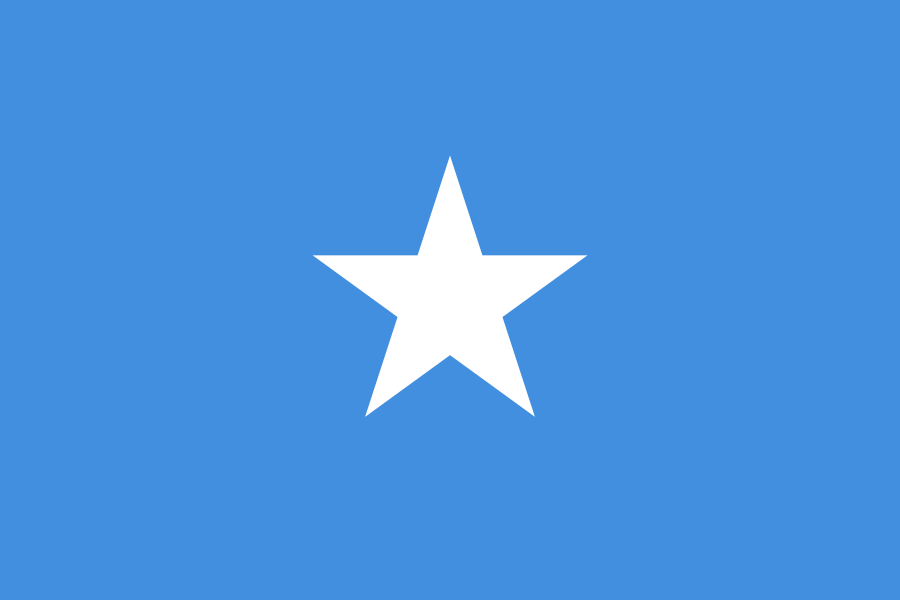
Light blue with a large white five-pointed star in the center.
What the flag means
The blue field was originally influenced by the UN flag but today is said to represent the sky and the Indian Ocean; the five points of the star represent the regions in the horn of Africa where Somali people live: the former British Somaliland and Italian Somaliland (which together make up Somalia), Djibouti, Ogaden (Ethiopia), and the Northeast Province (Kenya).
Source: CIA World Factbook (archived)
South AfricaAfrica
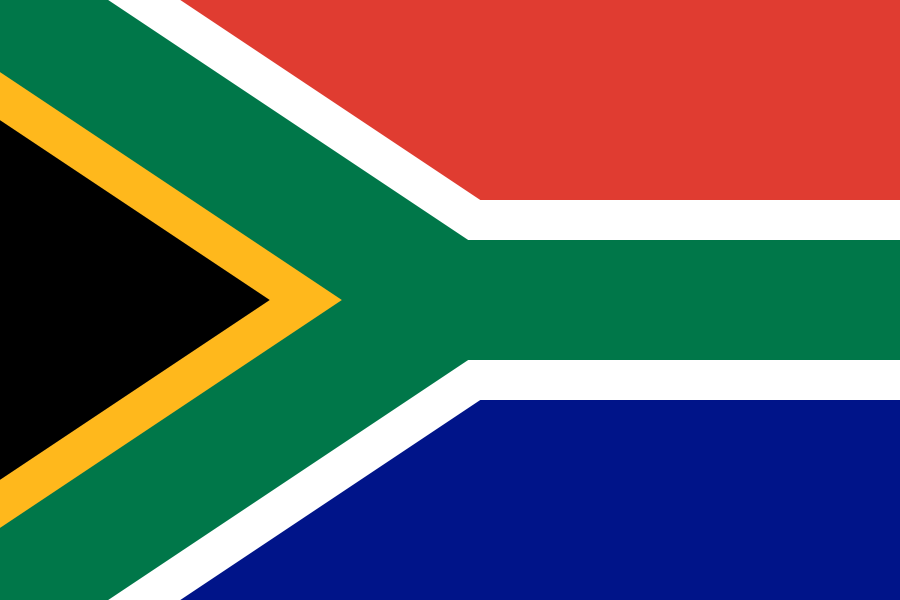
Two equal-width horizontal bands of red (top) and blue separated by a central green band that splits into a horizontal Y; a black isosceles triangle is in the Y, with narrow yellow bands around it; the red and blue bands are bordered by narrow white stripes.
What the flag means
The colors have no official meaning, but the Y stands for "the convergence of diverse elements within South African society, taking the road ahead in unity".
Source: CIA World Factbook (archived)
South KoreaAsia
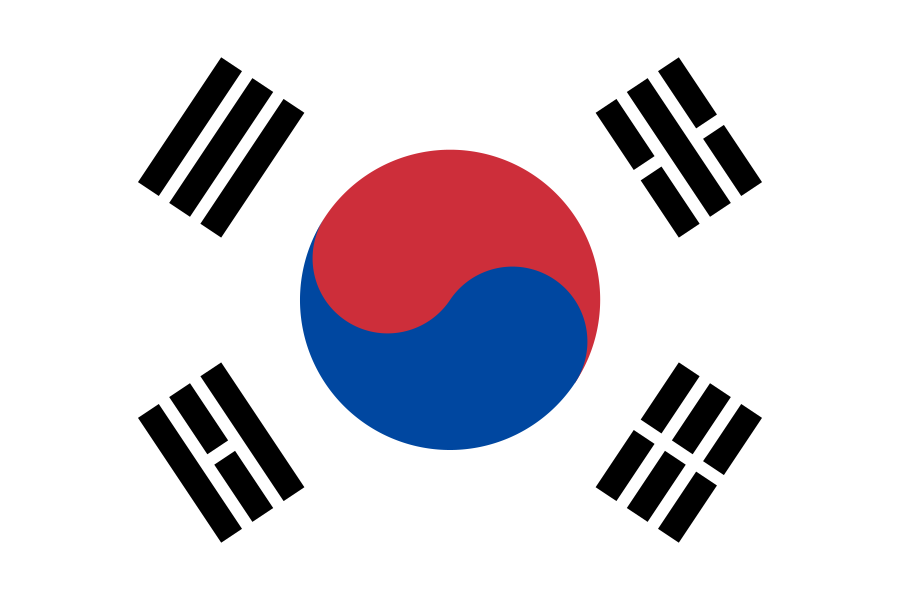
White with a red-and-blue yin-yang symbol in the center; a black trigram ( kwae ) from the ancient I Ching (Book of Changes) is in each corner of the white field.
What the flag means
The flag is called Taegukki; white is a traditional Korean color and represents peace and purity; blue stands for the negative cosmic forces of the yin, and red for the opposite positive forces of the yang; each trigram represents one of the universal elements, which together express the principle of movement and harmony.
Source: CIA World Factbook (archived)
South SudanAfrica
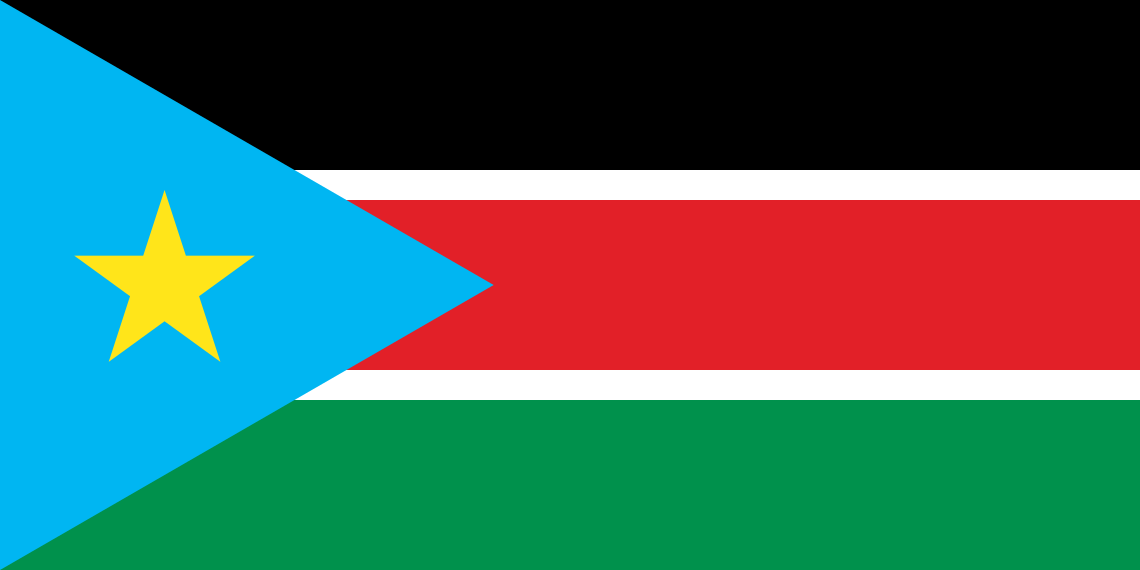
Three equal horizontal bands of black (top), red, and green; the red band is edged in white; a five-pointed gold star is in the middle of a blue isosceles triangle based on the left side.
What the flag means
Black stands for the people, red for the blood shed in the struggle for freedom, green for the land, and blue for the Nile; the gold star represents the unity of the country's states.
Source: CIA World Factbook (archived)
SpainEurope
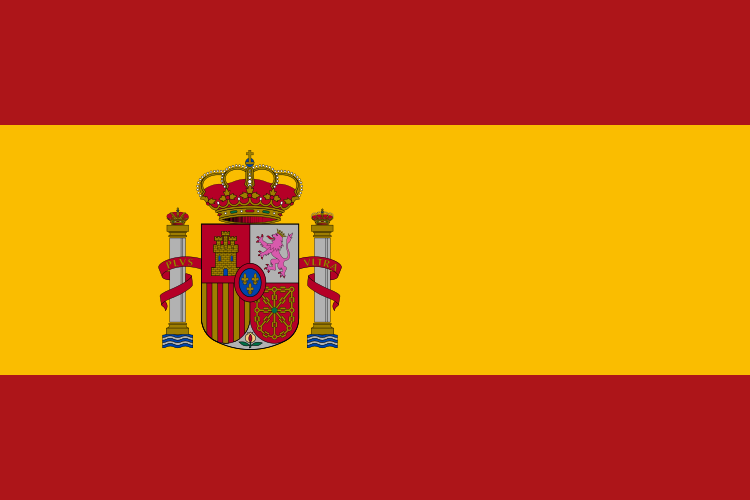
Three horizontal bands of red (top), yellow (double-width), and red, with the national coat of arms on the left side of the yellow band; the coat of arms shows the emblems of the area's former kingdoms (clockwise from upper left: Castile, Leon, Navarre, and Aragon), which also used red and yellow as their colors; the stylized pomegranate at the bottom of the shield represents Granada; the two columns represent the Pillars of Hercules, which are promontories (Gibraltar and Ceuta) on the Strait of Gibraltar; a red scroll bears the imperial motto of "Plus Ultra" (further beyond), referring to Spanish lands outside Europe.
What the flag means
The central coat of arms brings together historic Spanish kingdoms. Its shield includes Castile, León, Aragon, Navarre and Granada, with the royal dynasty’s arms at the center.
Sri LankaAsia
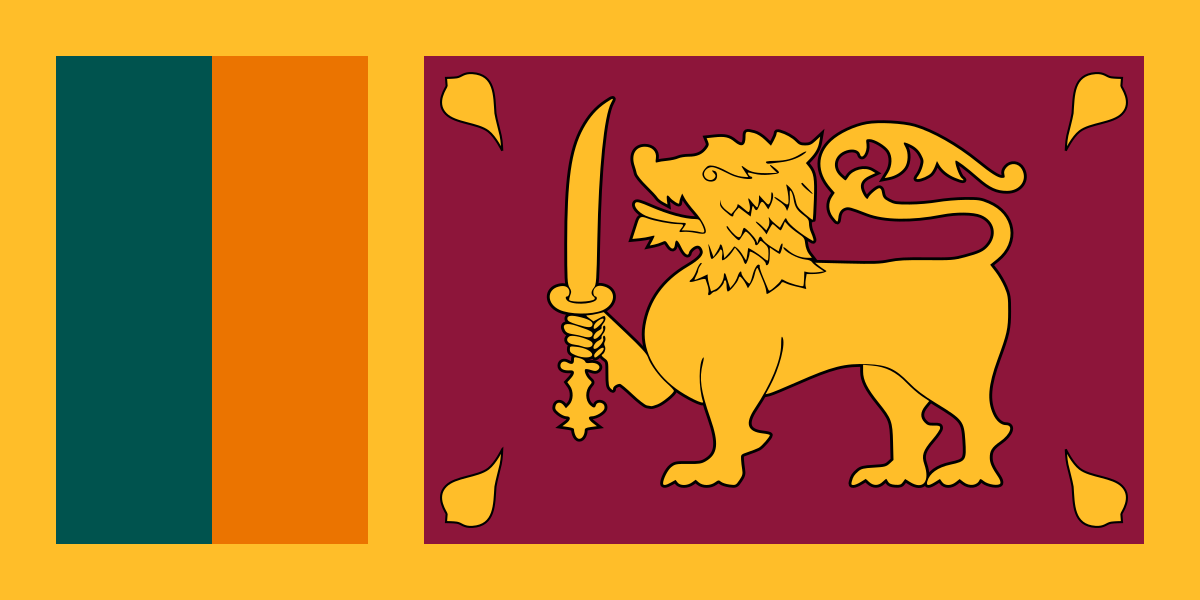
Yellow with two panels; the smaller panel on the left has two equal vertical bands of green (left side) and orange; the larger panel has a yellow lion holding a sword on a maroon field, with a yellow bo leaf in each corner.
What the flag means
The sword stands for national sovereignty; the lion for Sinhalese ethnicity, the strength of the nation, and bravery; the four bo leaves for Buddhism and the four virtues of kindness, friendliness, happiness, and equanimity; orange stands for Tamils, green for Moors, and maroon for the Sinhalese majority; yellow represents other ethnic groups.
Source: CIA World Factbook (archived)
SudanAfrica
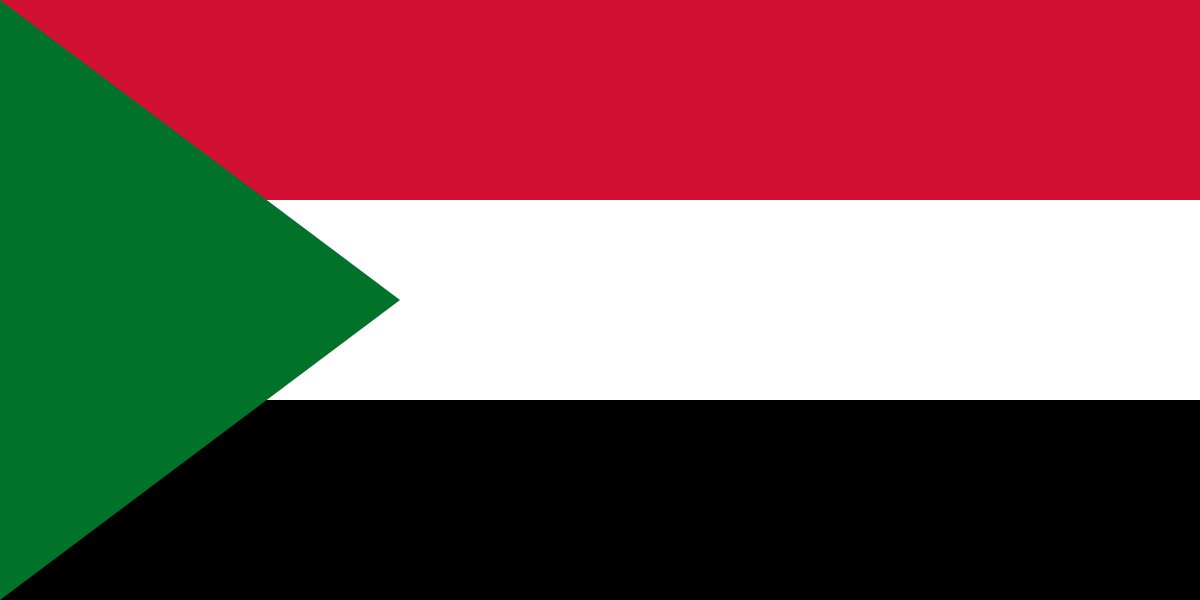
Three equal horizontal bands of red (top), white, and black, with a green isosceles triangle based on the left side.
What the flag means
Red stands for the struggle for freedom; white for peace, light, and love, black for the people; green for Islam, agriculture, and prosperity.
Source: CIA World Factbook (archived)
SurinameSouth America
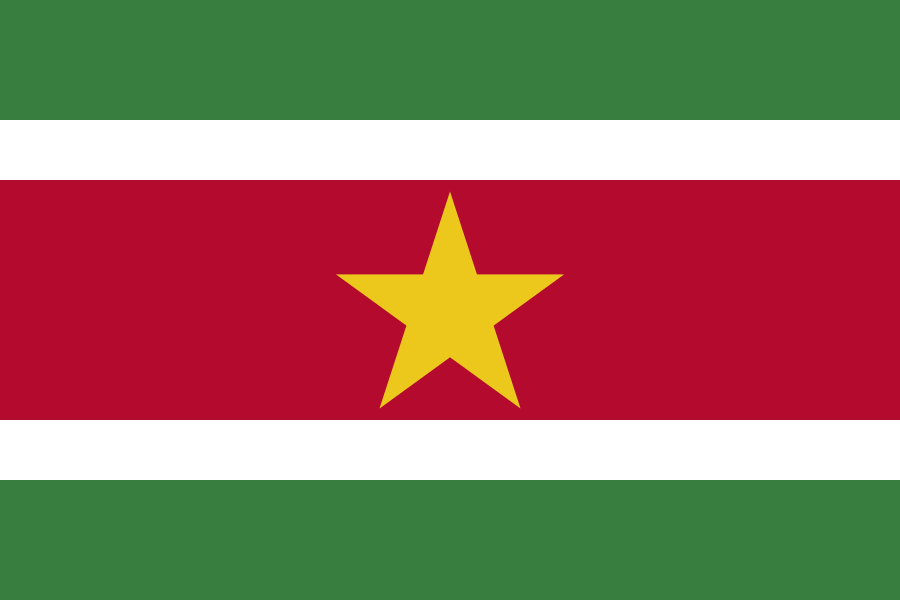
Five horizontal bands of green (top, double-width), white, red (quadruple-width), white, and green (double-width); a five-pointed yellow star is centered on the red band.
What the flag means
Red stands for progress and love, green for hope and fertility, and white for peace, justice, and freedom; the star represents the unity of ethnic groups.
Source: CIA World Factbook (archived)
SwedenEurope
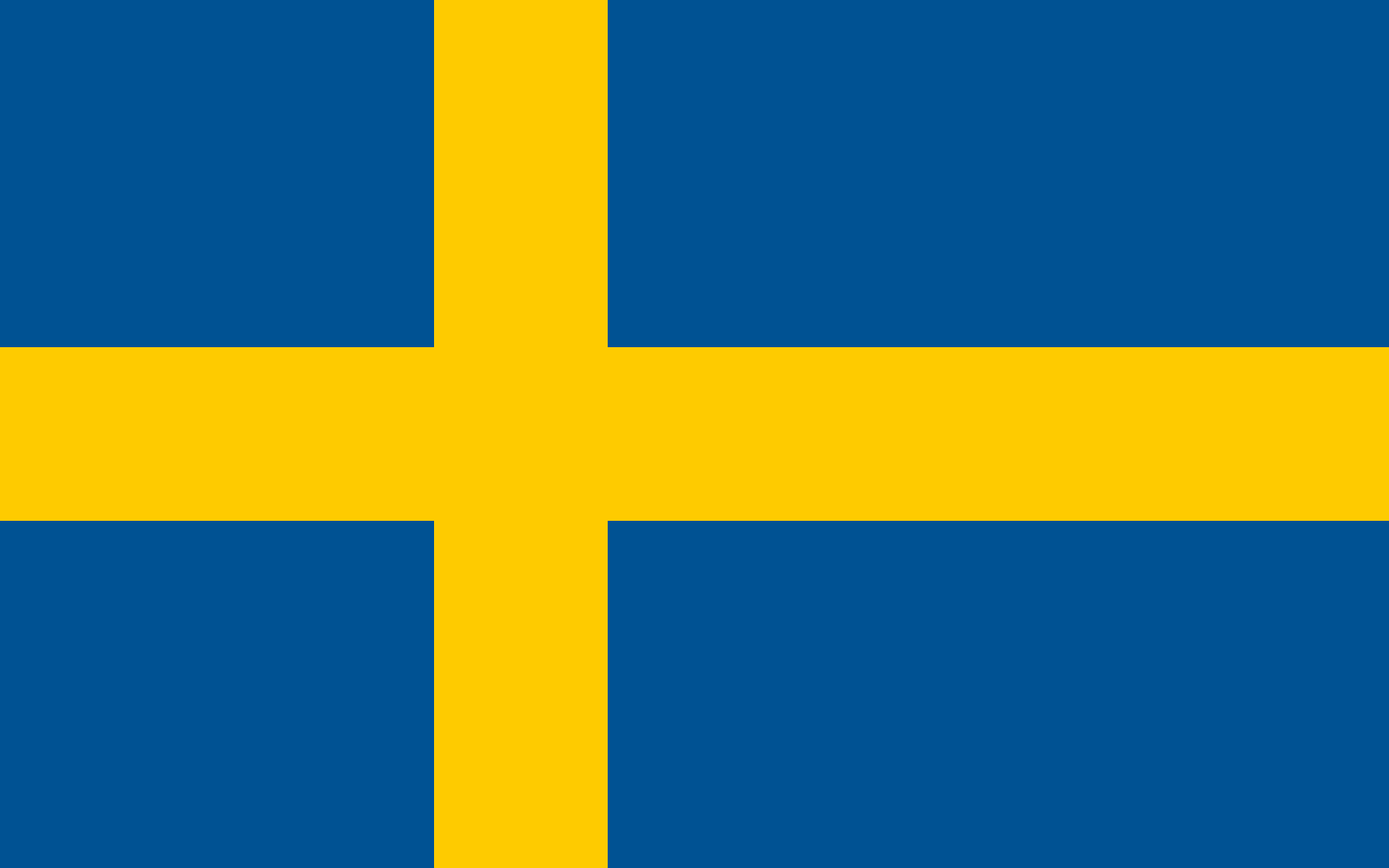
Blue with a golden yellow cross extending to the edges of the flag; the cross is shifted to the left side in the style of the Dannebrog (Danish flag).
What the flag means
The colors come from the Swedish coat of arms.
Source: CIA World Factbook (archived)
SwitzerlandEurope
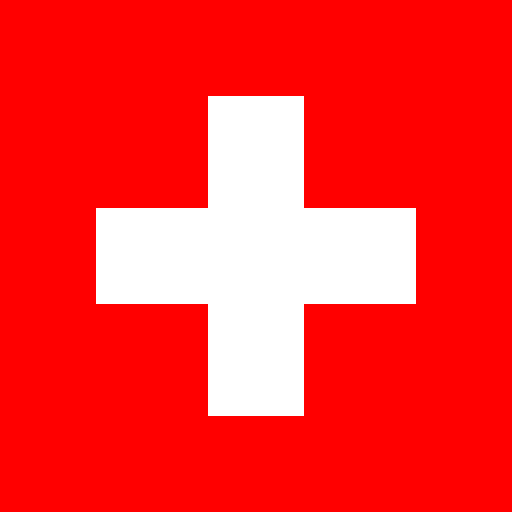
Red square with an equal-armed white cross in the center that does not extend to the edges of the flag.
What the flag means
The white cross recalls a symbol used to identify Swiss Confederation troops in the medieval period. The national flag is square; Swiss maritime flags use a rectangular form.
Source: CIA World Factbook (archived)
SyriaAsia
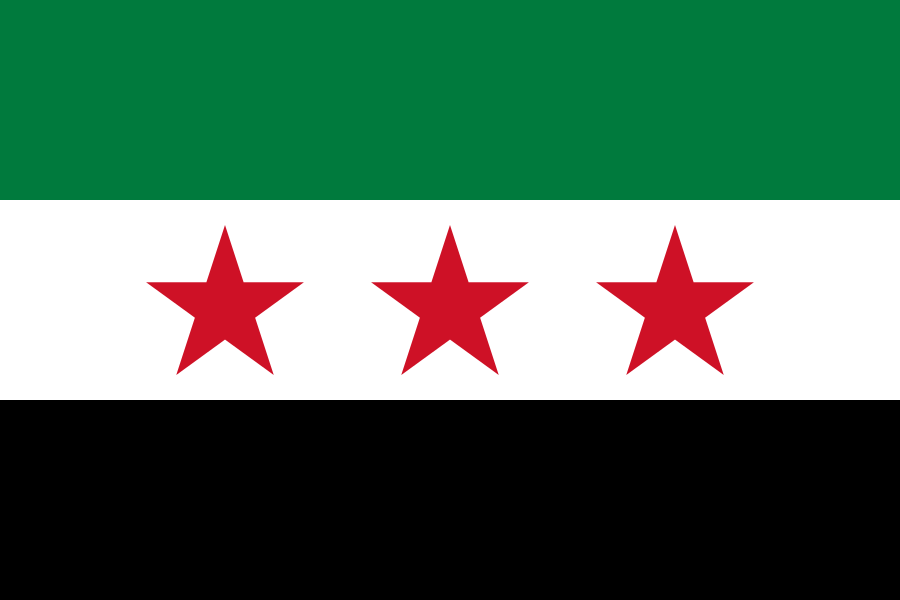
Three equal horizontal bands of green, white and black, with three red five-pointed stars across the white band.
What the flag means
The colors recall historic Arab caliphates and are also associated with hope, peace and struggle. The three red stars form part of the independence-era design restored as the national flag.
This is the green-white-black, three-star design reinstated after the change of government in December 2024 and formalized in 2025.
São Tomé and PríncipeAfrica
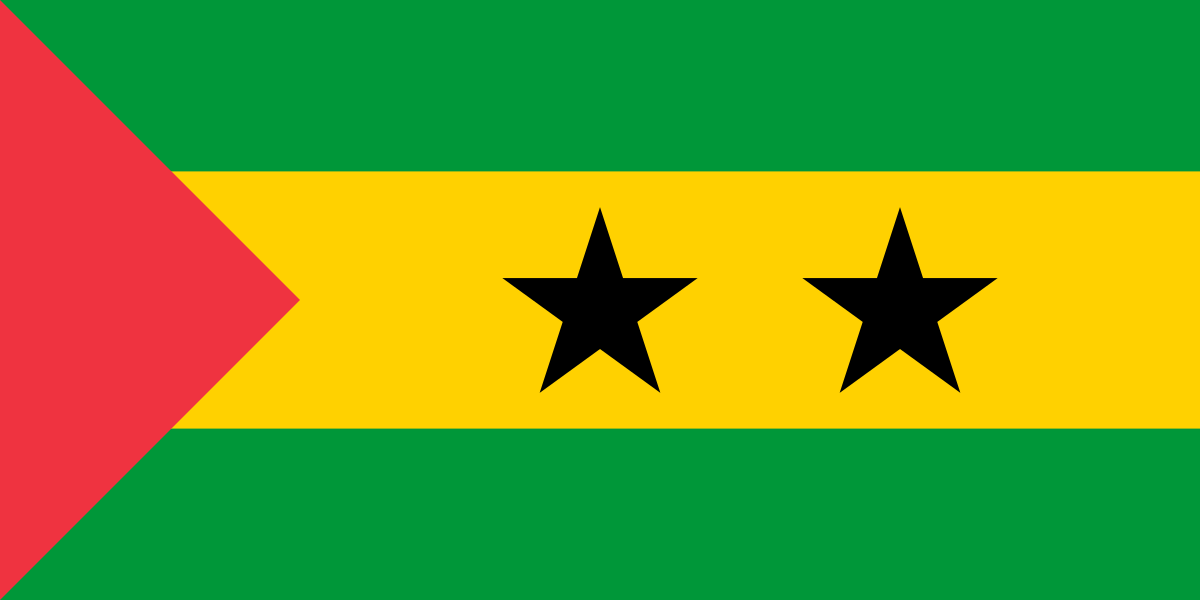
Three horizontal bands of green (top), yellow (double-width), and green with two five-pointed black stars in the center of the yellow band and a red isosceles triangle based on the left side.
What the flag means
Green stands for the country's rich vegetation, red for the struggle for independence, and yellow for cocoa, one of the country's main agricultural products; the two stars symbolize the main islands.
Source: CIA World Factbook (archived)
TajikistanAsia
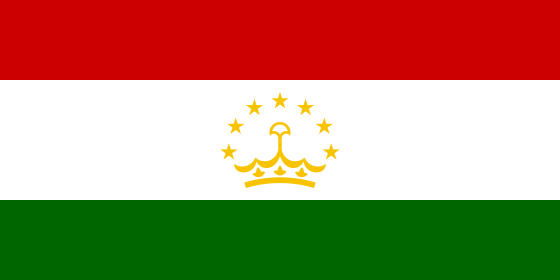
Three horizontal stripes of red (top), a wider stripe of white, and green; a gold crown under seven five-pointed gold stars is in the center of the white stripe.
What the flag means
Red stands for the sun, victory, and the unity of the nation; white for purity, cotton, and mountain snows; green for Islam and nature's bounty; the crown symbolizes the Tajik people; the stars represent the number seven, which is considered a symbol of perfection and the embodiment of happiness.
Source: CIA World Factbook (archived)
TanzaniaAfrica
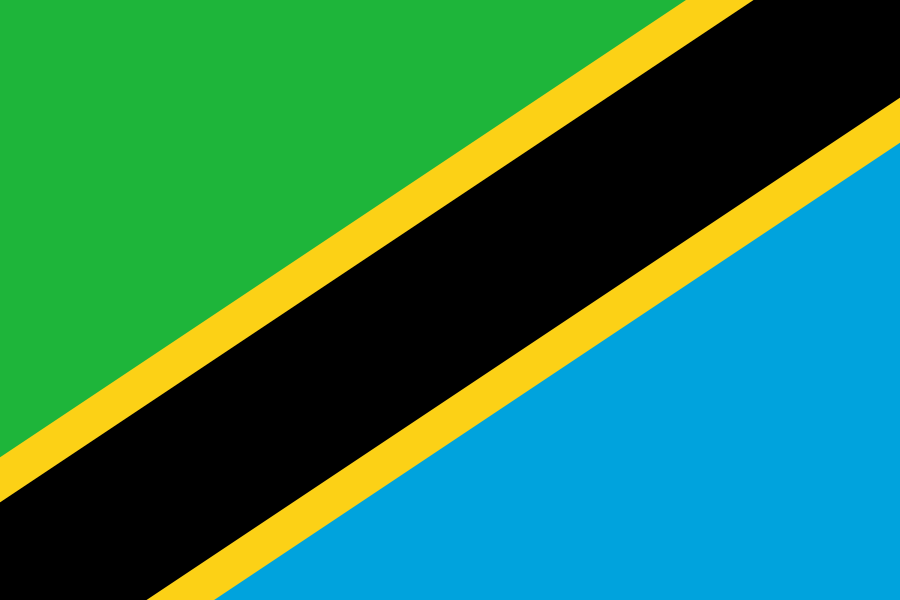
Divided diagonally by a yellow-edged black band, from the lower left corner to the upper right corner; the upper triangle (left side) is green, and the lower is blue.
What the flag means
Colors come from the flags of Tanganyika and Zanzibar; green stands for natural vegetation, gold for rich mineral deposits, black for the Swahili people, and blue for lakes and rivers, as well as the Indian Ocean.
Source: CIA World Factbook (archived)
ThailandAsia
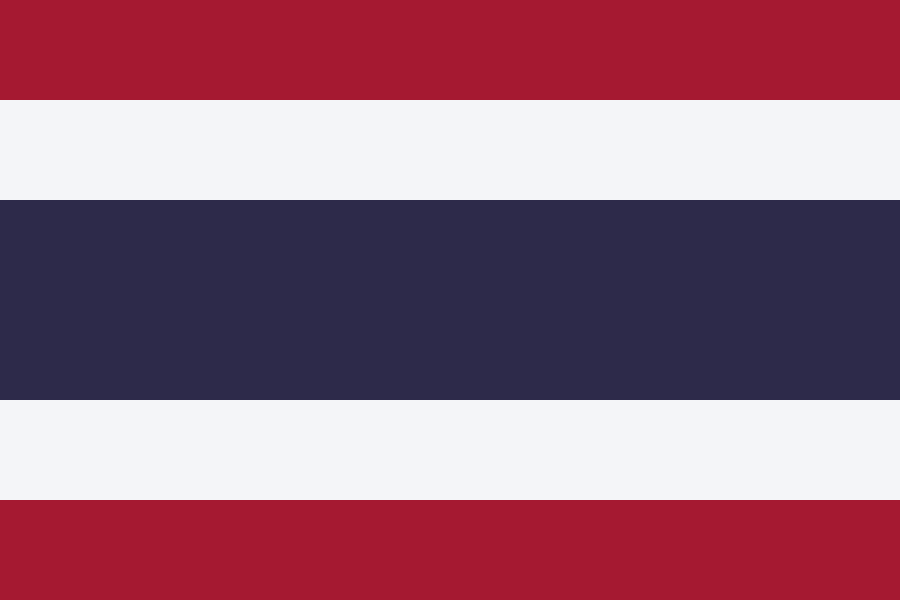
Five horizontal bands of red (top), white, blue (double-width), white, and red.
What the flag means
Red stands for the nation and the blood of life, white for religion and the purity of Buddhism, and blue for the monarchy.
Source: CIA World Factbook (archived)
Timor-LesteAsia
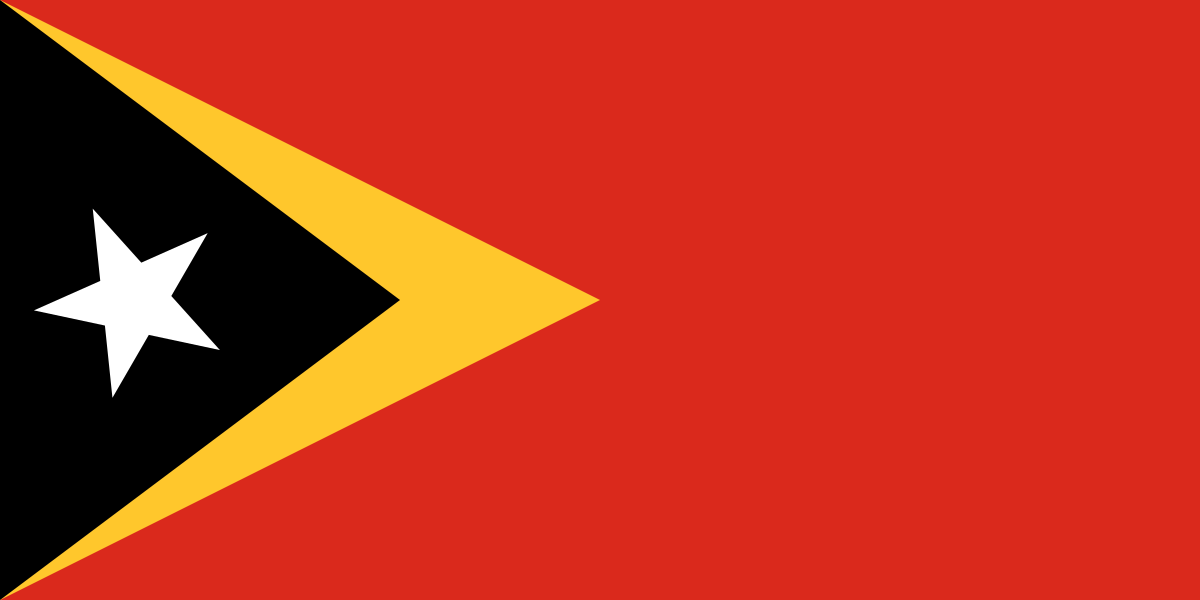
Red with a black isosceles triangle (based on the left side) on a slightly longer yellow arrowhead that extends to the center of the flag; a white star is in the center of the black triangle.
What the flag means
Yellow stands for past colonialism, black for obscurantism that needs to be overcome, and red for the struggle for freedom; the white star represents peace and a guiding light.
Source: CIA World Factbook (archived)
TogoAfrica
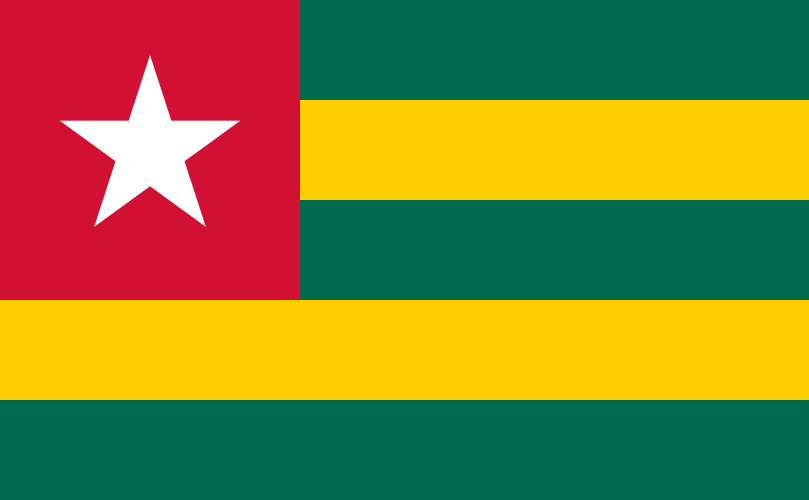
Five equal horizontal bands of green (top and bottom) alternating with yellow; a five-pointed white star on a red square is in the upper-left corner.
What the flag means
The five horizontal stripes stand for the country's regions; red stands for the people's loyalty and patriotism; green for hope, fertility, and agriculture; yellow for mineral wealth and faith that hard work and strength will bring prosperity; the star symbolizes life, purity, peace, dignity, and national independence.
Source: CIA World Factbook (archived)
TongaOceania
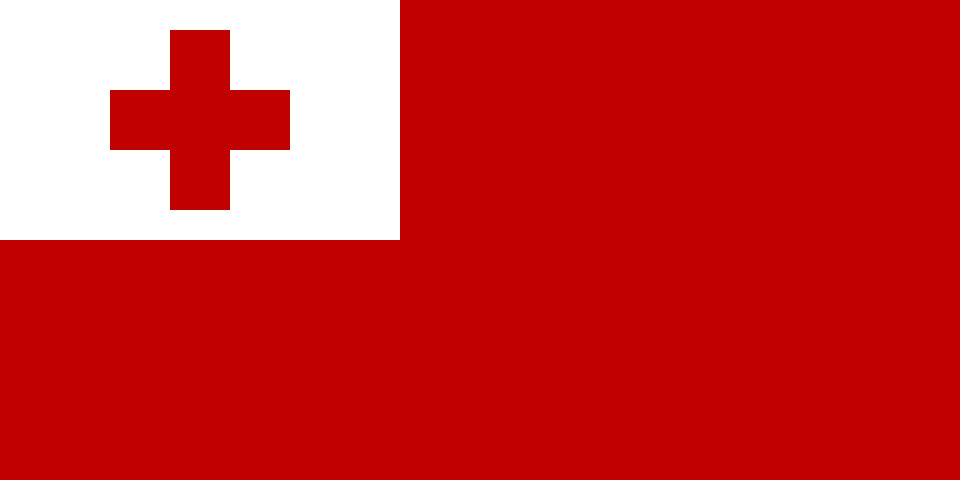
Red with a red cross on a white rectangle in the upper-left corner.
What the flag means
The cross stands for Christianity in Tonga, red for Christ's blood and sacrifice, and white for purity.
Source: CIA World Factbook (archived)
Trinidad and TobagoNorth America
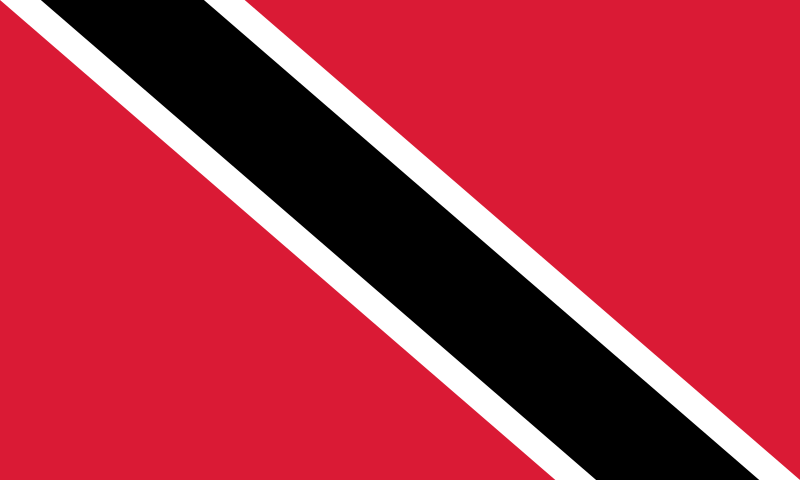
Red with a white-edged black diagonal band from the upper left to the lower right.
What the flag means
The colors represent the elements of earth, water, and fire; black also stands for the wealth of the land and the dedication of the people; white for the sea, the purity of the country's aspirations, and equality; red for the sun, the vitality of the land, and the people's courage and friendliness.
Source: CIA World Factbook (archived)
TunisiaAfrica
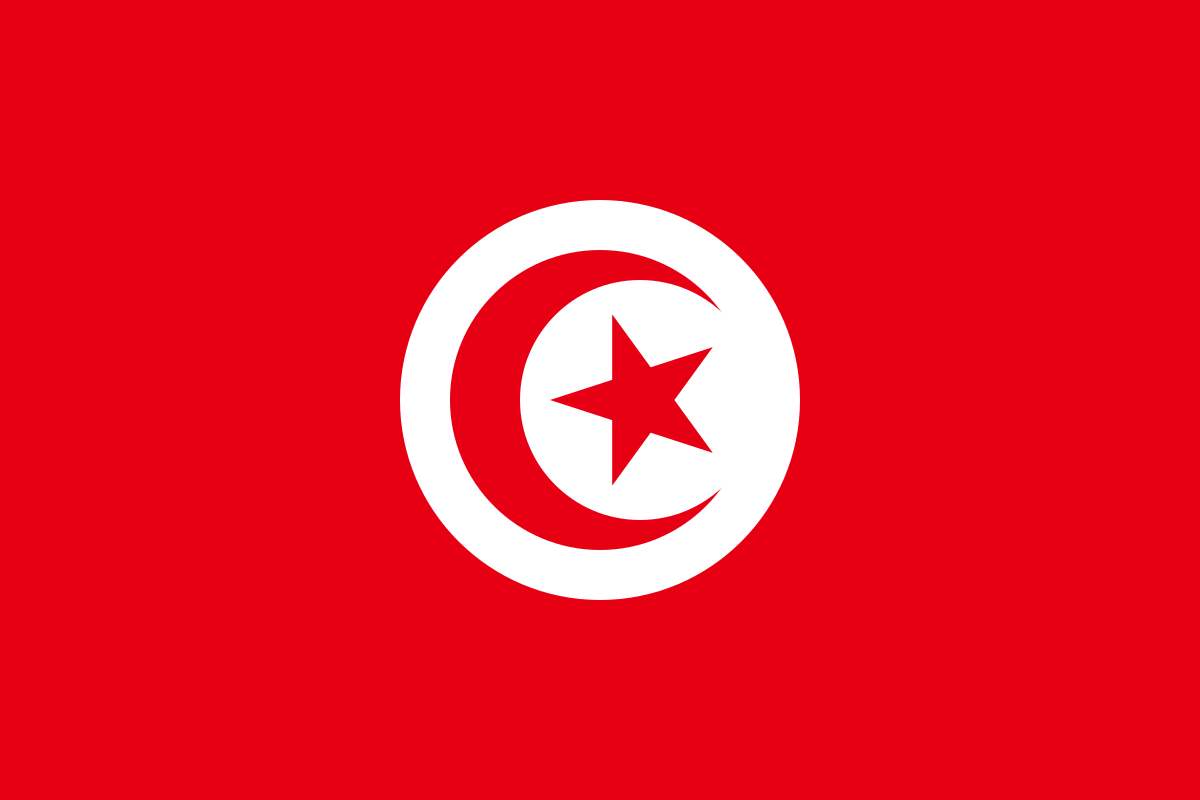
Red with a white disk in the center that displays a red crescent around a five-pointed red star.
What the flag means
Red stands for martyrs' blood shed the fight against oppression, and white for peace; the crescent and star are traditional symbols of Islam.
Source: CIA World Factbook (archived)
TurkmenistanAsia
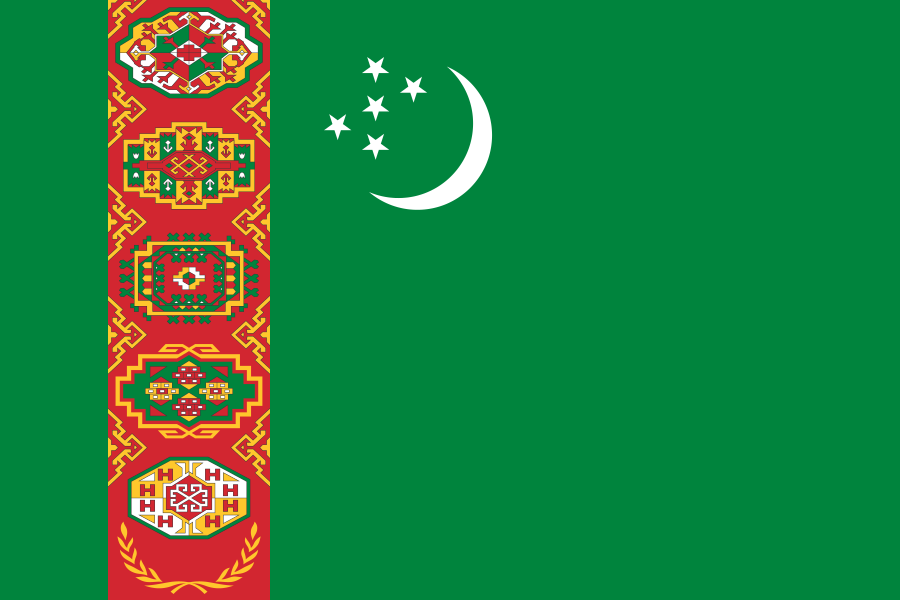
Green field with a vertical red stripe near the left side; the stripe has five tribal guls (designs used in producing carpets) stacked above two crossed olive branches; five five-pointed white stars and a white crescent moon appear in the upper left corner of the main field.
What the flag means
The green color and crescent moon stand for Islam, the five stars for the country's regions, and the guls for national identity.
Source: CIA World Factbook (archived)
TuvaluOceania
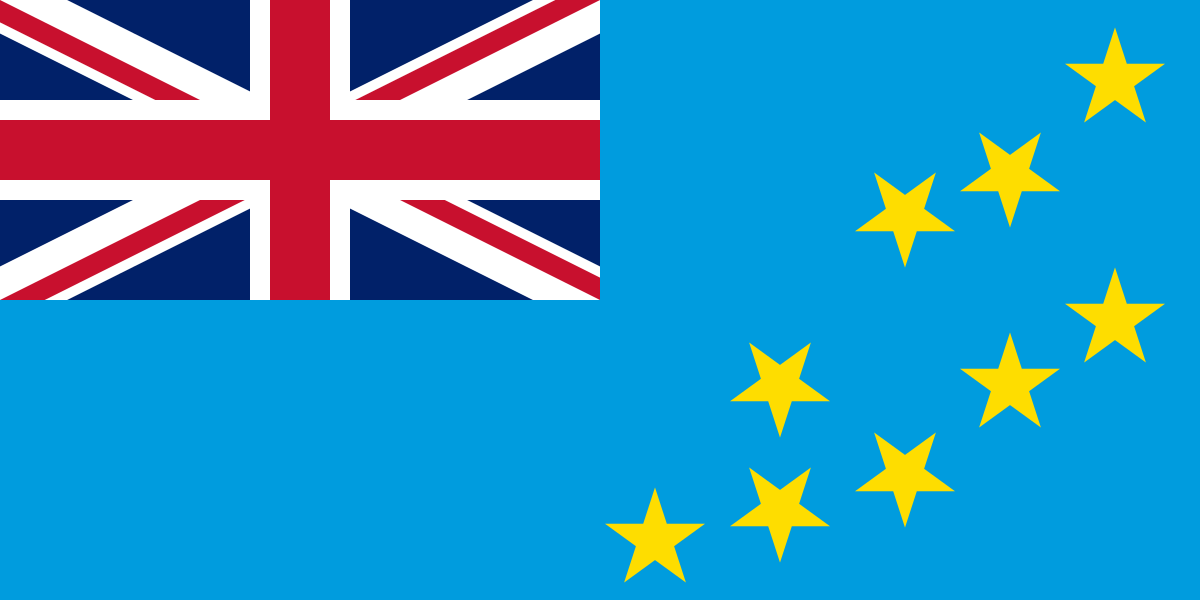
Light blue with the UK flag in the upper-left quadrant; the right half of the flag has nine five-pointed yellow stars.
What the flag means
The stars represent a map of the country, with each symbolizing an atoll in the ocean.
Source: CIA World Factbook (archived)
TürkiyeAsia
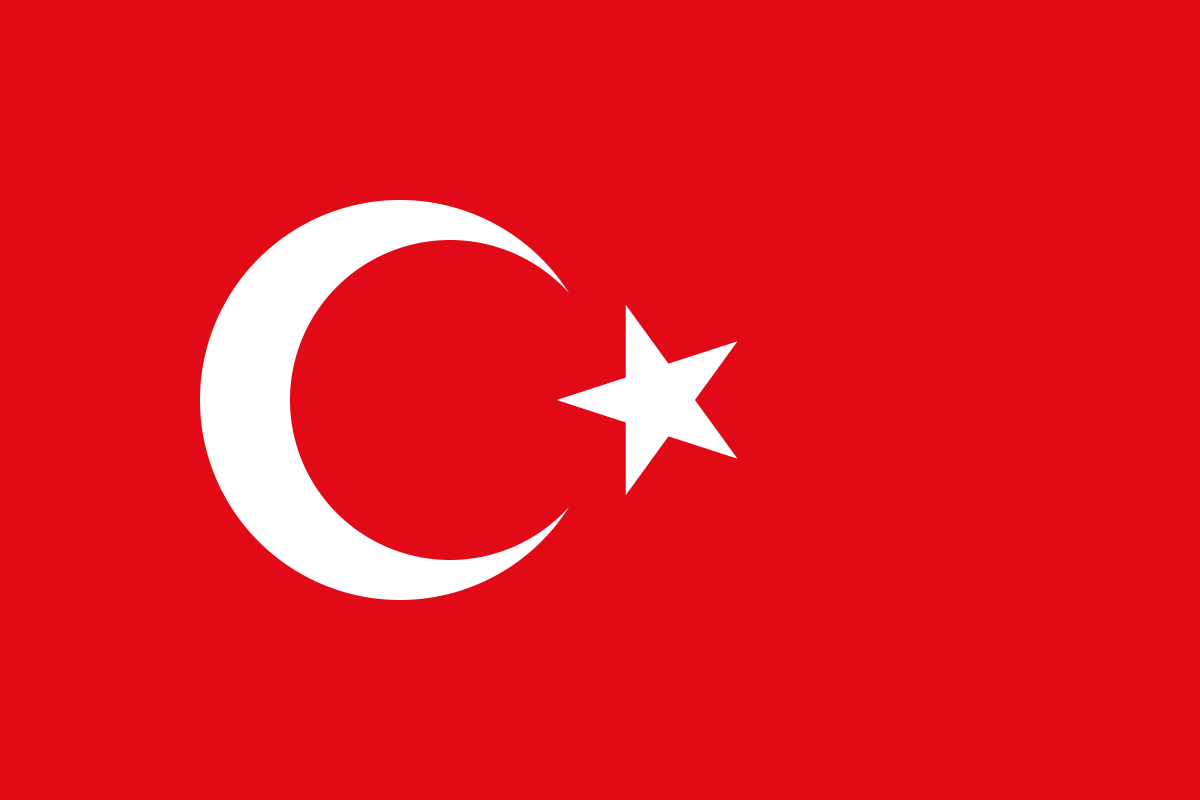
Red with a vertical white crescent moon and five-pointed white star centered just outside the crescent's opening.
What the flag means
The flag colors and designs closely resemble the Ottoman Empire's flag; the crescent moon and star serve as insignia for Turkic peoples; according to one interpretation, the flag represents the reflection of the moon and a star in a pool of blood of Turkish warriors.
Source: CIA World Factbook (archived)
UgandaAfrica
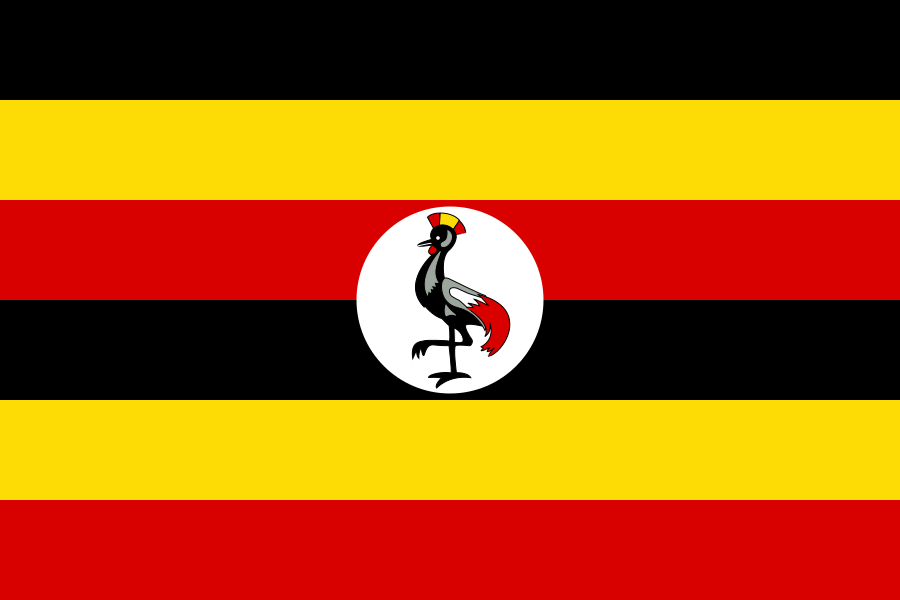
Six equal horizontal bands of black (top), yellow, red, black, yellow, and red; a white disk is at the center and shows a grey crowned crane (the national symbol).
What the flag means
Black stands for the African people, yellow for sunshine and vitality, and red for African brotherhood.
Source: CIA World Factbook (archived)
UkraineEurope
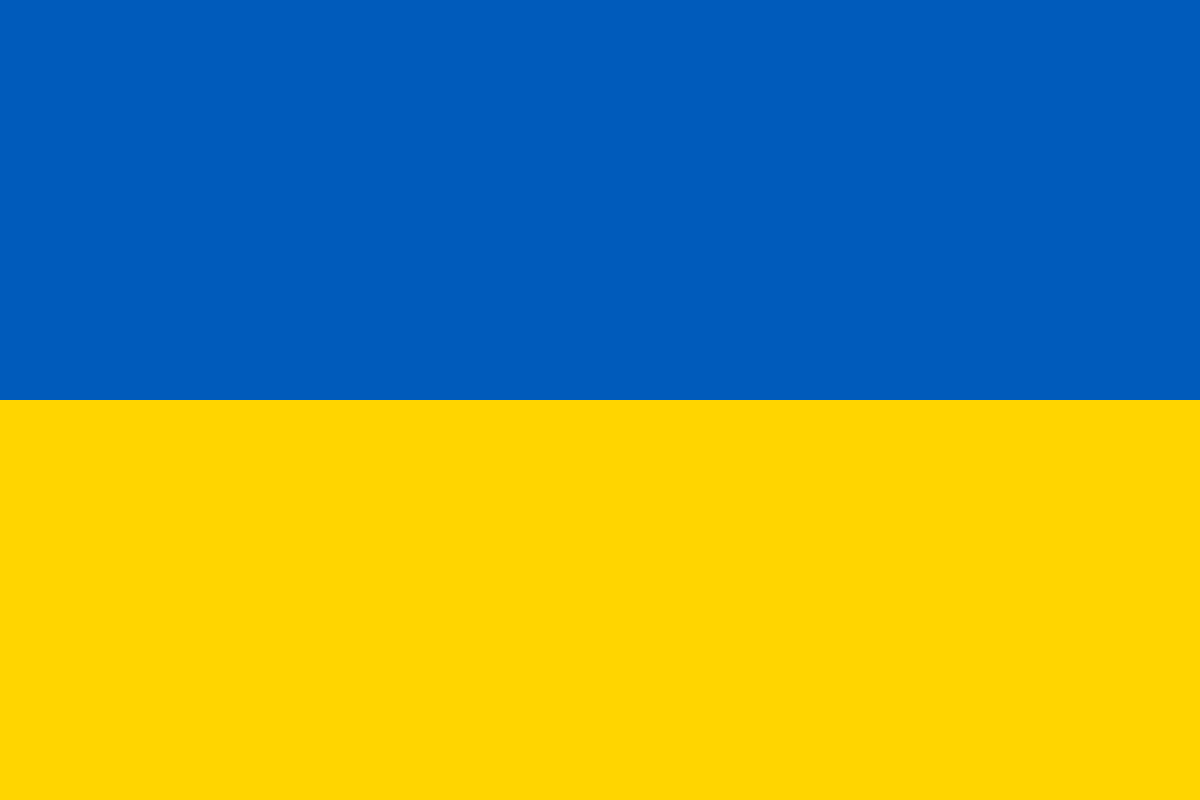
Two equal horizontal bands of blue (top) and yellow.
What the flag means
The colors date back to medieval heraldry, but they are sometimes said to represent grain fields under a blue sky.
Source: CIA World Factbook (archived)
United Arab EmiratesAsia
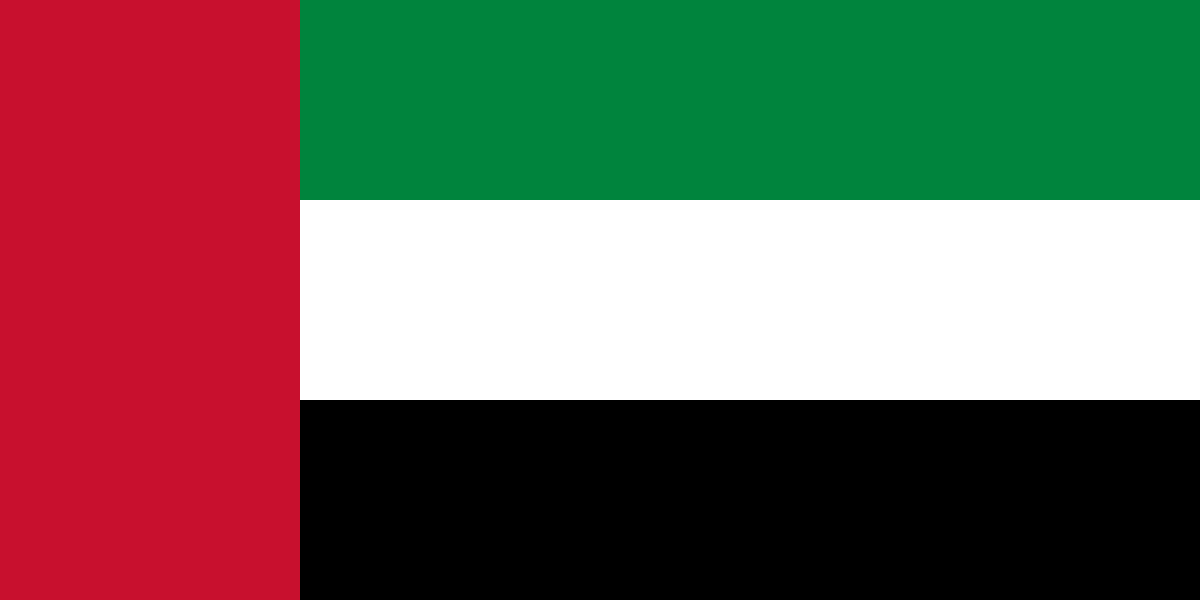
Three equal horizontal bands of green (top), white, and black, with a wider vertical red band on the left side.
What the flag means
The flag incorporates all four pan-Arab colors, which in this case represent fertility (green), neutrality (white), oil (black), and unity (red); red is a traditional color that was part of all the emirates' flags before their unification.
Source: CIA World Factbook (archived)
United KingdomEurope
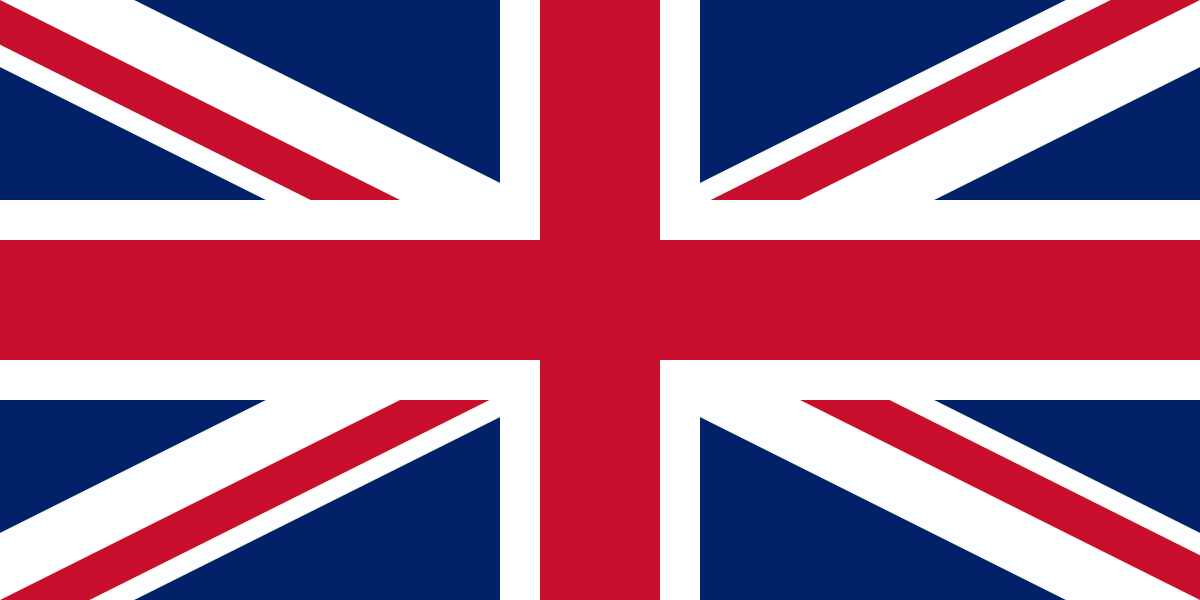
Blue field with the red cross of Saint George (patron saint of England) edged in white on top of the diagonal red cross of Saint Patrick (patron saint of Ireland), which is on top of the diagonal white cross of Saint Andrew (patron saint of Scotland).
What the flag means
The Union Flag combines the crosses associated with Saint George of England, Saint Andrew of Scotland and Saint Patrick of Ireland. The combined design expresses the union represented by the United Kingdom.
Source: CIA World Factbook (archived)
United StatesNorth America
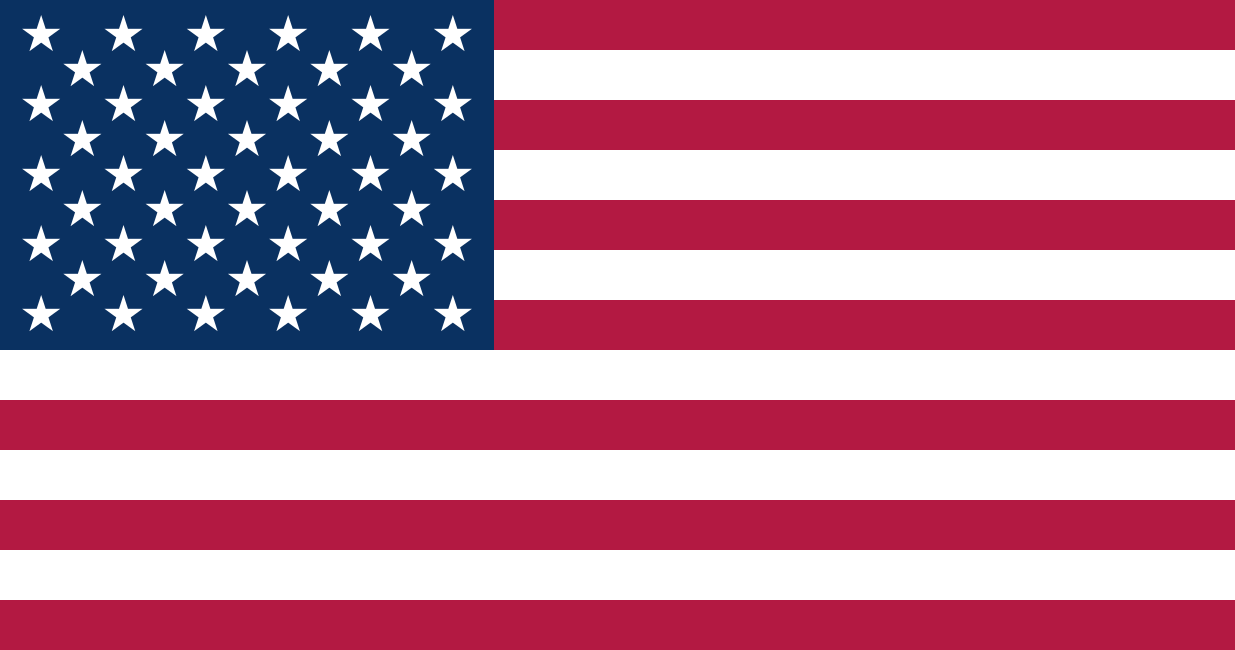
13 equal horizontal stripes of red (top and bottom) alternating with white; a blue rectangle in the upper-left corner has 50 five-pointed white stars, arranged in nine offset horizontal rows of six stars (top and bottom) alternating with rows of five stars.
What the flag means
The stars represent the 50 states, and the stripes represent the 13 original colonies; blue stands for loyalty, devotion, truth, justice, and friendship; red for courage, zeal, and fervency; white for purity and rectitude of conduct.
Source: CIA World Factbook (archived)
UruguaySouth America
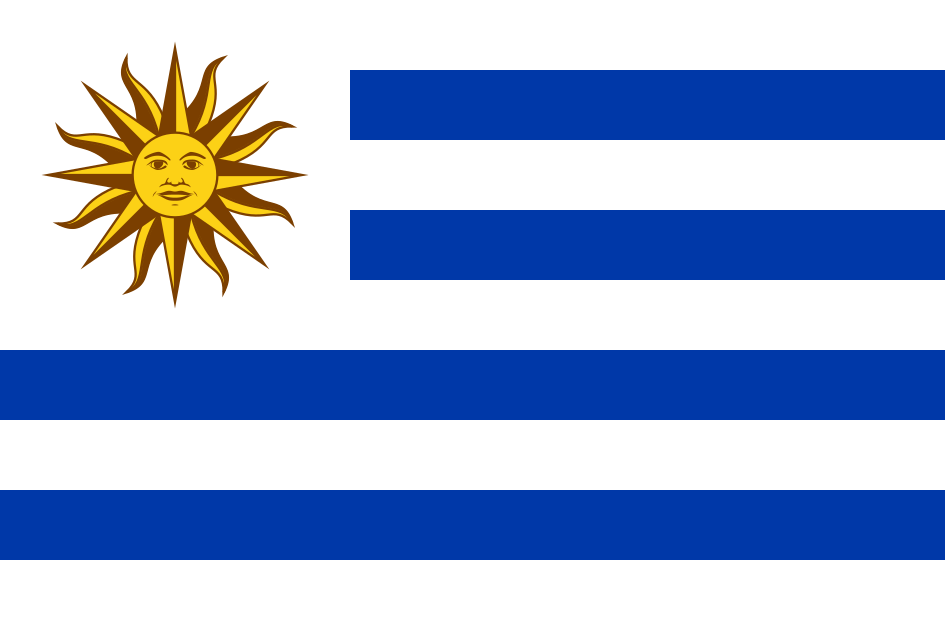
Nine equal horizontal stripes of white (top and bottom) alternating with blue; a white square in the upper-left corner has a yellow sun with a human face (outlined in black) known as the Sun of May, with 16 rays that alternate between triangular and wavy.
What the flag means
The stripes represent the country's nine original departments; the sun refers to the legend of the sun breaking through the clouds on 25 May 1810 as independence was declared from Spain; the sun is said to be Inti, the Inca god of the sun.
Source: CIA World Factbook (archived)
UzbekistanAsia
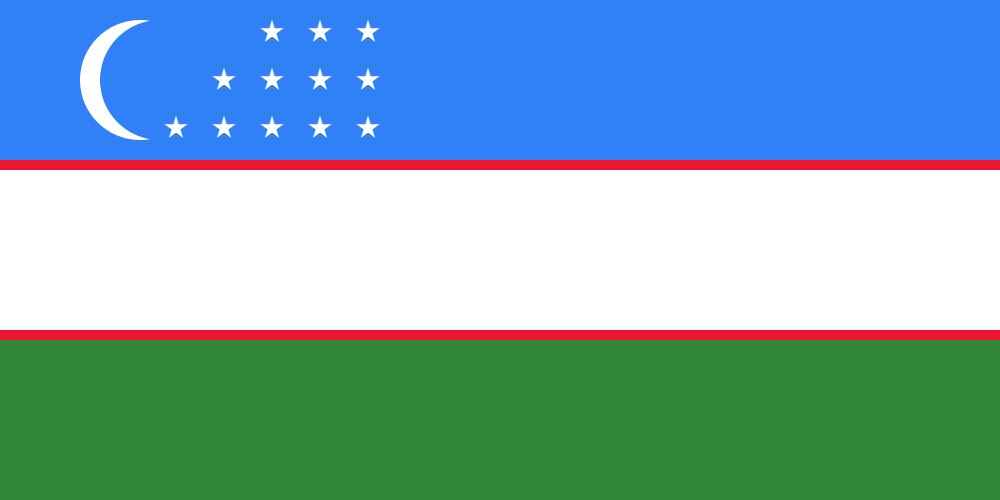
Three equal horizontal bands of blue (top), white, and green separated by narrow red stripes with a vertical white crescent moon and 12 five-pointed white stars in the left corner of the top band.
What the flag means
Blue stands for the Turkic peoples and the sky, white for peace and the striving for purity in thoughts and deeds, and green for nature and Islam; the red stripes represent the vital force of all living organisms; the crescent stands for Islam, and the 12 stars for the months and constellations of the Uzbek calendar.
Source: CIA World Factbook (archived)
VanuatuOceania
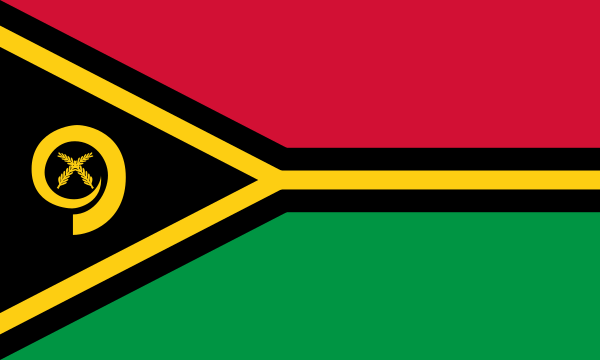
Two equal horizontal bands of red (top) and green with a black isosceles triangle (based on the left side); a black-edged yellow stripe in the shape of a horizontal "Y" faces the left side and encloses the triangle; a boar's tusk in the triangle circles two crossed namele fern fronds, all in yellow.
What the flag means
Red stands for unity and the blood of men and boars, green for the richness of the islands, and black for the ni-Vanuatu people; the yellow "Y" reflects the islands' layout in the Pacific Ocean and symbolizes the light of the Gospel; the boar's tusk is a symbol of prosperity; the ferns represent peace.
Source: CIA World Factbook (archived)
Vatican City (Holy See)Europe
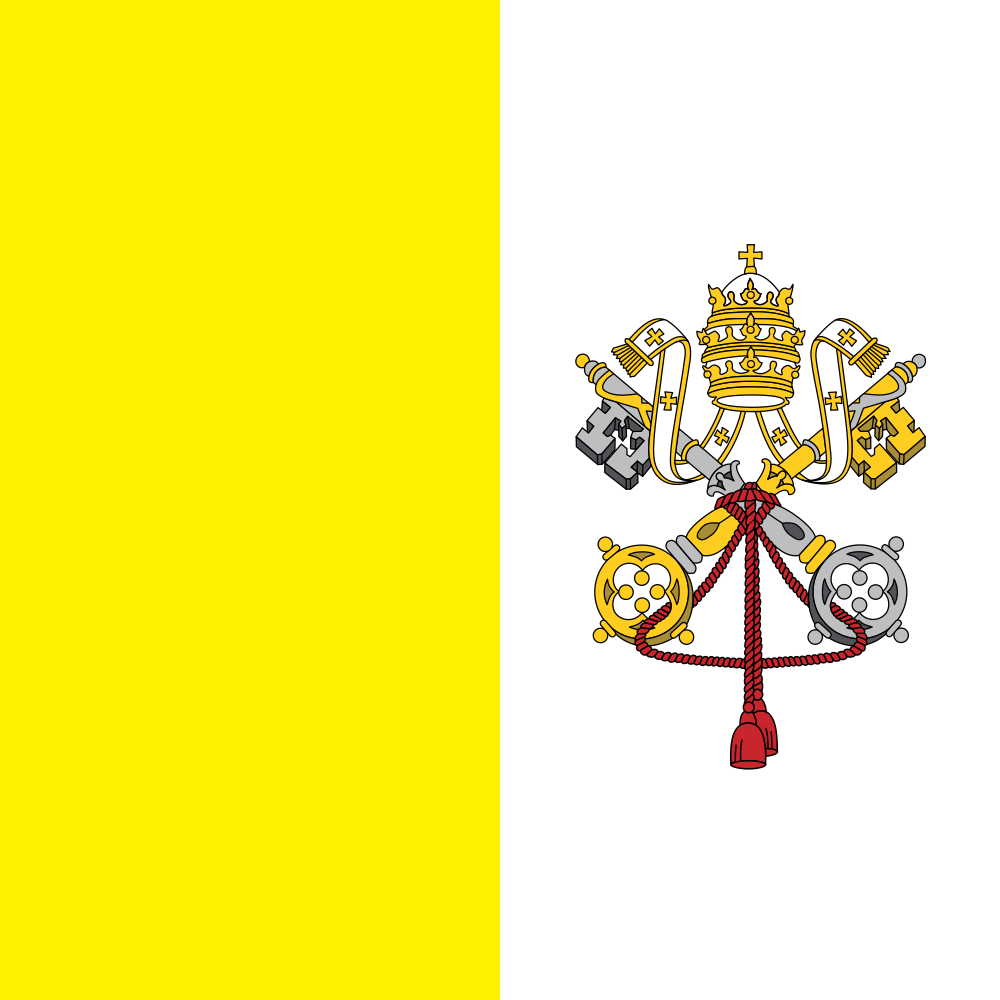
Two vertical bands of yellow (left side) and white, with the arms of the Holy See centered in the white band; the arms show the crossed keys of Saint Peter under the three-tiered papal tiara.
What the flag means
The crossed keys and papal tiara identify the Holy See. Yellow and white are historic papal colors whose use dates to 1808; the modern Vatican City flag was first raised in 1929.
Included as Vatican City (Holy See). The Holy See is a UN General Assembly non-member observer state.
Source: Vatican City State — Flag
VenezuelaSouth America
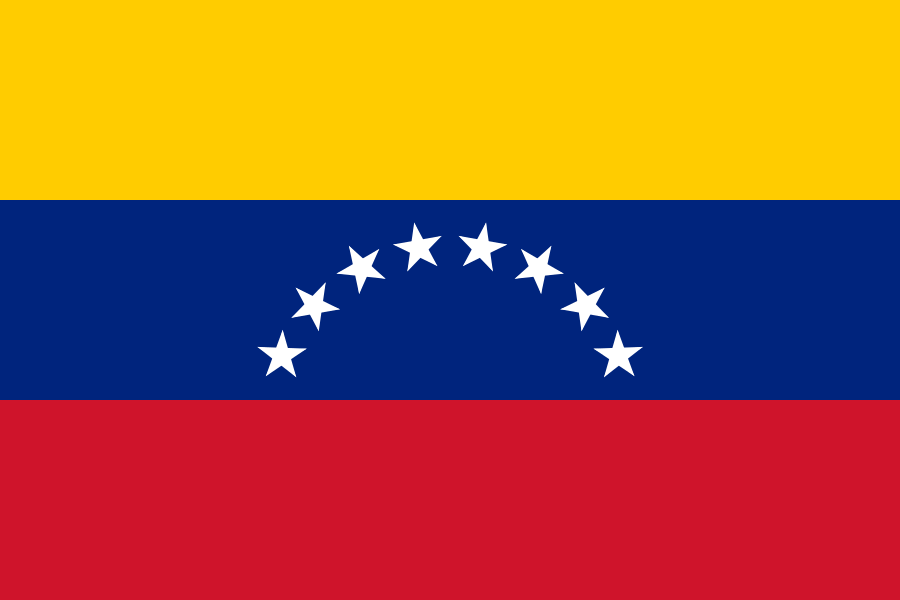
Three horizontal bands of yellow, blue and red, with an arc of eight white five-pointed stars in the blue band.
What the flag means
Yellow stands for the riches of the land, blue for the courage of its people, and red for the blood shed in attaining independence.
The catalogue shows the civil flag with eight stars. The state flag also carries the national coat of arms in the upper hoist.
Source: CIA World Factbook (archived)
VietnamAsia
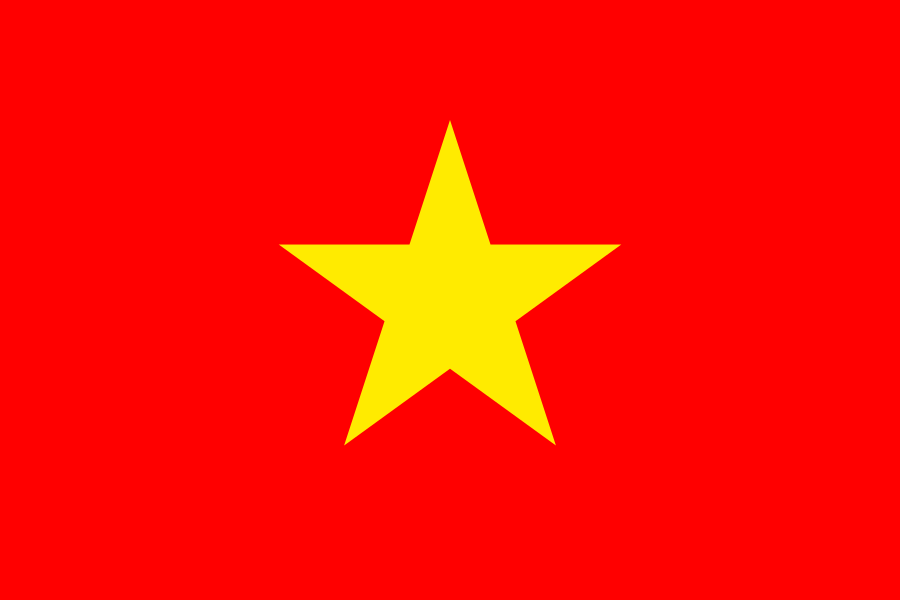
Red field with a five-pointed yellow star in the center.
What the flag means
Red stands for revolution and blood, and the five-pointed star for the five elements of the populace — peasants, workers, intellectuals, traders, and soldiers — that unite to build socialism.
Source: CIA World Factbook (archived)
YemenAsia
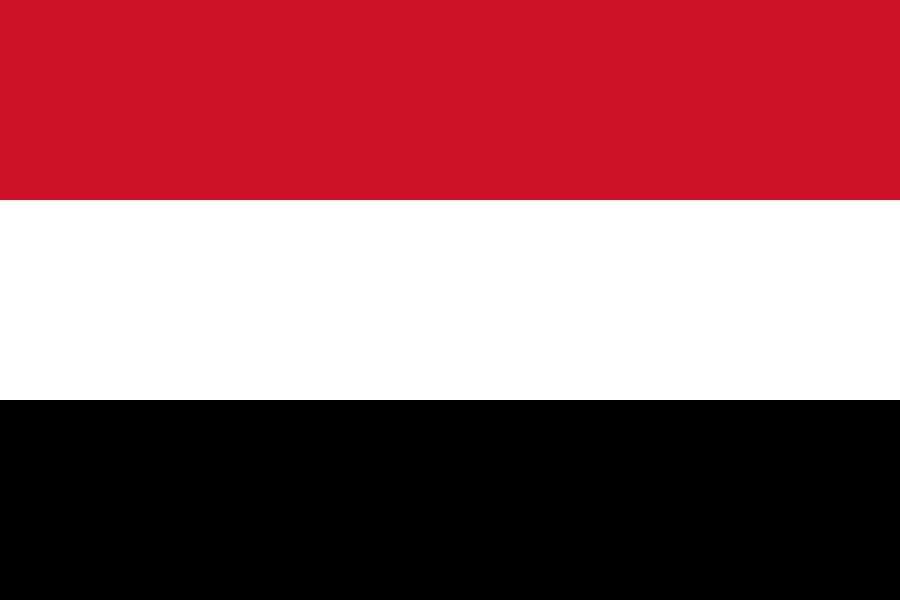
Three equal horizontal bands of red (top), white, and black.
What the flag means
The band colors come from the Arab Liberation flag and represent oppression (black) overcome through bloody struggle (red), to be replaced by a bright future (white).
Source: CIA World Factbook (archived)
ZambiaAfrica
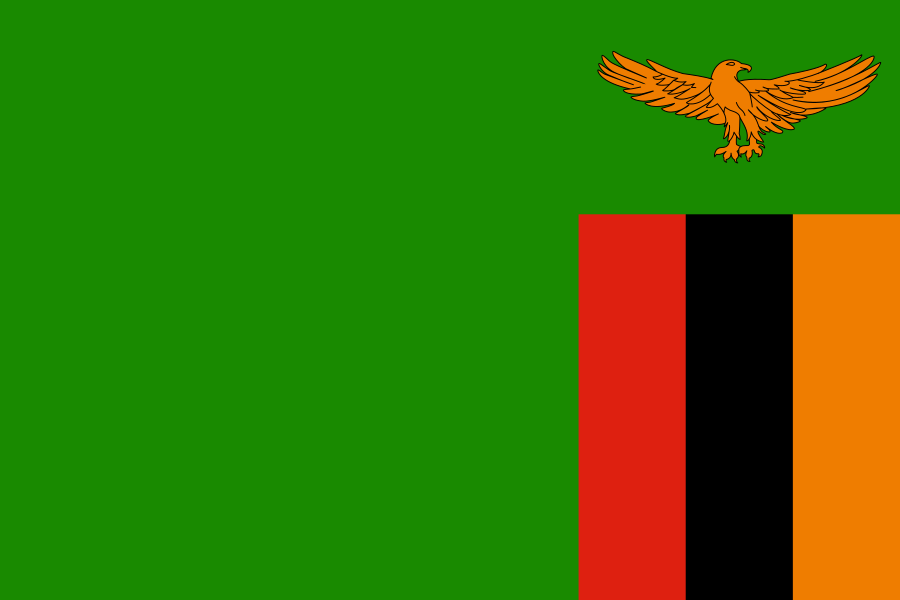
Green field with a soaring orange eagle in the upper-right corner; a panel of three vertical bands is under the eagle, in red (left side), black, and orange.
What the flag means
Green stands for the country's natural resources and vegetation, red for the struggle for freedom, black for the people, and orange for the country's mineral wealth; the eagle represents the people's ability to rise above the nation's problems.
Source: CIA World Factbook (archived)
ZimbabweAfrica
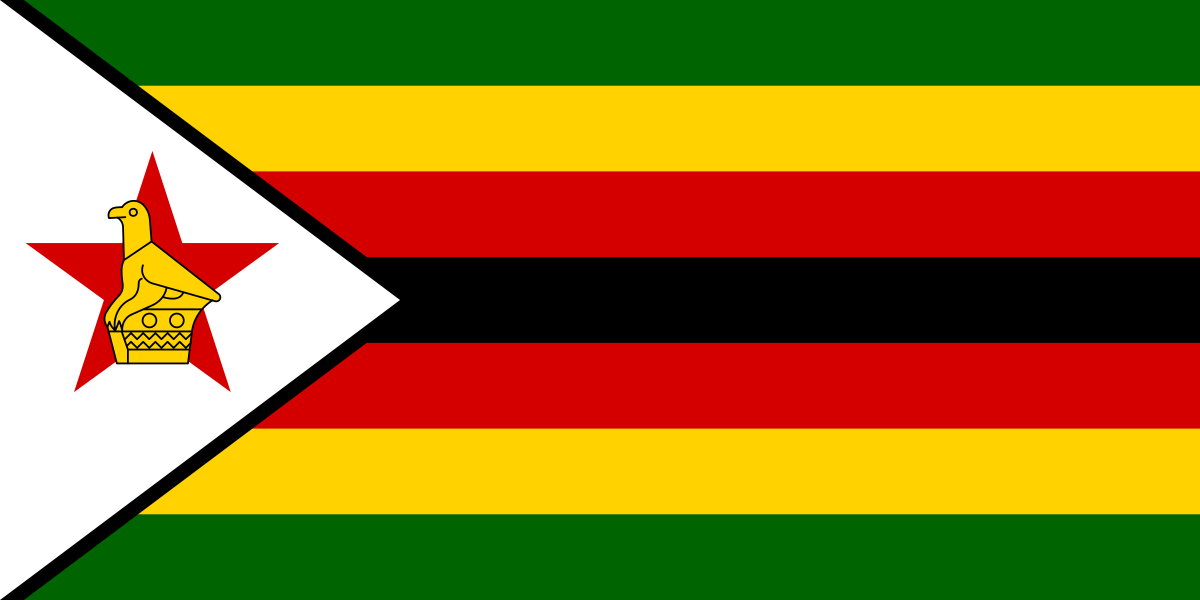
Seven equal horizontal bands of green (top), yellow, red, black, red, yellow, and green, with a white isosceles triangle edged in black based on the left side; in the middle of the triangle, a yellow bird is on top of a five-pointed red star.
What the flag means
The bird represents the long history of the country; white stands for peace, green for agriculture, yellow for mineral wealth, red for the blood shed to achieve independence, and black for the people.
Source: CIA World Factbook (archived)
No flags match yet
Try a shorter country name or remove an appearance filter.
Every flag tells a story
National flags connect colors, symbols and patterns with a country’s identity. A star can represent a state, an ideal or a constellation; a color may refer to a landscape, a historical movement or a tradition. Meanings depend on the individual flag, so there is no universal color dictionary.
Which flags are included?
This collection covers 195 countries: the 193 United Nations member states plus the Holy See and the State of Palestine. Territories and other flag-bearing places are not included in this edition. Regional groupings are browsing aids.