A beach covered in froth can look as though someone has poured detergent into the surf. Sometimes foam does involve pollution, but the appearance alone does not establish that. Ordinary marine organic matter can also help waves create persistent bubbles. The important distinction is between explaining the physical process and identifying what is in a particular patch of foam.
Sea foam forms when waves and wind mix air into seawater containing substances that help bubbles persist. Natural organic material, including decaying algae, can supply these surface-active compounds. Foam may collect along the coast as wind and currents move it. Its color or thickness alone cannot establish whether local water is clean or safe.
1. How waves make sea foam
Air, mixing and bubble-stabilizing material
Breaking waves introduce air into water. Some dissolved or suspended material helps the resulting bubbles last long enough to accumulate rather than disappear immediately. Compounds that change conditions at a water surface are called surfactants; the term describes a physical role, not proof that a substance came from household soap.
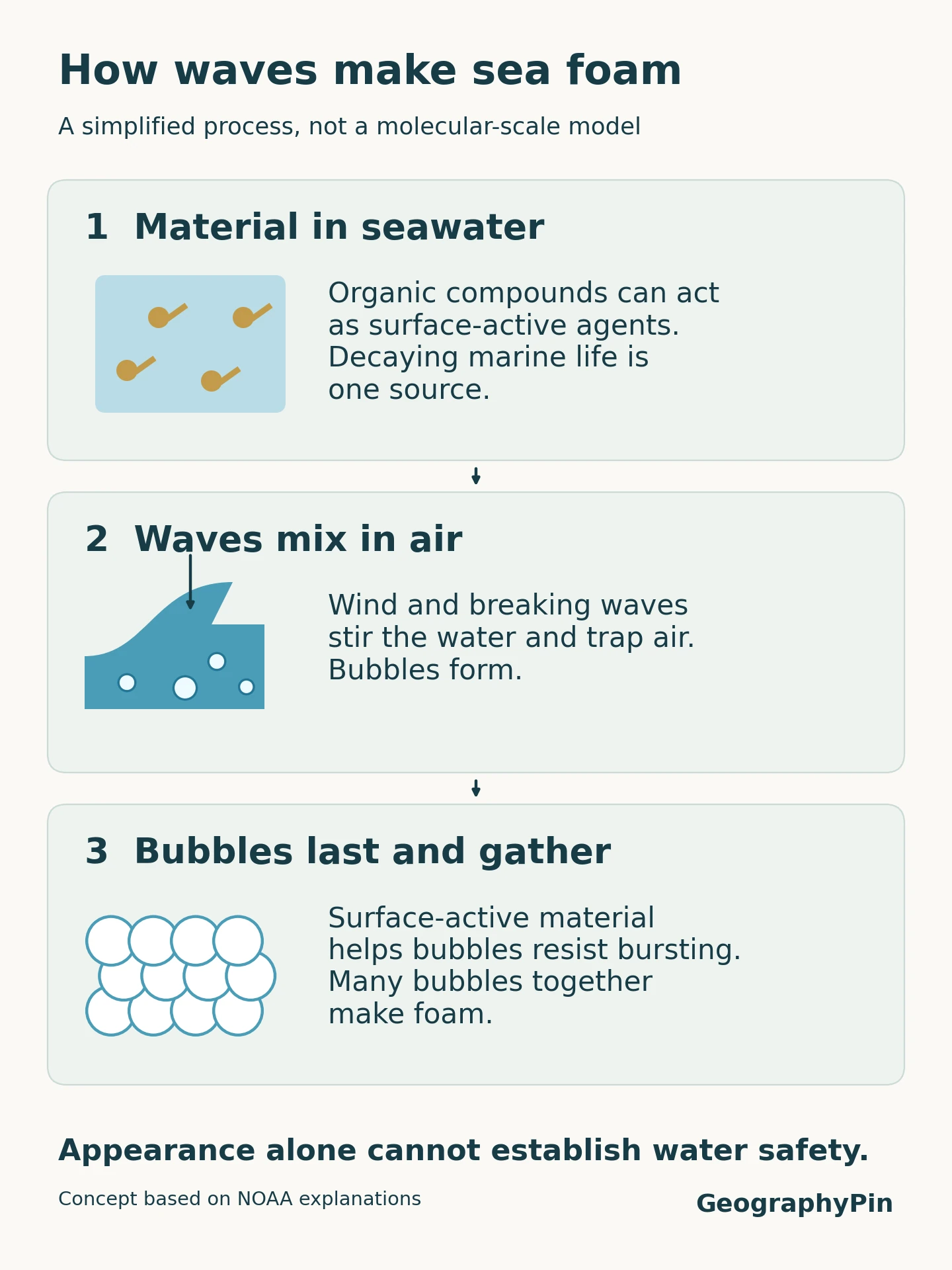
Marine plants and animals provide natural organic material, and decomposition can release compounds that promote foaming. NOAA identifies decaying algal blooms as one source of substantial coastal foam. Wave agitation then produces the visible froth from material already present in the water.
A bubble is air surrounded by a thin liquid film. A heap of foam is therefore not a solid deposit of algae, and it is not simply a pile of salt. The diagram illustrates the mechanism at different scales; it does not depict a chemical test of the beach shown in the photograph.
2. Why foam collects in some places
Formation and accumulation are not the same thing
The amount of foaming material, the strength of agitation and the way water moves all matter. A coast with abundant organic material may look different after energetic wave action than during calm conditions. Material supplied from marine, river or land sources can also vary between locations.
Once bubbles form, wind and currents can gather them into patches or lines. EPA Tasmania describes coastal foam lines associated with converging tidal currents, river outflows and wind. A visible band can therefore mark where floating material has collected, rather than the exact point where all its bubbles first formed.
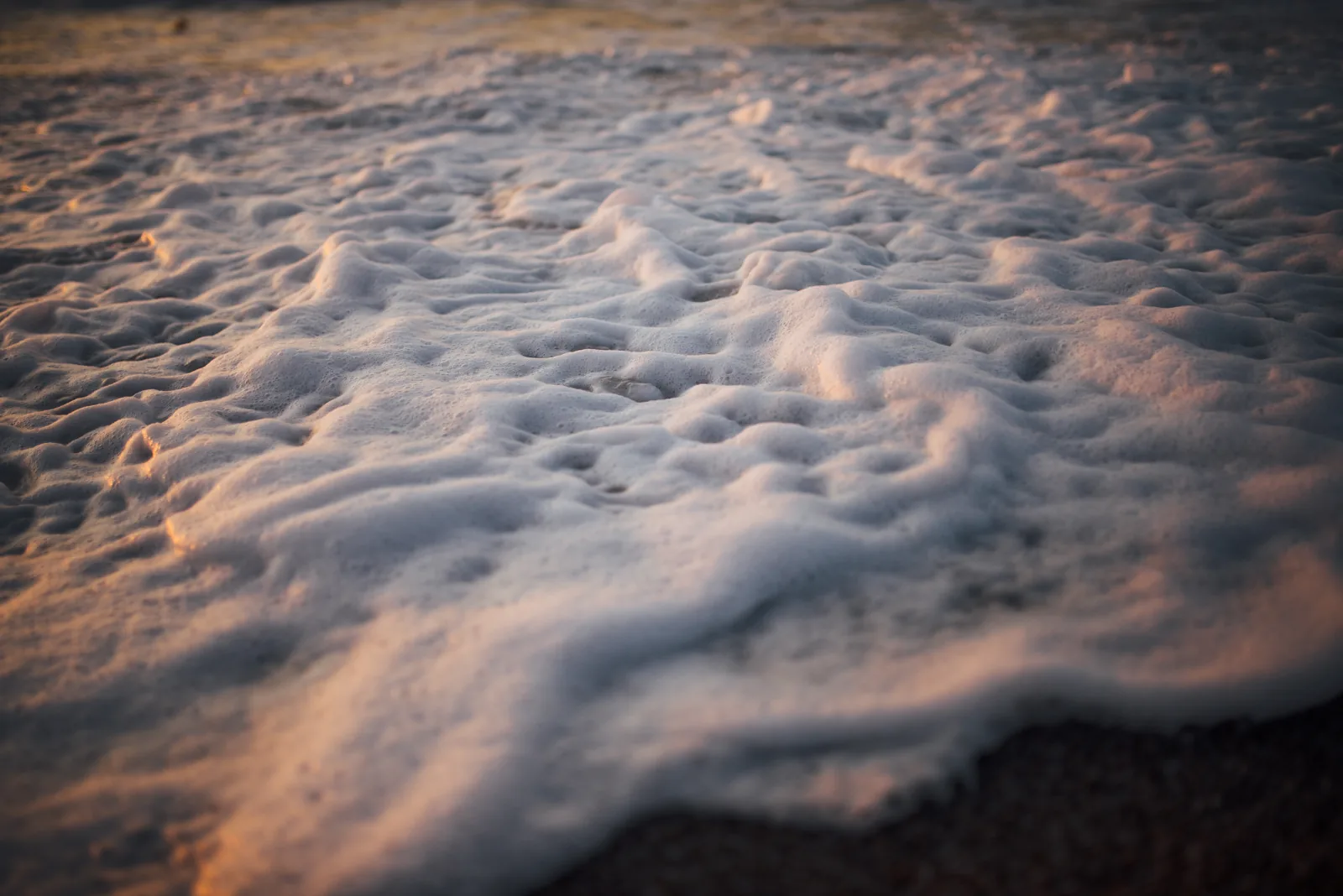
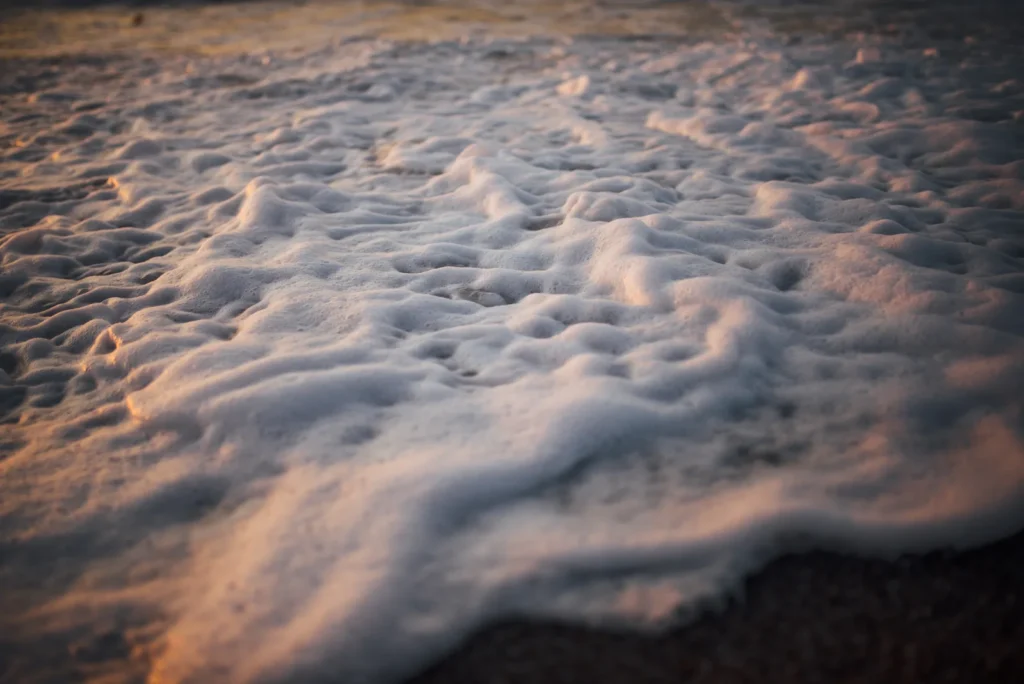
- A blanket of closely packed bubbles.
- The edge of the foam against the shore.
The photograph shows surface appearance, not chemical composition or water quality. Photo: Shixart1985 / Wikimedia Commons, CC BY 2.0. Resized and converted to WebP; explanatory HTML markers added by GeographyPin.
Read the photograph as an observation of surface texture and accumulation. It cannot tell you which organisms contributed the material, whether a contaminant is present or what a laboratory sample would show. Those questions require evidence beyond an image.
3. What color and texture can tell you
Useful clues are not a diagnosis
Foam can be white, tan or brown. Natural foam may darken as it collects particles and debris, but pollution-related foam can also vary in color. A simple “white means chemicals, brown means natural” rule is unreliable. Natural processes and human-caused discharges can contribute to the same event.
| Observation | Reasonable interpretation | Still unknown |
|---|---|---|
| Bubbles beside breaking waves | Air is being mixed into water. | The composition of the foaming material. |
| A concentrated line or patch | Surface movement may be collecting foam. | Its original source and contaminant concentration. |
| Tan or brown froth | Particles or organic material may contribute to its appearance. | Whether it is harmless, polluted or associated with harmful algae. |
| Foam with unusual discoloration, scum or dead animals | A reason to avoid contact and consult local authorities. | The cause without site-specific investigation. |
Wisconsin DNR’s surface-water guidance emphasizes that foam events can involve natural conditions, pollution or both. Its examples concern waterways generally, not a test result for every ocean beach. The transferable lesson is the limit of visual identification, not a claim that every patch contains a particular pollutant.
4. When local advisories matter
Before entering the water, check local beach, swimming and harmful-algal-bloom notices. CDC advises staying out when water looks or smells bad and following posted or online guidance. Not every waterbody is monitored, so the absence of a sign is not proof that no harmful bloom is present.
Harmful algae in salt water may be associated with discoloration, scum, foam or dead wildlife, but some blooms are difficult to see. Do not use the presence or absence of froth as a complete safety test. Avoid playing in an unexplained foam accumulation, and keep children and pets away while checking the relevant local guidance.
If you report a concerning event, the location, date and a photograph taken without entering the water are more useful than a confident guess about its chemistry. Leave sampling and identification to the responsible environmental or public-health authority. This article explains the process; it does not assess conditions at a particular beach.
What Did We Learn Today?
Sea foam is an accumulation of bubbles, not a diagnosis of what is in the water. Natural organic material can help bubbles persist after waves introduce air, while currents and wind collect the froth. Color and thickness cannot distinguish every natural event from contamination or harmful algae. Local observations, testing and advisories answer a different question from the general explanation of foam formation.
Sources & Data Notes
The diagram explains a process, and the photograph illustrates visible foam. Neither identifies the chemistry or safety of a particular coastal event. Freshwater guidance is used only for the limits of visual identification, not as a finding about the photographed shore.
- NOAA: What is sea foam?. Marine organic material and wave agitation.
- NOAA: How does sea foam form?. Educational process explanation supporting the original diagram.
- EPA Tasmania: Foam and Foam Lines. Surface-active compounds and coastal accumulation.
- Wisconsin DNR: Foam on Waterways. Natural and pollution-related foam can overlap in appearance.
- CDC: How to Recognize a Harmful Algal Bloom. Warning signs, monitoring limits and local advisories.
Photograph: Shixart1985 / Wikimedia Commons, CC BY 2.0; resized and converted to WebP. Numbered HTML observations are GeographyPin additions, not measurements. The original diagram is GeographyPin’s conceptual illustration.