Akhaltsikhe and Vardzia make a coherent two-day route through southern Georgia: stay in Akhaltsikhe for the town and Rabati Castle, then devote a separate day to Vardzia and the Mtkvari valley. Vardzia is a cliff-cut monastic complex outside the city, not another sight you can walk to from the castle. The trip works best when transport, daylight and the sections currently open at Vardzia shape the plan.
Before booking around Vardzia: the heritage agency reported a temporary restriction near the Secret Tunnel after rockfall damage in 2026. A later October conservation update did not announce full reopening. Confirm the permitted visitor route before traveling and follow the barriers and staff instructions on site.
How to use this article: Start with where to sleep, check Vardzia’s seasonal hours, or go straight to the Vardzia excursion day.
Understand the Route and Choose Your Base
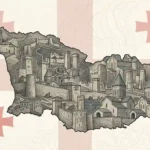
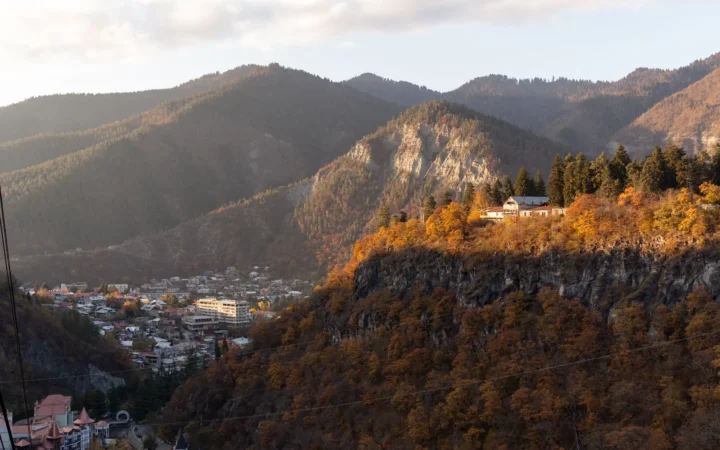
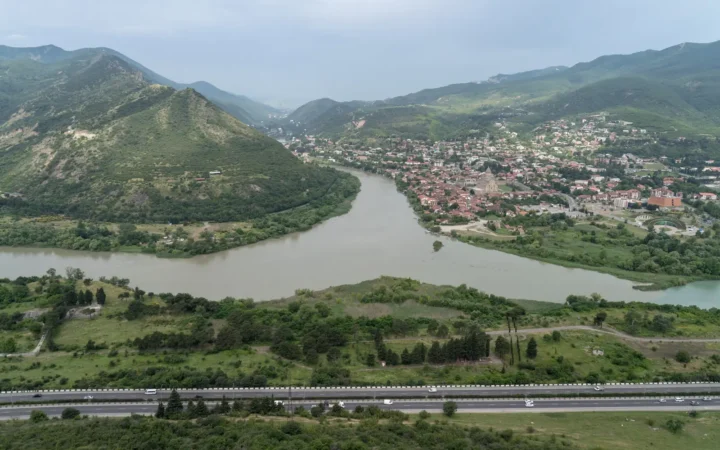
This route is in Samtskhe-Javakheti, a region of Georgia in the South Caucasus. Akhaltsikhe is the town base. Vardzia lies farther along the southern valley route through Aspindza and Khertvisi. The Mtkvari, also known as the Kura, is the river to follow on the map.
Georgia’s tourism board describes Vardzia as roughly an hour’s drive from Akhaltsikhe. Treat that as broad orientation, not a transfer guarantee: stops, road conditions and the exact pickup point add time. Give the excursion a day rather than treating the drive as part of a spare afternoon.
Akhaltsikhe or the Vardzia valley?
| Base | Best reason to choose it | Tradeoff |
|---|---|---|
| Akhaltsikhe | Combine Rabati, town meals and an excursion without moving hotels. | Vardzia requires an outward and return journey. |
| Vardzia valley | Put the cave complex at the center of the stay and shorten the morning approach. | Arrange meals, transfers and onward travel around the specific accommodation. |
| Borjomi | Keep a longer holiday focused on forest walks and the resort town. | The Vardzia outing becomes longer; an overnight farther south reduces backtracking. |
Two nights in Akhaltsikhe are the least rushed version: arrive and settle in, spend a full day on Vardzia, then leave without a late transfer after sightseeing. One night can work if the arrival and onward travel fit comfortably around the two visiting days.
Vardzia Access, Tickets and Seasonal Opening
Check the open route, not just the opening time
In a September 11, 2026 statement reported by Georgian Public Broadcaster, the National Agency for Cultural Heritage Preservation described damage to a footbridge and railings near the Secret Tunnel, with that section temporarily closed. It said debris removal, protective netting and repairs were planned before full access could return.
An October 2 report relaying the agency’s findings described further urgent conservation measures and ongoing monitoring. Neither report supplies a confirmed reopening date. Do not assume an older one-way route or exit tunnel will be available; ask the museum-reserve which sections you may visit that day.
Published hours and admission
The agency’s Georgian-language Vardzia visitor page lists daily opening with this seasonal pattern:
- March–April: 10:00–18:00.
- May–September: 10:00–19:00.
- October 1–November 14: 10:00–18:00.
- November 15–February: 10:00–17:00.
The official museum-reserve tariff page lists adult admission at 15 GEL. Guides, audio guides and the listed minibus service are separate charges. Eligibility for discounted admission varies, so bring the relevant documentation and confirm your category rather than assuming a foreign student card qualifies for every reduction.
These are published listings reviewed in November 2026, not a promise that every path or service will operate. Check holiday changes and last admission separately. Reserve a generous two- to three-hour visiting window, adjusting to the open route and your pace, rather than arriving shortly before closing.
What to Look for at Vardzia
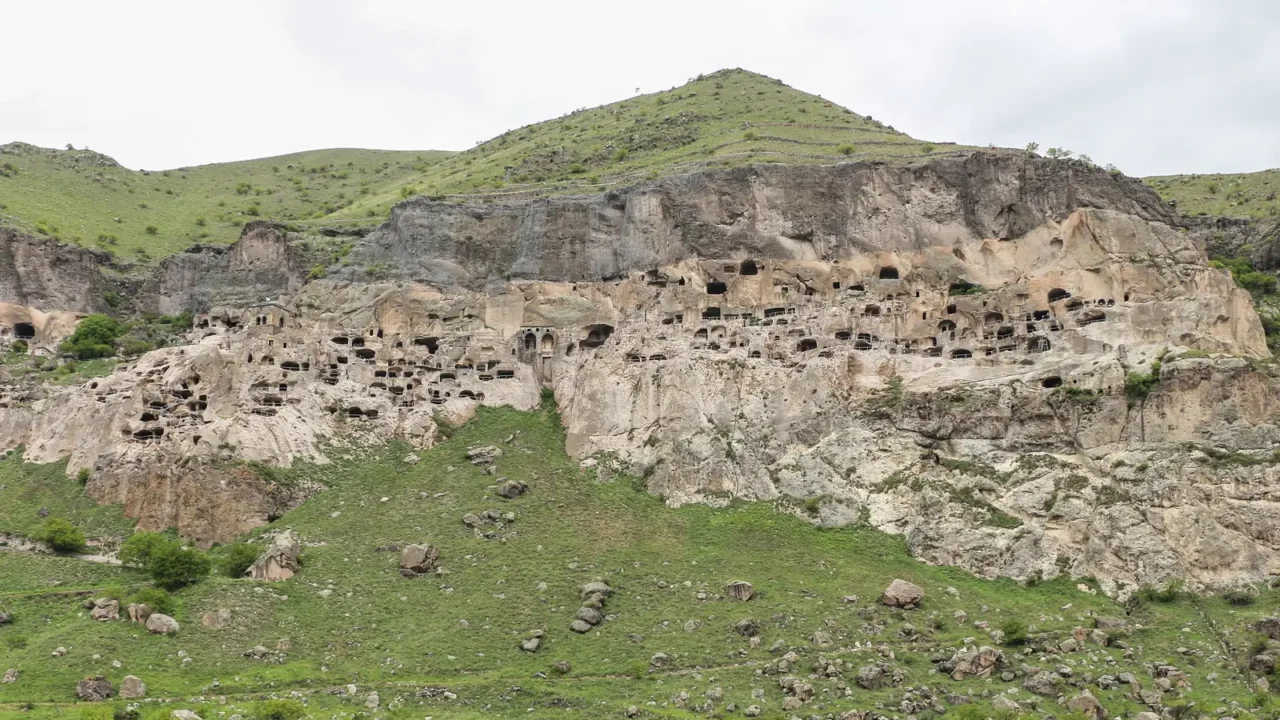
Vardzia’s main construction belongs to the 12th century and the reigns of Giorgi III and his daughter Tamar. Its cave rooms, passages and water infrastructure reveal how a large religious community occupied the cliff. The view across the valley helps explain the setting, but the carved interiors give the visit its substance.
Make the Church of the Dormition a priority where access permits. The heritage agency identifies royal portraits of Giorgi III and Tamar among its paintings. Approach it as a religious and conservation space: respect worship, obey photography instructions and do not touch the painted surfaces.
Rather than trying to tick off a disputed total of caves, look for the different functions of the spaces: worship, storage, accommodation and circulation between levels. The surviving complex has been altered by earthquakes and other damage, and not every surviving part belongs to the visitor route.
One label needs precision: Vardzia-Khertvisi is on Georgia’s UNESCO Tentative List. That is a proposed heritage landscape, not an inscription on the World Heritage List. Its significance extends beyond a single cave facade to the relationship between settlements, fortifications and the valley.
Akhaltsikhe, Rabati and Optional Nearby Stops
Give Rabati its own part of the day
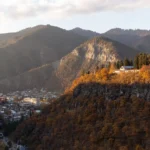
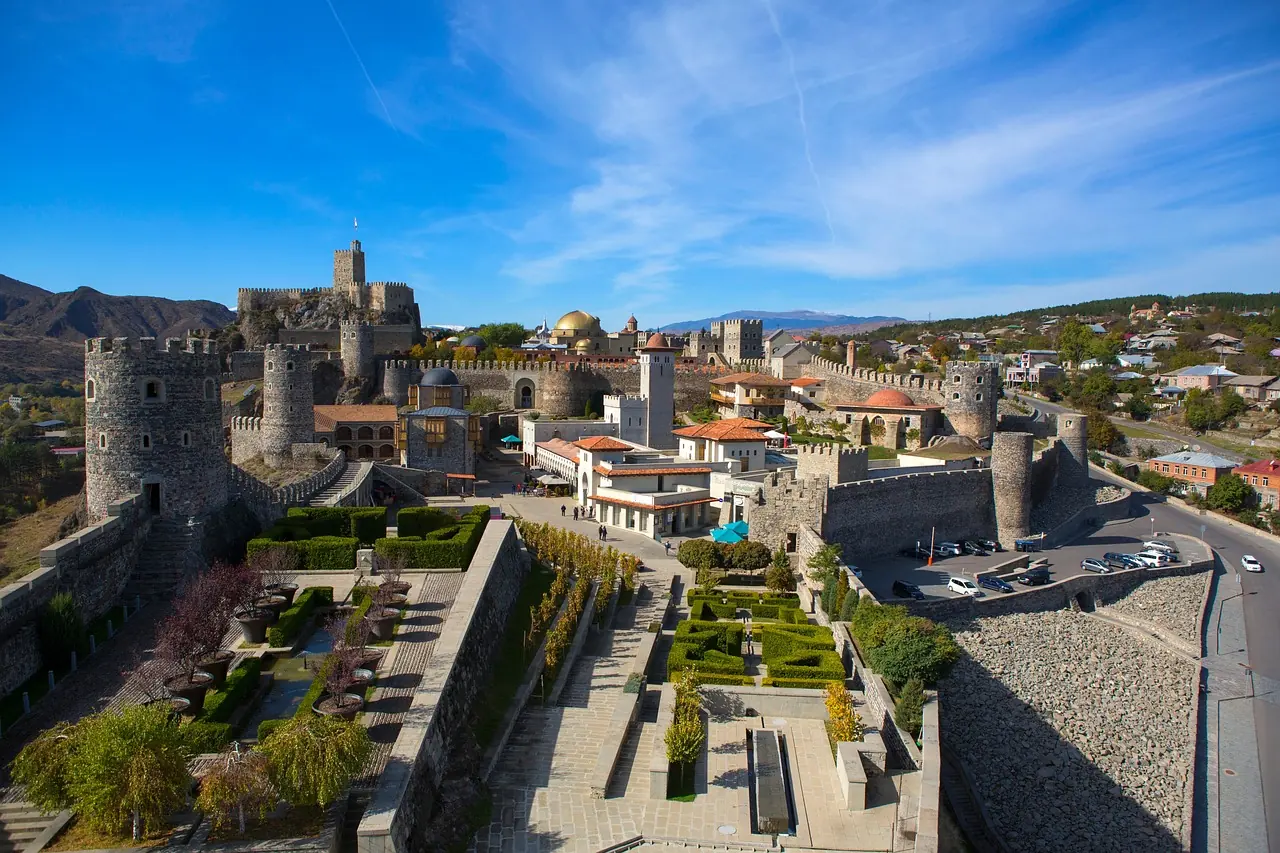
Rabati, or Akhaltsikhe Castle, is the main sightseeing anchor in the town. Allow time to walk through the complex rather than treating it only as a photograph from outside. Use GeographyPin’s separate Rabati Castle guide for its buildings and historical layers.
For planning, the operator’s September 29, 2026 opening notice gives 09:00–18:00 from October 1. Its price page lists a standard foreign-visitor ticket at 20 GEL. Confirm later seasonal notices, ticket coverage and any separate arrangements for the history museum. An illuminated castle exterior does not mean the ticketed areas remain open.
Khertvisi is the natural companion to Vardzia
Khertvisi Fortress stands above the meeting of the Paravani and Mtkvari rivers on the route toward Vardzia. Choose between a brief view from an appropriate stopping place and a proper visit by the village footpath. The heritage agency lists adult fortress admission at 10 GEL; allow extra time if entering.
Put Vardzia first when its opening window or your group’s walking stamina is the constraint. You can visit Khertvisi on the way back if there is enough daylight and it is open. There is no advantage in reaching the day’s main destination tired and close to closing.
Sapara needs a separate detour
Sapara, also written Safara, is a functioning monastery about 6 miles (10 kilometers) from Akhaltsikhe, in a wooded setting. It suits travelers who have additional time for religious architecture. Arrange the return transport and check access before setting out; do not automatically add it to a full Vardzia-and-Khertvisi day.
A Realistic Two-Day Akhaltsikhe and Vardzia Itinerary
Day one: arrive, visit Rabati and stay in town
Travel to Akhaltsikhe, leave your luggage and have a meal before the castle visit. If you arrive early enough, spend the afternoon at Rabati and consider the history museum according to its own opening arrangements. Finish with dinner in town instead of another long transfer.
Use the evening to confirm the next day’s departure, Vardzia access and return plan. If you arrive too late for Rabati, move it to the following morning or departure day. Do not substitute a hurried visit to a closing complex just to preserve the original order.
Day two: Vardzia and the river valley
- Morning: leave Akhaltsikhe with enough time to arrive near Vardzia’s opening. Make only a short outward stop at Khertvisi if the timing works.
- Main visit: ask about the open route at the entrance, then explore at a comfortable pace. Take breaks before climbing more steps rather than measuring success by how many rooms you reach.
- Afterward: have lunch, then make a fuller Khertvisi stop if it was omitted earlier and access permits.
- Return: head back to Akhaltsikhe or to prearranged accommodation in the Vardzia valley. Keep a long onward drive optional, especially with limited daylight.
For a third day, choose one clear extension: Sapara, a Borjomi stay or a longer journey across Javakheti. Adding every named monastery and fortress weakens the route by turning visiting time into driving time.
A single-day trip from Tbilisi is a different proposition. It concentrates a long outward and return journey around a site that takes time to explore. If it is your only option, prioritize Vardzia and one short stop, and examine the actual time on site before buying a multi-attraction tour.
Transport: Driver, Rental Car or Public Connections
A driver or car gives control over the stops
For the two-day plan, an Akhaltsikhe-based driver is a practical choice if you want Khertvisi and a flexible return without driving yourself. Agree the complete route, waiting time, pickup location, return destination and total price. Ask whether guiding and entrance tickets are included; transport alone does not provide either.
A rental car gives similar flexibility, with the added responsibility of checking conditions and arranging parking. For an approach from Tbilisi, the Borjomi corridor combines naturally with an Akhaltsikhe overnight. The alternative across the Javakheti uplands and Paravani area should be chosen for the conditions and the wider route, not solely because a navigation app offers it.
Confirm the return before using local transport
If using buses or minibuses, check the current Akhaltsikhe and Vardzia connections locally before departure. Get the departure point and return arrangement, not just confirmation that a route exists. Ask for departures on your actual travel date, and avoid relying on an old timetable for a same-day connection.
Do not assume a through service will wait while you visit Khertvisi. With a limited return window, a direct Vardzia visit can be a better choice than multiple stops. A tour is another option, but compare the actual route, time allowed at the caves, pickup area and cancellation terms before committing.
Best Time, Clothing and Accessibility
For an outdoor heritage itinerary, late spring and early autumn are sensible starting choices. Summer requires sun protection and drinking water on exposed stone paths. Winter needs more flexibility for cold, ice, shorter daylight and road disruption. These are planning considerations, not guarantees that a particular day or route will be suitable.
At Vardzia, expect a visit shaped by stairs, uneven surfaces and confined passages rather than a level museum circuit. Wear shoes with reliable grip and keep your hands free on steps. A listed shuttle or minibus service does not make the cave interiors step-free.
If you have limited mobility, vertigo or difficulty with enclosed spaces, ask the operator exactly which approach and viewing areas are suitable before purchasing admission. The exterior view may be a more appropriate visit for some travelers, but its access also needs checking.
Bring clothing appropriate for church visits and follow local dress and photography instructions. Supervise children closely around steps and exposed edges. Stay within the permitted route, never cross a closure barrier, and allow staff instructions to override an old map or travel description.
Food, Costs and the Final Booking Checks
Akhaltsikhe is a useful place to make a meal part of the trip rather than treating it as a fuel stop. Ask about Meskhetian dishes such as tatarberaki or apokhti preparations, and check ingredients if you have dietary restrictions. The tourism board highlights both as part of the local food tradition; availability depends on the restaurant and season.
Keep admission, transport and lodging as separate budget lines. Vardzia’s listed adult ticket, Rabati’s foreign-visitor ticket and an optional Khertvisi entry do not include the cost of getting between them. Get the whole transport quote before deciding which option fits your budget.
- Before booking: choose your base and confirm the open Vardzia sections relevant to your visit.
- The day before: recheck weather, road conditions, opening and return transport.
- Before paying: clarify ticket categories, optional services and what your driver or tour includes.
- Before leaving the site: keep enough time for the agreed pickup and avoid adding an unplanned detour late in the day.
The strongest version of this route is not the one with the most stops. It is the one that leaves enough time for Vardzia’s open areas, an unhurried castle visit and a comfortable return.
What Did We Learn Today?
Akhaltsikhe supplies the town base and Rabati visit, while Vardzia deserves its own excursion with transport and access confirmed in advance. Khertvisi fits the valley route; Sapara needs extra time. Seasonal opening, changing conservation restrictions and the physical demands of the cave paths matter more than an ambitious attraction count, making a two-day plan a useful starting point for most first visits.
Sources & Data Notes
Published prices and hours can change; they do not establish that every section is accessible. No confirmed full reopening notice for Vardzia was identified in the consulted material. Visit durations and itinerary choices are editorial recommendations, not operator schedules. UNESCO status is described as Tentative List placement.
Featured photograph: Vardzia’s rock-cut monastery in southern Georgia, photographed in May 2024. Photo: Bernard Gagnon / Wikimedia Commons, CC BY 4.0. Resized and converted to WebP.
- National Agency for Cultural Heritage Preservation: Vardzia and Khertvisi museum-reserve visitor page and service tariffs (Georgian).
- Georgian Public Broadcaster: September 11, 2026 agency statement on access restrictions; October 2, 2026 conservation update (Georgian).
- Akhaltsikhe Castle administration: Working Hours 2026, Prices and About Museum.
- Georgia Travel: Vardzia and Akhaltsikhe, for destination context and the regional food tradition.
- Georgia Travel: Khertvisi Fortress, Safara Monastery and Samtskhe-Javakheti, for location and route context.
- UNESCO World Heritage Centre: Vardzia-Khertvisi Tentative List entry.