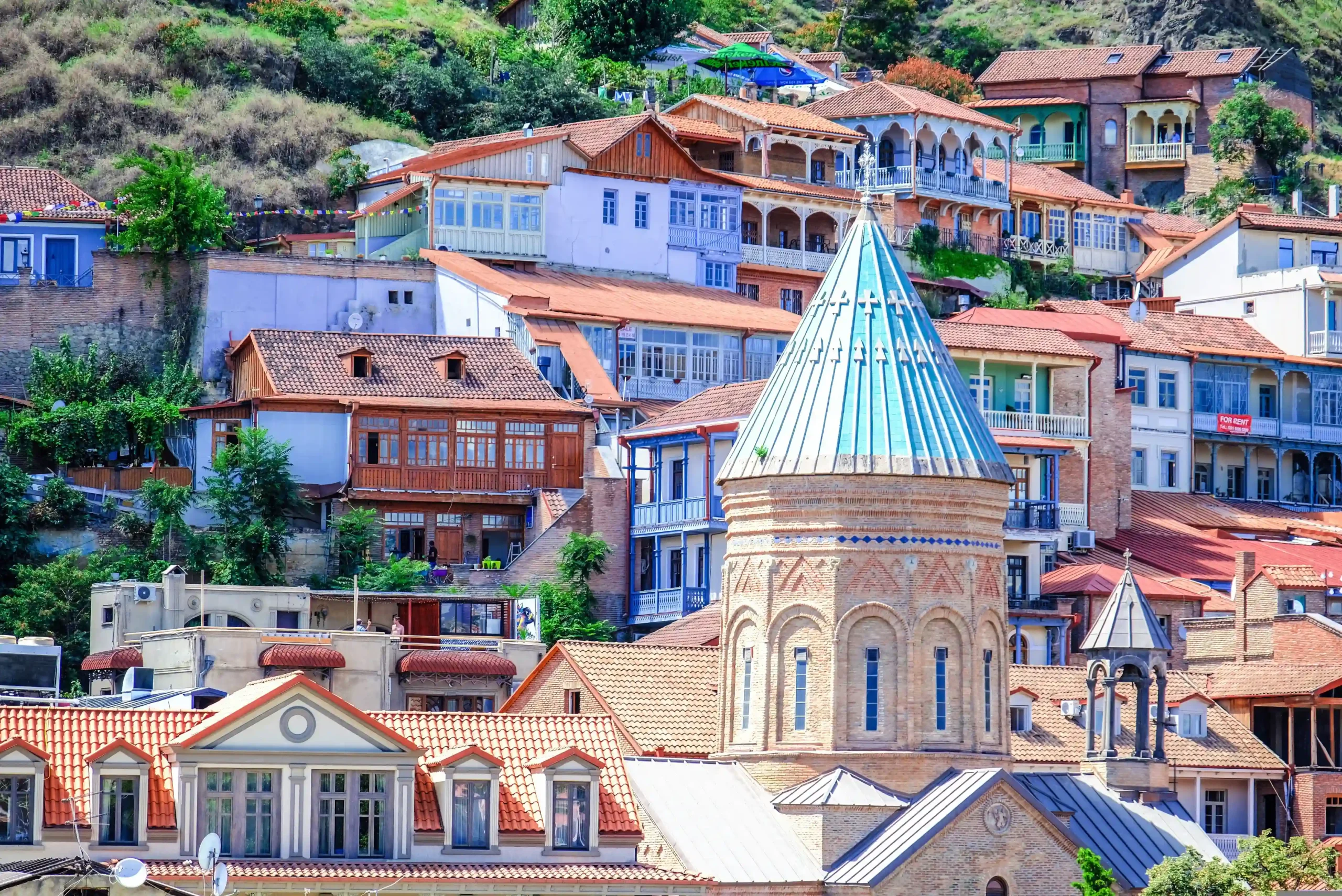
Kutaisi offers a compact river city, Imeretian food and a useful base for western Georgia’s monasteries, caves and canyons. The key planning decision is how much time to give the city itself before heading into the surrounding countryside.
For a first Kutaisi trip, allow two full days: one for the city and one for a carefully chosen excursion. Stay near the center if you want to walk, plan the airport transfer separately, and add a third day if you want both monasteries and a cave or canyon without rushing.
How to use this article: Start with airport transfers, choose a base, check Gelati access, or follow the two-day plan.
Where Kutaisi Fits Into a Georgia Trip
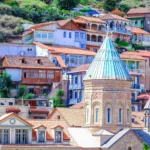
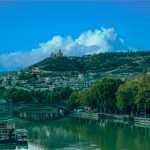
Kutaisi sits on the Rioni River in Imereti, western Georgia. Its central streets, bridges and Bagrati Cathedral form a manageable city visit, while the monasteries, caves and canyons advertised alongside them are separate excursions. Keep that distinction in mind when deciding how many nights to book.
The city suits travelers who enjoy markets, regional food, church architecture and a relatively compact walking base. A car is unnecessary for a central stay. A driver or organized excursion becomes useful when linking rural attractions, especially when the last return connection is uncertain.
One city day, then time for the surroundings
Allow one full day for central Kutaisi and a second for a selected outing. Three full days make a better base for combining the city, a monastery trip and one nature route. These are planning recommendations, not the time needed to tick every attraction off a list.
| Time available | A sensible plan | Main tradeoff |
|---|---|---|
| One full day | Market, central streets, river bridges and Bagrati | Little room for rural attractions |
| Two full days | City day plus monasteries or a cave excursion | Choose one main interest outside town |
| Three full days | City, monasteries and a separate nature day | More transport costs, but less rushing |
If you are crossing the country, Kutaisi can sit between a Tbilisi city break and time on the coast in Batumi. An inexpensive flight does not make it a good idea to squeeze both cities and a canyon into the same arrival day.
Getting From the Airport and Traveling Onward
Choose a city transfer, not just an airport bus
Kutaisi International Airport is outside the city. Before buying a transfer, check the actual destination: an airport coach to Tbilisi or Batumi does not automatically stop at your Kutaisi accommodation.
The airport’s official FAQ lists Georgian Bus and Omnibus and directs travelers to their booking pages for flight-linked services. Check the departure against your flight, the city drop-off, luggage allowance and what happens after a delay. A staffed desk or a 24-hour telephone number does not mean buses leave continuously.
The airport also publishes a dedicated shuttle service to the Kutaisi Tourism Center, with pickup outside the arrivals hall. Check its current timetable, fare and city stop before choosing a transfer; this is distinct from the rail-station shuttle.
For a late arrival, compare the available bus with a prearranged transfer to your exact address. Tell your host the arrival time and check whether reception or self-check-in is available. Keep the address saved offline in Georgian as well as English.
The airport railway station is a separate connection
According to the airport’s railway information, the station is about 1.1 miles (1.8 kilometers) from the terminal, with a free dedicated shuttle for rail passengers. This is an airport-to-station connection, not a free bus into central Kutaisi.
Use the Georgian Railway website to check trains for your date and the precise station shown on the ticket. Allow for immigration, baggage collection and the shuttle before choosing a departure. For an onward flight, leave a buffer rather than relying on a tight train-to-plane connection.
When arriving from Tbilisi or Batumi by road, confirm the terminal or stop before paying. Minibuses, coaches and private transfers may have different departure points. Compare the full door-to-door journey, including the final taxi, rather than a headline fare alone.
Where to Stay and How to Get Around
Start with the central walking area
For a first visit without a car, look around the central square, the White Bridge and nearby streets on either side of the Rioni. These are practical landmarks for comparing accommodation, not formal hotel districts. Check the walking route to the entrance, not just its straight-line distance from the center.
A hillside guesthouse can give you views but also a climb after dinner. A property near the airport can be useful for a very early flight, yet adds transfers to a city-focused stay. Ask about stairs, elevator access, heating or air-conditioning as appropriate, and whether a car can reach the entrance.
Walk the central sights in clusters and use a booked taxi when the hill to Bagrati, luggage or the weather makes walking impractical. For rural trips, agree on all stops, waiting time and the return journey before departure. A one-way drop-off at a monastery is not the same service as a half-day excursion.
If using a local bus or marshrutka, confirm the destination and last return departure locally. Do not build an evening flight connection around an unverified timetable. Families should request suitable child restraints in advance rather than assuming a vehicle will have them.
A City Walk Through Markets, Bridges and Bagrati
Use the center for an unhurried day rather than treating Kutaisi only as somewhere to sleep between tours. The route below is a suggested sequence, with breaks and the uphill section left flexible.
Green Bazaar, central square and the Rioni
Begin with the Green Bazaar, a working market selling produce, cheeses, dried fruit, sauces and sweets such as churchkhela. Carry small-denomination lari, ask before photographing people and check prices before accepting a purchase. This is a place to browse everyday food culture, not a staged tasting included in an admission ticket.
Continue toward the central square and Colchis Fountain, whose figures draw on archaeological finds associated with ancient Colchis. The nearby garden-boulevard and theater buildings add context without requiring a museum-heavy schedule. Finish the flatter part of the walk around the White Bridge and the Rioni.
Leave time for lunch before choosing a hill or garden. Trying to combine every bridge, viewpoint and indoor attraction can turn a compact center into an unnecessarily long walking day.
Bagrati: the city viewpoint, with a UNESCO distinction
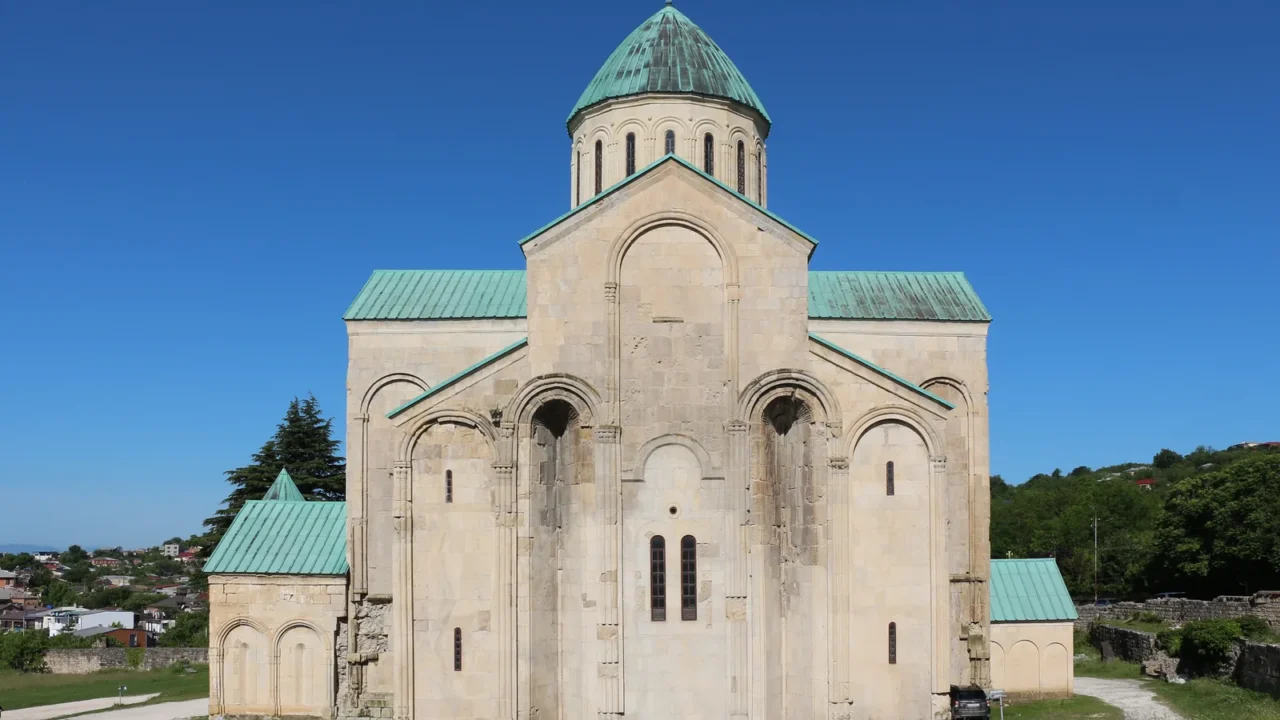
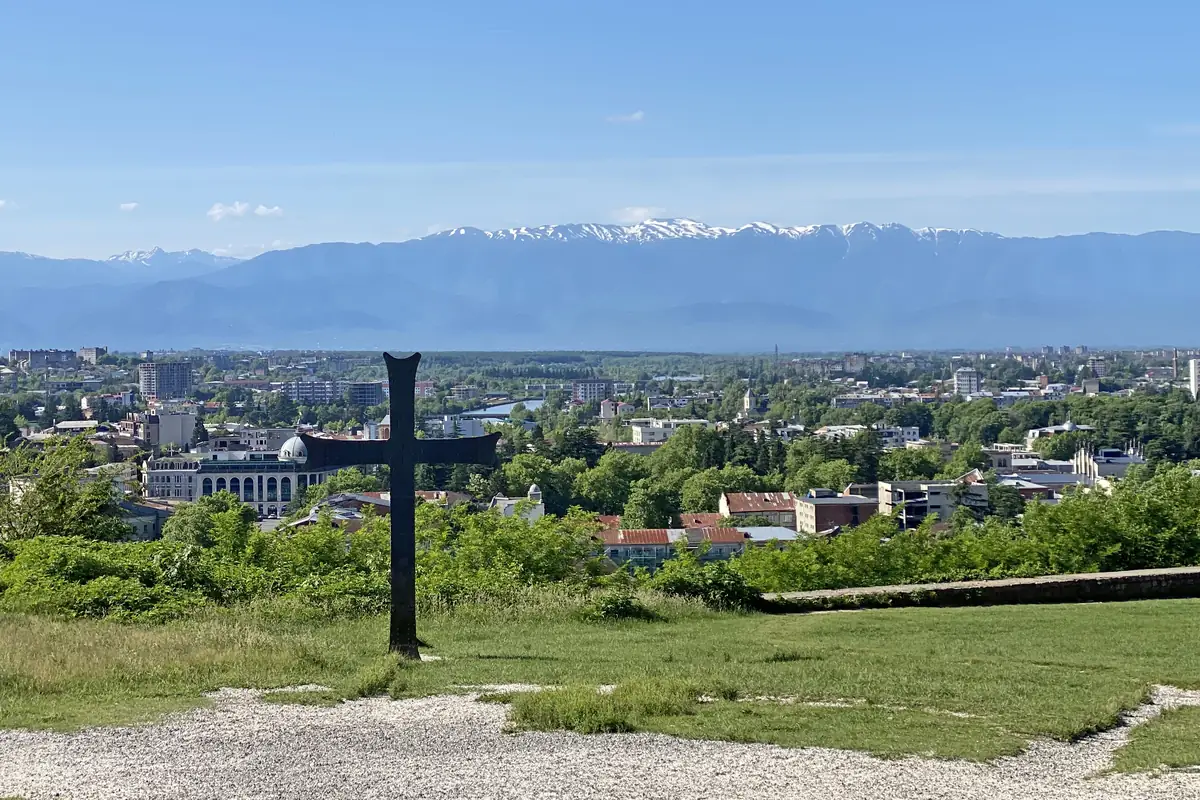
Bagrati Cathedral stands above the city on Ukimerioni Hill. Its origins are medieval, but substantial modern reconstruction is part of the building you see today. The uphill approach is a reason to allow extra time or use a taxi, especially in heat or rain.
Bagrati is not part of the current UNESCO World Heritage property. UNESCO excluded it from the property’s boundaries in 2017 following reconstruction that affected its integrity and authenticity. Gelati retained World Heritage status. Describing both places as currently UNESCO-listed repeats an outdated designation.
At Bagrati and other functioning churches, dress modestly, follow the posted requirements and avoid interrupting services. Ask about interior photography. For a quieter alternative to another viewpoint, consider the botanical garden, checking its opening arrangements before setting off.
Gelati and Motsameta: Plan a Separate Monastery Trip
Gelati’s heritage matters more than a promised opening time
Gelati Monastery, founded in 1106, was both a religious center and a place of scholarship. Its architecture, wall paintings and mosaic make it one of the most important cultural visits near Kutaisi.
It is also a conservation site. The Gelati Rehabilitation Committee’s 2026 mosaic update describes completion of a preventive conservation stage while identifying further restoration work. That is not an announcement that every part of the monastery has reopened.
Confirm which parts are accessible before paying for transport. Ask specifically about the main church, the mosaic, grounds access and any restrictions on your intended day. The official material consulted did not provide a dependable visitor-access calendar. Do not make a nonrefundable excursion depend on unrestricted interior viewing.
Motsameta works as a separate stop
Motsameta Monastery lies between Kutaisi and Gelati, with a wooded approach and a dramatic valley setting. Its location makes it a logical companion to Gelati when both can be visited, but it remains worthwhile when Gelati access is limited.
Allow a half-day block for a monastery outing, including driving, walking, respectful visits and delays. Treat that as a flexible planning allowance. These sites are outside the central walking circuit; do not rely on an assumed pedestrian shortcut between them.
Choose a Cave or Canyon Day, Not Every Excursion
Prometheus Cave, Sataplia, Okatse and Martvili are often marketed together, but they provide different experiences. Choose by the terrain, weather and what your group can comfortably do. Martvili is in neighboring Samegrelo rather than Kutaisi city.
| Excursion | Main reason to go | Check before leaving |
|---|---|---|
| Prometheus Cave | A guided underground cave visit near Tskaltubo | Operating day, entry time and whether the separate boat option runs |
| Sataplia | Dinosaur footprints, a cave and forest surroundings | Open facilities, walking conditions and access needs |
| Okatse Canyon | A suspended walkway and canyon views | Weather closure, height and age rules, approach walk |
| Martvili Canyon | Canyon paths and an optional boat trip | Operating day, water conditions and boating eligibility |
Check the actual activity, not just the attraction name
At Prometheus Cave, the operator states that boating is prohibited when the water level rises. A cave ticket therefore does not guarantee a boat experience. Wear shoes with grip and ask about steps and route suitability if mobility is a concern.
The Okatse visitor guide says walking is not permitted in rainy or snowy conditions. It also lists a height requirement of more than approximately 3 feet 11 inches (1.2 meters) and excludes children under six. Confirm both rules with the visitor center when planning a family outing.
The Martvili guide distinguishes the walking visit from the boat route. Boating depends on conditions, has a minimum-height rule and requires a life jacket. The managed visitor route is not a swimming stop.
Published operator pages are not fully consistent about opening days: the Prometheus and Martvili guide pages exclude Mondays, while some overview listings say daily. Contact the relevant visitor center before committing to a Monday trip and confirm the latest admission price, last entry and closures for any day.
For a first visit, a cave-focused outing around Tskaltubo or one canyon-led day is easier to enjoy than a four-attraction circuit. Add a second stop only after accounting for driving, queues, lunch and the return. Keep the city as a fallback when weather closes outdoor sites.
A Flexible Two- or Three-Day Kutaisi Itinerary
Two full days: city plus one priority
Day one: Visit the Green Bazaar and central square, have lunch, then walk the Rioni bridges. Add Bagrati when the weather and your energy suit the climb. Finish with an Imeretian dinner rather than another long transfer.
Day two: Choose the monastery route if history is your priority and access is confirmed, or a nature excursion if the forecast and operating conditions fit. Leave the other option for a future trip rather than stacking them around a late arrival or early departure.
Three full days: separate history and nature
Keep day one in the city, use day two for Motsameta and available parts of Gelati, and reserve day three for a cave or canyon. Swap the second and third days if the forecast is better for the outdoor route. If Gelati access is restricted, use the extra city time for a longer meal, garden visit or a museum whose opening has been checked.
An arrival evening is not a full sightseeing day. With two nights but only one complete day, prioritize the city and choose at most a shorter outing. With an evening flight, keep the final day’s plan near your luggage and leave the airport transfer buffer intact.
When to Visit, What to Eat and What to Budget
Match the season to the trip
For a sightseeing-led trip, spring and early autumn are sensible starting choices. Georgia’s tourism board recommends spring and autumn for cultural visits, but western Georgia’s weather still calls for a rain plan. Summer can be hot; winter offers shorter sightseeing days and a greater need to check conditions outside town.
Choose a forecast suitable for your actual excursion rather than trusting a monthly “best time” label. A dry day matters more for Okatse than for a market-and-café day. Pack a waterproof layer, shoes with grip, sun protection and clothing suitable for church visits.
Order for Imereti
Try Imeretian khachapuri, the round cheese-filled bread, alongside dishes such as lobio and vegetable-and-walnut pkhali. Order a few dishes to share instead of assuming every plate is a single-person main course. Ask about walnuts, dairy and other ingredients if anyone has allergies or dietary restrictions.
For wine, ask about Imeretian grapes and producers rather than ordering only the best-known Kakhetian labels. Our guide to Georgian grape varieties explains regional names such as Tsitska, Tsolikouri and Krakhuna. Arrange separate transport if a tasting is part of your day.
Budget for the excursion, not only the room
A central walking day and a privately driven canyon day have very different costs. Build a budget from accommodation, food, airport transfers, attraction tickets and rural transport. Ask whether a tour price includes admission, boating, lunch and pickup before comparing it with another offer.
Use Georgian lari, code GEL, and keep some small cash for markets and minor purchases. Check card acceptance before ordering or buying tickets. Room rates, exchange rates and fares change, so a single undated daily-budget figure would give false precision.
Entry Documents, Safety and Access Checks
Visa and entry requirements depend on nationality and the travel document you use. Check the Georgian authorities’ rules for your case rather than assuming all visitors receive the same visa-free stay. The official e-Visa portal serves eligible short-stay applicants.
Since January 1, 2026, incoming tourists generally need health and accident insurance covering their full stay, including arrival and departure dates, with at least GEL 30,000 in coverage. The Georgian MFA notice specifies a policy in Georgian or English, in physical or electronic form, and lists exemptions. Check the full requirements before departure and keep the policy accessible.
Use the latest government safety advice alongside your own country’s travel advisory. Avoid demonstrations, secure belongings and take care on uneven or poorly lit streets. Prebook taxis where possible and check working seatbelts. Rural road conditions, heavy rain and landslides can disrupt a planned excursion.
For emergencies in Georgia, call 112. Share your destination and expected return with someone when going beyond the city, and keep enough phone battery and mobile data for changes to the plan.
Travelers who need step-free access should confirm the exact accommodation entrance, vehicle, church approach and attraction route. “Central,” “family-friendly” and “easy walk” do not establish wheelchair access or stroller suitability.
What Did We Learn Today?
Kutaisi works best with a full day for its market, riverfront and Bagrati, followed by separate time for the surrounding monasteries or nature sites. The airport connection needs its own planning, Gelati’s World Heritage status does not guarantee unrestricted visitor access, and cave or canyon activities depend on operating conditions. Choose a few priorities, keep a weather alternative and verify the return journey before leaving town.
Sources & Data Notes
Suggested trip lengths and routes are editorial planning estimates, not operating schedules. Gelati access remains subject to confirmation, and conflicting park opening-day listings require a direct check. Entry and insurance information, fares, tickets and transport arrangements can change; follow the linked authorities before departure. Additional official sources for individual sights, entry requirements and safety are linked in the relevant sections.
Featured photo: Bagrati Cathedral in Kutaisi, photographed from the east in May 2024. Photo: Bernard Gagnon / Wikimedia Commons, CC BY 4.0. Resized and converted to WebP.
- Georgia Travel: Kutaisi
- Georgia Travel: Imereti
- Kutaisi Airport: transport and visitor FAQ
- Kutaisi Airport: railway connection
- UNESCO: Gelati Monastery
- UNESCO: 2017 boundary change excluding Bagrati
- Gelati Rehabilitation Committee: mosaic conservation update
- National Parks of Georgia: Prometheus Cave visitor guide
- National Parks of Georgia: Okatse Canyon visitor guide
- National Parks of Georgia: Martvili Canyon visitor guide