Historical flag guide
The Forty-Eight-Star US Flag (1912–1959)
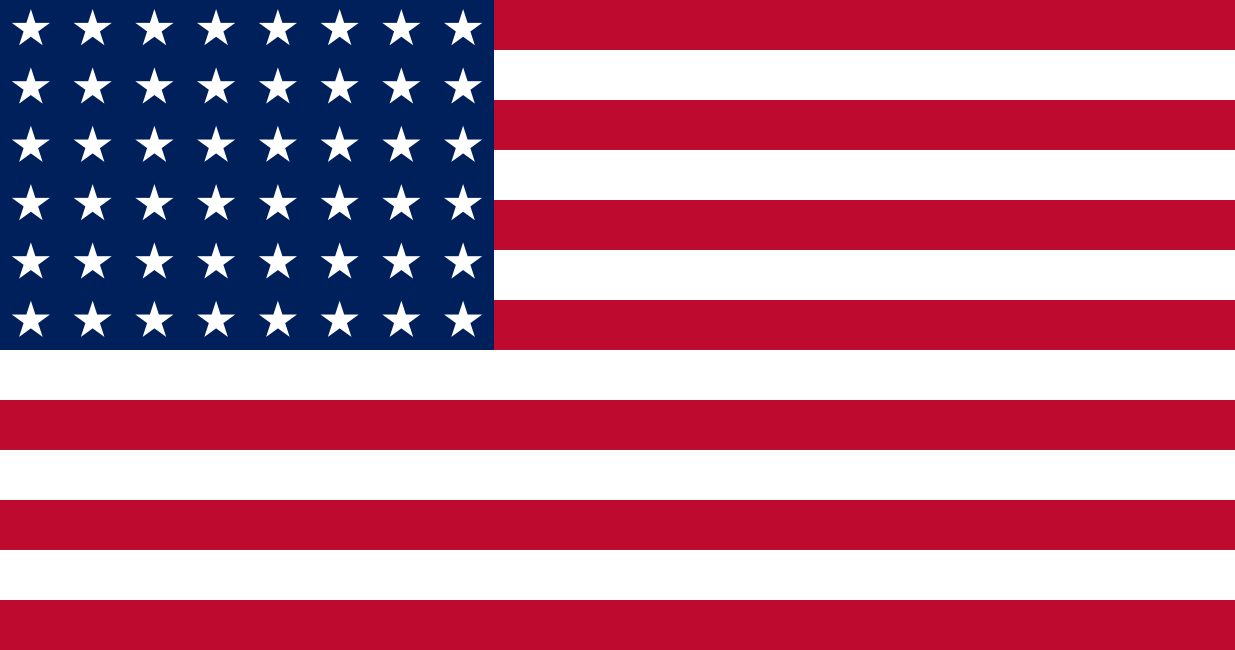
Forty-eight white stars in six straight rows of eight above thirteen stripes.
When and how this design was used
New Mexico and Arizona brought the count to 48. A 1912 executive order specified straight rows with a point of each star upward. This grid lasted through both world wars until Alaska’s star took effect on July 4, 1959.
New Mexico and Arizona joined the Union in 1912. The forty-eight-star design associated with those admissions lasted through both world wars and can also be found on a US postage stamp issued in 1957. On an intact flag, count six straight rows of eight stars. That regular grid is especially helpful when identifying a small flag in an old photograph.
Dates in United States flag history
1795–1818 — Fifteen-star, fifteen-stripe flag · The design incorporated Vermont and Kentucky and became the Fort McHenry flag.
1959–1960 — Forty-nine stars · A short-lived arrangement followed Alaska’s admission.
Compare with the current flag of United States
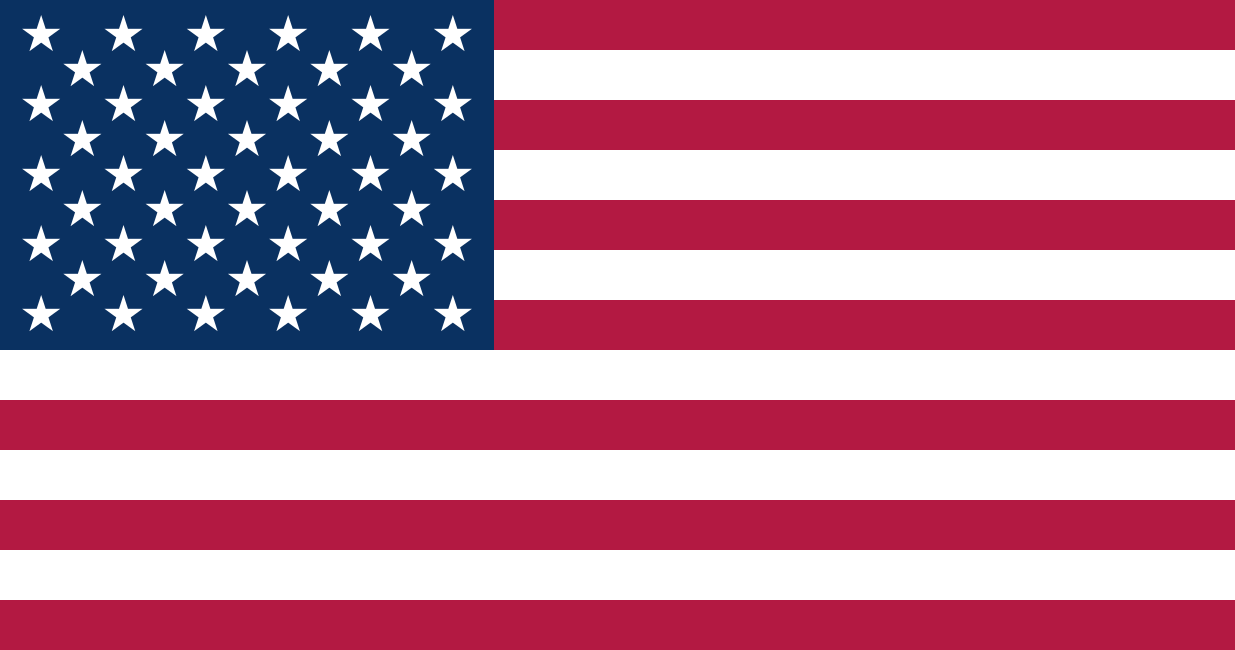
13 equal horizontal stripes of red (top and bottom) alternating with white; a blue rectangle in the upper-left corner has 50 five-pointed white stars, arranged in nine offset horizontal rows of six stars (top and bottom) alternating with rows of five stars.
What Did We Learn Today?
Six rows of eight stars identify the forty-eight-star US flag. That regular grid changed when the forty-ninth star was added in 1959.
Sources & Data Notes
View references and illustration credit
- Smithsonian National Postal Museum, 48-star flag stamp
- Smithsonian Institution · the flag acts and the 1912 star arrangement
- New York State Military Museum · Dates of use of U.S. star patterns
- Office of the Law Revision Counsel, U.S. House of Representatives · 4 U.S.C. § 2
Historical illustration
Illustration source · Jacobolus · Public domain

Unmodified SVG served locally.