National flag guide
Flag of United States: Meaning, Symbols and History
The Continental Congress adopted the basic Stars and Stripes design on 14 June 1777, specifying thirteen stars and thirteen alternating stripes for the original states.
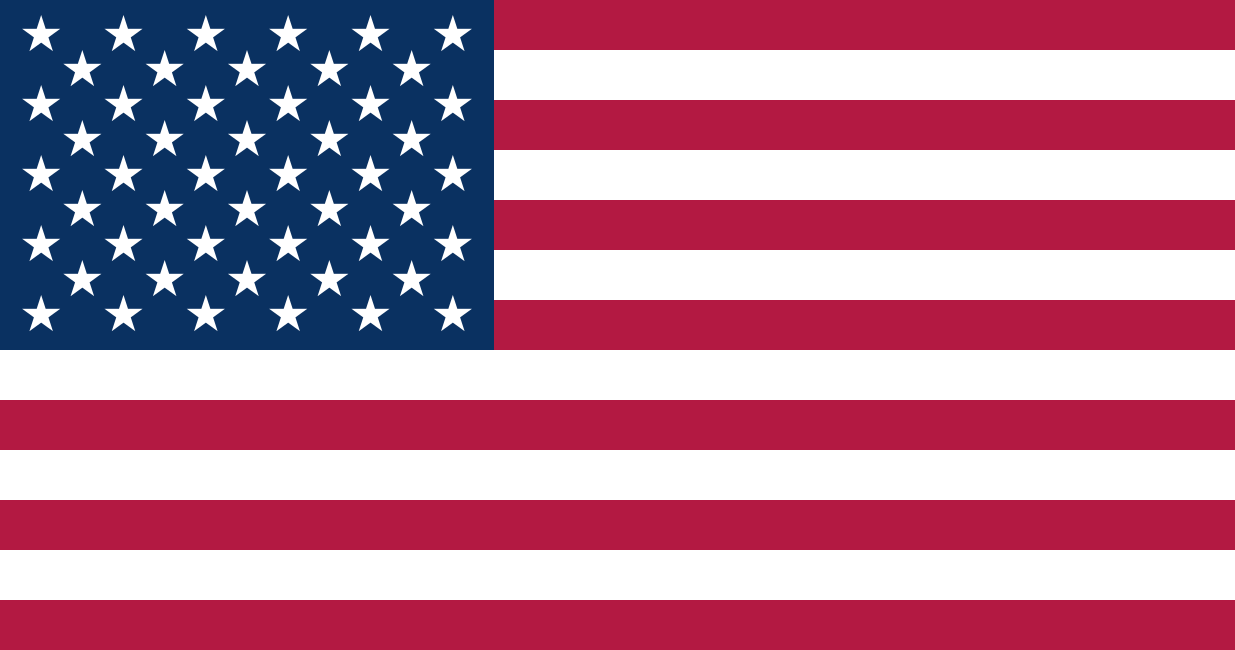
13 equal horizontal stripes of red (top and bottom) alternating with white; a blue rectangle in the upper-left corner has 50 five-pointed white stars, arranged in nine offset horizontal rows of six stars (top and bottom) alternating with rows of five stars. The fifty stars represent the states; the thirteen stripes recall the original colonies.
The design and its details
13 equal horizontal stripes of red (top and bottom) alternating with white; a blue rectangle in the upper-left corner has 50 five-pointed white stars, arranged in nine offset horizontal rows of six stars (top and bottom) alternating with rows of five stars.
| Flag | United States |
|---|---|
| Collection | Country flags |
| Adoption or specification | 4 July 1960 for the current fifty-star version |
| Browsing region | North America · Northern America |
| Illustrated proportions (height:width) | 10:19 |
What the flag means
The fifty stars represent the states; the thirteen stripes recall the original colonies. Familiar explanations of red, white and blue often draw on later patriotic tradition or the Great Seal’s colors, rather than explicit meanings assigned in the 1777 flag resolution.
| Element | Meaning or historical connection |
|---|---|
| Fifty stars | The fifty states of the union. |
| Thirteen stripes | The thirteen original colonies, a count retained even as the number of states increased. |
| Red, white and blue | Later patriotic interpretations often draw on the Great Seal’s colors. The 1777 flag resolution did not assign a moral meaning to each color. |
| Blue canton | The field carrying the union of stars; its arrangement changed as new states were admitted. |
How the flag developed
The Continental Congress adopted the basic Stars and Stripes design on 14 June 1777, specifying thirteen stars and thirteen alternating stripes for the original states. The resolution did not prescribe every drawing detail, so early flags used different star arrangements. The familiar Betsy Ross story should not be presented as a conclusively documented account of a single inventor.
As states joined, Congress changed the flag. A fifteen-star, fifteen-stripe version represented the additions of Vermont and Kentucky and became the flag associated with the bombardment of Fort McHenry in 1814. In 1818 the stripe count returned to thirteen, while the stars would continue to grow with the number of states. This separated the flag’s founding-history symbol from its changing representation of the Union.
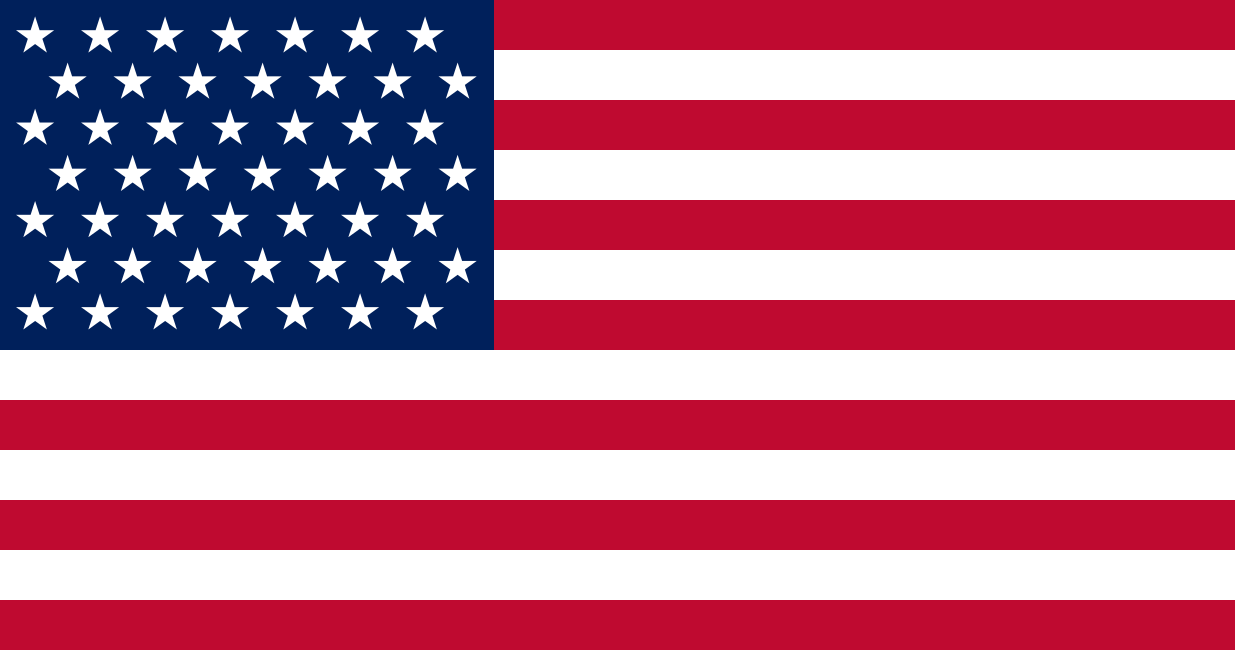
The forty-nine-star flag followed Alaska’s admission, and the present fifty-star design came into use on 4 July 1960 after Hawaii became a state in 1959. Nine offset rows alternate six and five stars. The 1960 date is the adoption of this particular star arrangement, not the founding of the country or the first use of the national flag. Historical American flags are most accurately identified by star count, stripe count and the period of their official use.
Why the star count changes but the stripes do not
The American flag combines two different historical counts. The stars follow membership of the union, while the thirteen stripes preserve the founding colonies. That distinction explains why the country can gain a state without adding another stripe.
There was an important exception. The 1795 flag had fifteen stars and fifteen stripes after Vermont and Kentucky joined. In 1818 Congress returned the stripe count to thirteen and established the practice of adding stars for new states, with changes taking effect on the following Fourth of July.
The modern arrangement also has a precise construction. Executive Order 10834 specified the fifty-star flag in 1959, before its effective introduction on 4 July 1960. A forty-nine-star photograph belongs to the brief interval after Alaska’s star was added and before Hawaii’s was added. The difference is a dateable national change, not simply a decorative choice by the manufacturer.
The main changes over time
1777 — Thirteen stars and stripes
Congress adopted the first Stars and Stripes resolution.
1795–1818 — Fifteen-star, fifteen-stripe flag
The design incorporated Vermont and Kentucky and became the Fort McHenry flag.
1818 — Thirteen stripes restored
Congress retained thirteen stripes while allowing the star count to grow.
1959–1960 — Forty-nine stars
A short-lived arrangement followed Alaska’s admission.
1960 — Fifty-star flag
Hawaii’s admission led to the present design on 4 July.
Historical flags in pictures

How to recognise this flag
Count thirteen stripes, with red at both the top and bottom, and fifty stars on the blue canton. Puerto Rico, Liberia and Malaysia have related striped structures but different cantons and emblems.
Compare the relevant designs in these guides:
Earlier designs and other uses
Historical star counts can be genuine period flags. The presidential standard, state flags and military service flags have separate identities and should not be substituted for the national Stars and Stripes.
Questions about this flag
When was the flag adopted?
4 July 1960 for the current fifty-star version. An adoption date can refer to a design, its restoration or a later legal specification; the timeline above separates those stages.
What should I check before identifying an older example?
Historical star counts can be genuine period flags. The presidential standard, state flags and military service flags have separate identities and should not be substituted for the national Stars and Stripes.
What Did We Learn Today?
Count thirteen stripes, with red at both the top and bottom, and fifty stars on the blue canton. Puerto Rico, Liberia and Malaysia have related striped structures but different cantons and emblems. Its adoption and later changes reflect the national history described in the timeline, while older or specialist flags need their own labels.
Sources & Data Notes
This guide distinguishes first use, national adoption, restoration and later construction standards. Traditional or commonly reported interpretations are identified where they differ from a formal specification. It is a dated reference, not a live record of every change in official flag use.
- US National Archives: Executive Order 10834.
- Archived World Factbook country record — background flag description and symbolic interpretations; later changes are explained above.
- Flagpedia: United States — flag artwork and comparison reference.
- Flag history reference and bibliography — chronology and links to underlying sources.
The main illustration preserves the selected flag artwork’s proportions; these are a reproduction guide, not a substitute for a legal construction drawing. Color names group shades for browsing.
Illustration credits
- Flag of the United States (1795-1818) (Variant).svg — Squee3; Public domain.
- Flag of the United States (1959–1960).svg — Flag design by the U.S. Government; SVG by Gunter Küchler / Berlin; Public domain.

