Explainers & Big Questions
What Is a Tidal Bore? How the Tide Sends a Wave Upstream
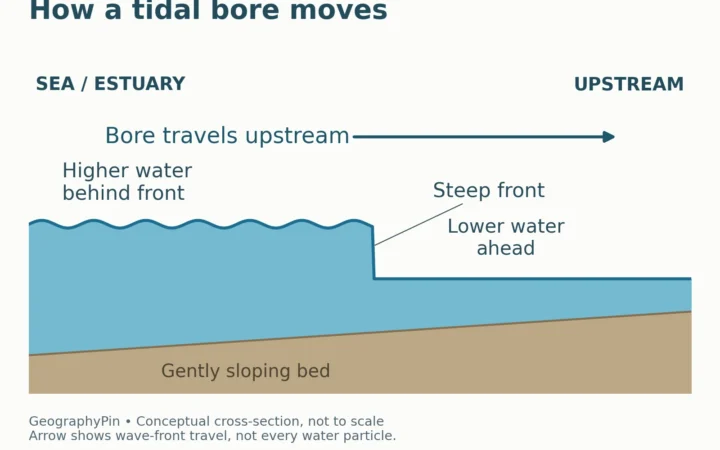
A tidal bore is a steep-fronted wave, or a train of waves, that travels upstream through a river or estuary as the incoming tide…
Learn geography
Clear answers to common geography questions, from definitions to famous debates. Short, sourced explainers with maps and simple visuals help you understand the “what,” “where,” and “why”—without the jargon.
A tidal bore is a steep-fronted wave, or a train of waves, that travels upstream through a river or estuary as the incoming tide…
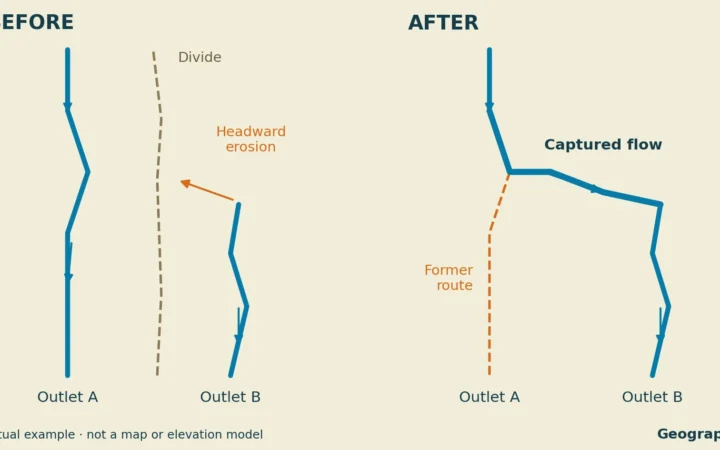
In late May 2016, a river in Canada’s Yukon began to fall as meltwater found a new way out of a retreating glacier. Follow…
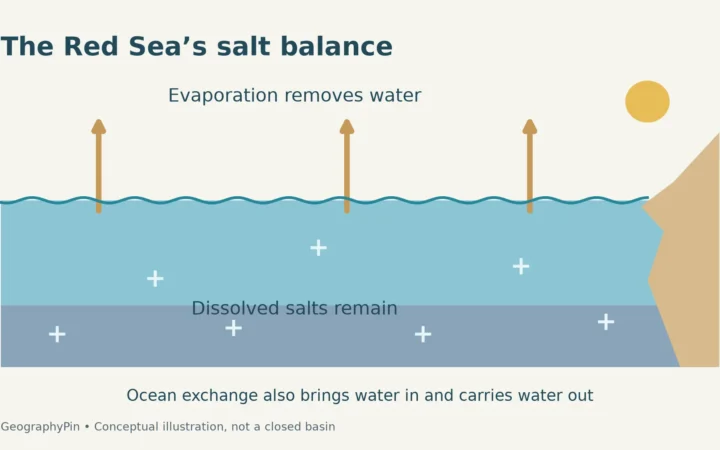
The Red Sea is connected to the ocean, yet its water is unusually salty. That makes it a useful contrast with a closed salt…
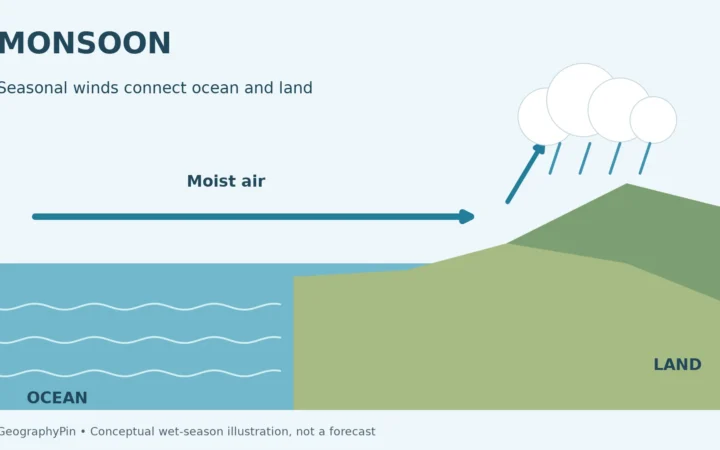
A downpour can last an hour; a monsoon describes a seasonal change in atmospheric circulation. Confusing the two makes a wet-season map look like…
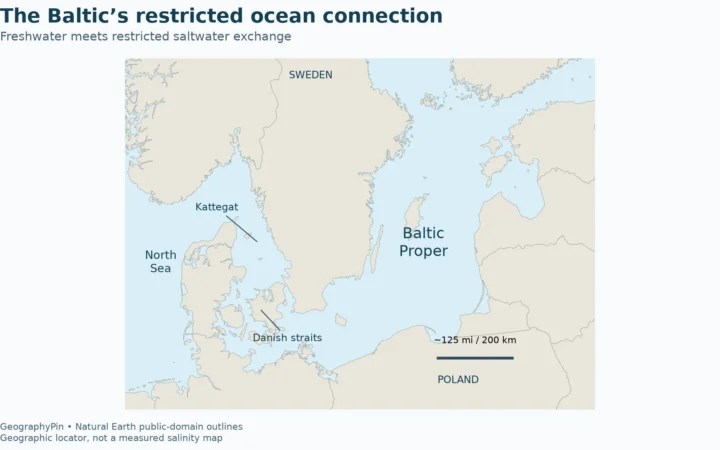
The Baltic is a sea, but its water is much less salty than ordinary open-ocean water. The explanation lies in its water budget and…
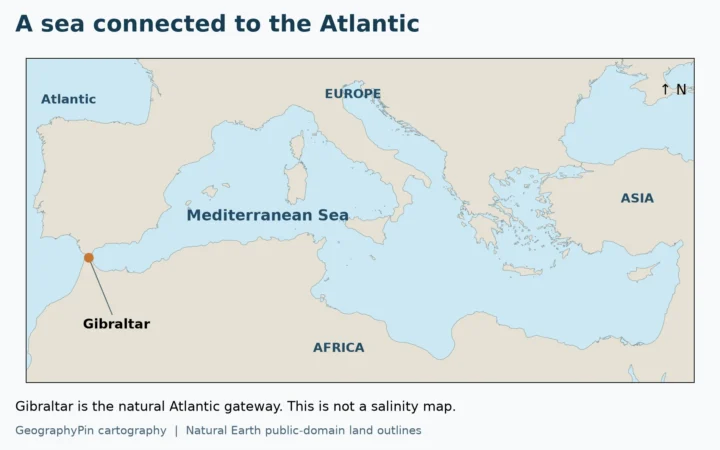
The Mediterranean is connected to the Atlantic, yet much of its water is saltier than the water arriving through Gibraltar. Its salinity reflects the…
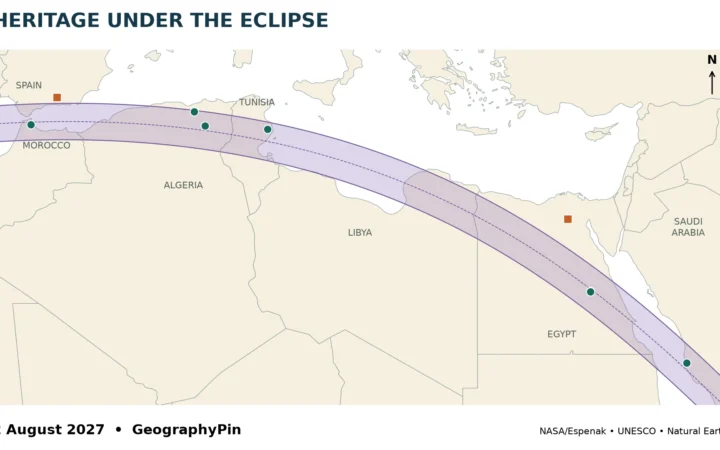
A famous monument can lie close to an eclipse route without experiencing totality. On August 2, 2027, that distinction separates the temples at Luxor…
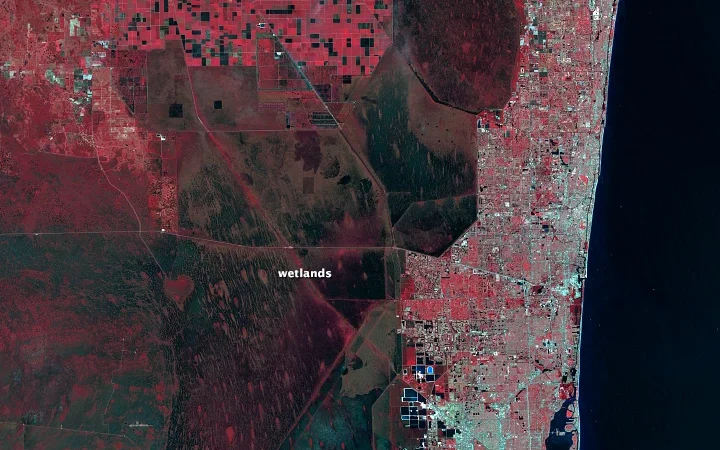
A red forest in a satellite image is not necessarily burning, and a dark patch is not automatically water. The first task is to…
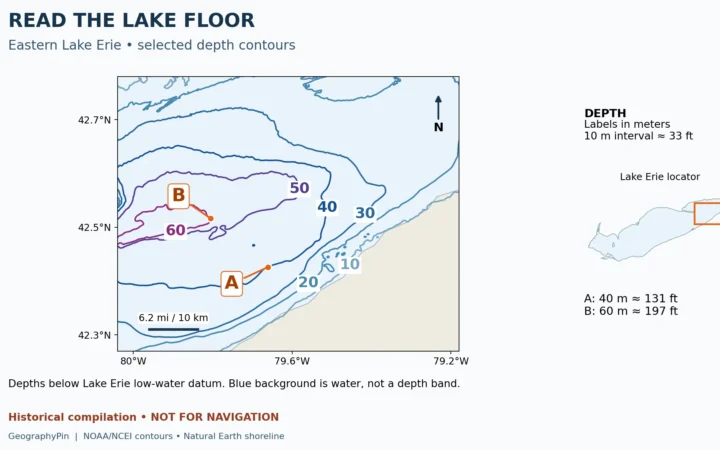
A blue patch and a set of depth numbers can make an underwater landscape look simple. The difficulty is deciding what the numbers are…
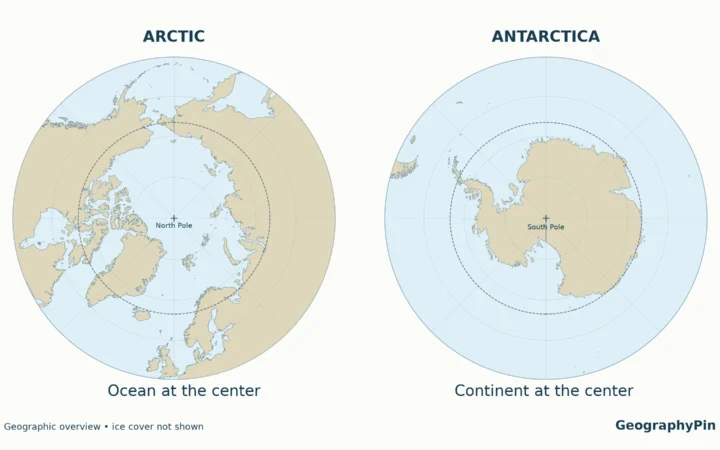
A white patch around each pole can make the Arctic and Antarctica look interchangeable. Coastlines, ice types and seasons reveal why they are not.…