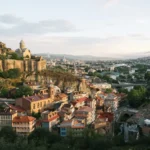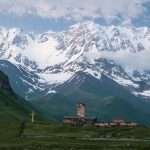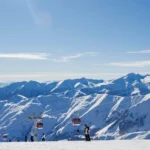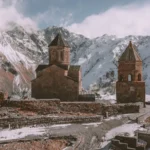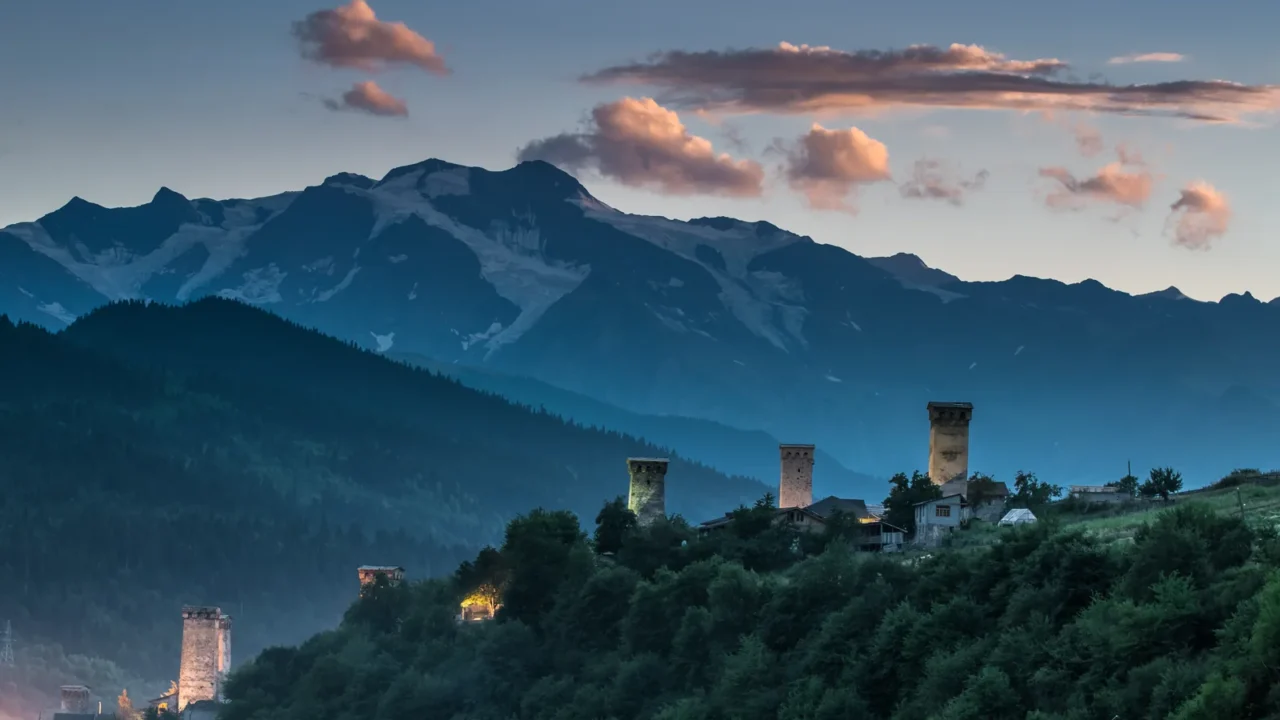
Mestia (მესტია) is the main visitor base in Upper Svaneti, in northwestern Georgia’s Caucasus Mountains. Stone towers and museums give the town a strong cultural identity, while surrounding valleys lead toward mountain walks, multi-day treks, and the Hatsvali and Tetnuldi ski areas. Allow time for the journey and choose your outdoor plans around conditions rather than treating every nearby landmark as a simple day trip.
Mestia is a highland townlet and administrative center in Upper Svaneti, about 4,900 feet (1,500 meters) above sea level. It is a practical base for Svan towers, museums, day walks, trekking toward Ushguli, and winter sports. The UNESCO-listed Upper Svaneti property is associated with Chazhashi in the Ushguli community, not the whole town of Mestia.
Choose your route through the guide: Compare road access with flights, check the demands of the Mestia–Ushguli trek, or plan around Hatsvali and Tetnuldi.
1. Orientation: Where Is Mestia, Georgia?
Mestia lies in the Samegrelo-Zemo Svaneti region. The town, the much larger Mestia Municipality, and the historic region of Svaneti are different geographic units. A hotel or trail described as “in Mestia” may be well outside the town, so check its exact location before planning a pickup or walk.
The main road approach comes from Zugdidi through the Enguri valley. Ushguli lies farther into Upper Svaneti and is reached by a separate onward journey. Mountain ridges and valleys make straight-line distances poor measures of travel time: use the actual road, its current condition, and the intended vehicle to judge an excursion.
For a first visit, think in three scales: the walkable parts of Mestia itself, excursions requiring transport to a trailhead or ski area, and multi-day travel through the surrounding villages. This makes it easier to keep cultural sightseeing, a mountain walk, and a long trek from competing for the same afternoon.
2. Svan Towers, Culture, and UNESCO Status
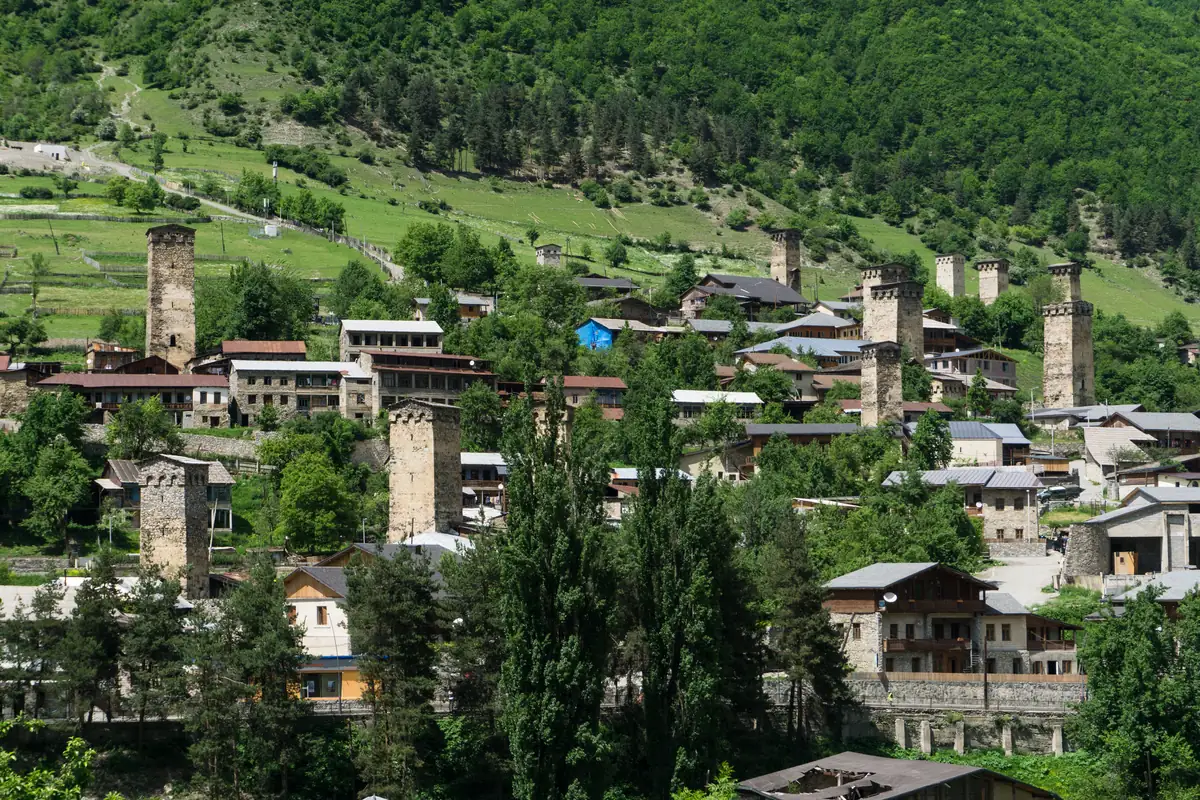
Svaneti’s tower-house complexes combine domestic life and defense. UNESCO describes towers commonly rising three to five floors, connected with houses and the wider settlement landscape. Their value lies in how buildings, land use, and mountain communities fit together, not simply in their appearance against the peaks.
The UNESCO World Heritage property named Upper Svaneti was inscribed in 1996. Its listing identifies the village of Chazhashi in the Ushguli community, within Mestia district. Mestia town is a base for visiting this heritage area; the inscription does not designate every building in Mestia or the entire Svaneti region.
Mestia has its own historic towers and cultural collections, so there is no need to rush onward before understanding the town. Walk through its older neighborhoods, visit a museum, and enter private buildings or towers only where access is explicitly offered. Ask before photographing people and follow instructions at churches and religious sites.
3. Getting There: Roads, Flights, and Practical Access
By road through Zugdidi
The Zugdidi–Jvari–Mestia–Lasdili road is the main approach corridor. Georgia Travel gives roughly three hours for the Zugdidi–Mestia drive as an orientation, but weather, works, stops, and traffic can change that substantially. From Tbilisi, treat reaching Mestia as a major travel day rather than the prelude to a substantial hike.
Arrange a suitable transfer or confirm the local minibus service, departure point, luggage arrangements, and fare for your date. If connecting from another service in Zugdidi, verify how the connection works instead of assuming a vehicle will wait. Self-drivers should check the rental agreement, vehicle suitability, and the latest Roads Department restrictions.
Access to Mestia does not establish access to Ushguli or a high trailhead. Official notices treat the Jvari–Mestia, Mestia–Ushguli, and other sections separately. Do not assume that an alternative route through Lower Svaneti is an all-season substitute simply because a navigation app offers it. Verify the complete route before setting out.
By air: Queen Tamar Airport, UGMS
Mestia’s Queen Tamar Airport is listed as UGMS in Georgia’s Aeronautical Information Publication. The airport entry places it about 1.2 miles (2 kilometers) northeast of the center, at 4,778 feet (1,457 meters), and identifies visual flight rules. Airport specifications establish the airfield’s characteristics, not passenger availability on a chosen date.
Vanilla Sky’s booking service offers information on domestic flights; its terms identify AK-AIR GEORGIA as the operating airline for the Natakhtari–Mestia service. Natakhtari is outside Tbilisi and is not Tbilisi International Airport. Confirm the departure airport, any shuttle, baggage allowance, and actual available flight before arranging other travel around it.
The booking service’s terms explicitly state that Mestia flights depend on destination weather. Check the available dates and cancellation conditions directly, and do not connect a weather-dependent Mestia arrival tightly to an international departure. Keep a road alternative and time buffer; old schedule images and advertised fares are not proof of a current flight.
4. Museums and Things to See in Mestia
Svaneti Museum of History and Ethnography
Start with this museum if you want context for the towers and churches you will encounter farther into Svaneti. Its collections include archaeological material, coins, religious art, manuscripts, and objects connected with everyday life. It belongs to the Georgian National Museum network.
The official Svaneti Museum page provides visitor information. Check its hours, holiday arrangements, ticket conditions, and any access needs before building a day around it. A museum visit is a useful poor-weather option, but should not be assumed available every day.
Mikheil Khergiani House-Museum
The memorial museum preserves the story of Mestia-born mountaineer Mikheil Khergiani, known as the “Tiger of the Cliffs.” Georgia Travel records its opening in 1983 and describes personal objects, photographs, awards, and climbing equipment. It complements the larger regional museum with a more personal account of Svaneti’s mountaineering history.
Confirm admission arrangements locally and allow time to see the neighborhood rather than treating the house as a quick photo stop. Neither a tower visit nor a museum requires you to take on a demanding mountain route to make the day worthwhile.
5. Walking and Trekking: Choose the Right Commitment
Mestia’s outdoor options range from town walks to exposed high-country routes. The starting point matters: a walk from the center and a walk after a vehicle transfer are not the same outing. Ask for the route, total ascent, surface, turnaround point, and current conditions before accepting a difficulty label.
| Plan | Main purpose | Decision before departure |
|---|---|---|
| Mestia museums and towers | Culture within the town | Opening arrangements and walking surfaces |
| Koruldi Lakes | High viewpoints and alpine lakes | Full ascent on foot or a suitable vehicle-assisted plan |
| Chalaadi valley walk | Mountain and glacier scenery | Trailhead access, bridge condition, and safe stopping point |
| Ushguli by road | Village heritage without a multi-day trek | Current road, return transport, and time in the villages |
| Mestia–Ushguli trek | Several days through mountain villages | Stages, passes, river crossing, lodging, and exit options |
Koruldi Lakes: avoid the “easy walk” assumption
The lakes sit high above Mestia, with routes passing the Jvari viewpoint. Walking all the way from town is a substantial ascent, not equivalent to a short stroll after a vehicle drop-off. Official tourism descriptions give differing lake elevations and effort assessments, so this guide does not turn them into a single universal distance or time.
Choose the outing with a local guide or driver who can explain the current approach and the part you will walk. Snow, cloud, and a deteriorating track can change the plan. Set a turnaround time that leaves room for a safe descent and your return transport.
Chalaadi: a viewpoint walk is not glacier access
The Chalaadi, also written Chalaati, outing follows the Mestiachala valley toward glacier scenery. Check current road and bridge access to the walking start, and establish the correct route locally rather than following a photograph or an old track without question.
Georgia Travel explicitly warns about falling rocks and the danger of approaching the glacier tongue. Keep to an appropriate viewing area and do not walk onto the glacier or enter ice openings. The attractive endpoint of an online route does not establish a safe stopping distance under today’s conditions.
Mestia–Ushguli: plan stages, not just a day count
The familiar multi-day trek connects Svan villages on the way to Ushguli. Georgia Travel describes roughly four to five days for the overall journey, but route variants, lodging choices, weather, and fitness change the schedule. Confirm each night’s accommodation, meals, drinking-water arrangements, and a way out if the next stage becomes unsuitable.
A consequential part of the commonly used route is the Adishi–Iprari stage. The tourism board warns of an unbridged river crossing and avalanche-prone terrain toward Chkhutnieri Pass. Do not attempt a river crossing when conditions are unsafe. A horse, another hiker’s successful crossing, or a fixed itinerary does not remove the hazard. Obtain current local advice and a qualified guide where needed, and be willing to change or abandon the stage.
For all mountain walks, carry suitable layers and rain protection, food, water, navigation, and a charged phone. Tell someone your route and expected return, check that your insurance covers the activity, and respect any closure. High passes and glacier terrain require preparation beyond ordinary village sightseeing.
6. Seasons and Winter Sports at Hatsvali and Tetnuldi
For a hiking-led visit, summer into early autumn is the most useful planning window. High routes can retain snow after lower valleys become accessible, and autumn brings shorter daylight and the possibility of new snow. Verify the route rather than interpreting a seasonal recommendation as an opening date.
Spring and late autumn can suit a quieter cultural visit if your transport and accommodation are operating, but leave flexibility for rain, snow, and disrupted excursions. Clear weather in Mestia does not establish conditions on a pass or the airport’s flight route.
Two ski areas, separate daily checks
Hatsvali and Tetnuldi are the ski areas associated with Mestia. They offer different settings, from forested terrain around Hatsvali to more open alpine slopes at Tetnuldi. Check the Mountain Trails Agency’s Mestia resort page for the specific lifts and runs relevant to your plans, and confirm road transfers separately.
Winter operations depend on the season’s announcements and conditions. A general “December to April” description is not a guarantee that both areas, every lift, or sightseeing rides are operating. Summer rides toward Zuruldi also require their own service check. Verify ticket coverage and the last descent before relying on a lift.
Arrange lessons, rental equipment, and the meeting point before a ski day, especially if your accommodation is in town rather than beside the slopes. Off-piste skiing and ski touring require suitable expertise, equipment, and avalanche assessment; a resort map does not establish that surrounding terrain is safe.
7. Where to Stay and How Long to Allow
For a first cultural-and-outdoor visit, three or four nights in Mestia make a useful starting plan. This allows a town and museum day, one main outing, and some flexibility around the journey. Add time for Ushguli or more hiking; a multi-day trek needs its own nights and transport arrangements.
- Central accommodation: prioritize it if you want convenient food, transport meetings, and town walking.
- Edge-of-town or hillside accommodation: choose it for the setting only after checking gradients, luggage access, and the return from dinner.
- A trekking guesthouse: ask about early breakfast, packed meals, luggage storage, and help confirming current route conditions.
- A winter stay: confirm heating, equipment storage, and the real transfer to your chosen ski area.
A balanced first stay could begin with museums and a neighborhood walk, use the best suitable day for your main mountain outing, and reserve another day for Ushguli by road or a second local activity. Keep the sequence flexible. Do not spend the good-weather window on an optional indoor stop if a planned high route needs it.
Ask for accommodation accessibility details directly: stairs, gradients, bathroom layout, and vehicle drop-off can matter more than the distance to the center. Check meal arrangements and dietary needs, keep local currency for services that do not accept cards, and download useful maps and booking details before leaving town.
For a larger Georgia trip, avoid putting an international flight immediately after the final mountain day. The main value of an extra night is not another attraction: it is space to handle a changed road, canceled flight, or worthwhile day that needs more time.
What Did We Learn Today?
Mestia brings together Svan towers, cultural collections, mountain walks, and winter sports, but each outing has its own access demands. The town is a base for the UNESCO heritage at Chazhashi in Ushguli, not a synonym for the entire listed property. Distinguish town visits from high-country trekking, check roads and flights separately, and give river crossings, glacier viewpoints, and ski terrain the preparation they require.
Sources & Data Notes
UNESCO’s listing defines the heritage property; it is not a designation of all Mestia town. The linked September 2025 eAIP supports airport characteristics, not current flight schedules. Road notices and route descriptions do not establish today’s access. Suggested stay lengths are editorial advice; no live airfare, lift opening, museum ticket price, or guaranteed hiking time is asserted.
Featured photograph: Mestia’s Svan towers at dusk, photographed in August 2015. Photo: Dmytro Balkhovitin / Wikimedia Commons, CC BY-SA 4.0. Resized and converted to WebP. This adapted image is licensed under CC BY-SA 4.0.
- UNESCO World Heritage Centre: Upper Svaneti, including inscription year and Chazhashi location.
- Georgia Travel: Mestia, for destination orientation, access context, and cultural attractions.
- Georgian National Museum: Svaneti Museum, with the tourism board’s collection overview.
- Georgia Travel: Mikheil Khergiani House Museum.
- Sakaeronavigatsia: Mestia airport eAIP entry, effective September 4, 2025.
- Vanilla Sky: booking terms and weather-dependent flight information.
- Roads Department: dated Mestia–Ushguli restriction notice, an example of section-specific restrictions.
- Georgia Travel: trekking overview and Adishi–Iprari route warning, for multi-day planning and river/pass hazards.
- Georgia Travel: Mestia–Koruldi Lakes and Chalaadi glacier route, with its explicit rockfall warning.
- Mountain Trails Agency: Mestia, Hatsvali, and Tetnuldi.