National flag guide
Flag of Serbia: Meaning, Symbols and History
Serbia’s red-blue-white belongs to the nineteenth-century development of Serbian and wider Pan-Slavic national colors.
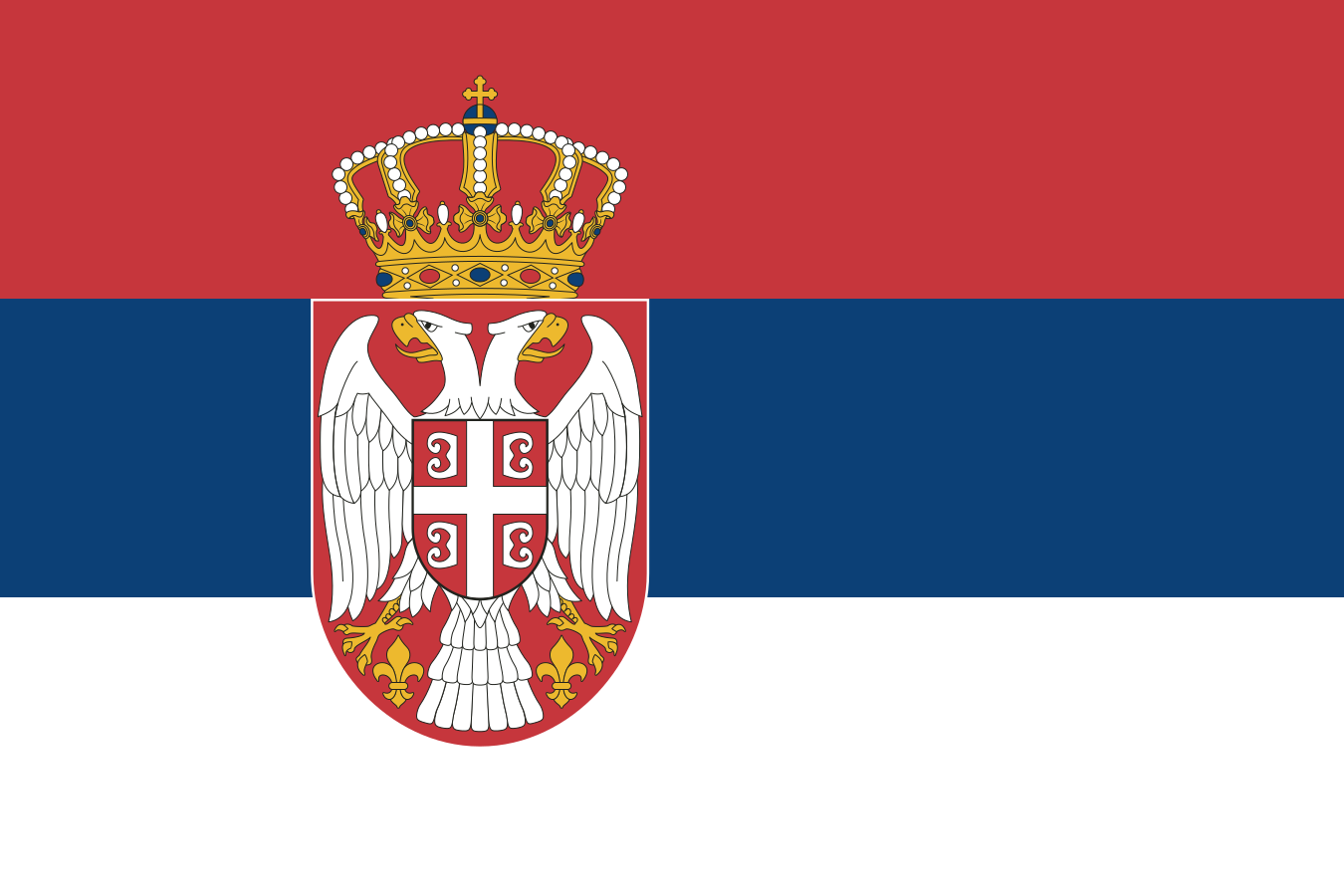
Three equal horizontal stripes of red (top), blue, and white; the national coat of arms is shifted to the left side; the principal field of the coat of arms displays a two-headed white eagle on a red shield; a smaller red shield on the eagle is divided into four quarters by a white cross; a royal crown is on top of the coat of arms.
The design and its details
Three equal horizontal stripes of red (top), blue, and white; the national coat of arms is shifted to the left side; the principal field of the coat of arms displays a two-headed white eagle on a red shield; a smaller red shield on the eagle is divided into four quarters by a white cross; a royal crown is on top of the coat of arms.
| Flag | Serbia |
|---|---|
| Collection | Country flags |
| Adoption or specification | 2004 design; standardised in 2010 |
| Browsing region | Europe · Southern Europe |
| Illustrated proportions (height:width) | 2:3 |
What the flag means
The double-headed eagle and the cross with four firesteels draw on Serbian heraldry. The firesteels are often popularly interpreted as letters, but the heraldic devices have a history that is not exhausted by that modern mnemonic.
| Element | Meaning or historical connection |
|---|---|
| Red, blue and white | The Serbian tricolour within the wider Pan-Slavic color tradition. |
| Double-headed eagle | A historic Serbian heraldic emblem. |
| Cross and four firesteels | Traditional devices on the breast shield. The firesteels should not simply be described as four modern Latin letters. |
| Crown | A historical state emblem retained by the republic; its presence does not make present Serbia a monarchy. |
How the flag developed
Serbia’s red-blue-white belongs to the nineteenth-century development of Serbian and wider Pan-Slavic national colors. Different princely, royal and republican versions combined those bands with changing coats of arms or other devices.
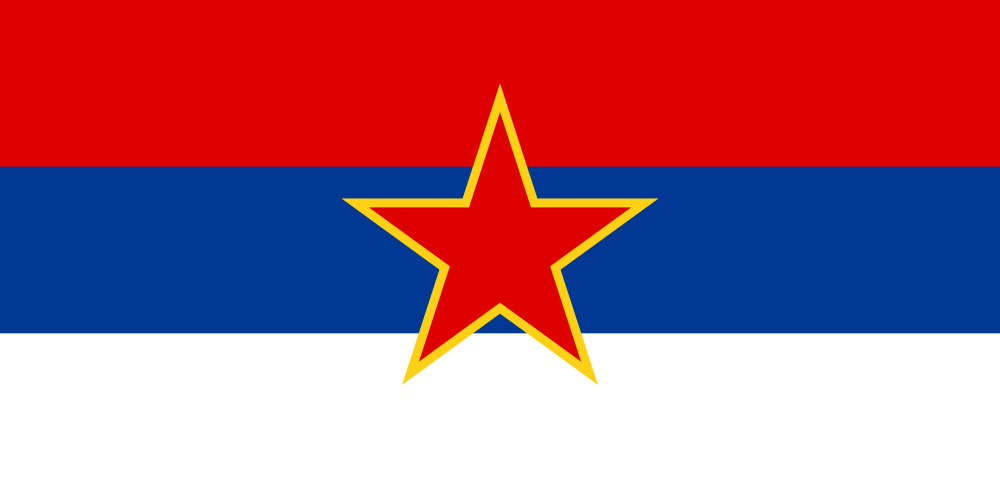
Under socialist Yugoslavia, Serbia’s republican flag carried a red star. After the socialist period, the plain tricolour reappeared, and the arms-bearing state flag was adopted in 2004 while Serbia was still in union with Montenegro. Serbia retained it as a separate state after 2006, with the heraldic drawing standardised in 2010. The crown on the arms preserves a historical symbol; it does not make the present republic a monarchy.
The main changes over time
Nineteenth century — National tricolour develops
Red-blue-white became established in Serbian state symbols.
Socialist period — Republican red star
A star marked the Yugoslav-era republican flag.
2004–2010 — Current state flag
The modern arms-bearing design was adopted and later standardised.
Historical flags in pictures
How to recognise this flag
Serbia is red-blue-white with a white double-headed eagle shifted toward the hoist. Croatia has red-white-blue and a checkerboard; Russia’s plain tricolour begins with white.
Compare the relevant designs in these guides:
Earlier designs and other uses
Serbia also has a plain national tricolour without the arms. The state flag illustrated here includes the coat of arms.
Questions about this flag
When was the flag adopted?
2004 design; standardised in 2010. An adoption date can refer to a design, its restoration or a later legal specification; the timeline above separates those stages.
What should I check before identifying an older example?
Serbia also has a plain national tricolour without the arms. The state flag illustrated here includes the coat of arms.
What Did We Learn Today?
Serbia is red-blue-white with a white double-headed eagle shifted toward the hoist. Croatia has red-white-blue and a checkerboard; Russia’s plain tricolour begins with white. Its adoption and later changes reflect the national history described in the timeline, while older or specialist flags need their own labels.
Sources & Data Notes
This guide distinguishes first use, national adoption, restoration and later construction standards. Traditional or commonly reported interpretations are identified where they differ from a formal specification. It is a dated reference, not a live record of every change in official flag use.
- Archived World Factbook country record — background flag description and symbolic interpretations; later changes are explained above.
- Flagpedia: Serbia — flag artwork and comparison reference.
- Flag history reference and bibliography — chronology and links to underlying sources.
The main illustration preserves the selected flag artwork’s proportions; these are a reproduction guide, not a substitute for a legal construction drawing. Color names group shades for browsing.
Illustration credits
- Flag of Serbia (1945–1992).svg — User:CrnaGora; Public domain.
