National flag guide
Flag of Slovenia: Meaning, Symbols and History
Slovenia’s white-blue-red derives from the national movement of 1848 and the heraldic colors associated with Carniola.
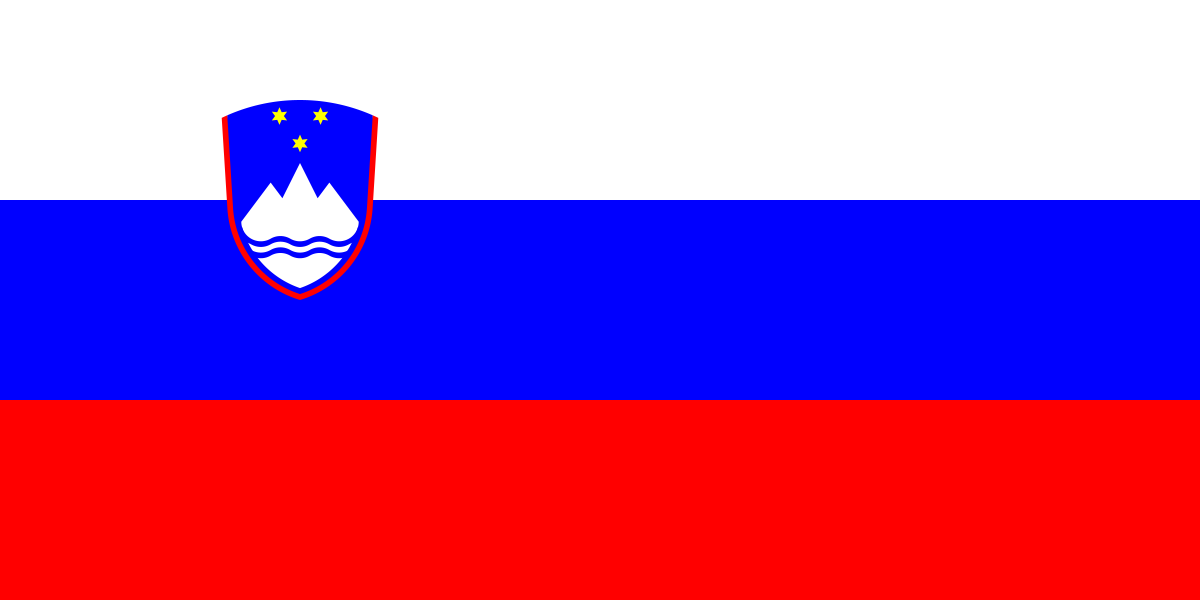
Three equal horizontal bands of white (top), blue, and red; the Slovenian seal (a shield with Triglav, the country's highest peak, in white on a blue background) is at the center, with two wavy blue lines under it; three six-pointed stars in an inverted triangle appear on the upper-left.
The design and its details
Three equal horizontal bands of white (top), blue, and red; the Slovenian seal (a shield with Triglav, the country's highest peak, in white on a blue background) is at the center, with two wavy blue lines under it; three six-pointed stars in an inverted triangle appear on the upper-left.
| Flag | Slovenia |
|---|---|
| Collection | Country flags |
| Adoption or specification | 25 June 1991 |
| Browsing region | Europe · Southern Europe |
| Illustrated proportions (height:width) | 1:2 |
What the flag means
Triglav is a geographical landmark, the wavy lines refer to waters, and the stars come from the arms of the Counts of Celje. These are specific references rather than a generic mountain-and-sky landscape.
| Element | Meaning or historical connection |
|---|---|
| White, blue and red | National colors connected with the heraldic tradition of Carniola. |
| White mountain | Mount Triglav, a major Slovenian national symbol. |
| Blue wavy lines | The sea and rivers. |
| Three gold stars | A heraldic reference to the Counts of Celje, not three current provinces. |
How the flag developed
Slovenia’s white-blue-red derives from the national movement of 1848 and the heraldic colors associated with Carniola. The tricolour therefore predates the independent Slovenian state.
As a republic within socialist Yugoslavia, Slovenia placed a red star on the tricolour. The independence-era design adopted in June 1991 replaced that star with a shield by Marko Pogačnik. The shield combines Mount Triglav, water lines and three stars. The national colors provide continuity with the nineteenth-century movement, while the new arms give the modern republic its own distinguishing device.
The main changes over time
1848 — National tricolour
White-blue-red became established in the national movement.
1945–1991 — Socialist republican flag
A red star appeared on the tricolour.
1991 — Independent-state flag
The Triglav shield replaced the star.
How to recognise this flag
Slovenia’s shield shows a white mountain and three gold stars. Slovakia’s shield shows a double cross on three blue hills. The similar country names and stripe colors make the shield especially important.
Compare the relevant designs in these guides:
Earlier designs and other uses
The red-star republican flag is historical. The current national flag uses the Triglav shield near the upper hoist.
Questions about this flag
When was the flag adopted?
25 June 1991. An adoption date can refer to a design, its restoration or a later legal specification; the timeline above separates those stages.
What should I check before identifying an older example?
The red-star republican flag is historical. The current national flag uses the Triglav shield near the upper hoist.
What Did We Learn Today?
Slovenia’s shield shows a white mountain and three gold stars. Slovakia’s shield shows a double cross on three blue hills. The similar country names and stripe colors make the shield especially important. Its adoption and later changes reflect the national history described in the timeline, while older or specialist flags need their own labels.
Sources & Data Notes
This guide distinguishes first use, national adoption, restoration and later construction standards. Traditional or commonly reported interpretations are identified where they differ from a formal specification. It is a dated reference, not a live record of every change in official flag use.
- Archived World Factbook country record — background flag description and symbolic interpretations; later changes are explained above.
- Flagpedia: Slovenia — flag artwork and comparison reference.
- Flag history reference and bibliography — chronology and links to underlying sources.
The main illustration preserves the selected flag artwork’s proportions; these are a reproduction guide, not a substitute for a legal construction drawing. Color names group shades for browsing.
Current flag artwork is supplied with the original flag collection; the package’s artwork register contains provenance and license details.