Flag Explorer
Russia’s White, Blue and Red Flag and Its Restoration
Russia’s white-blue-red developed in maritime use under Peter the Great, with an important civil-ensign decision in 1705.
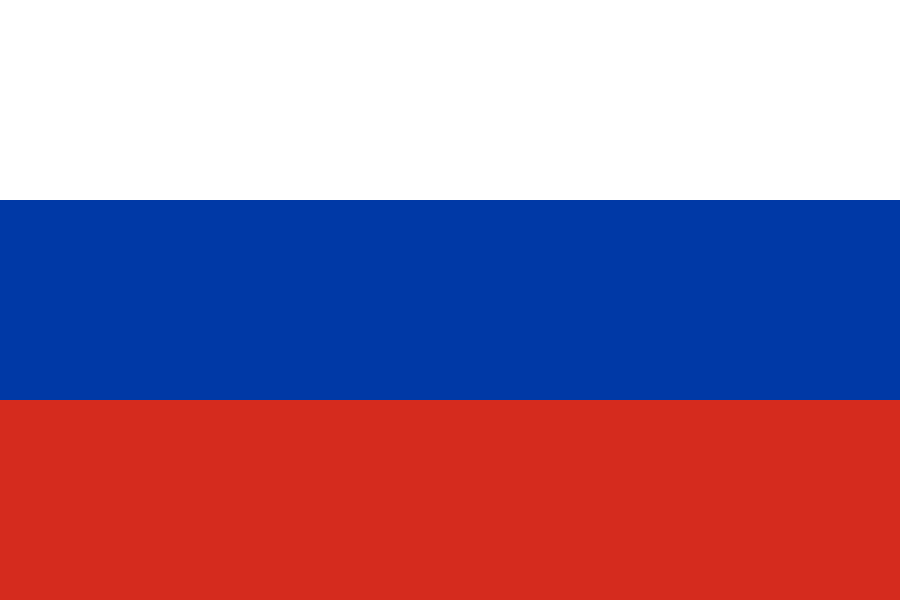
When did Russia restore the white-blue-red tricolor?
The white-blue-red tricolor returned as Russia’s state flag in August 1991. Its colors had appeared in Russian maritime and national flags long before the Soviet period. Later regulations standardized the modern proportions, so the restoration date and a construction drawing can have different dates.
The design and its details
Three equal horizontal bands of white (top), blue, and red.
| Collection | Country flags |
|---|---|
| Adoption or design date | Tricolour restored in 1991; present proportions from 1993 |
| Geographic region | Europe · Eastern Europe |
| Illustrated proportions (height to width) | 2:3 |
What the flag means
The colors have no single universally prescribed official interpretation. Popular meanings exist, but historical maritime use provides a firmer explanation than assigning a fixed modern virtue to each band.
| Element | Meaning or historical connection |
|---|---|
| White, blue and red | The national tricolour associated with Russia’s older maritime and state history. |
| Color meanings | No single official symbolic meaning is assigned to each band; popular virtue lists are interpretations. |
| Plain tricolour | The national flag differs from the presidential standard and other arms-bearing official flags. |
Compare the flags of Russia and France
Follow the white band from one edge to the other. Which way does it run? In both drawings, the flagpole side is on the left.

Reveal the flag names and clues
A · Russia — White runs along the top edge. Blue and red run beneath it in that order.
B · France — White is an upright band between blue at the pole and red at the fly.
How the flag developed
During the imperial period it coexisted and competed with other state colors, including black-yellow-white. National use of the tricolour became established in the later nineteenth century.
The Bolshevik revolution replaced imperial flags with Soviet designs. The Russian Soviet republic had its own flag within the USSR, distinct from the all-union Soviet flag. The tricolour returned in 1991 during the collapse of the Soviet system; its present proportions were specified in 1993. A chronology should therefore separate Russia’s national flag, the Soviet Union’s flag and the flag of the Russian Soviet republic.
Russia’s national flag and the Soviet flag
The Russian white-blue-red tricolour belongs to a national tradition that predates the Soviet Union. The USSR’s red hammer-and-sickle flag represented a union of republics, while the Russian SFSR had a separate republican flag within that union.
Restoration of the tricolour in 1991 therefore marked a return to an earlier Russian design, rather than a recoloring of the USSR flag. Later standards clarified proportions and shades. The black-yellow-white imperial flag is a further historical design and should not be merged with the white-blue-red chronology.
This layered history explains why historical photographs can show several red flags with related emblems. Identifying the flag of the union, a constituent republic, a party or a military unit requires the actual device and context, not the red field alone.
The main changes over time
1705 — Civil maritime ensign
Peter the Great’s era established the tricolour in merchant shipping.
Soviet period — Different republican and union flags
Red Soviet designs replaced the imperial-era national flag.
1991–1993 — Tricolour restored
White-blue-red returned, followed by the current proportions.
Historical flags in pictures

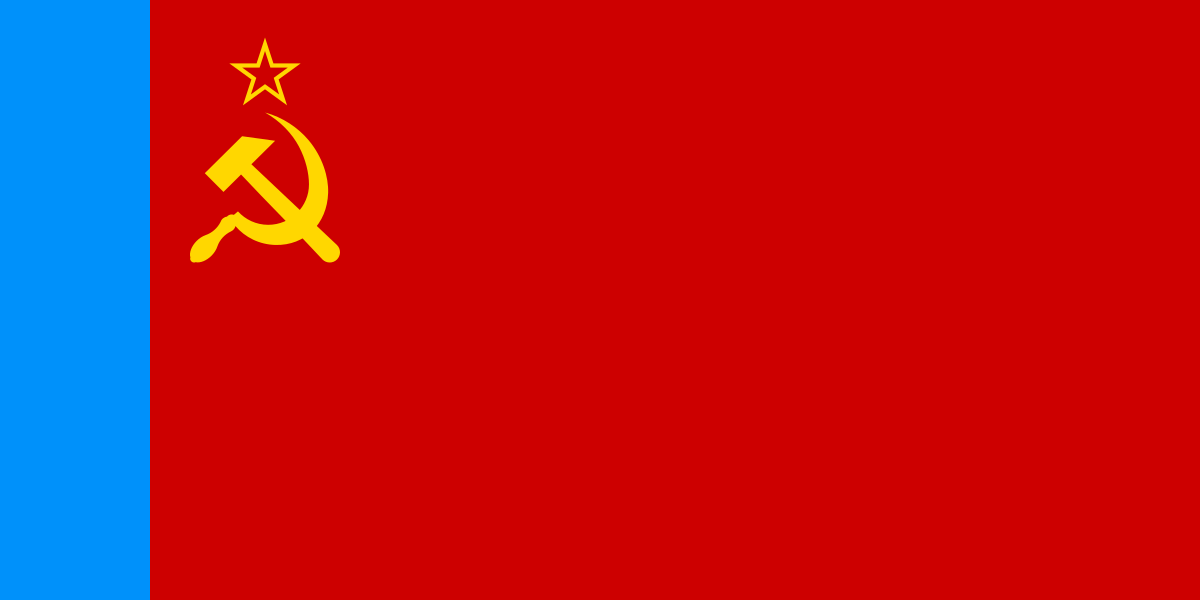
Earlier designs and other uses
The Russian SFSR’s red flag with a blue hoist band and the USSR’s all-union flag were separate historical designs.
Download the flag
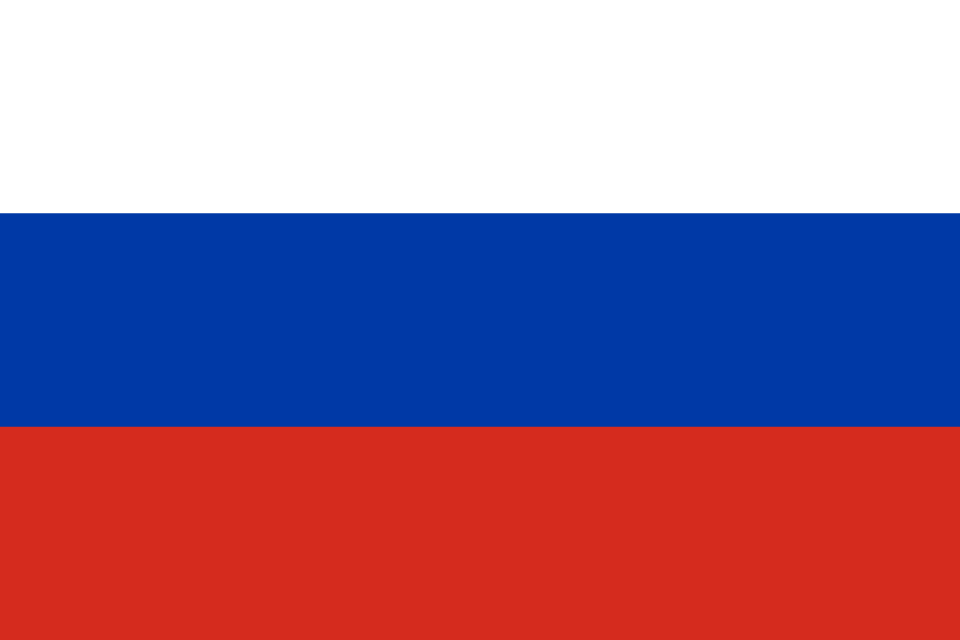
Artwork credit and reuse
Flagpedia vector collection · Public domain. The PNG is a raster export of the credited SVG.
What Did We Learn Today?
The order is white-blue-red. Slovakia and Slovenia add different shields to that arrangement. Serbia reverses the white and red positions.
Sources & Data Notes
View references and illustration credits
The dates distinguish adoption of the flag from later revisions to its artwork. The comparison uses the two illustrations at the same height, with the hoist on the left.
- Russian Federation, Federal Constitutional Law 1-FKZ on the national flag, Article 1 — Article 1 gives white, blue and red in descending order and sets a height-to-length ratio of 2:3.
- Archived World Factbook country record — background flag description and symbolic interpretations; later changes are explained above.
- Flagpedia: Russia — flag artwork and comparison reference.
- Flag history reference and bibliography — chronology and links to underlying sources.
Illustration credits
- Flag of the Russian Empire (black-yellow-white).svg — Кёне, Бернгард Васильевич; Public domain.
- Flag of the Russian Soviet Federative Socialist Republic.svg — Pianist; Public domain.

