National flag guide
Flag of Netherlands: Meaning, Symbols and History
The Dutch tricolour developed during the struggle against Spanish rule.
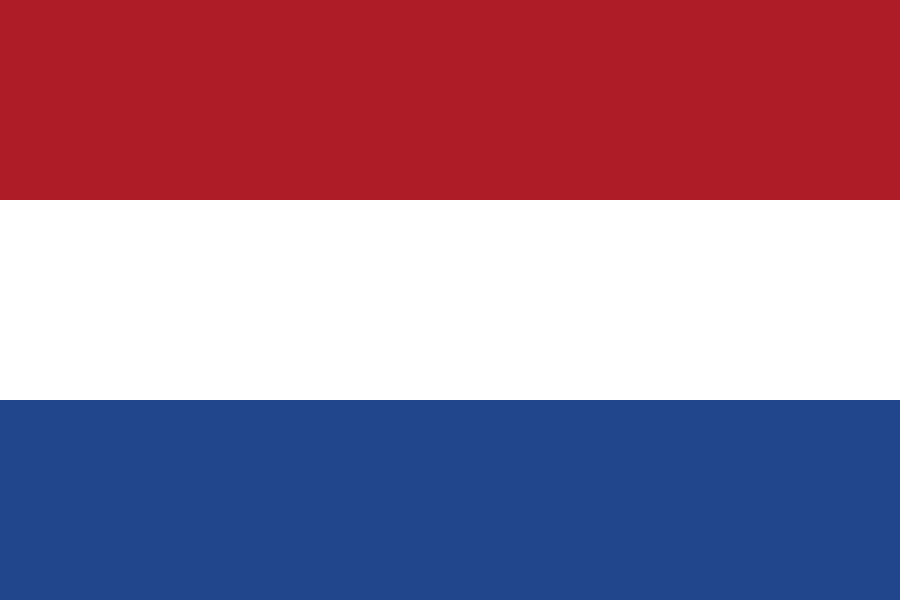
Three equal horizontal bands of bright red (top), white, and cobalt blue. The official national flag has red at the top, not orange. Orange pennants can accompany it for royal occasions without changing the flag’s three stripes. The Netherlands uses horizontal red-white-dark blue. Luxembourg commonly uses a lighter blue and different proportions.
The design and its details
Three equal horizontal bands of bright red (top), white, and cobalt blue.
| Flag | Netherlands |
|---|---|
| Collection | Country flags |
| Adoption or specification | Red-white-blue established in the seventeenth century; confirmed in 1937 |
| Browsing region | Europe · Western Europe |
| Illustrated proportions (height:width) | 2:3 |
What the flag means
The official national flag has red at the top, not orange. Orange pennants can accompany it for royal occasions without changing the flag’s three stripes.
| Element | Meaning or historical connection |
|---|---|
| Red-white-blue | The established Dutch national arrangement that developed from the earlier orange-white-blue Prince’s Flag. |
| Red replacing orange | A historical change of national colors, rather than proof of one universal modern color meaning. |
| Plain field | There is no required national coat of arms on the ordinary flag; orange pennants have a separate royal association. |
How the flag developed
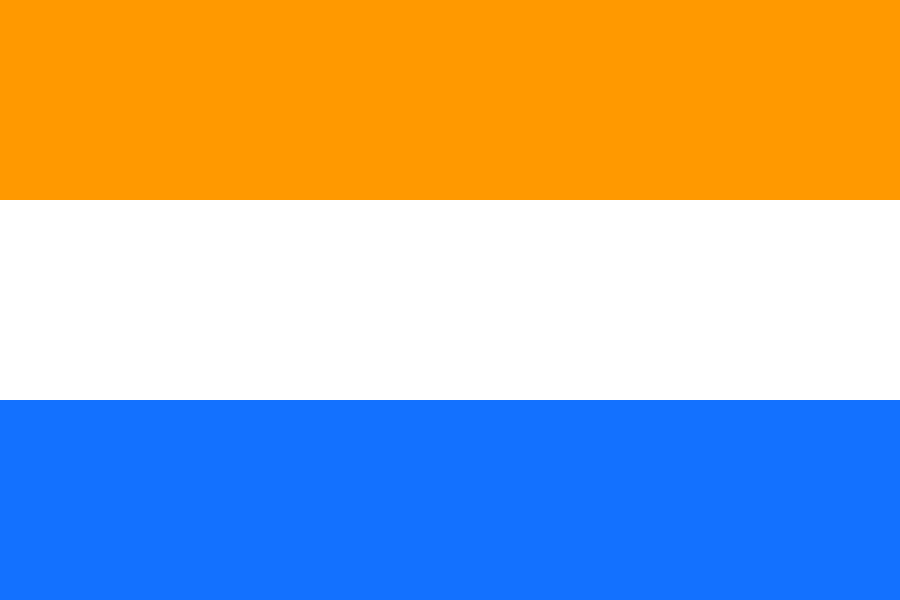
The Dutch tricolour developed during the struggle against Spanish rule. An early orange-white-blue Prince’s Flag associated with William of Orange preceded the red-white-blue pattern that became established in the seventeenth century. The reason for the change cannot be reduced confidently to a single story about fading orange dye.
The national colors were confirmed as red, white and blue by royal decree in 1937. The older orange-white-blue design remains a historical flag with changing political associations, while orange continues as an important royal and national color outside the flag itself. The Dutch tricolour influenced other flag traditions, but similar colors elsewhere do not establish that every such flag was copied directly from it.
The main changes over time
Late sixteenth century — Prince’s Flag
Orange-white-blue represented the revolt and Orange tradition.
Seventeenth century — Red-white-blue established
The red-topped tricolour became prominent in national and maritime use.
1937 — Colors confirmed
A royal decree confirmed the modern national colors.
Historical flags in pictures
How to recognise this flag
The Netherlands uses horizontal red-white-dark blue. Luxembourg commonly uses a lighter blue and different proportions. France arranges its colors vertically.
Compare the relevant designs in these guides:
Earlier designs and other uses
The orange-white-blue historical flag and royal orange pennant have distinct roles; neither changes the national tricolour into an orange-topped flag.
Questions about this flag
When was the flag adopted?
Red-white-blue established in the seventeenth century; confirmed in 1937. An adoption date can refer to a design, its restoration or a later legal specification; the timeline above separates those stages.
What should I check before identifying an older example?
The orange-white-blue historical flag and royal orange pennant have distinct roles; neither changes the national tricolour into an orange-topped flag.
What Did We Learn Today?
The Netherlands uses horizontal red-white-dark blue. Luxembourg commonly uses a lighter blue and different proportions. France arranges its colors vertically. Its adoption and later changes reflect the national history described in the timeline, while older or specialist flags need their own labels.
Sources & Data Notes
This guide distinguishes first use, national adoption, restoration and later construction standards. Traditional or commonly reported interpretations are identified where they differ from a formal specification. It is a dated reference, not a live record of every change in official flag use.
- Archived World Factbook country record — background flag description and symbolic interpretations; later changes are explained above.
- Flagpedia: Netherlands — flag artwork and comparison reference.
- Flag history reference and bibliography — chronology and links to underlying sources.
The main illustration preserves the selected flag artwork’s proportions; these are a reproduction guide, not a substitute for a legal construction drawing. Color names group shades for browsing.
Illustration credits
- Prinsenvlag.svg — Miyamaki, Oren neu dag, Artem Karimov, Golradir; Public domain.
