National flag guide
Flag of Luxembourg: Meaning, Symbols and History
Luxembourg’s red-white-blue developed during the nineteenth century from the colors of its heraldic tradition.
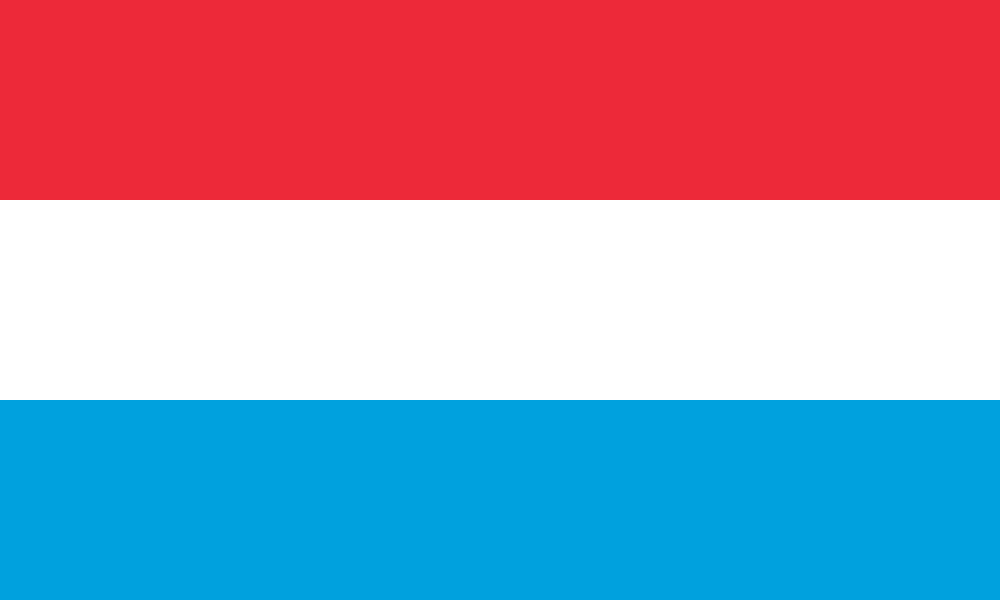
Three equal horizontal bands of red (top), white, and light blue. The colors derive from heraldry rather than a universally fixed modern meaning for each stripe. The lighter blue and the longer common proportions distinguish the national tricolour from its Dutch counterpart. Luxembourg uses red-white-light blue.
The design and its details
Three equal horizontal bands of red (top), white, and light blue.
| Flag | Luxembourg |
|---|---|
| Collection | Country flags |
| Adoption or specification | Nineteenth-century use; legislation in 1972 and revision in 1993 |
| Browsing region | Europe · Western Europe |
| Illustrated proportions (height:width) | 3:5 |
What the flag means
The colors derive from heraldry rather than a universally fixed modern meaning for each stripe. The lighter blue and the longer common proportions distinguish the national tricolour from its Dutch counterpart.
| Element | Meaning or historical connection |
|---|---|
| Red, white and light blue | Colors related to Luxembourg’s historic heraldry. |
| Three horizontal bands | The ordinary national tricolour, without a lion in its center. |
| Red lion banner | A separate heraldic flag with its own recognised use, rather than a required emblem on the tricolour. |
How the flag developed
Luxembourg’s red-white-blue developed during the nineteenth century from the colors of its heraldic tradition. The tricolour became established around the revolutionary period of 1848. Although it resembles the Dutch flag, the Luxembourg design is tied to the grand duchy’s own arms and national development.
Legislation in 1972 and amendments in 1993 clarified Luxembourg’s national symbols, including the tricolour and the red-lion flag used for particular purposes. These legal dates are later than the flag’s familiar historical use. The red-lion banner has also been promoted in public discussions about national identity, but its popularity does not by itself mean that the tricolour ceased to be the national flag.
The main changes over time
1840s — Tricolour becomes established
Red, white and blue entered the country’s national flag tradition.
1972 — National-symbols law
Legislation defined Luxembourg’s principal national symbols.
1993 — Legal clarification
Amendments clarified flag specifications and the red-lion flag’s uses.
How to recognise this flag
Luxembourg uses red-white-light blue. The Netherlands has a darker blue stripe. In practice reproduction and lighting can obscure the shade, so a small unlabeled image may not be enough for certain identification.
Compare the relevant designs in these guides:
Earlier designs and other uses
The red-lion flag is an official maritime and aviation ensign with an important wider cultural presence. It should be identified by that purpose rather than automatically labelled a replacement national flag.
Questions about this flag
When was the flag adopted?
Nineteenth-century use; legislation in 1972 and revision in 1993. An adoption date can refer to a design, its restoration or a later legal specification; the timeline above separates those stages.
What should I check before identifying an older example?
The red-lion flag is an official maritime and aviation ensign with an important wider cultural presence. It should be identified by that purpose rather than automatically labelled a replacement national flag.
What Did We Learn Today?
Luxembourg uses red-white-light blue. The Netherlands has a darker blue stripe. In practice reproduction and lighting can obscure the shade, so a small unlabeled image may not be enough for certain identification. Its adoption and later changes reflect the national history described in the timeline, while older or specialist flags need their own labels.
Sources & Data Notes
This guide distinguishes first use, national adoption, restoration and later construction standards. Traditional or commonly reported interpretations are identified where they differ from a formal specification. It is a dated reference, not a live record of every change in official flag use.
- Grand Duchy of Luxembourg: National symbols.
- Archived World Factbook country record — background flag description and symbolic interpretations; later changes are explained above.
- Flagpedia: Luxembourg — flag artwork and comparison reference.
- Flag history reference and bibliography — chronology and links to underlying sources.
The main illustration preserves the selected flag artwork’s proportions; these are a reproduction guide, not a substitute for a legal construction drawing. Color names group shades for browsing.
Current flag artwork is supplied with the original flag collection; the package’s artwork register contains provenance and license details.