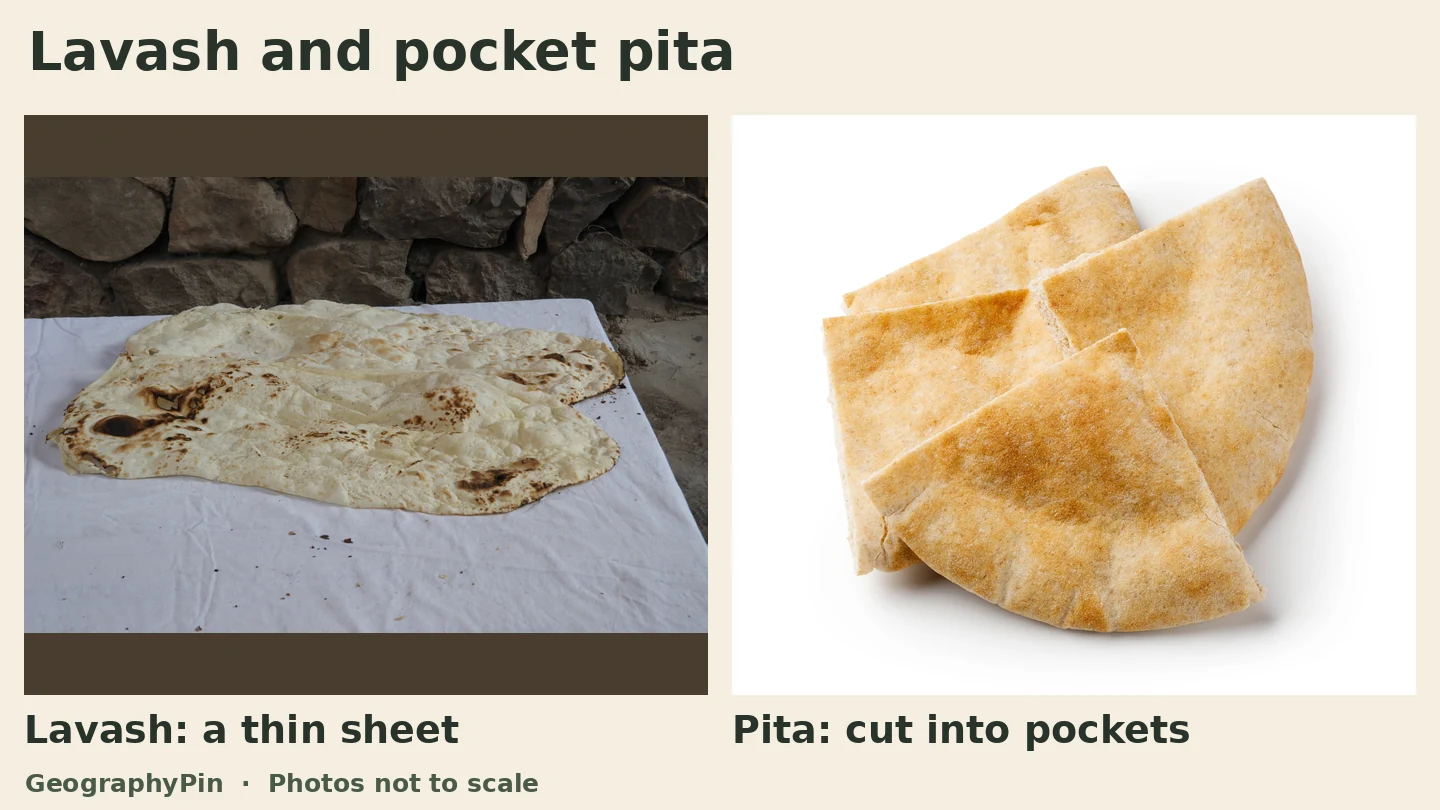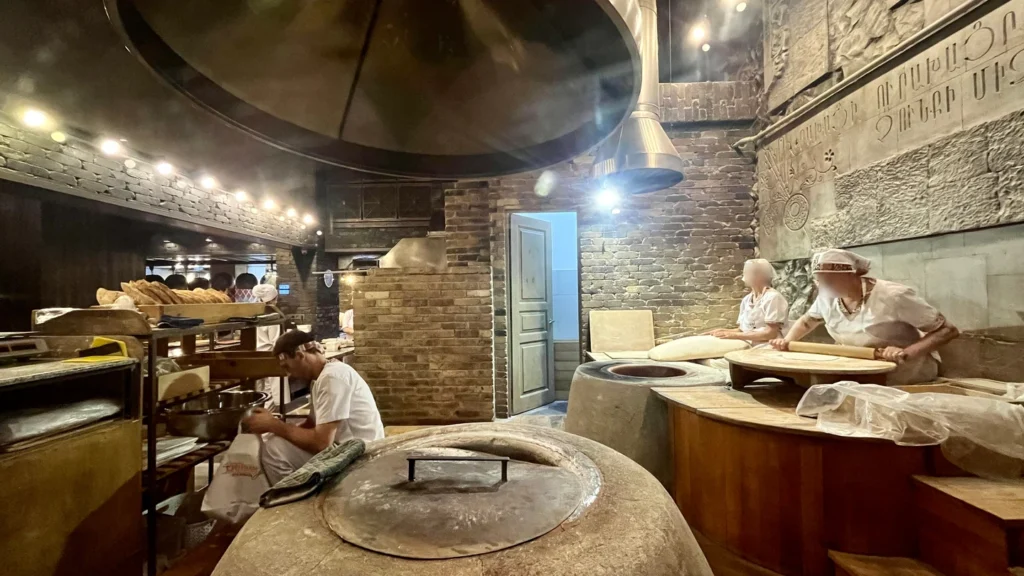
Lavash is a thin flatbread that can be folded around a filling when soft or snapped into pieces when dry. It’s a staple of Armenian cooking, with related traditions elsewhere in the region. The easiest way to tell it from pocket pita is to look at how the bread holds its filling.
Fresh lavash is usually mild, soft and pliable, with toasted spots where the dough blisters. Wrap it around herbs, cheese or grilled meat, or tear off a piece to eat with a meal. Pocket pita puffs into two connected layers so you can cut it open and stuff it.
How to use this article: Compare which bread holds your filling better, see how bakers use a clay oven, or learn why some lavash is dry on purpose.
1. Lavash vs. pita: the difference you can see

| What to look for | Lavash | Pocket pita |
|---|---|---|
| Shape | Broad, thin sheet | Usually a round that puffs in the oven |
| Texture | Flexible when fresh; brittle when intentionally dried | Typically soft and chewy, with two walls around a hollow center |
| How it holds a filling | Lay the filling on the sheet and roll it up | Cut the bread and tuck the filling inside |
Pick a wrap for long fillings and a pocket for stuffing
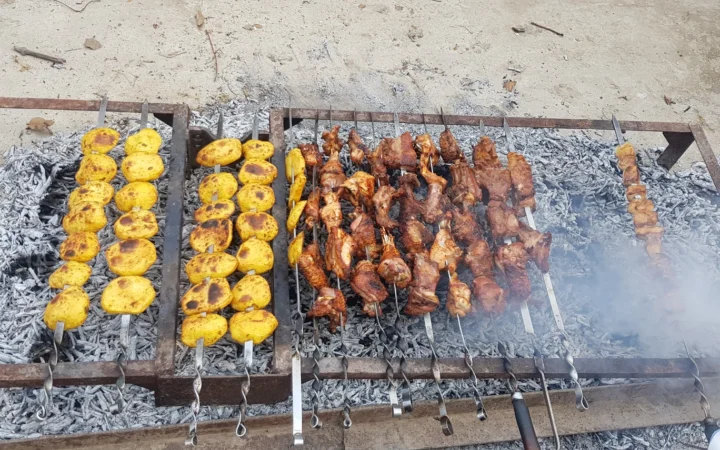
To serve a long skewer of grilled meat with herbs, use a broad sheet of soft lavash and roll it around the filling. For falafel and chopped vegetables, a cut pocket pita holds the loose pieces inside. Those are practical differences in shape, not hard serving rules. Pita can also be folded or torn for dipping, and not every style of pita develops a pocket.
2. What goes into lavash, and where the blisters come from
A thin sheet bakes against the wall of the tonir
Wheat flour and water form the base of the dough. Armenia’s tourism authority describes bakers rolling and stretching it over a cushion, then pressing the sheet against the hot wall of a tonir, a traditional clay oven. The thin surface blisters and browns where it meets the heat. Unlike a pocket pita, the sheet is not meant to inflate as one large pocket.
Recipes vary. A home-oven version can add yeast and salt and bake on a hot surface rather than an oven wall. The King Arthur Baking lavash recipe is one published home adaptation, not a requirement for making the traditional version. Armenia’s practice of making and sharing lavash is documented separately from related flatbread traditions in Azerbaijan, Iran, Kazakhstan, Kyrgyzstan and Türkiye. Heritage listings describe specific communities’ practices; they don’t decide where every version of a bread originated. See our Armenia country profile for the wider setting.
3. Why lavash comes soft, crisp or dry
Dry sheets do a different job from fresh ones
A fresh sheet bends without cracking. It has a mild wheat flavor, with more toasted flavor at the browned blisters. Some sheets are dried deliberately for storage. The Smithsonian’s reporting in Armenia describes both misting dried bread to make it pliable again and crumbling dry lavash into khash, a rich broth. A brittle sheet isn’t automatically a failed wrap; it may have been made or stored for another use.
Frequently Asked Questions
Is lavash always unleavened?
No. Some traditional descriptions feature a simple flour-and-water dough. Other recipes add yeast. The label tells you the type of bread, not the exact dough formula.
Is lavash the same as a flour tortilla?
Both can make a wrap, but they are different flatbread traditions. A soft commercial wrap can do the same job in a sandwich; it won’t necessarily have the same blistered surface or baking method.
What Did We Learn Today?
To recognize lavash, look for a thin sheet rather than a bread with a hollow center. Soft lavash wraps a filling and dried lavash can be crumbled or softened again. Pocket pita is the better choice when you want to tuck a filling inside the bread.
Sources & Data Notes
Show sources and notes
The comparison is with pocket-forming pita, not every bread sold as pita. Recipes and the handling of fresh and dried sheets vary between bakers.
- Armenia’s Tourism Committee: traditional lavash, for the dough and tonir method, and the Silk Road heritage guides’ handbook on UNESCO’s multinational flatbread inscription for the regional context.
- Smithsonian Folklife Festival: reporting on lavash served with khash, for how dried and fresh sheets are served.
- King Arthur Baking: Golden Pita Bread, for the oven puff that creates a pocket.
- Cover: Benoît Prieur, Yerevan lavash baking, CC0 1.0, cropped. Comparison: GerritR’s fresh lavash near Noravank, CC BY-SA 4.0, paired with USDA Team Nutrition’s quartered pocket pita, U.S. public domain. The labeled comparison is shared under CC BY-SA 4.0.