Pick your Armenia travel dates around the part of the trip you would most regret missing. A city-and-monastery holiday, a lakeside stay and an Aragats climb need different weather windows, even when they appear on the same itinerary.
Choose the season around the activity
May and September are useful starting choices for an Armenia trip focused on Yerevan and cultural sightseeing. July–August better suit warm-season lake stays, while Aragats hiking needs a separate mountain-weather check. The best month depends on altitude and activity: city temperatures do not describe Lake Sevan or high trails.
How to use this article: Compare city sightseeing, lake stays and mountain or winter activities.
Planning sources checked: November 18, 2026. Climate normals cover 1991–2020; forecasts and access must be checked for your actual dates.
1. Choose a season for your main activity
City sightseeing and lower-elevation excursions
For a first trip centered on Yerevan and cultural sights, May or September is a useful starting choice. This is an editorial recommendation based on the station comparison below: both avoid the capital’s hottest monthly means, while May is cooler and September warmer. June and early October can also work, with different heat and evening-layer trade-offs.
Spring is not automatically dry. At Yerevan/Arabkir, the 1991–2020 precipitation normals peak in April and May, while August is the driest month. Carry rain protection for spring sightseeing rather than planning only for mild temperatures.
Lake scenery and highland stays
Choose July or August if your priority is spending time outdoors around Lake Sevan in the warmest part of its annual air-temperature cycle. Armenia’s official tourism site also highlights summer for its lakeshore destinations. That is a reason to consider a summer lake stay, not a guarantee of suitable swimming conditions or operating beach services.
High mountains and winter sports
For Aragats, the tourism authority identifies July–September as the more favorable hiking window, while warning that sun, rain, hail and snow can occur within a day. Choose the route and difficulty with a qualified local guide; a summer month does not make every summit an ordinary walk.
Winter is a different trip rather than a colder version of the summer circuit. Build it around cities or a specifically confirmed winter-sports operation, not an assumption that all mountain roads, lifts or trails will be usable.
2. Monthly climate: city, lake and mountain stations
These are monthly means, combining daytime and nighttime conditions, not average afternoon highs. They come from Armenia’s station submissions to the WMO’s 1991–2020 normals archive, hosted by NOAA NCEI. A climate normal describes a reference period; it does not predict the weather on your travel dates.
| Month | Yerevan/Arabkir | Sevan Lake | Aragats H/M |
|---|---|---|---|
| January | 27.7°F (-2.4°C) | 23.2°F (-4.9°C) | 9.5°F (-12.5°C) |
| February | 32.9°F (0.5°C) | 24.1°F (-4.4°C) | 10.4°F (-12.0°C) |
| March | 43.9°F (6.6°C) | 31.1°F (-0.5°C) | 14.9°F (-9.5°C) |
| April | 54.1°F (12.3°C) | 40.3°F (4.6°C) | 22.3°F (-5.4°C) |
| May | 62.6°F (17.0°C) | 48.9°F (9.4°C) | 31.5°F (-0.3°C) |
| June | 72.0°F (22.2°C) | 57.0°F (13.9°C) | 41.2°F (5.1°C) |
| July | 78.1°F (25.6°C) | 62.2°F (16.8°C) | 49.3°F (9.6°C) |
| August | 78.3°F (25.7°C) | 62.8°F (17.1°C) | 50.4°F (10.2°C) |
| September | 70.2°F (21.2°C) | 56.3°F (13.5°C) | 43.2°F (6.2°C) |
| October | 58.1°F (14.5°C) | 47.8°F (8.8°C) | 32.7°F (0.4°C) |
| November | 44.1°F (6.7°C) | 36.3°F (2.4°C) | 20.5°F (-6.4°C) |
| December | 32.4°F (0.2°C) | 27.5°F (-2.5°C) | 13.3°F (-10.4°C) |
The station elevations are approximately 3,653 feet (1,113 meters) at Yerevan/Arabkir, 6,290 feet (1,917 meters) at Sevan Lake and 10,587 feet (3,227 meters) at Aragats H/M. The last is a high-mountain station, not Aragats’ highest summit. Sevan’s figures measure air, not lake water.
The city and lake monthly mean series use 30 years each. Aragats uses 27–29 available years, depending on the month, within the same reference period. Fahrenheit values are calculated from the published Celsius normals; both are displayed to one decimal place.
3. What the monthly differences mean for your route
March and April: warming in Yerevan does not mean the high mountains have entered a comparable season. In April, the Aragats station’s monthly mean remains below freezing. Keep a high-elevation outing separate from the decision to book a spring city break.
May and June: the capital becomes substantially warmer, but the lake still has a cooler climate. A multi-region trip needs layers rather than one outfit chosen from the Yerevan forecast. Let a lake stop be a shoreline or cultural visit if conditions are unsuitable for a longer outdoor day.
July and August: these are the warmest months at all three stations, but the temperatures are far from interchangeable. In August, the mean is 78.3°F (25.7°C) at Yerevan/Arabkir, 62.8°F (17.1°C) at Sevan Lake and 50.4°F (10.2°C) at Aragats H/M. A warm capital afternoon cannot stand in for a mountain forecast.
September and October: September can balance city sightseeing with a weather-dependent mountain plan. By October the Aragats station’s mean is close to freezing, even though Yerevan remains much milder. Keep the mountain component optional rather than treating autumn as one uniform season.
November through February: favor a compact route with room for delays. The UK’s travel advice specifically flags poorer road conditions in the coldest months and advises avoiding rural driving after dark where possible. Confirm the actual route, not just whether your destination is welcoming visitors.
For deciding which regions to combine, use our Armenia routes and trip-planning guide. Choose the month around your most weather-sensitive activity, then fit city sightseeing around it.
4. Check forecasts, access and equipment before booking
Start with the Hydrometeorology and Monitoring Center’s Armenia forecast. Check its issue date and the dates covered before using the information. Use the forecast for the relevant region and elevation zone, not just the first temperature displayed for Yerevan.
The WMO World Weather Information Service is another official forecast handoff. Select the relevant city and inspect the issue time there too. Neither a capital-city outlook nor a monthly normal establishes wind, visibility, snow cover or trail conditions higher up.
- Before paying: confirm the chosen activity’s operating dates, weather-cancellation terms and return transport directly with the operator. Avoid making a remote outing the fixed last step before a flight.
- Before a rural drive: ask about that day’s road conditions and daylight travel. Check current travel warnings separately; a favorable season does not remove regional security restrictions.
- For mixed city and lake days: pack removable layers and rain protection, with sun protection and drinking water for outdoor stops.
- For a mountain day: agree on appropriate footwear, insulation, waterproof layers and other route-specific equipment with your guide. Leave a lower-elevation alternative available if conditions change.
What Did We Learn Today?
Armenia has no single travel season that suits every elevation. Use the monthly station comparison to narrow your dates, then make the final choice with the destination forecast, route conditions and operator confirmation. Keep the most weather-dependent outing flexible rather than letting it control an otherwise workable trip.
Sources & Data Notes
Climate data and planning notes
The table uses parameter 5, mean air temperature, from archive version 3.3. Station values are not countrywide temperatures, lake-water measurements or summit forecasts. Month choices are editorial planning judgments, not guarantees of access. No live prices, future event dates or opening claims are included.
- NOAA NCEI: WMO Climate Normals methodology
- WMO 1991–2020 station CSV: YerevanArabkir_37789
- WMO 1991–2020 station CSV: SevanLake_37717
- WMO 1991–2020 station CSV: AragatsHM_37781
- Armenia Travel: seasonal hiking guidance, September 10, 2025
- Armenia Travel: Gegharkunik and summer lake visits
- Armenia Hydrometeorology and Monitoring Center: forecast handoff
- WMO: Armenia weather information
- UK FCDO: Armenia road conditions and safety
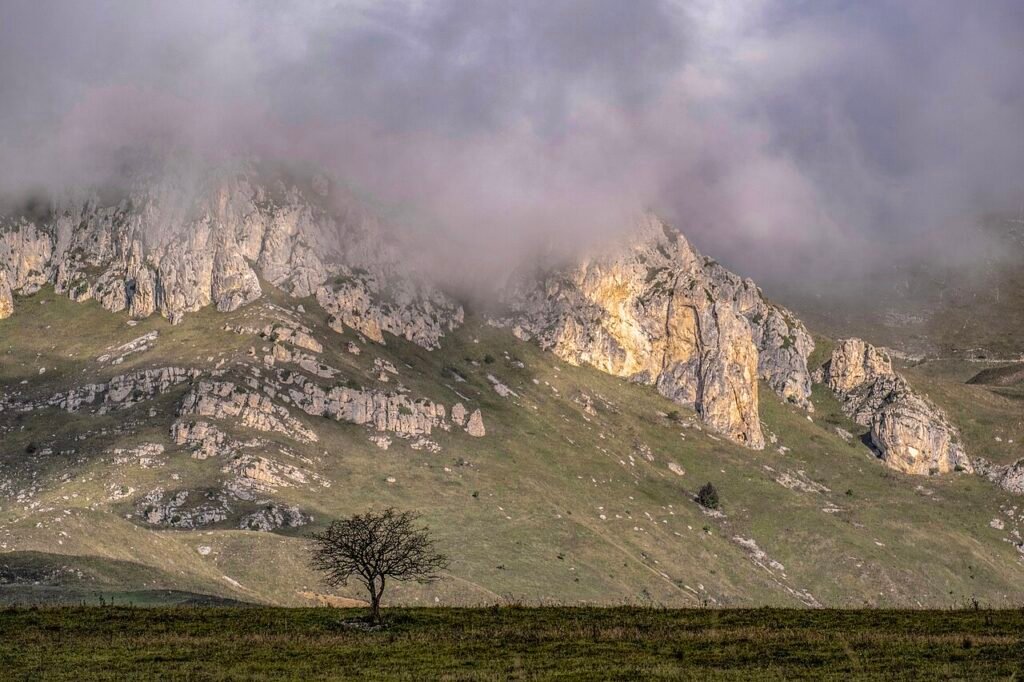
Photo: Wowan1978, Dilijan National Park near Mount Dimats, September 29, 2024, Wikimedia Commons, CC BY-SA 4.0. Resized and cropped for display; the displayed photo remains under the same license.