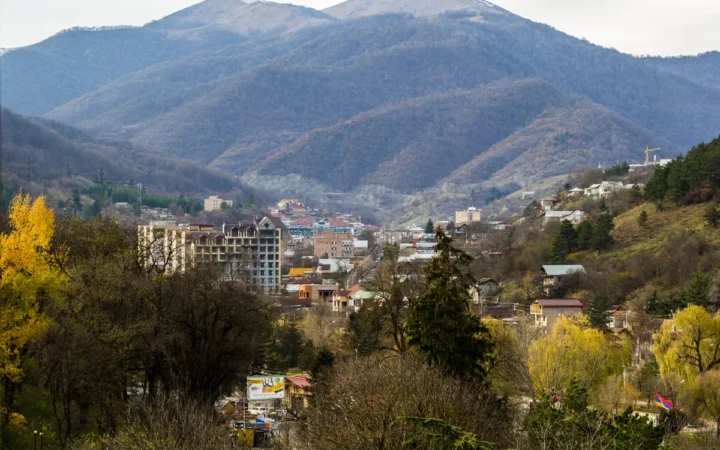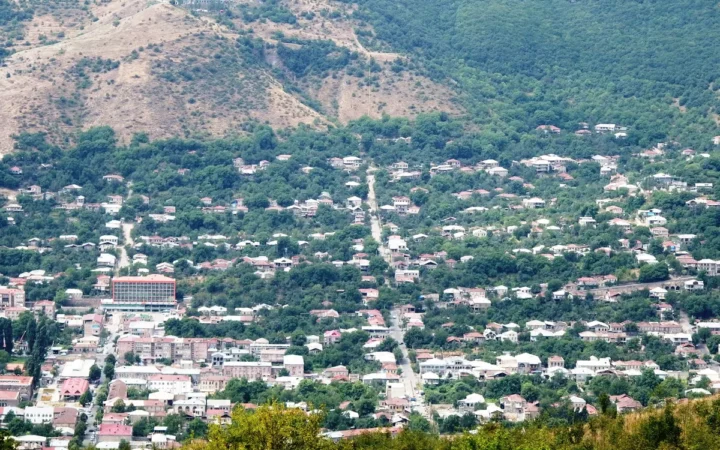
Gyumri rewards a different plan from a monastery-hopping excursion: time on the streets, a museum chosen for your interests and a return journey that does not cut the visit short. Its historic buildings and the legacy of the 1988 earthquake belong in the same picture of the city.
Gyumri is a city in Armenia’s Shirak Province, known for its Kumayri historic streets, black-and-red-tuff buildings and artistic heritage. For a first visit, focus on the central streets and one museum. Choose a day trip only with a confirmed return journey; stay overnight if you want a slower pace.
How to use this article: Start with the central visit plan, choose a day trip or overnight stay, or make the rail checks before booking.
1. Where is Gyumri?
Gyumri is in Shirak Province, in northwestern Armenia. It is a city destination in its own right, not a neighborhood of Yerevan. Plan the intercity journey separately from the time you want to spend in the historic center.
Armstat estimated the city’s permanent population at 114,000 on October 1, 2026. This is the individual urban settlement, not the whole province, and an estimate based on the 2022 census rather than a new census count. For a consistent comparison, see the dated directory of cities and towns in Armenia.
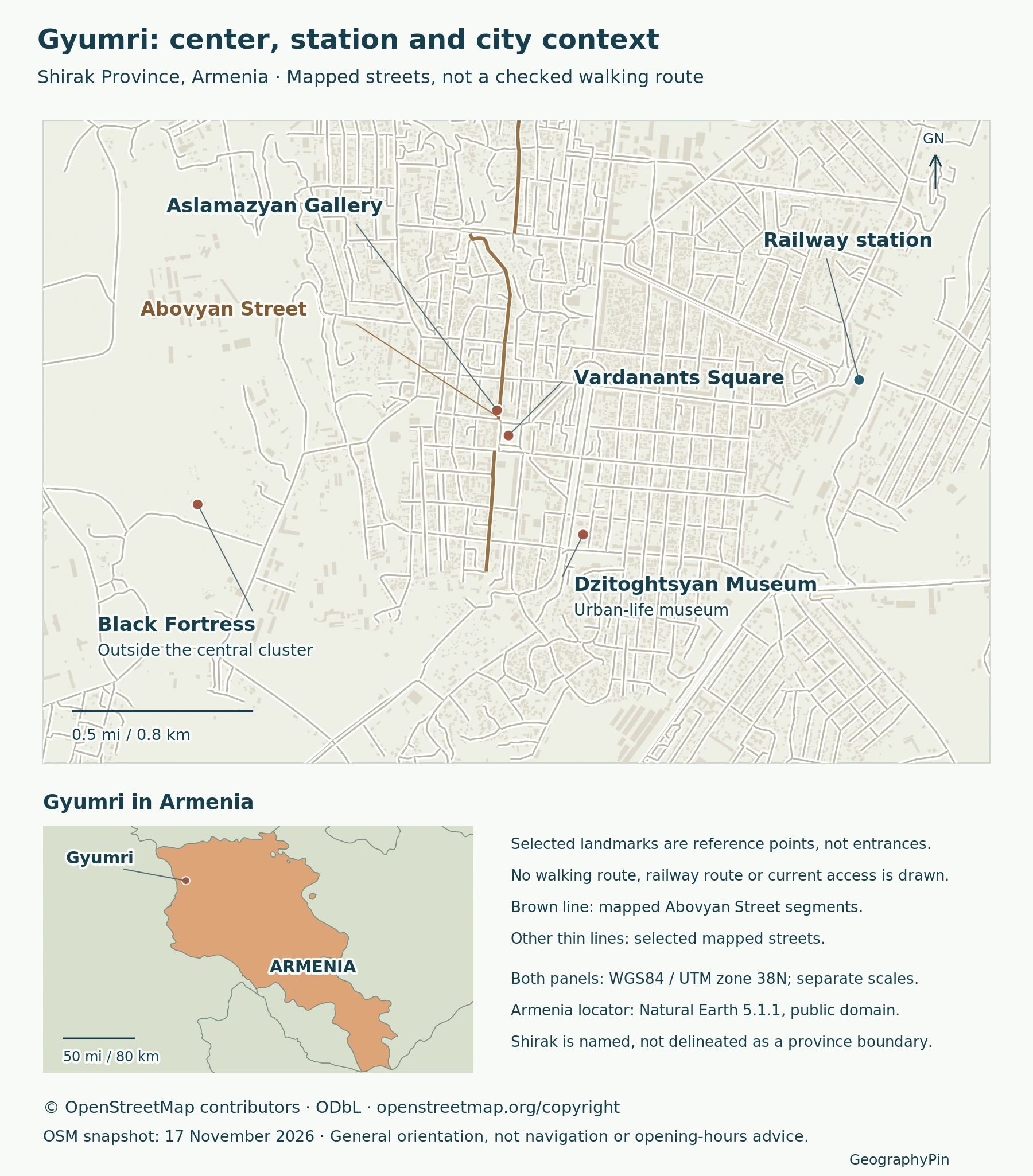
The map separates the railway station from the central sights. Use it to orient your arrival and museum choice, not as a surveyed step-free route or a guarantee that every marked building is open.
2. Historic streets, names and reconstruction
Kumayri is an older settlement name and the name associated with Gyumri’s historic district. Alexandrapol and Leninakan also appear in accounts of the same city’s past. These are historical identities to recognize in museum labels, not three additional towns to fit into an itinerary.
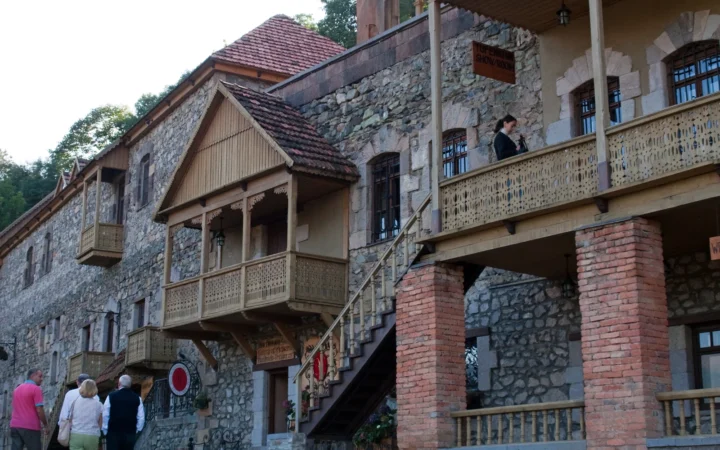
The EU–Council of Europe COMUS heritage project describes a concentration of nineteenth-century buildings made from black and red tuff, with carved details, arched windows and decorated entrances. The city’s craft heritage is visible at the scale of a doorway or façade, not only in major monuments.
On December 7, 1988, the Spitak earthquake devastated northern Armenia; Gyumri, then called Leninakan, was among the cities severely affected. The local Institute of Geophysics and Engineering Seismology documents the loss of its own building and its move from temporary premises into a new building in 2015. Reconstruction was a long process, not a single reopening date.
Read restored streets alongside that history. A handsome façade does not establish that the whole city has recovered in the same way, and occupied courtyards are not automatically public attractions. Ask before entering private spaces.
3. A focused walk and one museum
Start with the center, not a ten-stop checklist
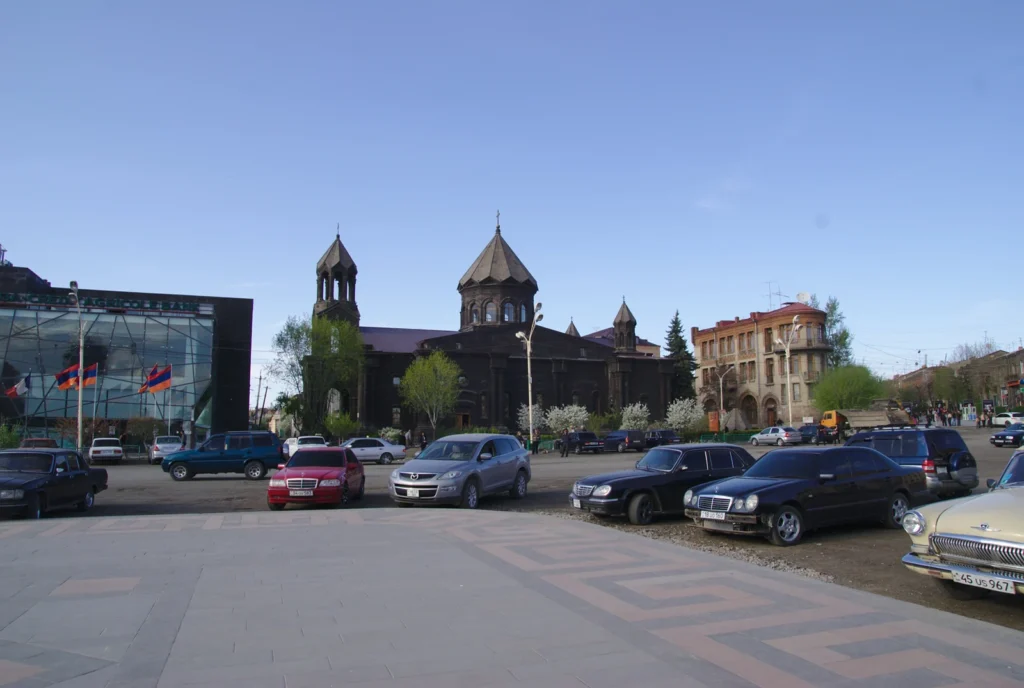
For a first visit, use Vardanants Square, Abovyan Street and one museum as the core of the day. This is a suggested order for a center-focused visit, not a timed route. Leave room to stop, look at building details and change plans if a museum is closed.
- Begin at Vardanants Square. Orient yourself before choosing a direction through the historic streets.
- Explore the Abovyan Street area. Armenia’s Tourism Committee describes cobbled streets, courtyards and historic buildings around Kumayri. Choose a manageable stretch rather than trying to cover every street.
- Choose a museum that matches your interest. The Aslamazyan sisters’ gallery suits an interest in art; the Dzitoghtsyan Museum of Urban Life and Culture offers a different introduction through a historic house and everyday objects.
The Aslamazyan Gallery: confirm your visit day
The ICOM Armenia museum listing places the Gallery of Mariam and Eranuhi Aslamazyan Sisters at 242 Abovyan Street. It describes paintings, sculpture and graphic work, as well as decorated objects. This makes the gallery a specific stop, rather than a vague instruction to “visit some museums.”
The listing reviewed in November 2026 gives Tuesday–Sunday opening days and asks visitors to arrange excursions in advance. Confirm your chosen date with the gallery, particularly for a guided visit; do not build a Monday itinerary around an assumed opening. Exact hours and ticket prices are deliberately left to the current listing.
Keep the Black Fortress as a separate optional extension, and Marmashen as an outing outside the city. Neither needs to be added to make a short central visit worthwhile.
4. Day trip or overnight?
Choose by usable time, not the number of sights
A day trip works best when you want the central streets and one museum, with both transport legs confirmed. I would choose an overnight stay for several museums or an unhurried evening. These are planning recommendations, not claims that a particular train or bus runs every day.
| Choice | Best fit | What to protect |
|---|---|---|
| Day trip | A short central walk and one confirmed museum. | Enough time to reach the return departure without rushing. |
| One night | More than one museum, slower street exploration or an evening in town. | Opening days across both dates and your onward connection. |
| Regional extension | A city visit plus places outside Gyumri. | Separate transport and time for the extra outing. |
For planning a northern Armenia route, choose where Gyumri fits before adding other regions. A transfer day with several distant stops is not the same as a full day in the city.
5. Getting there and practical access
Check both ends of the rail journey
South Caucasus Railway operates the Yerevan–Gyumri connection, but service types and dates matter. In its September 17, 2026 notice, the operator announced an earlier Gyumri departure for express train 100/101 from September 25. That dated change is a reason to check the timetable, not a complete round-trip schedule.
Use the operator’s passenger booking service for your actual date. Confirm the outward service, return departure and station before deciding how long you can spend in town. Do not combine a commuter timetable with express-train information as if they describe the same service.
If comparing a bus or minibus with an arranged driver, ask for the exact departure point, operating date, luggage arrangements and return plan. No fixed bus stop, fare or journey time is verified here. With a driver, agree whether waiting and any out-of-center stops are included before accepting the quote.
Cobbles are part of the historic-street setting, so comfortable footwear matters. If you need step-free access, ask the museum about its entrance and internal circulation rather than assuming a central location means easy access. In cold or wet weather, shorten the outdoor portion if surfaces are slippery; in warmer conditions, leave space for breaks. Check the forecast and local conditions for your date instead of treating a seasonal description as a guarantee.
What Did We Learn Today?
Gyumri is best approached as a city to spend time in, not a checklist of detached attractions. Its historic district, artistic collections and earthquake history give a short central visit substance. The practical choice is how much usable time you have after allowing for museum opening days and the journey back.
Sources & Data Notes
Population, practical checks and image credits
Population is a dated settlement estimate, not a province total. Heritage sources support historical descriptions, not present building conditions. The museum listing and dated railway notice were reviewed in November 2026; confirm your exact visit date with the relevant operator. The suggested walk and stay choices are editorial recommendations, not a tested accessible route or guaranteed schedule.
- Armstat: permanent population, October 1, 2026, city row on page 5
- EU–Council of Europe COMUS: Gyumri heritage and historical names
- Institute of Geophysics and Engineering Seismology: 1988 earthquake and reconstruction
- Armenia Tourism Committee: historic streets and selected attractions
- ICOM Armenia: Aslamazyan Gallery collection and visitor listing
- South Caucasus Railway: September 2026 timetable change
Original GeographyPin cartography using © OpenStreetMap contributors, ODbL, via the Geofabrik Armenia extract, snapshot 17 November 2026; country locator from Natural Earth 5.1.1, public domain. Derived OSM subset remains ODbL. No routes or provincial boundaries are inferred.
Featured photograph: Vardanants Square and the Holy Mother of God Cathedral in Gyumri. Photograph by ogannes, May 3, 2013, via Wikimedia Commons, CC BY-SA 2.0. Full-frame resize and WebP conversion, offered under the same license. Historical photograph, not a current access report.