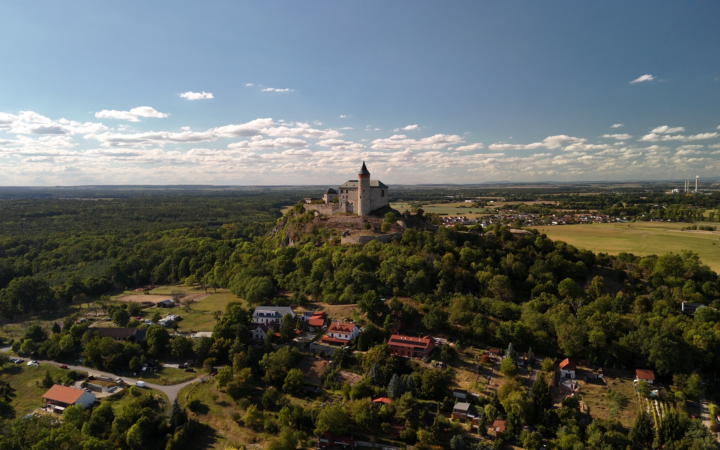
Tabori Castle, also known as Korchi-Kala, was a medieval fortress above Tbilisi’s Botanical Garden. Foundation ruins survive; the historical fortress should not be confused with a surviving intact castle.
History
In the Heart of Tbilisi’s Landscape
The fortress guarded the approaches to Tbilisi’s Ganja Gate. Its hilltop position was part of the city’s defenses.
Early Records and Reconstruction
The Georgian Encyclopedia dates Tabori’s first written mention to 1045, during Bagrat IV’s occupation of the city. In 1723, Constantine II of Kakheti, also known as Mahmad-Quli Khan, briefly held it before losing it.
Repeated Destruction and Recapture
Persian forces destroyed the fortress in 1735 and 1743. Erekle II captured it in 1748, expelled the garrison and rebuilt its defenses. It was destroyed again during Agha Mohammad Khan’s attack on Tbilisi in 1795.
Final Years and Present State
A 1776 document uses the name Korchi-Kala, translated as “guard fortress.” An 1800 city plan marks a ruined fortification. Archaeological excavations in 1972 uncovered defensive remains but did not locate the church ruins.
Sources & Data Notes
The chronology follows the Georgian Encyclopedia entry by T. Beridze. A first written mention is not a construction date. The historical account is not a current survey of access or site conditions.
- Georgian Encyclopedia: Tabori Fortress (თაბორის ციხე), T. Beridze, published by the Georgian National Academy of Sciences encyclopedia editorial office.
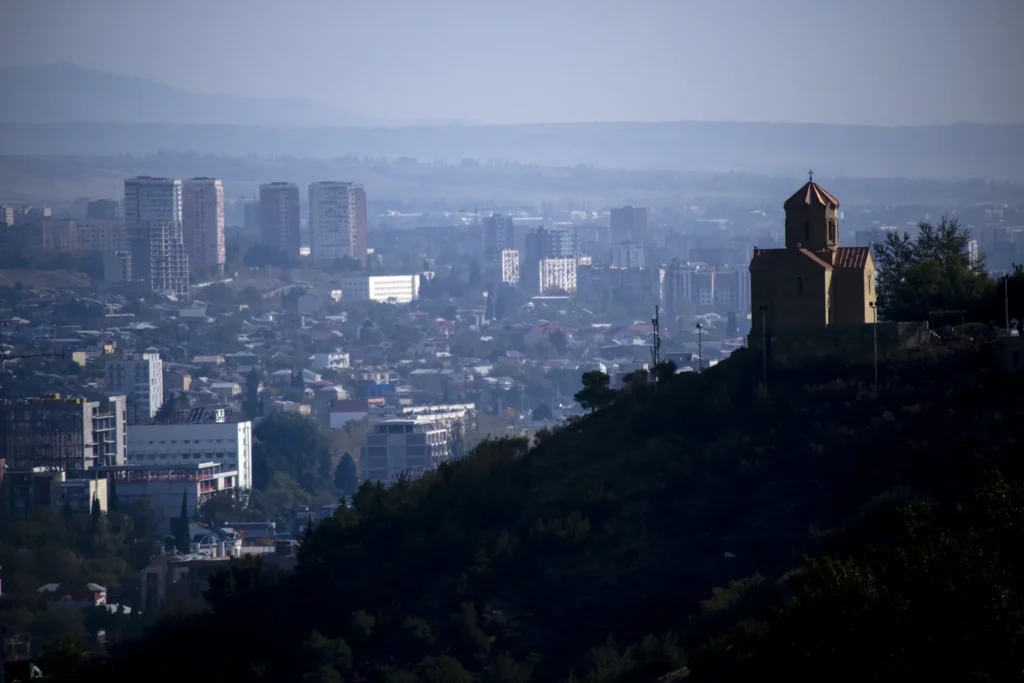
Featured photograph: the modern church on Tabori hill, not intact medieval castle ruins. Photo: Mostafa Meraji (Mostafameraji), Wikimedia Commons, CC BY-SA 4.0. Photographed October 22, 2017; resized and converted to WebP. This version remains under CC BY-SA 4.0.