Take the felt off a traditional yurt and what looks like a single round tent separates into pieces: a wall you can fold, poles you can carry and a wooden ring that comes down from the roof. The same pieces appear in both a Mongolian ger and a Kyrgyz yurt, but the builders put them together in different ways.
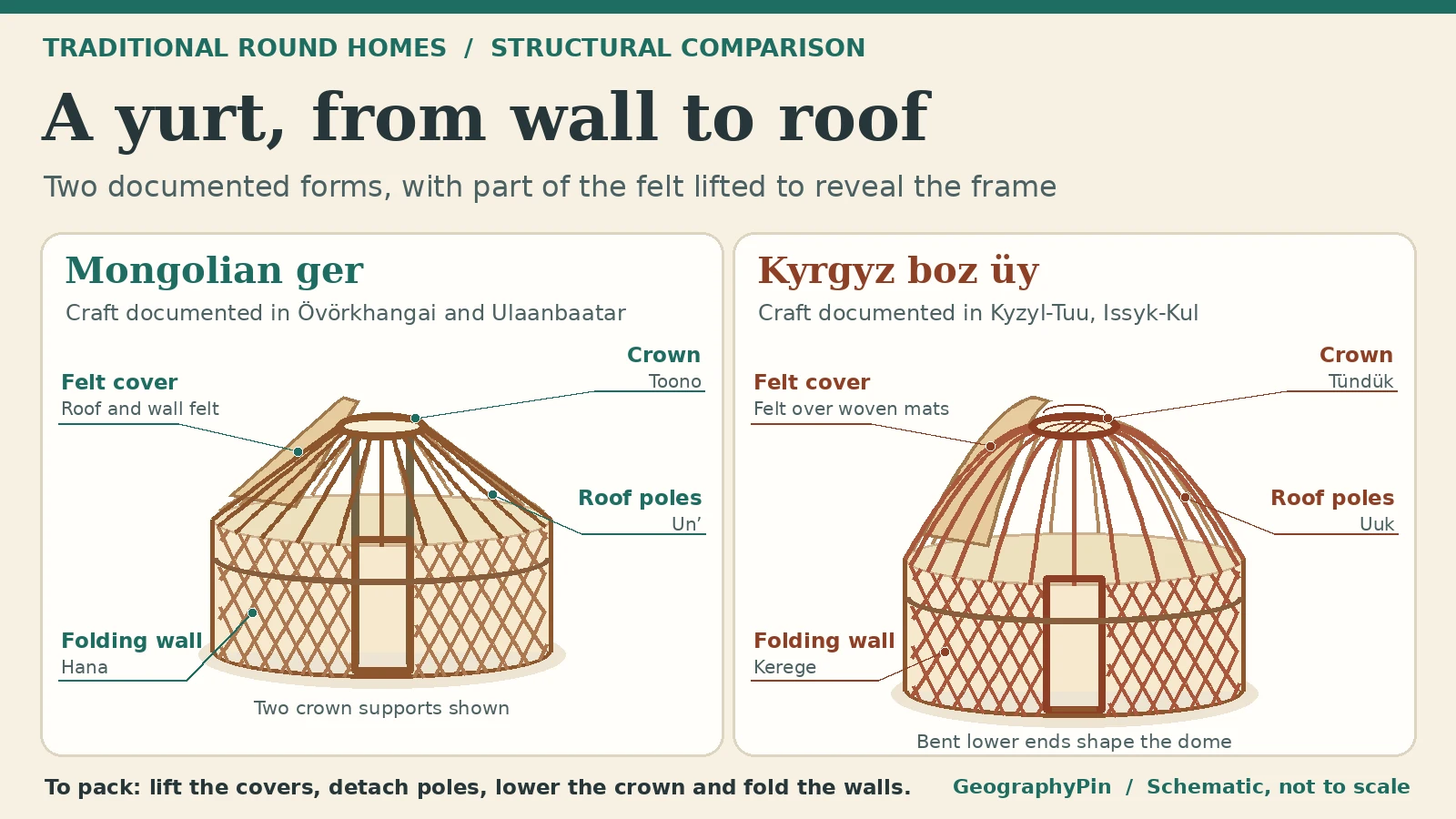
A yurt is a round dwelling with a foldable wooden wall, detachable roof poles and a crown at the top. The Mongolian ger and Kyrgyz boz üy are two traditional forms. Both use removable felt coverings. In the examples here, the ger has straight roof poles and crown supports; the Kyrgyz yurt has poles bent near the wall.
How to use this article: Start with the labeled drawings, see how the Kyrgyz roof pole joins the frame, or find out which pieces come apart for a move.
1. Four Parts to Look For in Any Traditional Yurt
Start at the wall. A lattice is a set of crossed wooden slats. Open a folded section and the slats spread into diamonds; tie several sections together and they form the curved wall. The roof poles run from its upper edge to the crown, the ring at the center of the roof. The frame carries the covers rather than relying on the fabric alone to hold its shape.
See where the same four parts sit in both homes

| Part | Mongolian ger | Kyrgyz boz üy |
|---|---|---|
| Folding wall | Hana: lattice panels laced into a circle with the doorway | Kerege: curved lattice wall sections |
| Roof poles | Un’: spokes from the wall heads to the crown | Uuk: poles with a bend near the wall end |
| Roof crown | Toono: ring that receives the roof poles; shown on two posts | Tündük: ring that receives the ends of the roof poles |
| Felt covering | Separate roof felt (deever) and wall felt (tuurga) | Felt over the roof and walls; the documented example uses woven grass mats under the wall felt |
2. How the Mongolian Ger Fits Together
Mongolia’s National Center for Cultural Heritage documents ger craftsmanship in Övörkhangai Province and Ulaanbaatar. Its inventory describes different carpenters specializing in the crown, poles, wall panels, door and pillars. Making a home does not have to mean one person carving every piece.
Ganbaatar Luvsangombo, writing for ICH Courier, describes an assembly in which the wall panels and the door are tied together first. The crown is then raised on its posts. The top ends of the poles go into holes in the crown, while the bottom ends are fastened to the top of the wall. The roof and wall felt go on after the frame is up, along with other cloth layers and the outer ties. The crown remains a place for light and ventilation; its own small cover can close the opening.
This is not only a rural form. A ger can travel between seasonal grazing areas or stand in a settled neighborhood. The Mongolia country profile distinguishes pastoral movement from life in the capital and other towns.
3. How Kyzyl-Tuu Makers Shape a Kyrgyz Yurt
Kyzyl-Tuu lies on the south side of Lake Issyk-Kul in Kyrgyzstan. A local craft account published by ICH Courier describes woodworking, weaving and felt-making as different jobs that come together in a boz üy. The village example uses woven needle-grass mats between the wall lattice and the felt, rather than relying on a single fabric layer.
The two ends of a bent roof pole do different jobs
The uuk meets the crown at its pointed end. The other end ties to the top of the wall; the bend shapes the transition between the wall and the dome. The KyrgyzCraft woodwork inventory documents these joints in a separate field record from Naryn. The wall-to-crown connection is the same idea as in the ger, but changing the shape of that pole changes the roof’s profile.
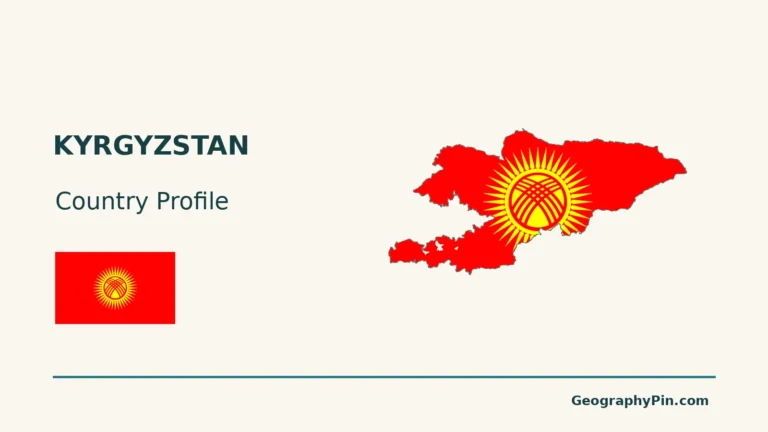
The crown is recognizable outside the home too. The crossed bands at the center of Kyrgyzstan’s flag represent a stylized tündük, not an overhead plan of every yurt.
4. What Folds, What Rolls and What Stays Rigid
The house packs because the parts separate
The felt and cloth can come off as separate covers. The roof poles are individual pieces, so they can come away from the crown and wall rather than moving as an intact roof. Each lattice panel narrows as its wooden slats pivot. The crown and door frame do not fold like the walls; they are carried as rigid pieces.
Families and workshops can vary the number of wall sections, the bend of the poles, the felt layers and the interior decoration. The two cutaways highlight how each example is made, not a rule that every home in one country must look one way. Portability is the common idea: the frame, covers and bindings can come apart without destroying them.
Frequently Asked Questions
Can you tell whether a covered yurt is Mongolian or Kyrgyz from its roof?
A roof profile can be a clue, but not proof. Covers conceal the joints, and the shape and proportions vary by maker and size. If you can see the frame, the roof poles and how the crown is supported tell you more than the outline alone.
Is the roof opening always left uncovered?
No. The Mongolian assembly account documents a separate felt cover for the crown. The ring is part of the roof frame; opening or covering the space inside it is a different matter.
Is felt the same as woven cloth?
No. Felt is made by working fibers such as sheep’s wool together into a mat, rather than weaving yarn into a fabric. A traditional cover can use felt alongside woven cloth, ropes or grass mats rather than substituting one material for all of them.
What Did We Learn Today?
A Mongolian ger and a Kyrgyz boz üy share the idea of a folding wall, a detachable roof and a removable cover. The names, pole shapes, supports and covering layers tell you how the two examples were made. The useful comparison is how the pieces join, not just how round the buildings look from outside.
Sources & Data Notes
Craft records, spelling and illustration credits
The cutaways are original GeographyPin schematics of documented forms, not measured reconstructions. The Kyzyl-Tuu craft account establishes the local materials and roof form; the Naryn woodwork entry supports the detailed pole connections. Romanized names vary; boz üy and tündük also appear as boz ui and tyunduk in the cited sources.
- Mongolia’s craft inventory: Övörkhangai, Ulaanbaatar and ger-making specialties.
- Ganbaatar Luvsangombo: Practice of Constructing the Mongolian Ger, ICH Courier, 2013; Built Heritage: comparative study of round dwellings on the Inner Asian steppe.
- ICH Courier: the Kyzyl-Tuu craft community and construction, 2022; KyrgyzCraft’s Naryn woodwork entry for the uuk.
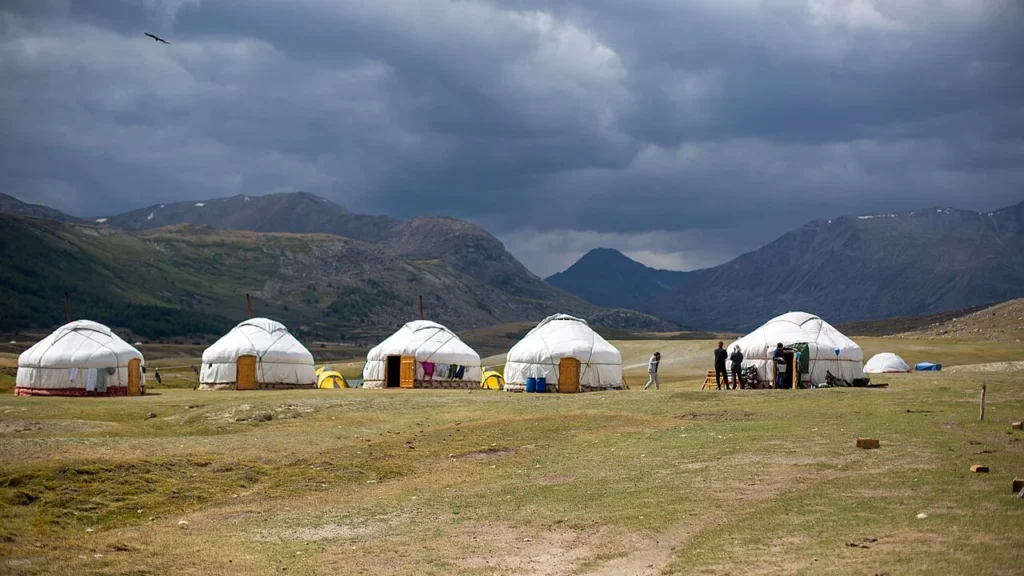
- Cover: traditional gers in western Mongolia, Bfreeproductions, July 30, 2022, cropped and resized under CC BY-SA 4.0. The photo is illustrative and is not identified as the craft example in Övörkhangai or Ulaanbaatar.