National flag guide
Flag of Kyrgyzstan: Meaning, Symbols and History
Kyrgyzstan adopted its red sun flag after independence from the Soviet Union.
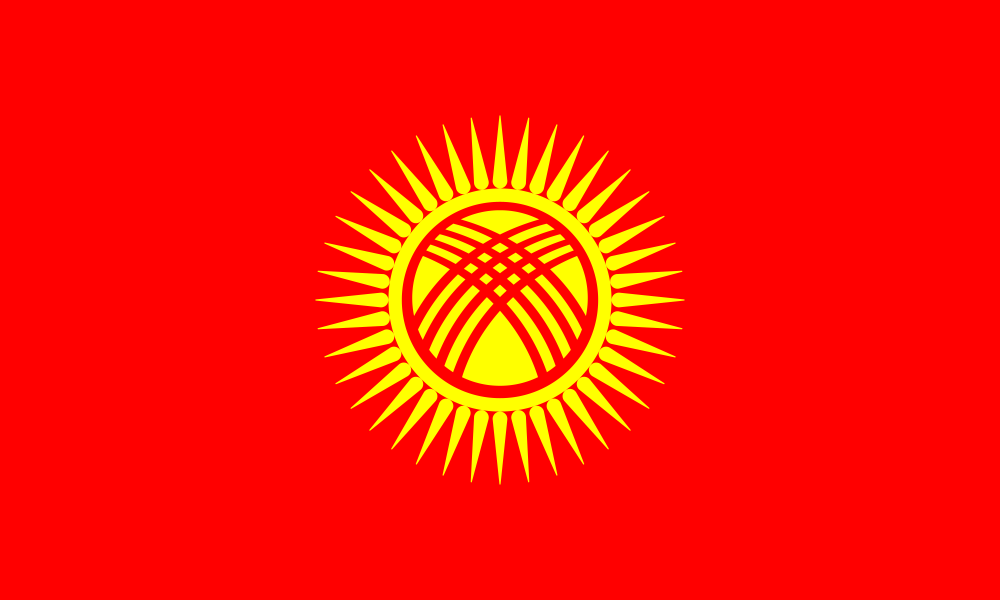
A red field with a golden sun of forty straight rays. Inside the sun is a red tunduk, the circular roof opening of a traditional Kyrgyz yurt. The tündük is the circular roof opening of a yurt and symbolises home and unity. The forty rays are associated with the traditional forty Kyrgyz tribes and the epic hero Manas.
The design and its details
A red field with a golden sun of forty straight rays. Inside the sun is a red tunduk, the circular roof opening of a traditional Kyrgyz yurt.
| Flag | Kyrgyzstan |
|---|---|
| Collection | Country flags |
| Adoption or specification | 3 March 1992; sun rays revised in December 2023 |
| Browsing region | Asia · Central Asia |
| Illustrated proportions (height:width) | 3:5 |
What the flag means
The tündük is the circular roof opening of a yurt and symbolises home and unity. The forty rays are associated with the traditional forty Kyrgyz tribes and the epic hero Manas.
| Element | Meaning or historical connection |
|---|---|
| Red field | Courage and the national heroic tradition. |
| Gold sun | Peace, prosperity and life. |
| Forty rays | The unity of the forty Kyrgyz tribes in the traditional national account. |
| Tunduk at the center | The roof opening of a yurt, expressing a shared home and national unity. The straightened rays belong to the 2023 revision. |
How the flag developed
Kyrgyzstan adopted its red sun flag after independence from the Soviet Union. The design replaced the Kirghiz Soviet republic’s red flag with blue-and-white horizontal bands and communist devices.
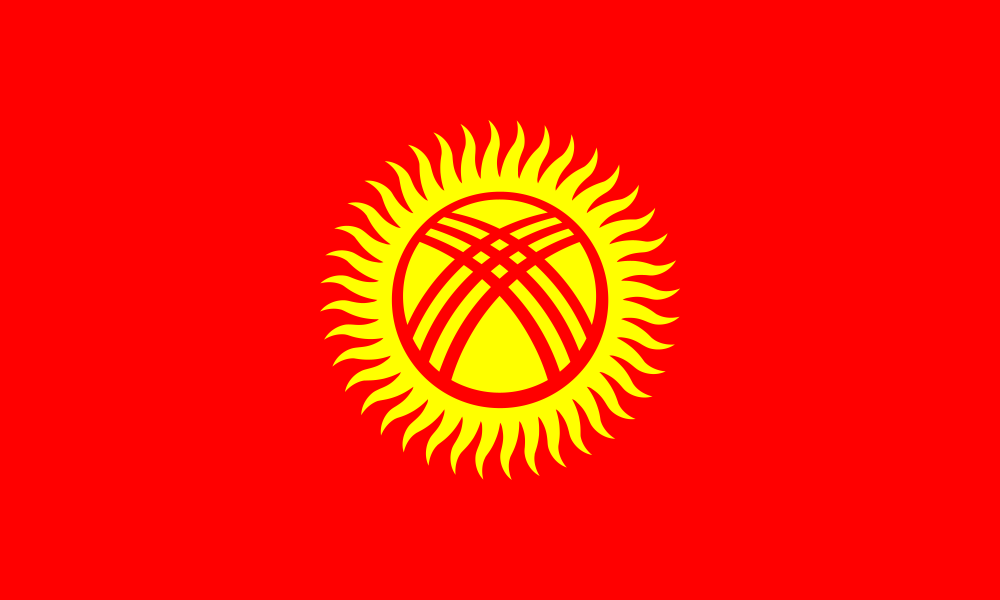
A December 2023 amendment changed the sun’s rays from a wavy form to straighter rays and adjusted the central yurt-roof drawing. The main symbolism remained: a forty-rayed sun surrounding the tündük. Older images are still common online, so a current reference needs to show the revised drawing rather than simply repeat an earlier SVG.
The main changes over time
1992 — Independent-state flag
The sun-and-yurt design replaced the Soviet republican flag.
2023 — Sun and roof details revised
The law changed the rays and central drawing.
Historical flags in pictures
How to recognise this flag
A yellow sun on red surrounds the crossed roof structure of a yurt. The current rays are straight rather than the older wavy form.
Earlier designs and other uses
The 1992–2023 flag is a genuine earlier design. It requires a historical label when compared with the revised current version.
Questions about this flag
When was the flag adopted?
3 March 1992; sun rays revised in December 2023. An adoption date can refer to a design, its restoration or a later legal specification; the timeline above separates those stages.
What should I check before identifying an older example?
The 1992–2023 flag is a genuine earlier design. It requires a historical label when compared with the revised current version.
What Did We Learn Today?
A yellow sun on red surrounds the crossed roof structure of a yurt. The current rays are straight rather than the older wavy form. Its adoption and later changes reflect the national history described in the timeline, while older or specialist flags need their own labels.
Sources & Data Notes
This guide distinguishes first use, national adoption, restoration and later construction standards. Traditional or commonly reported interpretations are identified where they differ from a formal specification. It is a dated reference, not a live record of every change in official flag use.
- President of the Kyrgyz Republic — State Symbols.
- Flagpedia: Kyrgyzstan — flag artwork and comparison reference.
- Flag history reference and bibliography — chronology and links to underlying sources.
The main illustration preserves the selected flag artwork’s proportions; these are a reproduction guide, not a substitute for a legal construction drawing. Color names group shades for browsing.
Illustration credits
- Flag of Kyrgyzstan (1992–2023).svg — Э. Айдарбеков, Б. Жайчыбеков, С. Иптаров, Ж. Матаев, М. Сыдыков; Public domain.
