A Zürich airport ride, a boat and mountain railway to Mount Rigi, and a reserved seat on the Glacier Express all work differently. Before buying a Swiss Travel Pass, price the rides you actually want. The pass can cover the journey without covering every charge that comes with it.
The Swiss Travel Pass is most useful when you have several busy travel days in a row and want to change plans without buying separate tickets. Ordinary tickets usually make more sense for a city stay or one excursion. Compare the Half Fare Card by adding its purchase price to your reduced fares, not by looking at the discounts alone.
How to use this article: Start with the Zürich example, jump to the Glacier Express fares, or follow the Mount Rigi comparison.
What changes when you buy a pass?
The Swiss Travel Pass covers trains, buses, boats and urban transport on its validity network. The regular version runs on 3, 4, 6, 8 or 15 consecutive days. Swiss Travel Pass Flex lets you choose that number of days within a month, but it costs more and requires you to activate travel days. The Swiss Half Fare Card, by contrast, is not a ticket: you buy a reduced fare for each ride. The visitor pass and card are for people who live outside Switzerland and Liechtenstein.
For December 2026, SBB lists second-class adult consecutive passes at CHF 254, 309, 399, 439 and 499 for those five durations. The Half Fare Card is CHF 150 for one month. The three comparisons below price one visitor aged 25 or older in second class where offered. They start from buying each product from scratch and use operator tariffs, not limited-quantity fares. Hotels, meals, museum savings and the journey to each example’s starting point are not included.
Three routes priced with the same rides on each option
| Sample trip | Ordinary tickets | New Half Fare Card + tickets | New 3-day Swiss Travel Pass |
|---|---|---|---|
| Zürich, December 9–11 | 38.20 | 171.00 | 254.00 |
| Glacier Express in three stages, December 14–16 | 337.00 | 399.50 | 416.00 |
| Lucerne to Mount Rigi and back, December 10 | 137.00 | 218.50 | 254.00 |
Zürich: pay for the zones you actually use
Take the airport train to Zürich HB and use city transport on days one and three, with a city-only day between them. Buy one 3-zone ZVV 24-hour ticket on each airport day and one city 24-hour ticket for day two. Zürich’s zone 110 counts as two fare zones; the airport is in zone 121. At the tariff in force before December 13, that is CHF 14.40 + 9.40 + 14.40, or CHF 38.20. The reduced total is CHF 7.20 + 6.60 + 7.20, or CHF 21 before buying the card. A single ticket can be cheaper on a day with only one ride. This example prices the same freedom to use local transport within the selected zones each day.
Glacier Express: the reserved seat changes the total
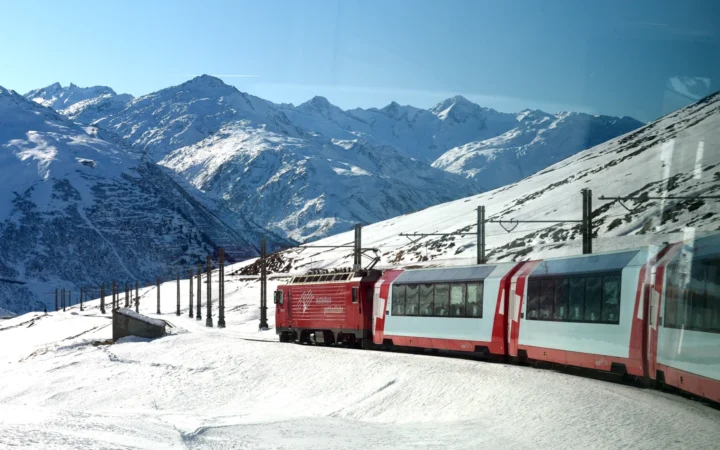
Split a December 14–16 journey along the Glacier Express route into three stages: Zermatt to Brig, Brig to Chur, then Chur to St. Moritz. The winter timetable shows each stage on PE 902. The individual second-class fares are CHF 41, 88 and 46. All three options in the table include the same three CHF 54 seat reservations. That is CHF 175 + 162 with ordinary fares, CHF 150 + 87.50 + 162 with a new Half Fare Card, or CHF 254 + 162 with the pass. A reserved seat ties you to a train even when the pass itself does not.
Split the route this way only if you want overnight stops in Brig and Chur. For a single Zermatt–St. Moritz ride, the operator lists CHF 166 plus one CHF 54 reservation. Regular trains can also serve much of the corridor without paying Glacier Express seat charges, but that would be a different comparison.
Mount Rigi: check whether the mountain leg is covered
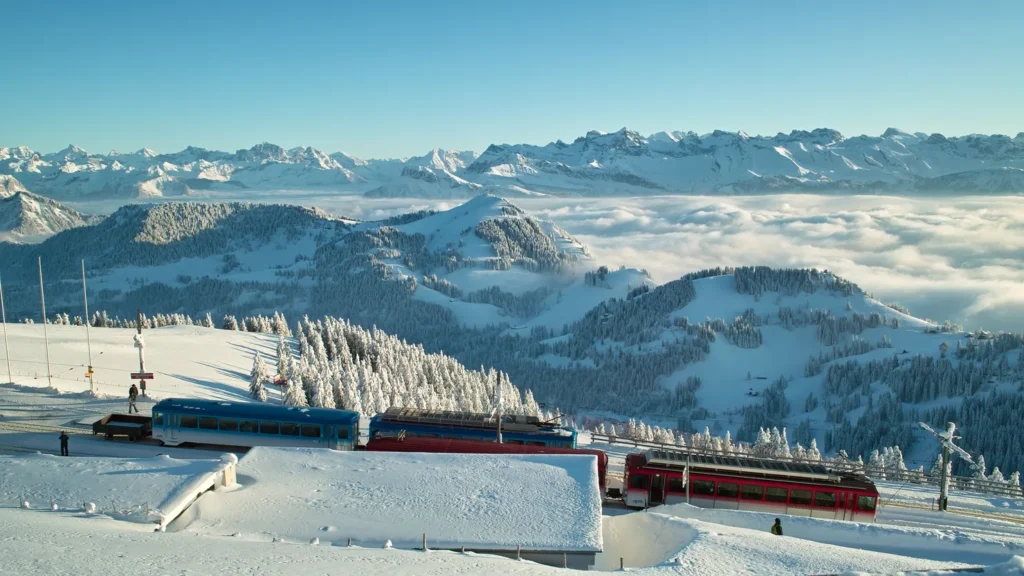
Take a scheduled boat from Lucerne to Vitznau, then the cogwheel train to Rigi Kulm and retrace the same route. The boat return costs CHF 53 and the cogwheel return CHF 84. With a Half Fare Card already in hand, the combined cost at the operators’ reduced rates is CHF 68.50. Buying the card specifically for this trip raises that to CHF 218.50. Both rides are covered on a valid Swiss Travel Pass day. The CHF 254 example buys an entire three-day pass, not a one-day product; someone who already has coverage pays no separate fare for the scheduled rides.
Both operators also accept the SBB Saver Day Pass on these services. If the date-specific price is below CHF 137 without a Half Fare Card, it beats the ordinary component fares shown here, though you should check the combined boat-and-rail offer too. If you already own the Half Fare Card, compare the reduced day-pass price against CHF 68.50. SBB requires advance purchase and has limited stock at each price. Its starting price is not a quote for December 10.
How to choose for your own dates
Write down every trip you expect to take and the dates you will take it. Put the routes that a pass merely discounts in a separate column. Compare the pass price plus those extra fares and reservations with your actual point-to-point total. Then run the same addition with the Half Fare Card and the reduced rates shown for your dates. A fixed-date Saver Day Pass is a separate option, and a cheaper train-specific ticket is not equivalent if you want freedom to take a later train.
If every ride is fully covered by the Swiss Travel Pass and exactly half-price with the card, a three-day pass at CHF 254 ties a new CHF 150 Half Fare Card at CHF 208 in ordinary fares: CHF 150 + 104 = 254. That is only the break-even point against the card. At CHF 208, ordinary tickets still cost less than either product.
For a short city stay, start with local zone tickets. For a string of long rail days, start by pricing the pass against ordinary fares and any available day passes. For a mountain trip, look up the specific operator first. Full Rigi coverage does not mean that a mountain journey to Jungfraujoch is fully included.
Frequently Asked Questions
Are mountain trains fully covered with a Swiss Travel Pass?
Some are, including the Rigi Railways route from Vitznau to Rigi Kulm. Other trips are only partly covered or discounted. Check exactly where the included segment ends and price the rest with the mountain operator.
Do scenic trains still require a seat reservation with the pass?
Yes where the operator makes one mandatory. On the Glacier Express, the pass covers the eligible travel fare, not the seat. Book the reservation for the correct train and class separately.
Does a three-day pass cover any three days of a week?
No. The regular pass covers three consecutive days. The three-day Flex version lets you select individual days within a month, which can make more sense if you have gaps between expensive rides.
What Did We Learn Today?
Compare the same rides before comparing products. Local tickets kept the Zürich total low, a new Half Fare Card only made sense if its discounts added up, and the Glacier Express kept its seat charge under every option. Include discounts you can actually use, and check the exact route before treating a mountain ride as covered.
Sources & Data Notes
Open fare tables, timetables and photo credit
Prices were checked November 26, 2026 for the December examples, in Swiss francs. The calculations use published adult fares and assume the named journeys operate as scheduled, not that any reserved seat is available. SBB’s published consecutive-pass prices used above are valid through December 31, 2026. ZVV changes tariffs on December 13. The examples do not use advertised saver floors as live quotations.
- SBB: Swiss Travel Pass and Flex adult prices, Swiss Half Fare Card, and Saver Day Pass.
- ZVV 24-hour fares and double-counted zones, ZVV station zones, and the December 13 tariff change.
- Glacier Express individual fares and seats and winter timetable.
- Lake Lucerne Navigation fares and accepted passes and schedules; Rigi Railways fares and accepted passes.
Cover: Cogwheel trains at Rigi Kulm in winter, Gestumblindi / Wikimedia Commons, CC BY 3.0, resized and cropped.