Historical flag guide
The Eureka Flag of Australia (1854)
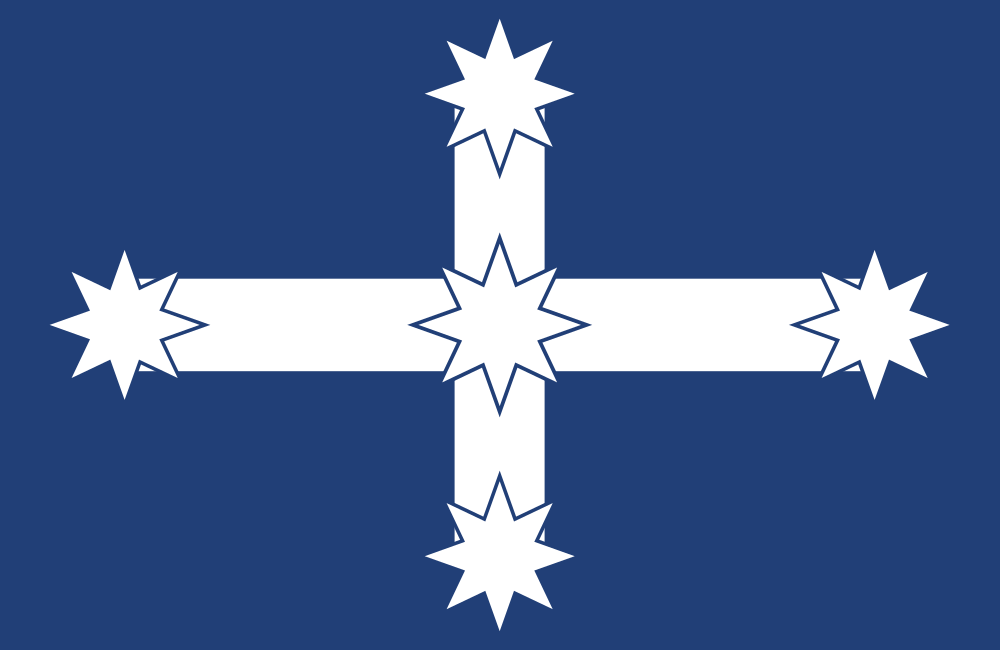
Five white eight-pointed stars meet the arms and center of a white cross on a dark blue field.
When and how this design was used
Gold miners at Ballarat rallied under this Southern Cross banner in 1854. Police recovered it after the storming of the Eureka Stockade on 3 December. The surviving blue-and-white textile is incomplete. This reconstruction shows how its five stars fit together.
The Eureka Centre dates the flag’s first raising at Bakery Hill to a Ballarat Reform League meeting on 29 November 1854. Accounts differ on who sewed it. The museum distinguishes those stories from what the surviving cloth can establish. The five stars form a cross joined by white bars, which helps distinguish the banner from the separate Southern Cross stars on Australia’s blue ensign.
Compare with the current flag of Australia
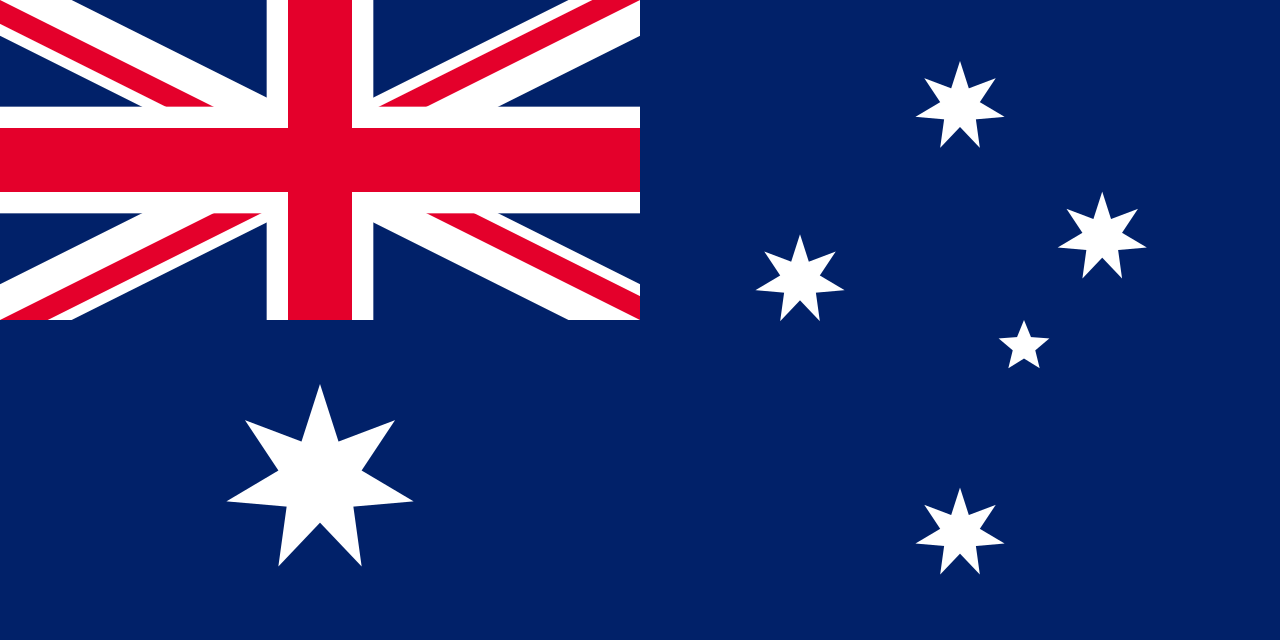
Blue, with the UK flag in the upper-left quadrant and a large seven-pointed star in the lower-left quadrant; on the right half is a representation of the Southern Cross constellation in white, with one small five-pointed star and four larger seven-pointed stars.
What Did We Learn Today?
The Eureka banner used white stars and a cross on blue in the 1854 uprising. It was a movement flag, and its surviving cloth is historical evidence of the design.
Sources & Data Notes
View references and illustration credit
- Eureka Centre Ballarat, The Eureka Flag
- Australian Department of the Prime Minister and Cabinet · Australian flags
- Department of the Prime Minister and Cabinet: Australian Flags
Historical illustration
Illustration source · Wikimedia Commons contributors, Eureka Flag.svg file history · Public domain


Removed editor metadata. Artwork geometry retained.