Historical flag guide
Australia’s Federation Competition Blue Ensign (1901–1903)
A six-pointed white star sits beneath the Union Jack. Five stars of different sizes and point counts form the Southern Cross on blue.
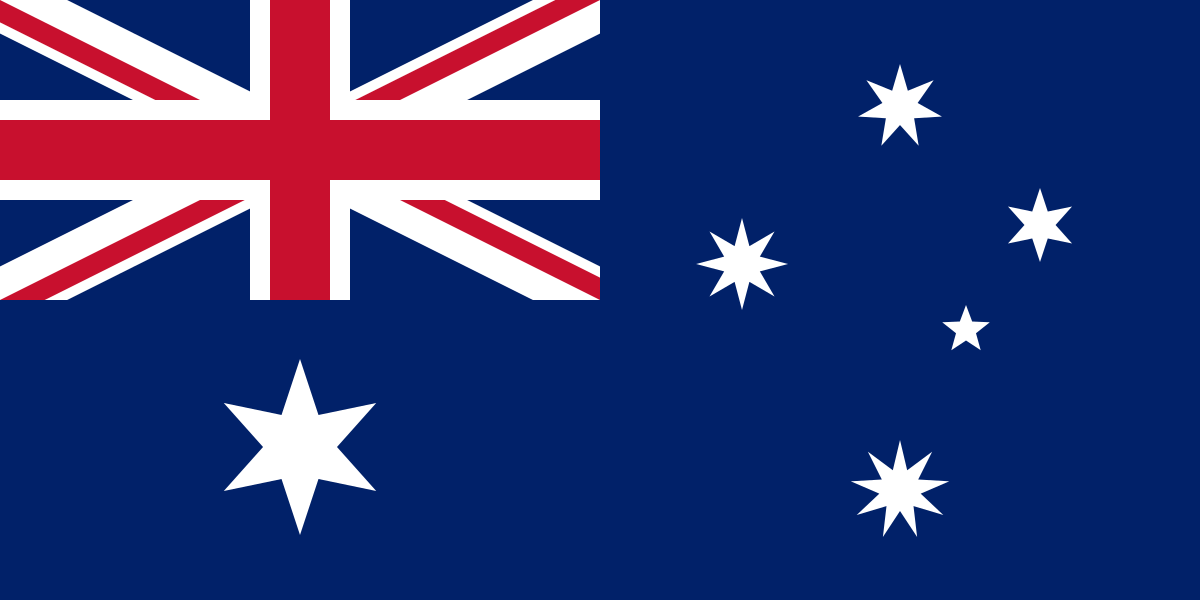
When and how this design was used
A public competition produced the design flown in Melbourne in September 1901. The six points of the large star counted the states of the new federation. On the fly, the designers gave the stars different numbers of points to suggest their relative brightness. When the ensigns were gazetted in 1903, the four larger stars of the Cross each received seven points.
Australia asked competition entrants for two flags, one for official and naval use and another for merchant ships. Five people submitted designs so similar that they shared the £200 prize. This helps explain why the red and blue ensigns share their principal elements and why an early blue example belongs to a wider family of maritime flags.
Dates in Australia flag history
1901 — Federation competition · The winning blue ensign was first flown.
Compare with the current flag of Australia
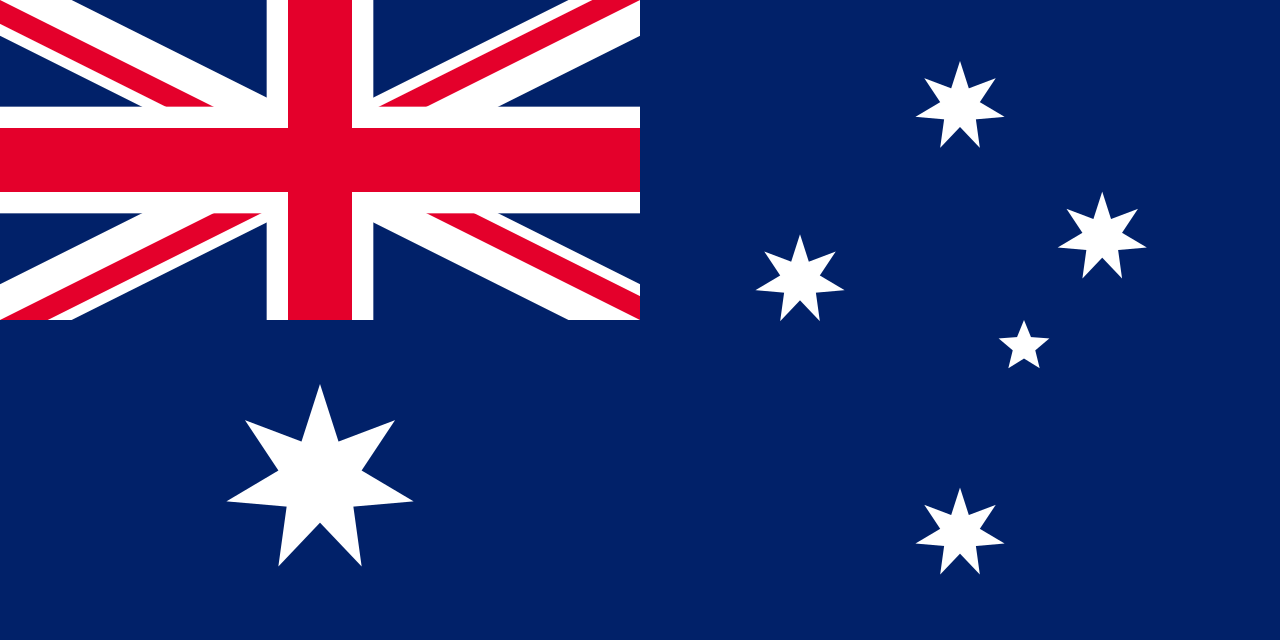
Blue, with the UK flag in the upper-left quadrant and a large seven-pointed star in the lower-left quadrant; on the right half is a representation of the Southern Cross constellation in white, with one small five-pointed star and four larger seven-pointed stars.
What Did We Learn Today?
On Australia’s early Federation competition design, inspect the Commonwealth Star and Southern Cross. Their points help distinguish it from later specifications.
Sources & Data Notes
View references and illustration credit
- Australian Department of the Prime Minister and Cabinet, the flag competition
- Australian Government, Australian Flags
- Eureka Centre Ballarat, The Eureka Flag
- Australian Department of the Prime Minister and Cabinet · Australian flags
Historical illustration
Illustration source · GeographyPin · GPL-2.0-or-later
Drawn as a recognition aid; spacing and colour are illustrative.