National flag guide
Flag of Venezuela: Meaning, Symbols and History
Venezuela’s yellow-blue-red traces to Francisco de Miranda’s independence-era flag, flown during his 1806 expedition and adopted by the independence congress in 1811.
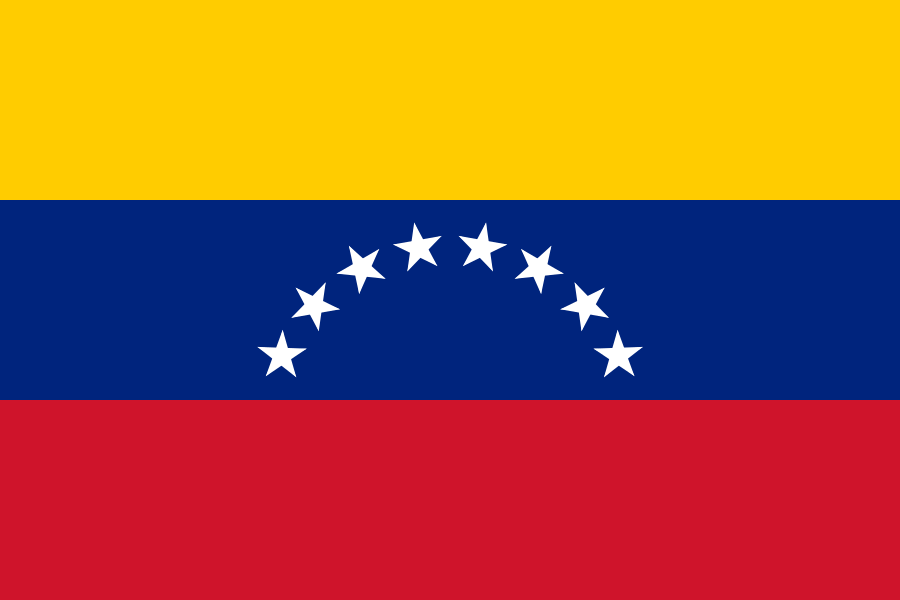
Three horizontal bands of yellow, blue and red, with an arc of eight white five-pointed stars in the blue band. The star count has a specific historical argument behind it. It does not represent the present number of Venezuelan states. Yellow, blue and red also carry modern interpretations of national wealth, waters and sacrifice.
The design and its details
Three horizontal bands of yellow, blue and red, with an arc of eight white five-pointed stars in the blue band.
| Flag | Venezuela |
|---|---|
| Collection | Country flags |
| Adoption or specification | 12 March 2006 for the eight-star version |
| Browsing region | South America · South America |
| Illustrated proportions (height:width) | 2:3 |
What the flag means
The star count has a specific historical argument behind it. It does not represent the present number of Venezuelan states. Yellow, blue and red also carry modern interpretations of national wealth, waters and sacrifice.
| Element | Meaning or historical connection |
|---|---|
| Yellow, blue and red | The independence-era tricolour tradition shared with the former Gran Colombian union. |
| Common color readings | National wealth, the country’s waters and sacrifice are familiar explanations; wording varies between accounts. |
| Eight stars | Seven original independence-era provinces, with an eighth added for Guayana in the modern design. |
| State arms | Appear on the official state version; plain and arms-bearing uses should be distinguished. |
How the flag developed
Venezuela’s yellow-blue-red traces to Francisco de Miranda’s independence-era flag, flown during his 1806 expedition and adopted by the independence congress in 1811. The same color tradition later spread through Gran Colombia.
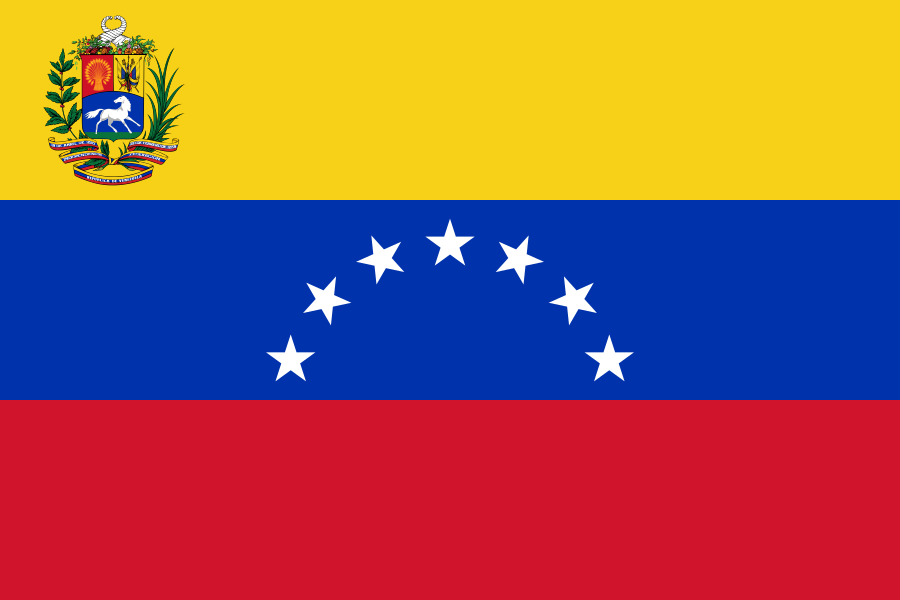
Stars were added to represent provinces in the independence struggle. The 2006 reform added an eighth star, associated with the historic province of Guayana and a decree of Simón Bolívar. It also changed details of the arms on the state version. The present eight-star civil flag is therefore a revision of a much older national design, not the beginning of the tricolour tradition.
The main changes over time
1806–1811 — Miranda’s tricolour
The colors entered independence-era national use.
Nineteenth–twentieth centuries — Changing stars and arms
Different versions reflected political and heraldic changes.
2006 — Eighth star added
The modern eight-star arrangement replaced the seven-star design.
Historical flags in pictures
How to recognise this flag
Venezuela has three equal horizontal bands and an arc of eight stars in the blue band. Colombia and Ecuador give yellow half the flag’s height.
Compare the relevant designs in these guides:
Earlier designs and other uses
The state flag adds the arms near the hoist in the yellow stripe. The civil version shown here omits them.
Questions about this flag
When was the flag adopted?
12 March 2006 for the eight-star version. An adoption date can refer to a design, its restoration or a later legal specification; the timeline above separates those stages.
What should I check before identifying an older example?
The state flag adds the arms near the hoist in the yellow stripe. The civil version shown here omits them.
What Did We Learn Today?
Venezuela has three equal horizontal bands and an arc of eight stars in the blue band. Colombia and Ecuador give yellow half the flag’s height. Its adoption and later changes reflect the national history described in the timeline, while older or specialist flags need their own labels.
Sources & Data Notes
This guide distinguishes first use, national adoption, restoration and later construction standards. Traditional or commonly reported interpretations are identified where they differ from a formal specification. It is a dated reference, not a live record of every change in official flag use.
- Archived World Factbook country record — background flag description and symbolic interpretations; later changes are explained above.
- Flagpedia: Venezuela — flag artwork and comparison reference.
- Flag history reference and bibliography — chronology and links to underlying sources.
The main illustration preserves the selected flag artwork’s proportions; these are a reproduction guide, not a substitute for a legal construction drawing. Color names group shades for browsing.
Illustration credits
- Flag of Venezuela (1954–2006).svg — See File history below for details.; Public domain.
