Flag Explorer
Ecuador Flag Meaning and the Condor on Its Coat of Arms
Ecuador shares the yellow-blue-red inheritance of Gran Colombia with Colombia and Venezuela.
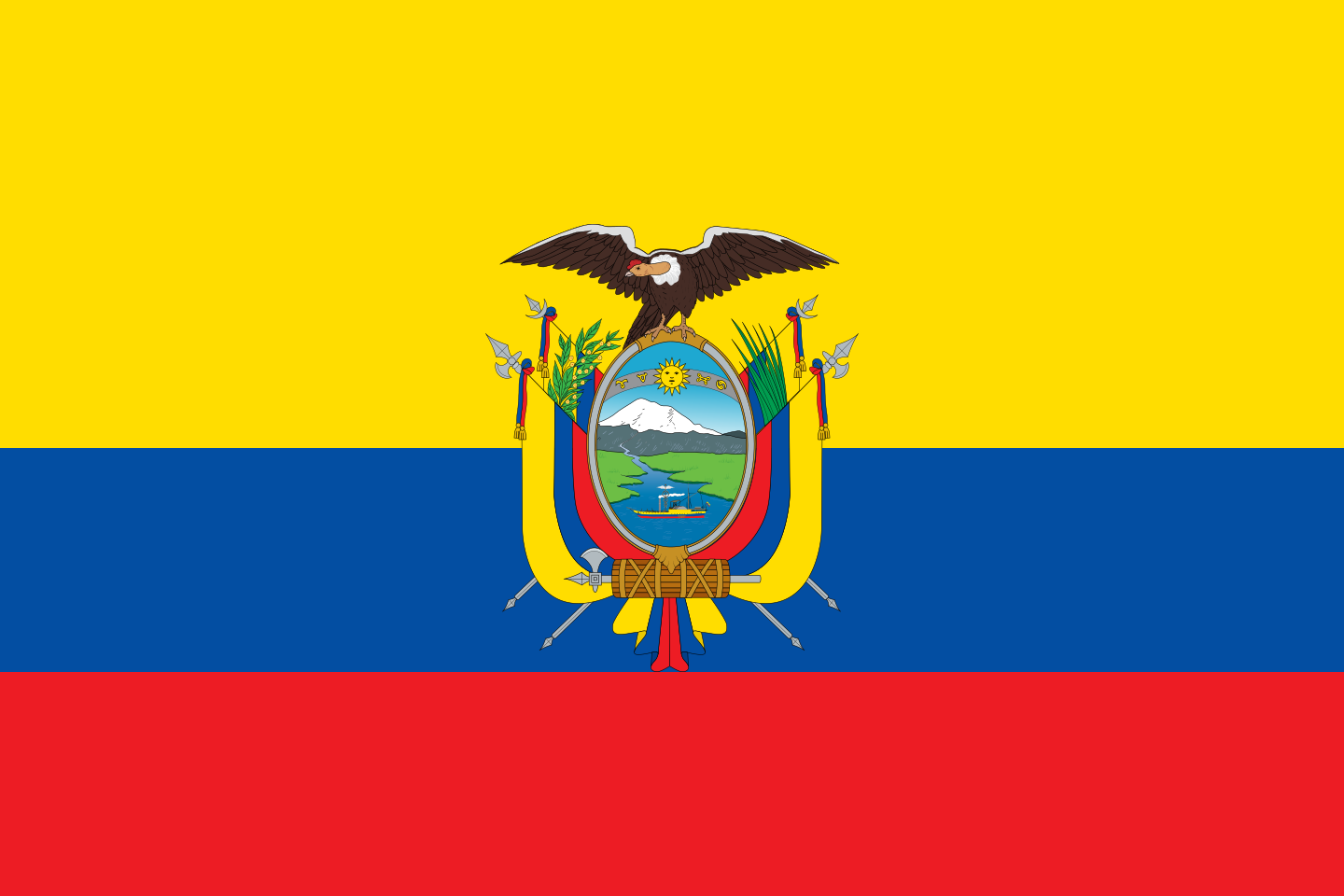
Why does Ecuador’s flag look like Colombia’s?
Ecuador and Colombia inherited yellow, blue and red from a shared independence-era flag tradition. Ecuador’s arms-bearing flag adds a shield with a mountain, river and ship, with a condor above. A plain Ecuadorian civil flag can be far harder to distinguish from Colombia’s.
The design and its details
Three horizontal bands of yellow (top, double-width), blue, and red, with the coat of arms at the center of the flag.
| Collection | Country flags |
|---|---|
| Adoption or design date | 26 September 1860; present arms established in 1900 |
| Geographic region | South America |
| Illustrated proportions (height to width) | 2:3 |
Look closer · Condor above the shield
What the flag means
The Andean condor stands above the shield, and the mountain-and-river scene connects the emblem with Ecuador’s landscape. The arms must be interpreted as an Ecuadorian composition, not a generic badge distinguishing an otherwise Colombian flag.
| Element | Meaning or historical connection |
|---|---|
| Yellow | Commonly linked with sunshine, crops and national wealth. |
| Blue | Sky, sea and rivers. |
| Red | Sacrifice in the struggle for freedom and justice. |
| Condor and landscape in the arms | A national emblem above a scene connecting Chimborazo, the Guayas and economic life. |
| Shared colors | A link with Gran Colombia’s independence-era flag tradition, not present membership of a common state. |
Compare the flags of Ecuador and Colombia
Which illustrated tricolor adds a shield and condor? In both drawings, the flagpole side is on the left.
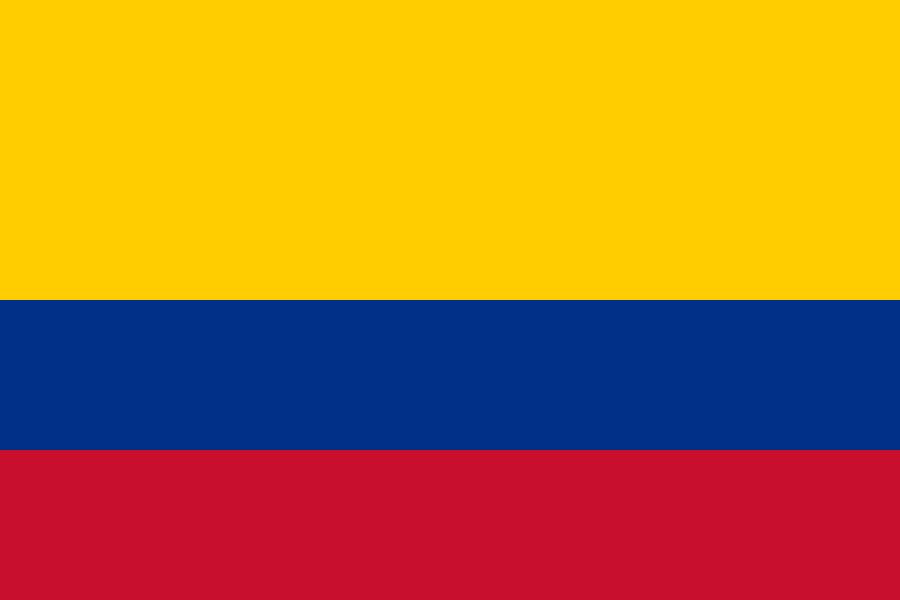
Reveal the flag names and clues
A · Ecuador — A condor rises above a shield on the illustrated national design. The wide yellow upper band is shared with its neighbor.
B · Colombia — The ordinary national tricolor has no central arms. Simply noticing the wide yellow band is insufficient.
How the flag developed
The country also used a distinctive white-and-light-blue design after the March Revolution of 1845.
The tricolour was restored in 1860 under Gabriel García Moreno. The arms were later established in their modern form, giving Ecuador a clear identifying device on the shared colors. Their condor, mountain, river and steamship assemble a national geographical and historical scene rather than simply repeating the colors’ general symbolism.
The main changes over time
1845–1860 — March Revolution designs
White-and-light-blue flags replaced the earlier tricolour.
1860 — Tricolour restored
Yellow-blue-red returned as the national arrangement.
1900 — Modern arms
The current national coat of arms was established.
Earlier designs and other uses
A plain civil tricolour is historically encountered; state uses add the arms. The illustrated version includes the national emblem.
Download the flag
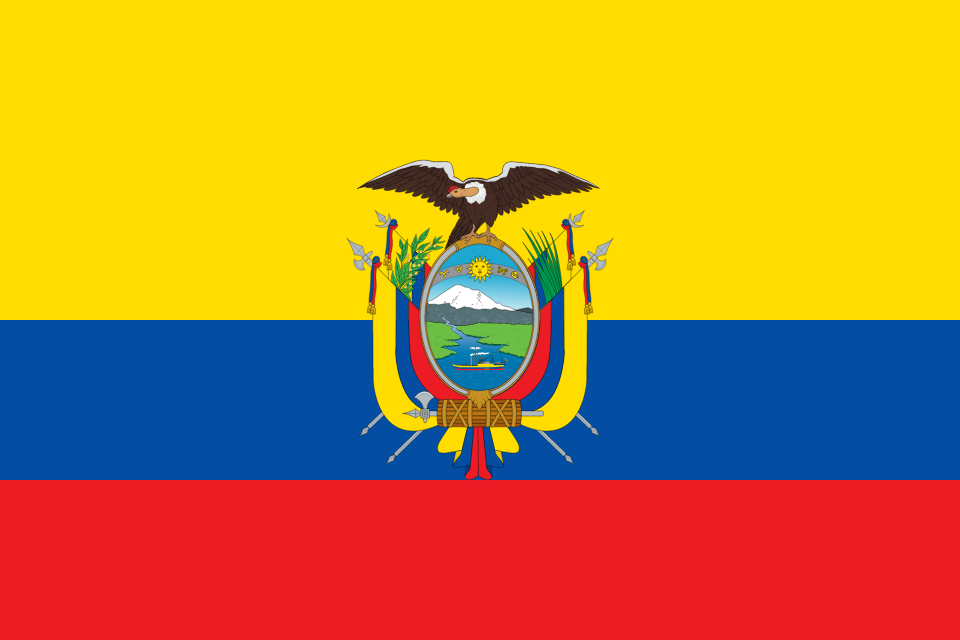
Artwork credit and reuse
Flagpedia vector collection · Public domain. The PNG is a raster export of the credited SVG.
What Did We Learn Today?
Like Colombia, Ecuador has a double-height yellow band. The central coat of arms is the quickest distinction in the state version shown here.
Sources & Data Notes
View references and illustration credits
The dates distinguish adoption of the flag from later revisions to its artwork. The comparison uses the two illustrations at the same height, with the hoist on the left.
- Flags of the World, Ecuador and the use of its coat of arms — The page compares Ecuador’s plain civil tricolor and the flag with the national arms, including the difference between prescribed use and common practice.
- Archived World Factbook country record — background flag description and symbolic interpretations; later changes are explained above.
- Flagpedia: Ecuador — flag artwork and comparison reference.
- Flag history reference and bibliography — chronology and links to underlying sources.
The flag downloads include the artwork credit and reuse terms for the SVG and PNG.