National flag guide
Flag of Liberia: Meaning, Symbols and History
Liberia’s flag was adopted shortly after the declaration of independence in 1847.
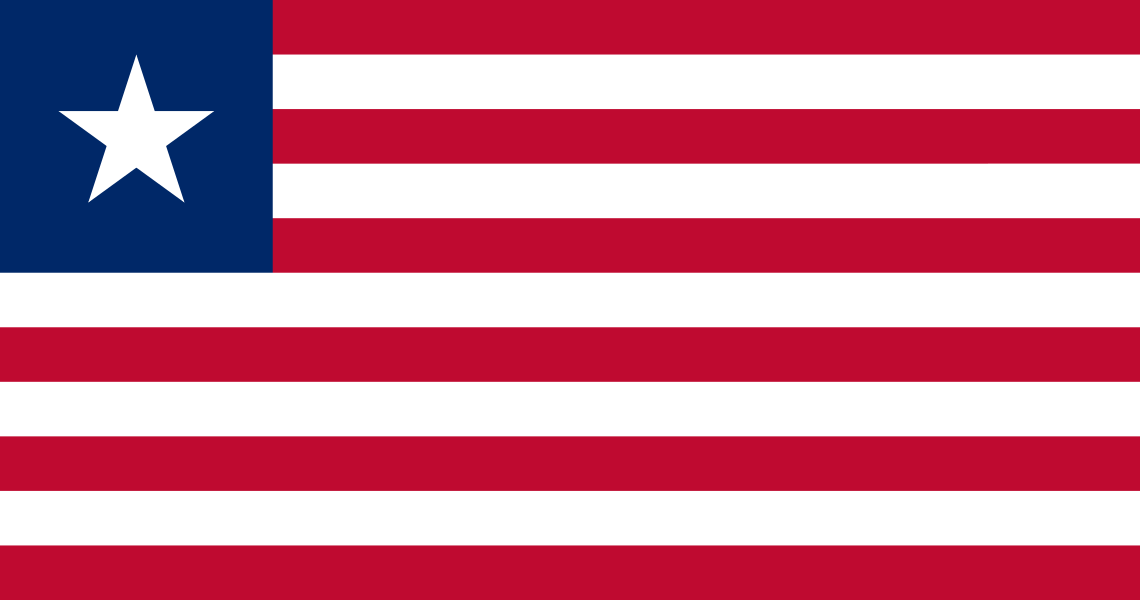
11 equal horizontal stripes of red alternating with white; a five-pointed white star sits on a blue square in the upper-left corner. The lone star represents Liberia’s independent African republic and the freedom associated with its founding. The eleven-stripe count is a particularly useful historical distinction.
The design and its details
11 equal horizontal stripes of red alternating with white; a five-pointed white star sits on a blue square in the upper-left corner.
| Flag | Liberia |
|---|---|
| Collection | Country flags |
| Adoption or specification | 24 August 1847 |
| Browsing region | Africa · Western Africa |
| Illustrated proportions (height:width) | 10:19 |
What the flag means
The lone star represents Liberia’s independent African republic and the freedom associated with its founding. The eleven-stripe count is a particularly useful historical distinction.
| Element | Meaning or historical connection |
|---|---|
| Eleven stripes | The eleven signatories of the declaration of independence. |
| Single white star | An independent African republic and the freedom of the settlers from whose movement the republic developed. |
| Blue canton | An association with the African mainland and national ideals of liberty. |
| Red and white | Traditional interpretations connect them with courage and moral integrity; their layout also shows the influence of the United States flag. |
How the flag developed
Liberia’s flag was adopted shortly after the declaration of independence in 1847. A committee of women led by Susannah Lewis prepared the new flag, replacing the colony’s cross-bearing canton with a single white star.
The red-and-white stripes and blue canton reflect the country’s historical relationship with the United States and the settlement of formerly enslaved African Americans. Eleven stripes refer to the signatories of Liberia’s independence declaration, rather than to the thirteen colonies represented by the American flag. The shared visual language does not make Liberia a US territory.
The main changes over time
1827 — Colonial predecessor
The canton contained a white cross.
1847 — Independent republic
A lone star replaced the cross in the national flag.
How to recognise this flag
One white star appears in a blue square above eleven red-and-white stripes. The United States has fifty stars and thirteen stripes.
Compare the relevant designs in these guides:
Earlier designs and other uses
The colonial cross flag and the independent lone-star flag are different historical designs.
Questions about this flag
When was the flag adopted?
24 August 1847. An adoption date can refer to a design, its restoration or a later legal specification; the timeline above separates those stages.
What should I check before identifying an older example?
The colonial cross flag and the independent lone-star flag are different historical designs.
What Did We Learn Today?
One white star appears in a blue square above eleven red-and-white stripes. The United States has fifty stars and thirteen stripes. Its adoption and later changes reflect the national history described in the timeline, while older or specialist flags need their own labels.
Sources & Data Notes
This guide distinguishes first use, national adoption, restoration and later construction standards. Traditional or commonly reported interpretations are identified where they differ from a formal specification. It is a dated reference, not a live record of every change in official flag use.
- Archived World Factbook country record — background flag description and symbolic interpretations; later changes are explained above.
- Flagpedia: Liberia — flag artwork and comparison reference.
- Flag history reference and bibliography — chronology and links to underlying sources.
The main illustration preserves the selected flag artwork’s proportions; these are a reproduction guide, not a substitute for a legal construction drawing. Color names group shades for browsing.
Current flag artwork is supplied with the original flag collection; the package’s artwork register contains provenance and license details.