National flag guide
Flag of Slovakia: Meaning, Symbols and History
Slovakia’s white-blue-red developed in the nineteenth-century national movement, particularly around 1848.
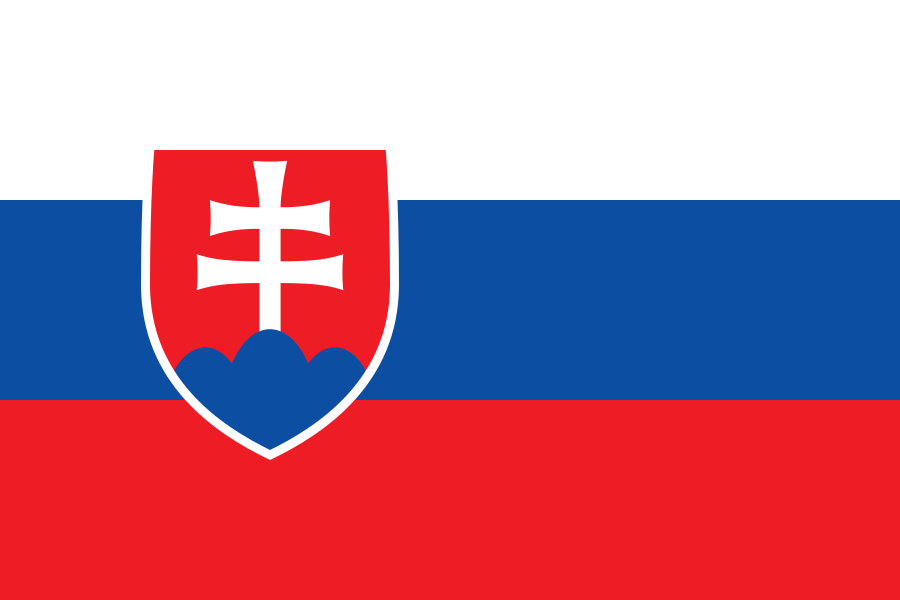
Three equal horizontal bands of white (top), blue, and red; the national coat of arms (a red shield bordered in white, with a white double-barred cross of St. Cyril and St. Methodius on top of three blue hills) is centered over the bands but offset to the left.
The design and its details
Three equal horizontal bands of white (top), blue, and red; the national coat of arms (a red shield bordered in white, with a white double-barred cross of St. Cyril and St. Methodius on top of three blue hills) is centered over the bands but offset to the left.
| Flag | Slovakia |
|---|---|
| Collection | Country flags |
| Adoption or specification | 3 September 1992 for the present arms-bearing design |
| Browsing region | Europe · Eastern Europe |
| Illustrated proportions (height:width) | 2:3 |
What the flag means
The white double cross and three blue hills belong to Slovak heraldry. The hills are conventionally connected with the Tatra, Fatra and Mátra mountain tradition, a historical reference that does not place every named range inside today’s Slovak borders.
| Element | Meaning or historical connection |
|---|---|
| White, blue and red | The Slovak tricolour within the Pan-Slavic color tradition. |
| Double cross | A historical Christian and national heraldic device. |
| Three hills | Conventionally associated with the Tatra, Fatra and Mátra mountain names in the historic arms. |
| Shield placement | The shield distinguishes the modern flag from other plain white-blue-red tricolours. |
How the flag developed
Slovakia’s white-blue-red developed in the nineteenth-century national movement, particularly around 1848. Those colors later appeared in several different Slovak political settings. A plain tricolour also served the wartime Slovak state, so the existence of the same three colors does not establish continuity of one government.
As Czechoslovakia moved toward dissolution, Slovakia selected the modern arms-bearing flag in 1992. The new shield made the flag distinct from the plain Russian tricolour and from neighboring Slovenia’s mountain shield. The design preceded the separate Slovak state’s creation on 1 January 1993. A flag adopted in 1992 can therefore correctly represent a country that became independent in 1993.
The main changes over time
1848 — National color tradition
White-blue-red became prominent in Slovak national symbolism.
1992 — Modern shield added
The present arms-bearing flag was adopted before the federation ended.
1993 — Separate state
The independent Slovak Republic continued with the new flag.
How to recognise this flag
Look for a white double-barred cross on a red shield above three blue hills. Slovenia’s similar tricolour instead has a white Triglav mountain, waves and stars.
Compare the relevant designs in these guides:
Earlier designs and other uses
Earlier plain Slovak tricolours and the modern arms-bearing national flag should be identified by period and political context.
Questions about this flag
When was the flag adopted?
3 September 1992 for the present arms-bearing design. An adoption date can refer to a design, its restoration or a later legal specification; the timeline above separates those stages.
What should I check before identifying an older example?
Earlier plain Slovak tricolours and the modern arms-bearing national flag should be identified by period and political context.
What Did We Learn Today?
Look for a white double-barred cross on a red shield above three blue hills. Slovenia’s similar tricolour instead has a white Triglav mountain, waves and stars. Its adoption and later changes reflect the national history described in the timeline, while older or specialist flags need their own labels.
Sources & Data Notes
This guide distinguishes first use, national adoption, restoration and later construction standards. Traditional or commonly reported interpretations are identified where they differ from a formal specification. It is a dated reference, not a live record of every change in official flag use.
- Archived World Factbook country record — background flag description and symbolic interpretations; later changes are explained above.
- Flagpedia: Slovakia — flag artwork and comparison reference.
- Flag history reference and bibliography — chronology and links to underlying sources.
The main illustration preserves the selected flag artwork’s proportions; these are a reproduction guide, not a substitute for a legal construction drawing. Color names group shades for browsing.
Current flag artwork is supplied with the original flag collection; the package’s artwork register contains provenance and license details.