Flag Explorer
Scotland’s Saltire and the Cross of Saint Andrew
The saltire developed as a Scottish national emblem in the medieval period.
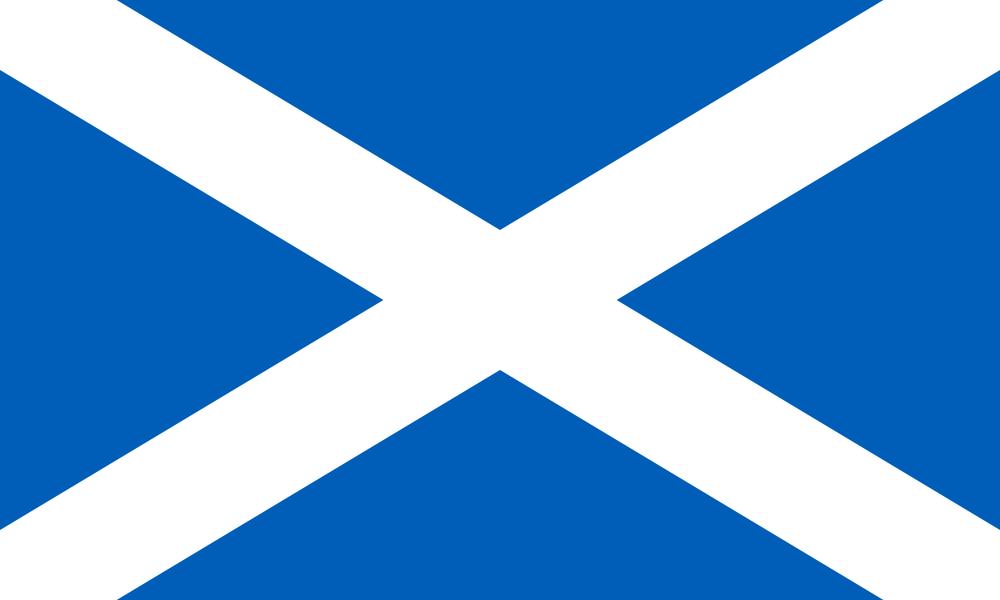
Which Scottish flag is the Saltire and which is the Lion Rampant?
Scotland’s Saltire is the white diagonal St Andrew’s Cross on blue. The Lion Rampant is the royal banner with a red lion on gold and has a distinct official use. A photograph of either can concern Scotland, but the name Saltire applies to the diagonal cross.
The design and its details
A white diagonal cross, or saltire, on a blue field.
| Collection | UK constituent countries |
|---|---|
| Adoption or design date | Medieval origins; later standardised blue recommendations |
| Geographic region | Europe · Northern Europe |
What the flag means
The Battle of Athelstaneford story is a legend of origin. Documentary medieval evidence and a later color recommendation answer different historical questions.
| Element | Meaning or historical connection |
|---|---|
| White diagonal cross | Saint Andrew’s saltire, the national emblem. |
| Blue field | The established background, with later recommendations intended to improve color consistency. |
| Cross-in-the-sky tradition | The Athelstaneford origin story is a national legend; documentary medieval use and the legend are different types of historical evidence. |
Compare the flags of Scotland and the United Kingdom
Can you trace a white diagonal from corner to corner without crossing an upright band? In both drawings, the flagpole side is on the left.
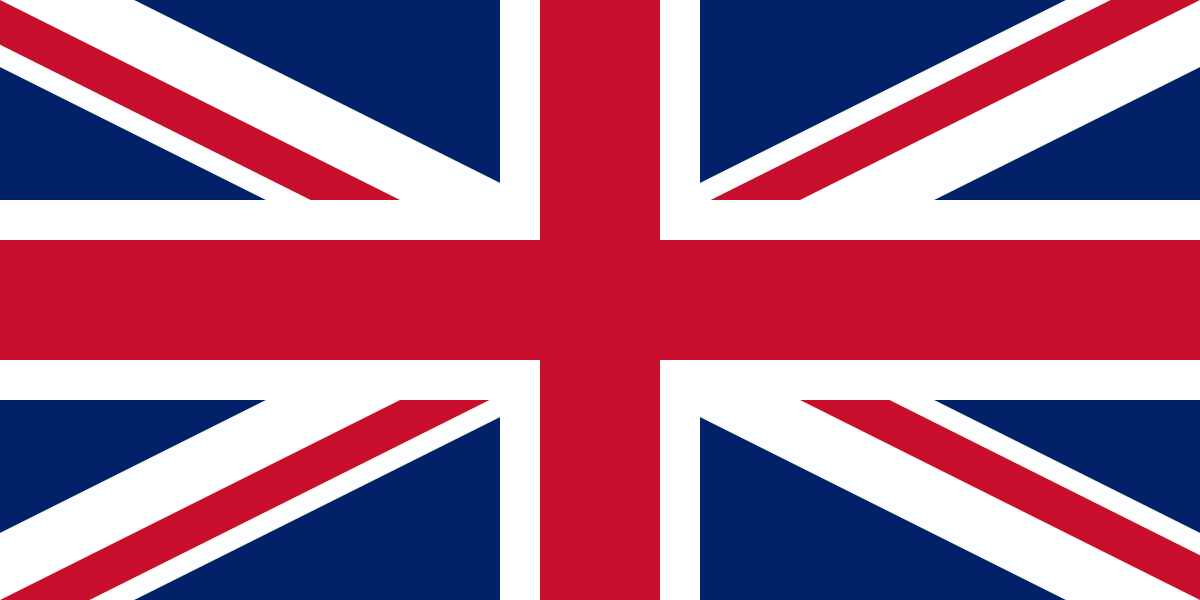
Reveal the flag names and clues
A · United Kingdom — White and red diagonals meet an upright red cross edged in white. The diagonals are only one component of the union design.
B · Scotland — A white saltire forms an unbroken diagonal cross on blue. There is no separate red upright cross.
How the flag developed
A famous story connects it with a cross seen in the sky before a ninth-century battle, but that is a national tradition rather than contemporary proof of the modern flag’s first use.
Scotland’s white saltire became part of the Union Flag in 1606. It continues as Scotland’s own national flag alongside its use within the wider UK design. Modern recommendations for the blue shade standardise reproduction without creating the underlying medieval symbol.
The main changes over time
Medieval period — Saltire tradition
Saint Andrew’s cross became a national emblem.
1606 — Union Flag component
The Scottish saltire joined the English cross.
Modern period — Color guidance
Recommendations sought more consistent reproduction of blue.
Earlier designs and other uses
The Lion Rampant is a royal banner with a different status and design.
Download the flag
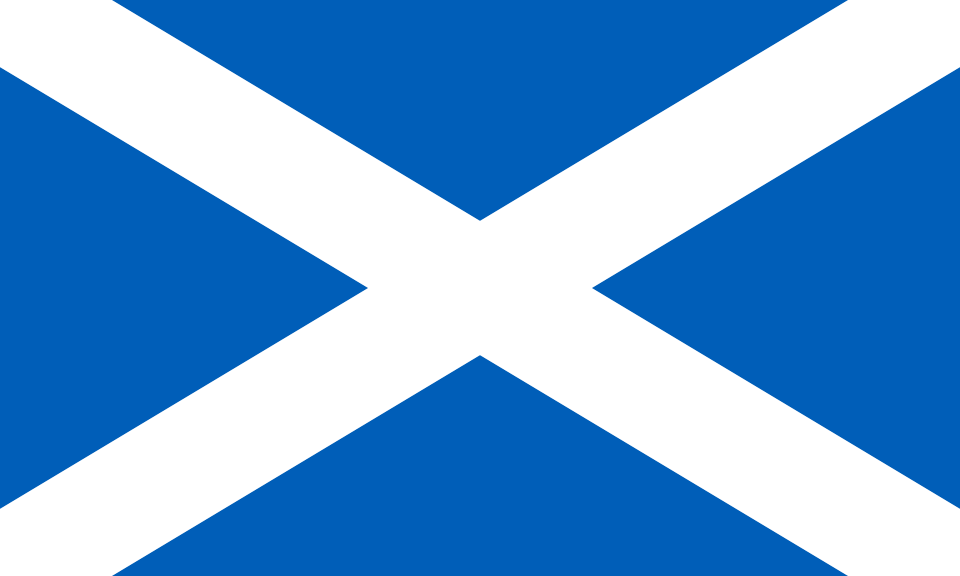
Artwork credit and reuse
Traditional design · Public domain. The PNG is a raster export of the credited SVG.


What Did We Learn Today?
A white X-shaped cross fills blue. The Lion Rampant is a separate royal banner, not the ordinary saltire.
Sources & Data Notes
View references and illustration credits
The dates distinguish adoption of the flag from later revisions to its artwork. The comparison uses the two illustrations at the same height, with the hoist on the left.
- Scottish Flag Trust, Saltire frequently asked questions — The Trust describes its Flag Code’s blue recommendation and its preferred 4:5 proportion. It also acknowledges other ratios used by flag makers.
- Scotland flag: history and source bibliography.
Illustration credits
- Flag of Scotland.svg — none known; Public domain.