National flag guide
Flag of United Kingdom: Meaning, Symbols and History
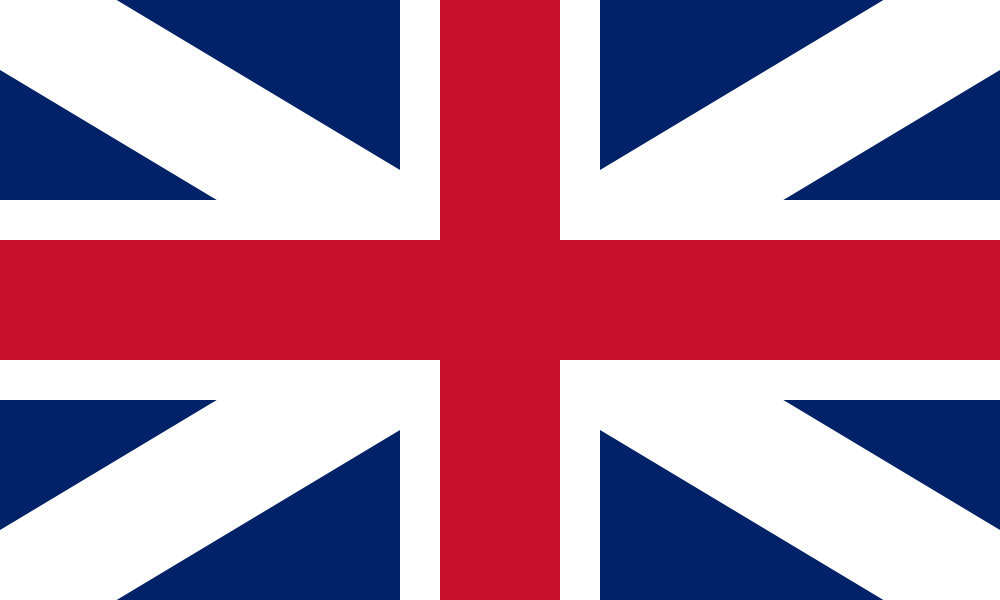
The first Union Flag combined the crosses associated with England and Scotland in 1606, after James VI of Scotland also became James I of England.
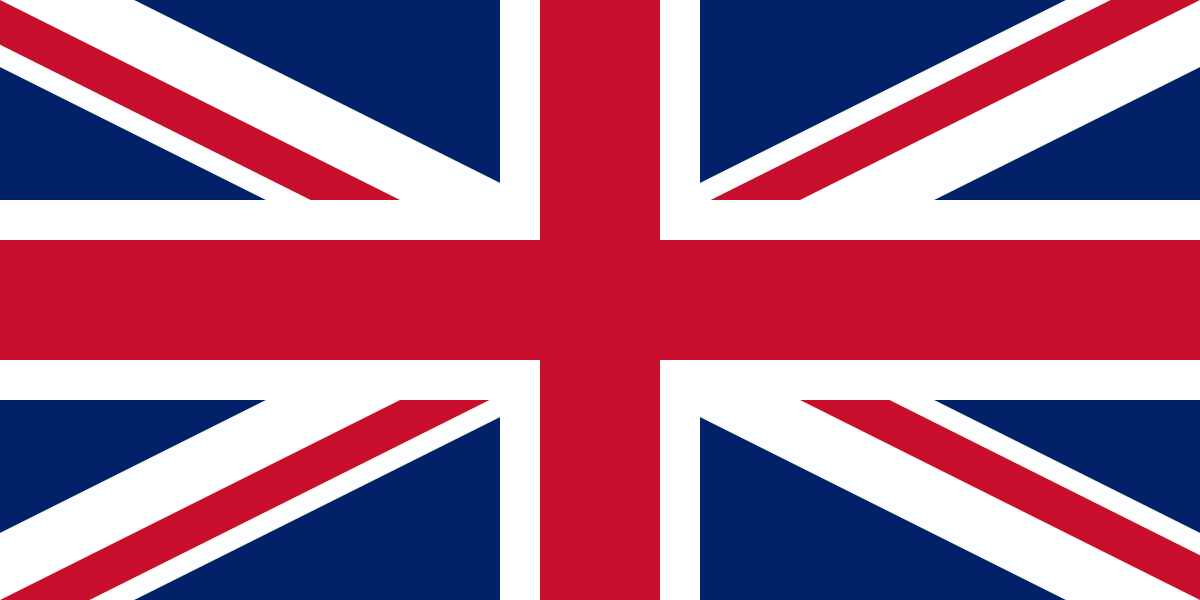
Blue field with the red cross of Saint George (patron saint of England) edged in white on top of the diagonal red cross of Saint Patrick (patron saint of Ireland), which is on top of the diagonal white cross of Saint Andrew (patron saint of Scotland).
The design and its details
Blue field with the red cross of Saint George (patron saint of England) edged in white on top of the diagonal red cross of Saint Patrick (patron saint of Ireland), which is on top of the diagonal white cross of Saint Andrew (patron saint of Scotland).
| Flag | United Kingdom |
|---|---|
| Collection | Country flags |
| Adoption or specification | 1 January 1801 for the present design |
| Browsing region | Europe · Northern Europe |
| Illustrated proportions (height:width) | 1:2 |
What the flag means
The design combines Saint George’s red upright cross, Saint Andrew’s white saltire and Saint Patrick’s red saltire. “Union Flag” and “Union Jack” are both established names. It is misleading to describe every diagonal red segment as centered on a white one.
| Element | Meaning or historical connection |
|---|---|
| Upright red cross | Saint George’s Cross, associated with England. |
| White diagonal cross on blue | Saint Andrew’s saltire, associated with Scotland. |
| Red diagonal cross | Saint Patrick’s saltire, added in 1801 for the historical union with Ireland. |
| Combined arrangement | A constitutional history of union. Wales has its own dragon flag but no separate dragon in this design. |
How the flag developed
The first Union Flag combined the crosses associated with England and Scotland in 1606, after James VI of Scotland also became James I of England. The kingdoms had one monarch but remained separate states until the 1707 union. The earlier design therefore has two historical contexts: the union of crowns and the later Kingdom of Great Britain.
The current arrangement dates to 1801, when the union with Ireland added Saint Patrick’s red diagonal cross. It was not redrawn when most of Ireland left the United Kingdom in the twentieth century. Wales has no separate emblem in the design because it was already incorporated into the English state when the first union flag was created. The offset diagonal stripes are deliberate and make the flag asymmetric; mirroring or rotating a drawing can produce an incorrect presentation.
Why Wales has no separate dragon in the Union Flag
The Union Flag developed through unions between kingdoms, rather than a modern competition to give every present constituent country an equal visual panel. In 1606 its designers combined Saint George’s upright cross with Saint Andrew’s diagonal saltire. In 1801 Saint Patrick’s red saltire was added.
Wales was already incorporated into the English legal and constitutional system when the first Union Flag was created, so no separate Welsh dragon was added. The absence is a result of that historical sequence; it does not make the Welsh flag a modern invention.
The red and white diagonal bands are deliberately offset. This gives the flag a correct orientation and makes it possible to fly it upside down even though its design looks broadly symmetrical at a glance. Small icons often simplify this detail, so a construction drawing is more reliable than a tiny emoji when checking an actual flag.
The main changes over time
1606 — First Union Flag
England’s and Scotland’s cross designs were combined.
1707 — Great Britain
The earlier union design represented the new united kingdom.
1801 — Present Union Flag
Saint Patrick’s cross was added following the union with Ireland.
Historical flags in pictures
How to recognise this flag
Check the upright red cross and the red diagonal crosses on a blue field. In the upper hoist quarter, the broader white part of the diagonal sits above the red diagonal. A mirrored image can look plausible while being reversed.
Earlier designs and other uses
British red, blue and white maritime ensigns place the Union Flag in a canton and serve different users. The Royal Standard is a separate flag representing the monarch.
Questions about this flag
When was the flag adopted?
1 January 1801 for the present design. An adoption date can refer to a design, its restoration or a later legal specification; the timeline above separates those stages.
What should I check before identifying an older example?
British red, blue and white maritime ensigns place the Union Flag in a canton and serve different users. The Royal Standard is a separate flag representing the monarch.
What Did We Learn Today?
Check the upright red cross and the red diagonal crosses on a blue field. In the upper hoist quarter, the broader white part of the diagonal sits above the red diagonal. A mirrored image can look plausible while being reversed. Its adoption and later changes reflect the national history described in the timeline, while older or specialist flags need their own labels.
Sources & Data Notes
This guide distinguishes first use, national adoption, restoration and later construction standards. Traditional or commonly reported interpretations are identified where they differ from a formal specification. It is a dated reference, not a live record of every change in official flag use.
- UK Government: Union Flag history and guidance.
- Archived World Factbook country record — background flag description and symbolic interpretations; later changes are explained above.
- Flagpedia: United Kingdom — flag artwork and comparison reference.
- Flag history reference and bibliography — chronology and links to underlying sources.
The main illustration preserves the selected flag artwork’s proportions; these are a reproduction guide, not a substitute for a legal construction drawing. Color names group shades for browsing.
Illustration credits
- Flag of Great Britain (1707–1800).svg — Hoshie; Public domain.
