Flag Explorer
Haiti’s Flag and the Difference Between Civil and State Use
Haiti’s blue-and-red flag belongs to the independence struggle that ended French colonial rule.
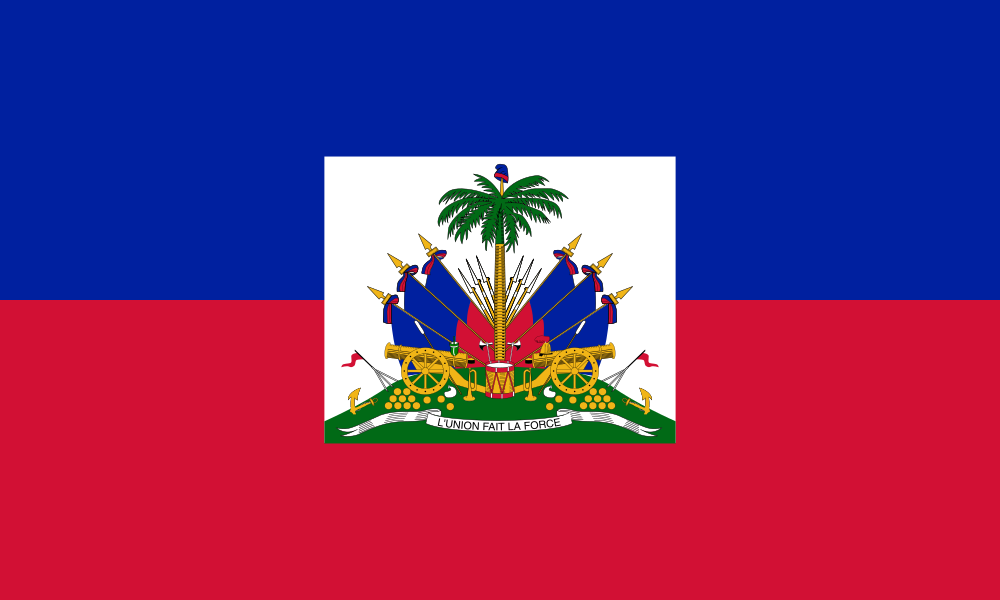
What changes between Haiti’s civil and state flags?
Haiti’s civil flag has blue above red. The state flag adds the national arms on a white panel. The palm, trophies and motto in the panel explain why a formal flag at a public building can look different from a simple Haitian bicolor.
The design and its details
Two equal horizontal bands of blue (top) and red; a centered white rectangle bears the coat of arms, which has a palm tree flanked by flags and two cannons above a scroll with the motto L’Union Fait LA Force (Union Makes Strength).
Article 3 specifies equal horizontal bands and places the arms on a square of white cloth. That last detail explains why a white patch surrounds the central design in the illustrated flag.
| Collection | Country flags |
|---|---|
| Adoption or design date | Blue and red restored in February 1986 |
| Geographic region | North America · Caribbean |
| Illustrated proportions (height to width) | 3:5 |
| Version shown | State flag with the coat of arms |
Look closer · The white panel
What the flag means
The flag’s changing colors are tied to political history. The motto L’Union fait la force means “Union makes strength.” A detailed account should distinguish the national founding tradition from documented later government changes.
| Element | Meaning or historical connection |
|---|---|
| Blue and red | A national color tradition developed from the French revolutionary palette during the independence struggle. |
| Palm, liberty cap and weapons | The independence and defense imagery of the state arms. |
| Motto | L’Union Fait la Force means Unity Makes Strength. |
| White arms panel | The setting for the state emblem; plain bicolours also have a distinct place in Haiti’s flag history. |
Compare the flags of Haiti and Belize
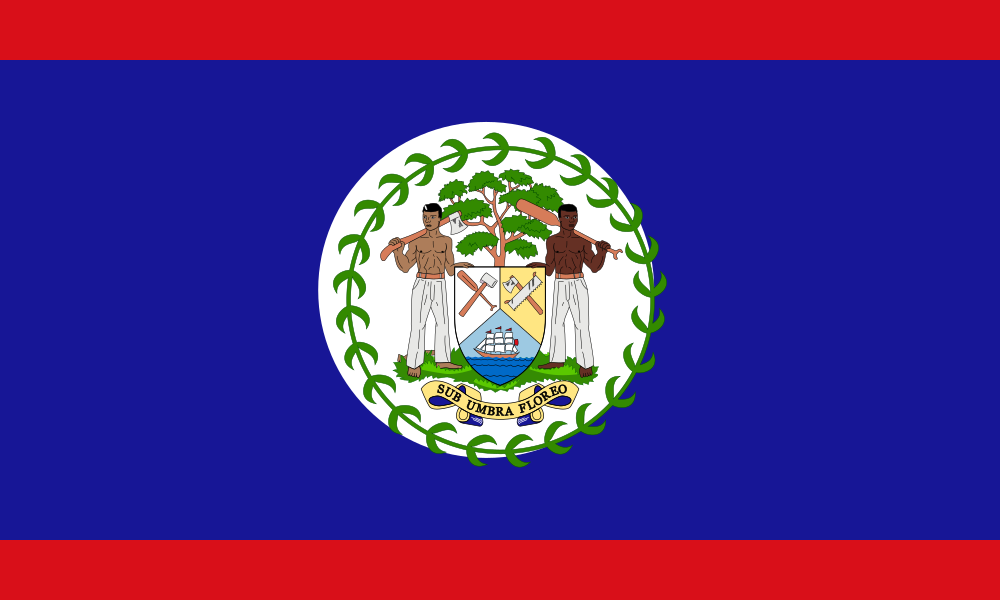
Where does the white surround the coat of arms? In both drawings, the flagpole side is on the left.
Reveal the flag names and clues
A · Haiti — The state flag shown has the arms on a white rectangular panel against horizontal blue and red halves.
B · Belize — The arms sit in a large white disc with a leafy wreath. Thin red stripes edge the otherwise blue field.
How the flag developed
The traditional account links the colors to the removal of white from a French tricolour at Arcahaie in 1803, with Catherine Flon sewing the remaining colors together. The precise details of that story belong to national tradition.
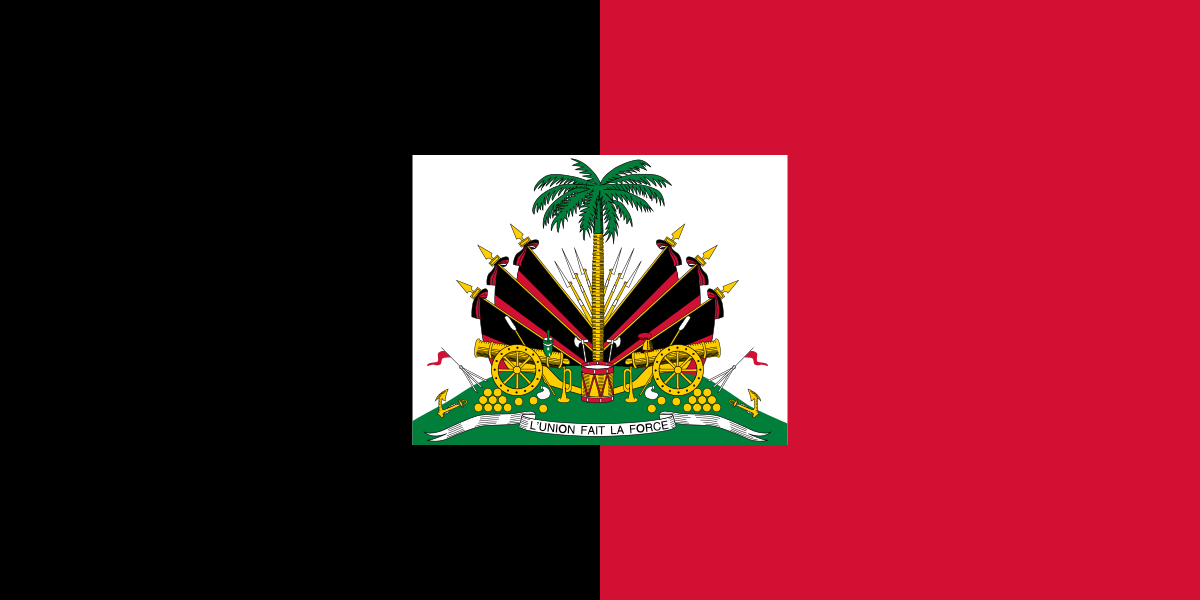
Independent Haiti also used black-and-red designs under particular rulers. The Duvalier government adopted a vertical black-and-red flag in 1964; blue and red returned when that regime fell in 1986. The state flag’s central arms add a palm, weapons and the motto of unity, while the plain bicolour serves as a civil form.
The main changes over time
1803–1804 — Independence tradition
Blue and red became symbols of the struggle against French rule.
1964–1986 — Duvalier-era flag
The state used a vertical black-and-red design.
1986 — Blue and red restored
The current color arrangement returned after the regime fell.
Historical flags in pictures
Earlier designs and other uses
The plain civil flag omits the arms. Earlier black-and-red flags should be identified by their specific periods.
Download the flag
Artwork credit and reuse
Flagpedia vector collection · Public domain. The PNG is a raster export of the credited SVG.
What Did We Learn Today?
Blue is above red, with the arms on a white central panel in the state flag. Liechtenstein places a gold crown in the upper hoist of a similar bicolour.
Sources & Data Notes
View references and illustration credits
The dates distinguish adoption of the flag from later revisions to its artwork. The comparison uses the two illustrations at the same height, with the hoist on the left.
- Haitian Constitution of 1987, Article 3 (French text).
- Archived World Factbook country record — background flag description and symbolic interpretations; later changes are explained above.
- Flagpedia: Haiti — flag artwork and comparison reference.
- Flag history reference and bibliography — chronology and links to underlying sources.
The flag downloads include the artwork credit and reuse terms for the SVG and PNG.
Illustration credits
- Vertical black and red with the arms — B1mbo
Coat of arms :Lokal_Profil and Myriam Thyes. Public domain.
