A letter from Mobile to Chicago asked for two things: help getting north and help finding a job. That request separates what made a worker want to leave from what made a particular city look like a place he could go.
Push factors are conditions that make people consider leaving where they live. Pull factors are opportunities or connections that make a particular destination attractive. During the Great Migration, limited work and racial oppression pushed many Black Americans away from the South, while northern jobs and networks helped draw people to cities such as Chicago.
How to use this article: Read each letter as evidence of what a person wanted or faced. Then ask which parts describe leaving, which explain Chicago, and which affect whether the trip can happen.
1. Why a Worker in Mobile Looked North
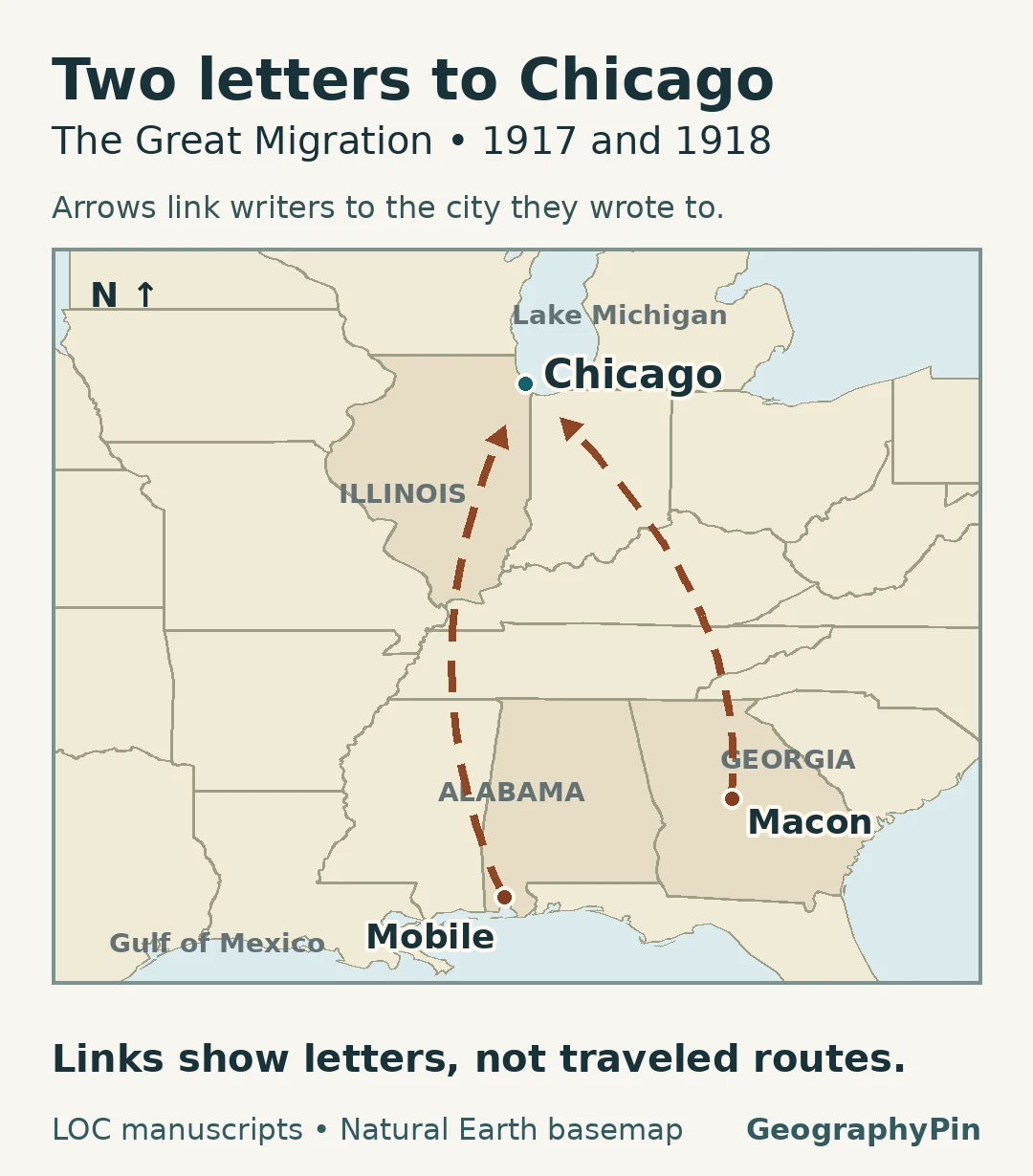
In 1917, Cleveland Galliard wrote from Mobile, Alabama, to the Bethlehem Baptist Association in Chicago. He said he had a family to support and had been out of work for about five months. He had run an elevator and cleaned for a railroad, but left after the employer asked him to work days and nights at the same pay. The letter connects the job problem to a concrete decision: he was looking for work somewhere else.
That is a push factor for this writer. The wider historical record tells us that Jim Crow laws, racist violence and unequal opportunity were important causes of the Great Migration. But read at the right scale: those conditions describe the broader movement. The letter is especially direct about employment, pay and supporting a family. It is not a list of every motive he had.
2. How a Chicago Defender Advertisement Reached Mobile
Other places also had work. Chicago was specific because Galliard had seen the association’s advertisement in the Chicago Defender. In the letter, he named jobs he thought he could do and asked for help getting there and finding a position. He offered to repay expenses after he found work. The destination opportunity was not just an abstract promise of higher wages; he knew who to contact.
That separates three ideas. Needing a job pushed him to consider leaving. An advertised route to employment made Chicago a potential pull. The expense of the trip and the need to arrange work could still stand in the way. A church contact might reduce those barriers, but the letter does not say that it paid his fare or found him a job.
3. What Changed When the Letter Came From Macon?
In 1918, Mrs. J. H. Adams wrote from Macon, in the U.S. state of Georgia, to the same association. She had also seen its offer of help with positions in the Defender. She described conditions at home as difficult and asked for assistance leaving. Unlike Galliard, the published letter excerpt does not describe the same sequence of railroad work, changed hours and months of unemployment. We can compare what both writers asked for without assuming they were in the same situation.
The same job lead could draw two households toward Chicago but be practical for only one. Someone who could pay the fare and manage a spell without wages could act on it. For someone who needed help getting there, the opportunity could stay out of reach. Galliard’s offer to repay the cost once he was working shows why that difference mattered to him. The letters do not tell us whether either household actually got help.
| Question | Mobile, 1917 | Macon, 1918 |
|---|---|---|
| Why consider leaving? | Unemployment and a family to support. | She described conditions as hard at home. |
| Why contact Chicago? | The Defender advertised the association’s help. | The same newspaper led her to the same job contact. |
| What barrier remained? | He asked for assistance getting there and proposed repayment. | She asked for help getting to Chicago; the excerpt does not establish how travel would be funded. |
A factor can also point in two directions, depending on who is making the decision. Lack of work can push a person away from one place while a job offer in another pulls them toward it. Family nearby might make leaving harder for one household; family at the destination might make the same journey possible for another. Say which person and which place you mean before classifying the factor.
4. What the Letters Cannot Tell Us
Both letters were requests for help. They show hopes and constraints before a decision, not proof that either writer moved. A later record showing where someone lived could establish an outcome, but a count or map of arrivals would still not tell us all the reasons for moving.
Chicago was not free from the discrimination people wanted to escape. The National Archives documents segregated neighborhoods, overcrowding and difficulties finding adequate housing and work. Those barriers at the destination can coexist with a pull factor. Comparing one place with another does not make the better option good in every respect.
To apply the method to a different route, match the evidence to the question. A letter or interview can tell you what a person considered. A transport record can tell you how they traveled. A census can show where people were recorded living. None of those sources automatically answers all three questions.
Frequently Asked Questions
What would help confirm that either writer reached Chicago?
A later Chicago directory, census entry or dated letter from the city could place a writer there if details such as a full name, family member or occupation match. A name alone is not enough, and a Chicago record would not tell us how the person traveled or whether the association helped.
Can you apply push and pull factors to a move within one country?
Yes. They explain reasons for leaving one place and choosing another at whatever scale the move occurs. The Great Migration was internal migration within the United States, not immigration into it.
What Did We Learn Today?
Separate pressure to leave from a reason to choose a particular destination, then look for the things that helped or blocked the move. Two letters to Chicago show why a job contact can matter, and why a stated intention does not prove the trip took place.
Sources & Data Notes
The two letters date to 1917 and 1918. The map uses modern reference boundaries and traces where the letters were sent, not where the writers traveled.
- Library of Congress, Chicago: Destination for the Great Migration, items 119 and 120 (Carter G. Woodson Papers): the Adams and Galliard letters and background on the association. For the Galliard transcription, see UMBC, Understanding the Great Migration, sheet 2.
- U.S. National Archives, The First Great Migration (1910–1940), for labor demand, Jim Crow, rail travel and discrimination in northern cities.
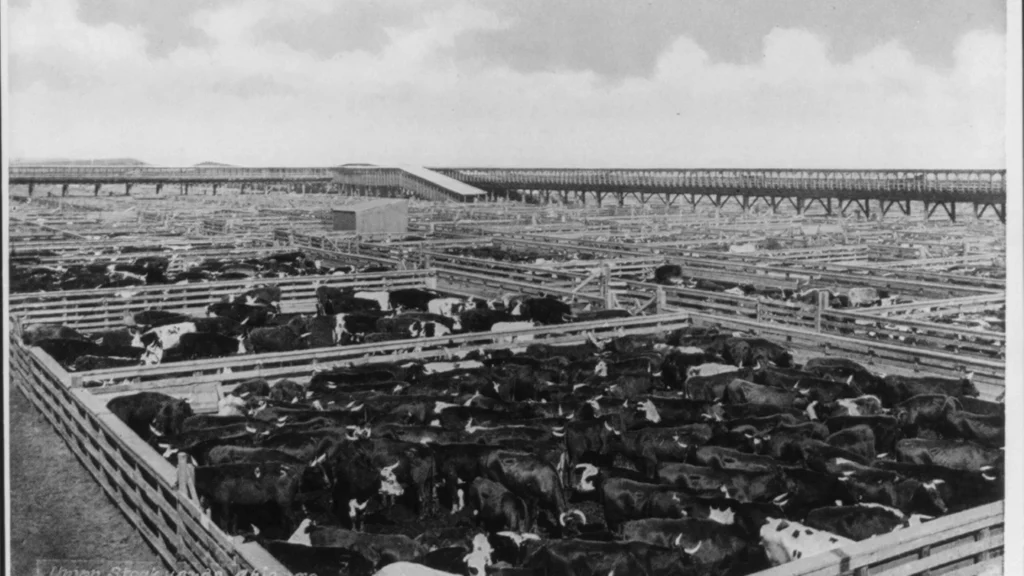
- Map: GeographyPin using Natural Earth, modern administrative reference boundaries; no individual journeys inferred. Featured image: Union Stock Yards, Chicago, Ill., 1907, V.O. Hammon Publishing Co., Library of Congress, public domain; cropped. It depicts the stockyards before the letters, not either writer.