This question sounds simple, but it carries a century of political baggage. Most people asking it are really trying to sort out three different things at once: who owns the canal now, why the United States is tied so closely to its history, and whether newer arguments about China change the answer.
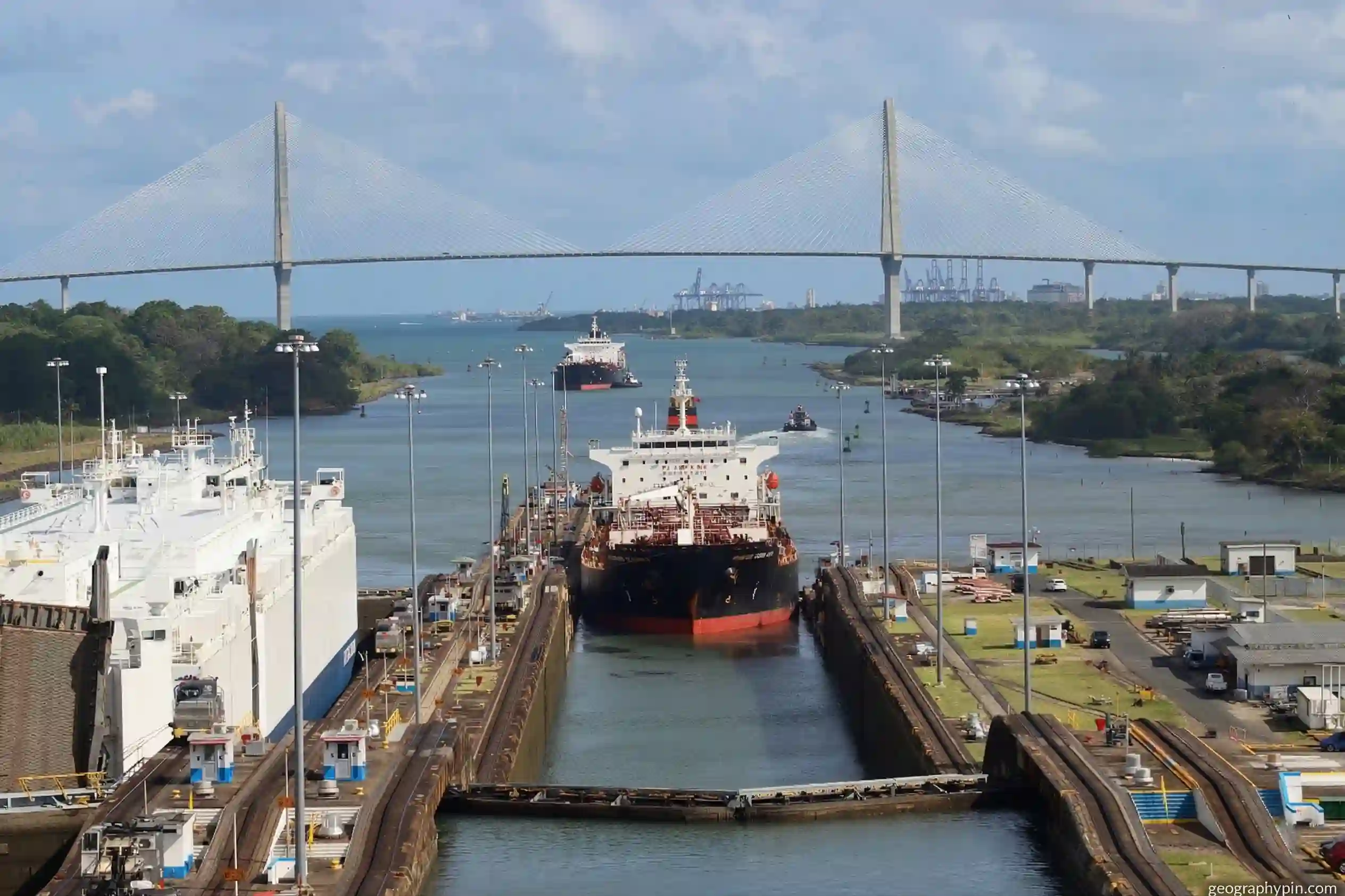
Who owns the Panama Canal? Panama does. Since December 31, 1999, Panama has had full jurisdiction and operational control, and the canal has been run by the Panama Canal Authority, a Panamanian public entity. The United States built it and long controlled it, which is why the question still comes up.
How to use this article: If you want the fast version, start with the short answer; for the key transfer date, jump to the 1999 handover; for the legal breakdown, use the control table; and for the biggest modern confusion, see the China-and-ports question.
The short answer
Panama owns the canal
Legally and politically, the clean answer is that the Panama Canal belongs to Panama. Panama’s constitution describes the canal as an “inalienable patrimony” of the Panamanian nation, and that same constitutional framework gives the Panama Canal Authority exclusive responsibility for administering and operating it. That is the present-day ownership answer, not a matter of opinion or rhetoric.
The confusion usually comes from the fact that people mix up ownership, historic control, and security-related treaty language. The United States was the dominant outside power in the canal’s construction and long-term administration, but that is not the same thing as saying Washington owns it today.
Why the United States is still part of the story
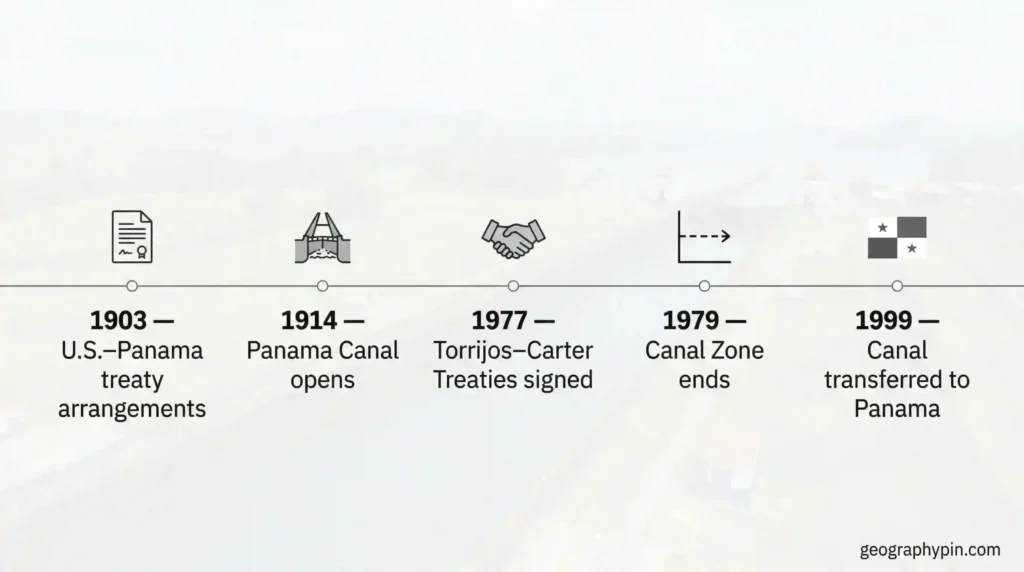
The U.S. connection is real, and it is the main reason this question still gets searched so often. The United States acquired the rights to build and operate the canal in the early 20th century, backed Panama’s break from Colombia in 1903, and completed the canal in 1914. For decades after that, the canal and the Canal Zone sat at the center of U.S. power in the region.
The date that matters most
The key legal handover came through the Torrijos-Carter Treaties. Those treaties were signed in 1977, the Canal Zone ceased to exist in 1979, and the canal itself was turned over to Panama on December 31, 1999. That last date is the one that settles the ownership question for the modern era.
That history matters because many English-language explainers still use loose phrases like “the U.S. owned the canal.” In everyday conversation, people often understand what that means. But the more careful wording is that the U.S. built, controlled, and operated the canal for much of the 20th century, while Panama holds sovereignty and operational control today.
Who runs the canal today
Day to day, the canal is run by the Panama Canal Authority, usually referred to by its Spanish initials, ACP. Panama’s constitutional text gives the ACP exclusive responsibility for the canal’s administration, operation, conservation, maintenance, and modernization, and the authority is structured as an autonomous public entity rather than a private company.
That governance point is important because it answers another hidden version of the ownership question: not just who owns it, but who actually makes the operational decisions. The ACP board has constitutional powers that include setting tolls, charges, and fees, subject to final approval by Panama’s Cabinet Council.
The control table
| Question | Best short answer | Why it matters |
|---|---|---|
| Who owns the canal? | Panama | The canal is treated in Panama’s constitution as national patrimony. |
| Who operates it? | The Panama Canal Authority | The ACP has exclusive responsibility for administration and operation. |
| Does the U.S. run it? | No | The U.S. has a historic and treaty-based role, but not present-day ownership or routine operation. |
| Do nearby ports equal canal ownership? | No | Port concessions at the canal’s entrances are separate from ownership and lock operation of the canal itself. |
Panama Canal Authority material also makes another point easy to miss in outside commentary: the canal is not framed as an asset waiting to be sold off. The constitutional and legal structure is designed to keep it under Panamanian public control and continuous operation.
What rights does the U.S. still have?
The United States is not the owner, but it is still part of the canal’s legal story because of the neutrality framework created by the 1977 treaties. U.S. State Department historical material says the Neutrality Treaty was designed to keep the canal secure and open, and Reuters noted in 2025 that U.S. officials and lawmakers were arguing over how far that treaty language could reach in a security dispute.
Neutrality is not ownership
The practical reading for ordinary readers is this: treaty-based security language is not the same thing as a standing ownership claim. Even when American officials speak aggressively about protecting access or countering foreign influence, the baseline fact remains that Panama holds sovereignty over the canal today. Reuters reported in 2025 that U.S. officials publicly recognized Panamanian sovereignty during high-level talks, even amid harder rhetoric from Washington.
So if the question is “Does the U.S. still have any legal role at all?” the answer is yes, in a treaty and security sense. If the question is “Does that mean the U.S. owns the canal?” the answer is no.
China, ports, and the ownership confusion
Does China control the canal?
No verified evidence shows that China controls the Panama Canal. CFR stated plainly in 2025 that there was no evidence the Chinese government controlled the canal, even while concerns persisted about Chinese-linked business presence in Panama. Reuters reporting has drawn the same distinction between the canal itself and commercial infrastructure around it.
This distinction matters because people often hear about ports at Balboa or Cristóbal, or about Chinese contractors and infrastructure projects, and then assume that control of those assets equals control of the canal. It does not. Port concessions, terminal operations, and nearby logistics assets are politically important, but they are not the same thing as owning or operating the canal’s waterway, locks, and transit regime.
That is why the question has reappeared so often in 2025 and 2026. Political speeches revived it, but the legal answer did not change: Panama owns the canal, and the ACP runs it.
FAQ
Did the United States ever own the Panama Canal?
In casual language, many people say yes. The more careful version is that the United States built, controlled, and operated the canal and the Canal Zone for much of the 20th century under treaty arrangements. For the modern ownership question, the decisive fact is that Panama has had full jurisdiction and operational control since December 31, 1999.
Can Panama sell the canal?
Panama’s constitutional language cuts strongly against that idea. The canal is described as an inalienable patrimony of the Panamanian nation, and the ACP exists to manage it as a public national asset.
Does China own or control the canal?
No. The canal’s ownership and operation remain Panamanian. Debate about Chinese influence has focused on ports, construction, and broader strategic presence in Panama, but that is separate from canal ownership and direct canal operation.
Could Washington simply take the canal back?
There is no simple treaty mechanism that would return the canal to U.S. control. While the United States historically administered the canal zone, this was based on treaty rights rather than full sovereign ownership, and those arrangements were terminated by the Torrijos–Carter Treaties.
What Did We Learn Today?
- Panama owns the Panama Canal today.
- The canal has been under full Panamanian jurisdiction and operational control since December 31, 1999.
- The Panama Canal Authority is the public body that runs it.
- The United States remains part of the canal’s treaty history, but neutrality language is not the same as ownership.
- Chinese-linked ports or projects near the canal do not change who owns the canal itself.
Sources & Data Notes
This article was prepared with AI assistance and editorial review, using standard reference material from the Panama Canal Authority, Panama’s constitutional text, U.S. Department of State historical records, and current Reuters reporting where recent political claims affected interpretation. Dates and legal milestones are presented in their standard official form, and some wording is simplified for readability without changing the underlying ownership answer.