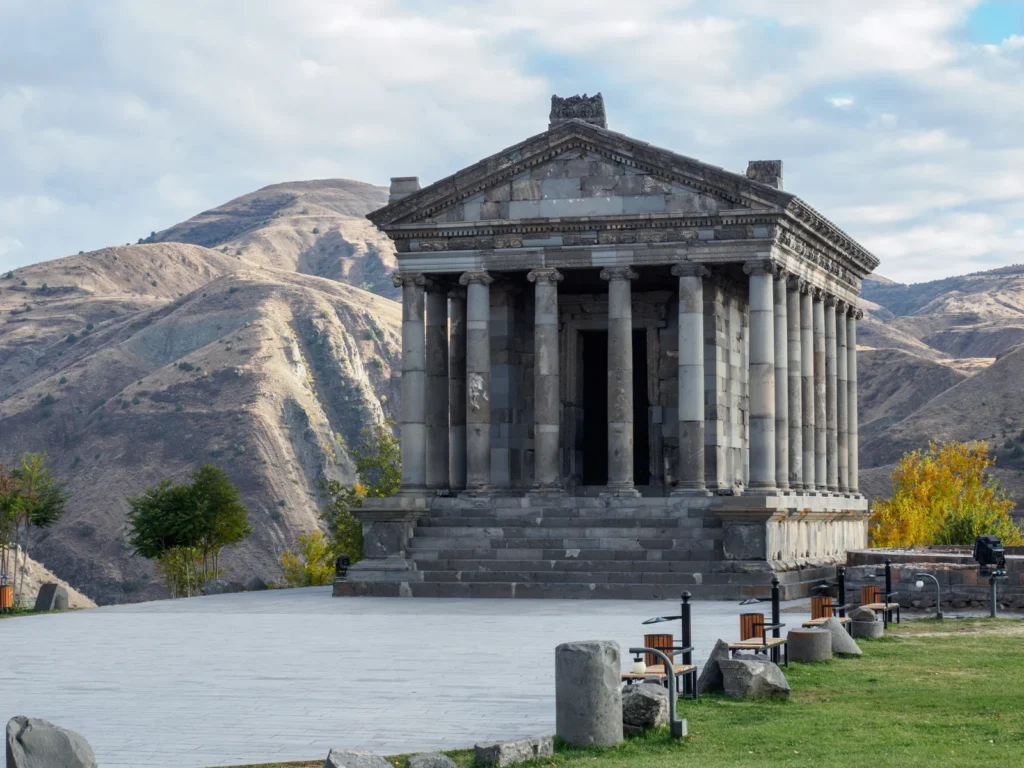
Garni village combines a classical temple, a canyon walk and a countryside lunch within reach of Yerevan. The useful planning distinction is between the temple on the plateau, the Symphony of Stones below it and Geghard Monastery farther along the excursion route: each needs its own stop.
For a wider route, see our Armenia travel guide.
Garni is a village in Kotayk Province, east of Yerevan in central Armenia. Its main visitor draw is the Temple of Garni, above the Azat River canyon. Choose a temple-and-village visit for a shorter outing, or reserve a full day for the temple, gorge and Geghard with transport arranged between stops.
Visitor sources and heritage status checked: November 10, 2026. Confirm operating details before departure.
How to use this article: Choose a visit plan, compare transport options, or check reserve excursions.
Where Garni Is and How to Plan Your Day
Garni sits outside Yerevan, Armenia’s capital, in a landscape of village streets and steep canyon edges. The archaeological complex occupies the southern end of the settlement. A map may make the temple and gorge look adjacent, but the change in elevation means they are separate visits rather than neighboring rooms in one attraction.
Use your actual starting address and intended entrance when checking the drive. A single city-to-village distance cannot describe a hotel pickup, a temple drop-off and a descent into the canyon equally well. Leave room for traffic, lunch and the return journey instead of treating Garni as a fixed-duration transfer.
Choose a day that matches your interests
The following are suggested itineraries, not operator schedules. The shorter option suits architecture-focused visitors; the full-day option assumes you want both culture and time outdoors.
| Plan | Include | Main planning issue |
|---|---|---|
| Shorter outing | Temple complex and village lunch | Confirm museum access and return transport |
| Full sightseeing day | Temple, Symphony of Stones and Geghard | Arrange separate transfers and walking time |
| Walking-focused day | Gorge and one selected longer trail | Check route conditions and any reserve permissions |
A useful compromise is to make the temple and lunch the core of the day, with the gorge dependent on weather and energy. Avoid adding a reserve hike simply because a map shows ruins nearby.
Temple, Fortress and Village Life
The Temple of Garni is a classical, colonnaded monument built of gray stone. Armenia’s official tourism site presents it as a first-century temple associated with the sun god Mihr. Its raised platform and Ionic columns distinguish it from the medieval churches most visitors encounter elsewhere in Armenia.
The standing building reflects substantial reconstruction. The temple collapsed in the 1679 earthquake and was reassembled during work completed between 1969 and 1975. Reading it as an untouched ancient structure would miss an important part of its history.
Look beyond the temple itself. The museum-reserve also includes the setting of a royal complex and a bathhouse with a mosaic. Check which parts are accessible on your visit, particularly if seeing the mosaic is a priority. A guided explanation can help connect the scattered remains without requiring an exhaustive chronology of the village.
Allow some time outside the archaeological enclosure. Armenia Travel highlights Garni’s village food experiences, including lavash, cheese, greens, gata and garden lunches. Arrange a hosted meal or bread-making session with a specific business; a private home or garden is not automatically open to visitors. Ask what is included, the price and whether you need to book ahead.
Mashtots Hayrapet Church offers another village stop if you want to see a smaller religious monument rather than immediately move on to the next major attraction. Respect any service taking place and ask before photographing worshippers.
Getting to Garni From Yerevan
Public transport, a driver or an excursion
Armenia’s official tourism site identifies public transport from Yerevan’s Gai Avenue as an option for Garni. It does not provide a dependable live timetable on that page. Confirm the departure point, destination, fare and last return locally before setting out. Do not rely on an old route number or assume a village service also serves the gorge entrance or Geghard.
A driver or organized excursion is the simpler choice when combining several stops. Agree on the exact route, waiting time, pickup location and total charge before departure. For a tour, check whether the Symphony of Stones is an actual stop, whether admission is included and whether a meal or lavash demonstration is optional.
Independent drivers should navigate to the attraction they intend to visit, rather than just “Garni.” Set the temple and the gorge as distinct destinations and follow signs and access restrictions on arrival. An apparent shortcut on a map is not evidence that a road is suitable for your vehicle.
For a public-transport day, make the return connection the fixed point around which you plan. Keep a locally confirmed alternative if the day runs late, and avoid relying on an on-demand pickup in the canyon without checking availability first.
The Gorge, Geghard and Khosrov Reserve
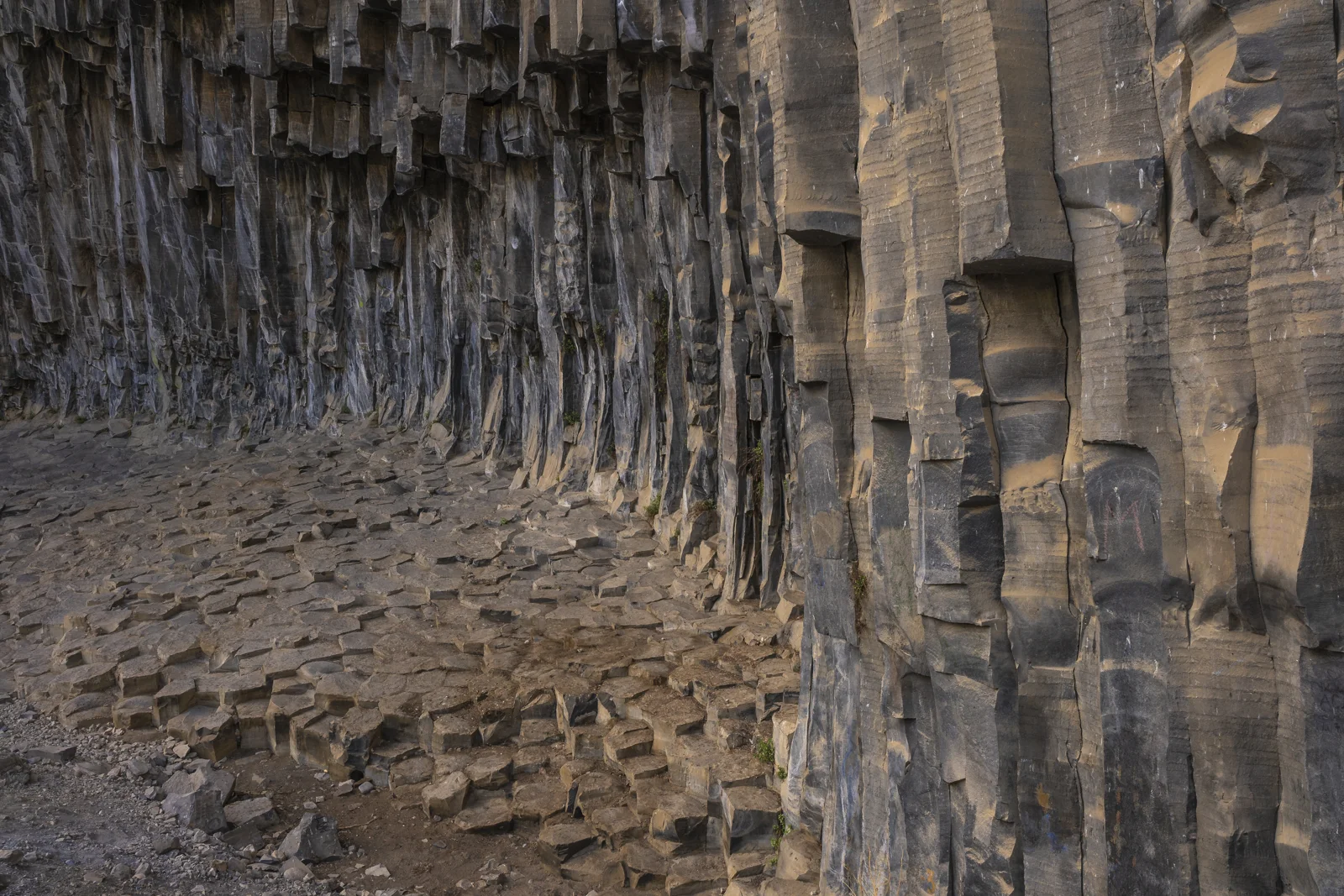

The Symphony of Stones is the column-lined part of the canyon beneath Garni. Walking down adds a climb back up unless you arrange another pickup. For the formation process, route choices and canyon precautions, see the separate Garni Gorge guide.
Geghard Monastery makes a complementary cultural stop, with medieval churches and chambers cut into rock. It is a functioning religious site: dress respectfully, keep conversation quiet during worship and follow signs on photography.
Keep the heritage labels straight. Geghard and the Upper Azat Valley are inscribed on UNESCO’s World Heritage List. Garni’s archaeological complex and Basalt Organ appear together on Armenia’s Tentative List, submitted on March 10, 2025. Tentative listing is not World Heritage inscription.
Treat Khosrov as a separate excursion
Havuts Tar and routes into Khosrov Forest State Reserve need their own planning. Contact the reserve administration before committing to a hike and ask which route is open, what permission or guide arrangements apply and how to return. The Ministry of Environment’s reserve contact page is a practical starting point. Do not infer permission to enter a protected area from an online trail track.
Season, Accessibility and Final Checks
Choose the walking part of the day around the forecast. In hot conditions, carry water and sun protection and shorten exposed walking. After rain or in freezing weather, stone steps and sloping paths deserve extra caution. A photograph taken in a different season says little about today’s footing.
The temple’s stairs and the canyon’s descent create different mobility demands. Ask the museum or tour operator about the exact route from drop-off to viewpoint, steps, toilets and assistance before booking if anyone in your group has limited mobility. A vehicle transfer does not establish step-free access.
- Confirm the museum-reserve’s hours, admission and any temporary closures using its visitor listing.
- Budget separately for transport, temple entry, any gorge charge, food and optional guiding.
- Carry some Armenian dram for small purchases, without assuming every service accepts cards.
- Use marked routes, avoid cliff edges and leave archaeological stones and plants undisturbed.
What Did We Learn Today?
Garni works best when its different experiences are planned separately: the reconstructed classical temple, the inhabited village, the canyon below and onward excursions. A focused temple-and-lunch visit is simpler than a day combining the gorge, Geghard and a reserve hike; the broader the route, the more important confirmed transport and access become.
Sources & Data Notes
Sources checked November 10, 2026. The visit plans are editorial recommendations, not tested itineraries or transport timetables. No fixed fare, road distance or opening schedule is promised. Armenia’s Tentative List submission supplies the reconstruction dates and Garni heritage status; it represents the submitting state’s account.
- Armenia Travel: Top Villages, Garni section
- Armenia Travel: Pre-Christian Heritage
- Garni Historical-Cultural Museum-Reserve visitor listing
- Armenia’s Tentative List submission: Garni and the Basalt Organ
- UNESCO: Monastery of Geghard and the Upper Azat Valley
- Ministry of Environment: Khosrov Forest State Reserve
Featured photograph: Ancient temple in Garni.jpg by Katsiaryna Naliuka, photographed 2018-11-02. CC BY-SA 4.0. Resized and converted to WebP; no crop.
