A Tokyo hotel can look close to a station on a map and still put you on the wrong side for your train. Before you compare rooms, decide which matters more: getting in from the airport, walking home after dinner, or boarding an early train with luggage.
Choose Shinjuku for late evenings and west-side sightseeing, Ueno for Narita’s Skyliner and museums, Asakusa for temple streets and direct Tobu trains to Nikkō, or Tokyo Station for an early bullet train to Kyoto. If your evenings are flexible, let the hardest airport transfer or earliest departure decide.
How to use this article: Compare all four bases, see a late Narita arrival, check Haneda to Asakusa, or pick where to leave your bags.
Shinjuku, Ueno, Asakusa and Tokyo Station
Which Train Is Easiest From Each Neighborhood?
Compare your arrival and next train first. On a phone, swipe the table to see what you give up with each base.
| Base | Airport transfer | Evenings | Next train | What you give up |
|---|---|---|---|---|
| Shinjuku | Narita Express if your train continues to Shinjuku. | Kabukicho dining and nightlife on the east side. | Odakyu Romancecar for Hakone-Yumoto. | A large station to cross; no Tokaido Shinkansen. |
| Ueno | Direct Skyliner from Narita to Keisei-Ueno. | Ameyoko market streets and casual food. | Ginza Line to Asakusa; JR trains from Ueno. | JR, Keisei and Metro entrances are not interchangeable. |
| Asakusa | Some Haneda and Narita trains run through to Toei Asakusa. | Temple streets, local restaurants and river walks. | Tobu limited express to Tobu-Nikkō. | Not on the JR Yamanote loop; longer rides to west-side plans. |
| Tokyo Station | Narita Express; from Haneda, Keikyu and a JR change at Shinagawa. | Marunouchi plazas and sit-down dinners. | Tokaido Shinkansen for Kyoto or Shin-Osaka. | A “Tokyo Station” address may put you across from your gates. |
On a wider map of Tokyo, Shinjuku is west of the other three choices. Ueno and Asakusa sit in the northeast of central Tokyo, and Tokyo Station is farther south. No single base makes both sides of the city equally handy.
Which Base Fits Your Itinerary?
Shinjuku or Ueno: after dinner or after landing?
Choose Shinjuku if several evenings end around Kabukicho, or if you plan to board the Odakyu limited express for Hakone-Yumoto and onward to Lake Ashi. Look east of JR Shinjuku Station for Kabukicho, west for the Nishi-Shinjuku office district, or south for the expressway bus terminal. Check your actual entrance against the hotel address. JR Shinjuku and Shinjuku-sanchome on the subway are different starting points.
Choose Ueno if you’re coming in on the Skyliner and would rather spend the next morning in Ueno Park or the museums. Use Keisei-Ueno as the arrival pin. For Ameyoko from JR Ueno, the Shinobazu Exit is the relevant one. A room that looks close to “Ueno Station” is more useful once you know which operator and which entrance you need.
Asakusa or Tokyo Station: two very different mornings
Choose Asakusa if you want Sensoji and the Sumida River on your doorstep, or a reserved Tobu train north the next morning. The airport train uses Toei Asakusa (A-18). If you approach on the Tokyo Metro Ginza Line instead, Exit 1 is for Kaminarimon and Sensoji; Exit 3 is for Tobu. Those exit numbers are Metro numbers, not directions from the Toei airport platform.
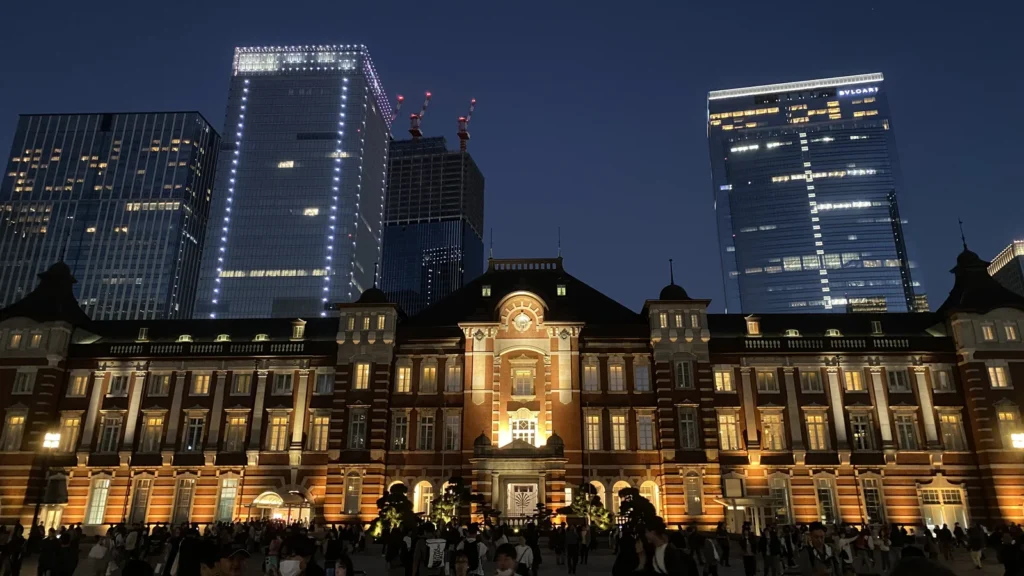
Choose Tokyo Station if you have a booked westbound bullet train early the next morning. Yaesu is on the east side, near the Tokaido Shinkansen gates. Marunouchi is on the west side, by the historic station frontage and the Imperial Palace side of the neighborhood. Stay in Marunouchi if that’s where you plan to spend your evenings. Just count the extra station crossing on departure morning.
Two Arrival and Departure Examples
These are scheduled weekday examples, checked November 25, 2026. The airport times start at the train platform, not when your plane lands. Look up your own terminal and date before booking around a late train.
Narita at night: Ueno unless Kyoto sets the alarm
If you clear arrivals and reach Narita’s Terminal 2/3 railway station in time, the 10:23 p.m. weekday Skyliner runs straight to Keisei-Ueno. The standard adult one-way ticket is ¥2,580 with reserved seating; the base fare differs slightly when paid by transit IC card. If your first day starts at Ueno Park, a room near Keisei-Ueno saves another train that night.
Change one detail and the choice flips: if you have Nozomi 1 to Kyoto the next morning, the timetable shows Tokyo 6:00 a.m., Shinagawa 6:07 a.m. and Kyoto 8:09 a.m. For a ticket from Tokyo, book on the Yaesu side if the evening route there is workable. Don’t assume the last Narita Express fits your flight; if the late connection is poor, move the morning train later or plan an arrival transfer you can actually make.
If the month is still open, see how May and November compare for Tokyo and Kyoto before locking in both hotels.
Haneda in the evening: Asakusa for an early Nikkō day
The 9:47 p.m. weekday Keikyu train from Haneda Terminal 3 is signed for Narita Airport, but stops at Toei Asakusa at 10:22 p.m. No change is required on that service. Check that the train you choose actually calls at Asakusa: other airport departures terminate before it or head the other way.
The next morning, walk to the Tobu station instead. SPACIA X No. 1 is scheduled from Tobu Asakusa at 7:50 a.m. to Tobu-Nikkō at 9:39 a.m. Confirm the operating day and reserve the limited express seat. Use the Nikkō rail and shrine transfer guide for what happens after you get off the train. If you sleep in Shinjuku instead, a ticket for this particular departure means crossing town before you even start for Nikkō.
A Last-Day Luggage Decision
Leave bags where you’ll pass again
If you’ll pass your hotel on the way out, ask whether it can keep your bags after checkout. Otherwise, put them near the station you’ll depart from, not where you happen to start the day. If you sleep in Shinjuku but plan to fly out of Narita after a day in Ueno, leaving bags near Keisei-Ueno avoids a trip back across town to collect them.
For station storage, check the specific operator and entrance, whether the locker or counter is on the public side of the gates, and when you can retrieve the bag. GO TOKYO’s luggage guide explains lockers and delivery. Large lockers can fill, so identify a fallback. For forwarding, ask the provider to confirm delivery timing rather than counting on your bag to reach the airport the day you hand it over.
Frequently Asked Questions
Which base works for an early onward train?
Check the station on the ticket, not just the city name. Tokyo Station is convenient for Kyoto if you’re boarding there; Shinagawa is another stop on the Tokaido Shinkansen, but don’t assume a Tokyo booking can be used from a different station without checking its terms. For a Tobu departure to Nikkō, use Tobu Asakusa instead.
How does the choice change between Haneda and Narita arrivals?
If a delayed arrival is your worry, test the latest workable route before booking a nonrefundable room. From Narita, compare the Skyliner to Keisei-Ueno and the Narita Express to Tokyo or Shinjuku. From Haneda, check Keikyu through-trains if you’re staying in Asakusa, or a Shinagawa change if you’re staying near Tokyo Station. Compare the full route, not the last airport departure alone: a train can leave the airport after your onward connection has finished.
What Did We Learn Today?
Work backward from the part of your trip you can’t easily move. Pin the exact station and entrance, then trace the walk from the hotel with your bags. If that route is straightforward, choose the neighborhood where you actually want to spend your evenings.
Sources & Data Notes
Operator schedules and the Skyliner fare were checked November 25, 2026. Sample times are in Japan local time. They don’t include walking between entrances, time to buy tickets, airport formalities or delays. Evening descriptions characterize the blocks around each station, not individual hotels.
Open the timetables, station maps and photo credit
- Narita Airport rail access, Haneda Airport train and monorail access and Toei airport routes.
- Keisei Terminal 2/3 timetable, Skyliner fares and reservations and JR East’s Narita Express.
- Keikyu’s Terminal 3 weekday schedule, JR Central’s westbound Shinkansen timetable, Tobu’s SPACIA X schedule and fares and Odakyu’s Romancecar guide.
- JR East station plans, Toei Asakusa station map and Tokyo Metro Ginza Line stops.
- Official GO TOKYO neighborhood guides: Shinjuku, Ueno and Ameyoko’s JR exit, Asakusa, Tokyo Station and Marunouchi.
- Cover: Tokyo Station’s Marunouchi façade at night, Procrastinator acc, 2024, CC0 1.0. Cropped to a wide frame.