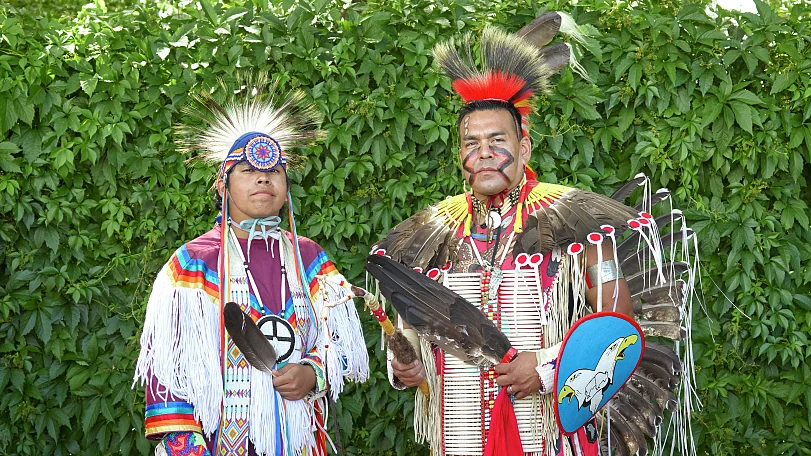
The first time you hear the emcee call Grand Entry, you might not know whether to stand, take a photo or stay seated and watch. The useful thing to learn before a powwow is not a list of rules for every gathering. It’s how to tell which moments are open to you and who to ask when you’re unsure.
A powwow is an Indigenous community gathering centered on singing, drumming and dancing. It can bring together families, friends and people from different Nations, and may include ceremonies, honors and dance competitions. If the gathering welcomes visitors, follow the host’s rules and wait for the emcee’s invitation before joining a dance.
How to use this article: Follow the sequence from the stands, find out when visitors can dance, or check whom to ask about photos.
1. Why People Come Together at a Powwow
Seeing dancers in an arena tells you only part of what’s happening. Weber State University’s powwow guide describes an occasion for family and friends to gather, celebrate and honor culture. It also notes that a dancer’s movement or a song can carry spiritual meaning. An event may include both competitive dances and social dances, but neither a contest nor a performance for visitors fully describes why people are there.
Intertribal means that people from different Nations come together. It does not erase the identities of the host or the people taking part. Weber State in Ogden, Utah, and the First Nations University of Canada gathering in Regina, Saskatchewan, illustrate how the tradition crosses the U.S.–Canada boundary without having one universal program. Before you go, check that your event welcomes spectators and look for the organizer’s own guidance.
2. From Grand Entry to the First Intertribal
Five moments to recognize from your seat
Grand Entry is the opening procession into the dance arena. At the First Nations University of Canada’s 2026 Spring Celebration Powwow, the published program described an Elder’s invocation, Eagle Staffs and flags entering before the main groups of dancers, then flag and veteran songs, acknowledgments and the first intertribal. The sequence below shows how to read the cues without assuming another host will use that same order.
1. When you arrive
Find spectator seating and keep the entrance aisle clear.
Who sets the rule: The host or committee sets seating rules. At Weber State, leave the marked places for Elders and dancers.
2. When Grand Entry is called
Stand if you’re able when asked. Follow the emcee’s direction on headwear. Leave the entry route clear.
Who sets the rule: At the Regina event, the arena directors help line up the staff and flag carriers; the emcee guides spectators.
3. When a flag, veteran or honor song is announced
Wait for the emcee to say who should stand, enter or remain outside. Don’t assume the previous instruction still applies.
Who sets the rule: The host decides who takes part. A song honoring a group is not necessarily an invitation to everyone.
4. When an intertribal is announced
Listen for visitors to be invited before entering. Ask which way to enter and how to move if the instruction is unclear.
Who sets the rule: Weber State directs questions about dancing without regalia to the Arena Director. The Regina host explicitly welcomes visitors to its intertribals.
5. Between songs or during contests
Stay at the edge unless invited. Ask about a photo when the dancer is not preparing to enter or competing.
Who sets the rule: The host decides when cameras are allowed. The person you want to photograph decides whether to be in your picture.
You don’t need to memorize every dance style to follow the procession. Listen for the names of the people and groups being recognized, then stay out of the way as they enter. The Eagle Staffs are not interchangeable decorations: the Regina host explains that they can represent a Nation, organization or family.
3. Who to Listen to When You’re Not Sure
The emcee and the Arena Director do different jobs
The emcee, or master of ceremonies, tells the room which part of the gathering is starting, explains its purpose when appropriate and makes invitations. The Arena Director deals with what happens on the floor, including organizing dancers and coordinating their entry. If you heard an invitation but don’t know where to line up, the Arena Director or a staff member at the arena is a better person to ask than a dancer about to enter.
You may hear the word drum used for the instrument or for the group of singers around it. At Weber State, the host drum is entrusted with songs for important moments. That isn’t permission to sit with the singers or handle the drum. Weber State specifies that approaching or sitting at a drum requires the lead singer’s permission.
4. When to Join a Dance or Take a Photo
Join a social dance only when the host invites you
Visitors without regalia can join some intertribal dances. At Weber State, the published etiquette limits dancing without regalia to intertribal and social songs and directs questions to the Arena Director. The Regina event welcomes visitors at its intertribals. That does not extend to every contest, procession or honor dance. If you aren’t sure what the emcee meant, watching is fine.
Regalia is the clothing and adornment a dancer wears, not a costume. Go as a guest in ordinary attire appropriate to the venue and follow any clothing rule the host gives for the arena. Don’t touch regalia, feathers or items a dancer is carrying without permission.
Photo permission is a two-part check
First ask what the host allows during that moment. Then ask the dancer before taking a photo of them or posing with them. The Regina guide explicitly asks visitors to seek the dancer’s permission. The Council of Three Rivers American Indian Center also explains why checking with the event host comes first. If cameras aren’t allowed during a song or procession, someone else holding up a phone doesn’t change the rule.
Ask specifically if you want to record video or share a portrait online. A camera-free announcement is a cue to put the phone down, not to switch from a photo to video. If you can’t ask without interrupting, wait until later or leave the camera away.
Frequently Asked Questions
Does Grand Entry happen only once?
Not necessarily. A host may schedule Grand Entry for more than one session. The Regina guide describes preparations before each Grand Entry. If seeing the procession matters to you, check the session time, not just the event’s opening hours.
What should I do if a feather falls in the arena?
Don’t pick it up or step into the arena. Let event staff handle it and follow the emcee’s instructions. Some hosts have a protocol for retrieving an eagle feather.
Do children have to enter the arena to take part?
No. They can listen and watch from spectator seating. If the host invites families to join an intertribal, check with a staff member about entering together and keep children with you near the dance area.
What Did We Learn Today?
The same arena can hold a procession, a song honoring specific people and a dance open to visitors. The cue for one moment doesn’t carry over to the next. Listen to the host, ask the right person and treat watching from the stands as a welcome way to be there.
Sources & Data Notes
Host guidance and archival photo credit
The guide compares two organizers’ published instructions. The detailed sequence is specific to the First Nations University of Canada’s 2026 event. Check the host of the gathering you plan to attend for the applicable rules.
- Weber State University: About Native American Pow Wows. Explains staff roles, regalia, spectator seating and participation in intertribal and social songs.
- First Nations University of Canada Spring Celebration Powwow: Know Before You Go. The 2026 Grand Entry sequence, visitor invitations and photography etiquette.
- Council of Three Rivers American Indian Center: Pow Wow Etiquette. Event and individual photo permission, and protocols for feathers.
- Cover: Carol M. Highsmith, portrait of Jarod and Raul Figueroa, Northern Wind Dancers at a Colorado Springs intertribal powwow, July 18, 2015. Carol M. Highsmith Archive, Library of Congress. No known restrictions on publication. Cropped for display. The portrait is not a photograph of Grand Entry or of either event in the comparison.