You’ve booked a Turkish bath, but what are you supposed to wear, and what happens when you walk in? The basic ritual is easy to follow once you know where you’ll change, where the attendant takes over, and which rules depend on the bathhouse.
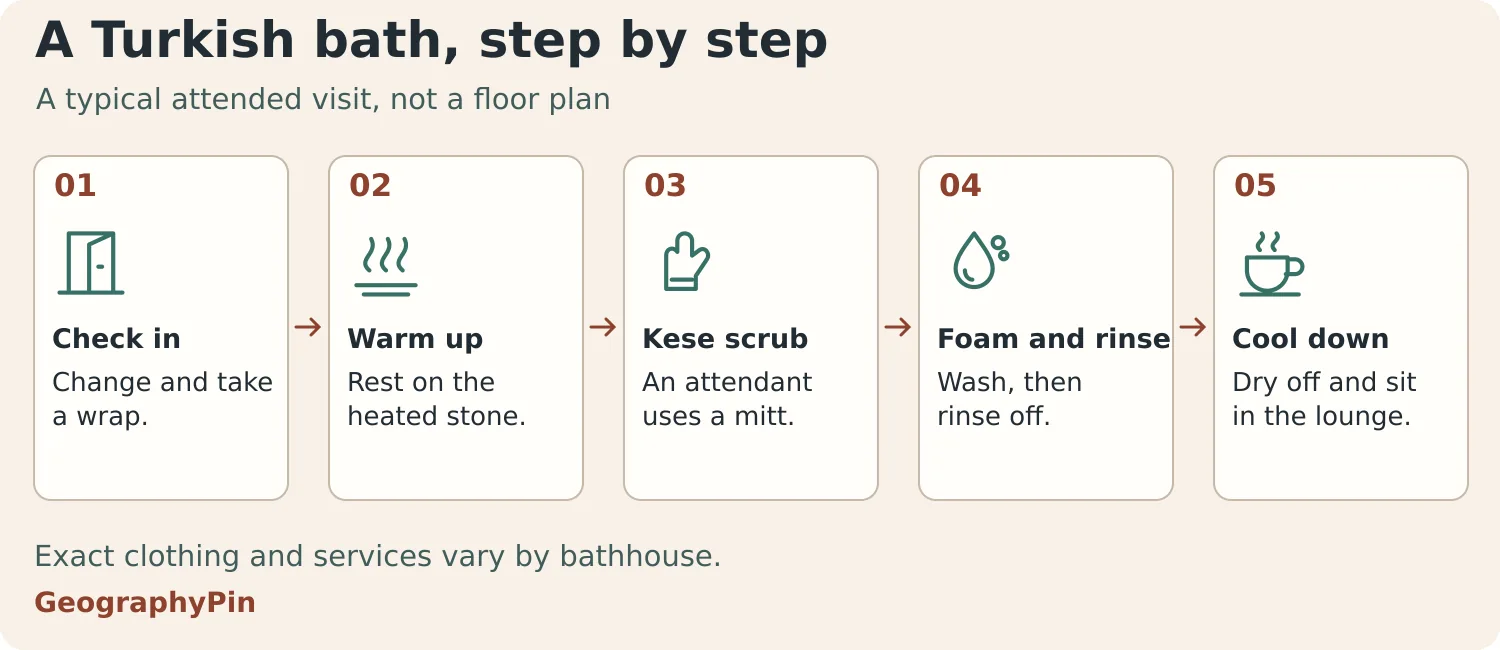
In a traditional Turkish hammam, you change into a wrap or permitted swimwear, warm up on heated marble, then get scrubbed with a mitt called a kese. A foamy wash and rinse usually follow before you dry off and cool down. Check the venue’s clothing rules and whether your group can bathe together before booking.
How to use this article: See what to wear, find out what the scrub feels like, or check how the two bathhouses handle tips.
1. From the changing room to the hot stone
Start at reception, not in the bath. Staff check your booking and show you where to change and store your clothes. Both Istanbul venues below ask guests to arrive 15 minutes ahead of the reserved time.

What to wear in the bath
A peştemal is a light bath wrap, not the towel you take home. Kılıç Ali Paşa provides one and requires coverage from the waist down. You can keep underwear or a swimsuit bottom on. Süleymaniye provides bathing clothes and allows your own swimwear. Pack dry underwear for afterward; if you bring swimwear, a small bag keeps it from soaking the rest of your things.
Where you warm up
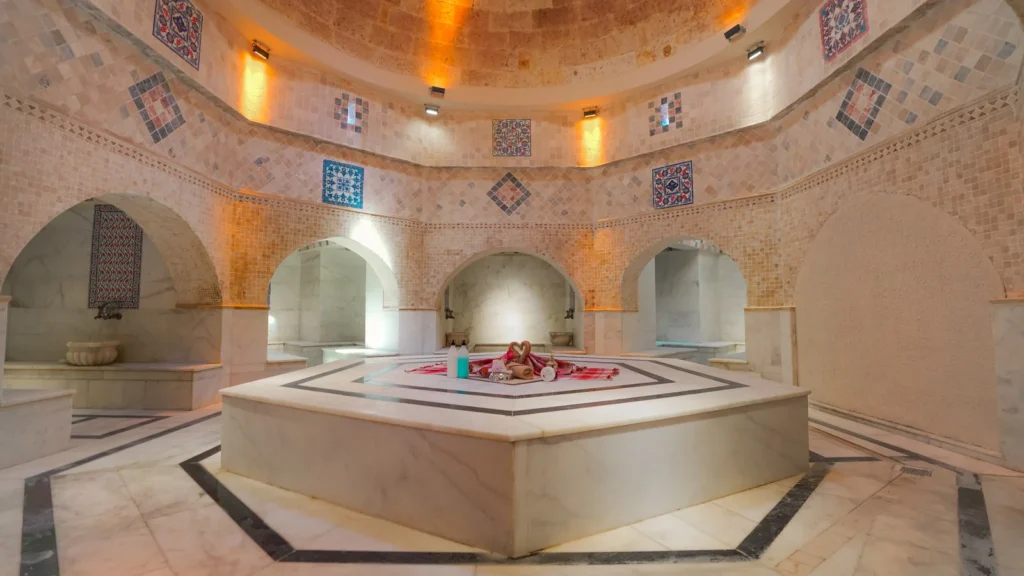
The central heated platform is the göbek taşı, the broad marble slab under the dome in the cover photo from Alaaddin Hamamı in Avanos. At the two Istanbul baths below, it’s where you warm up before the scrub. You may pass through a temperate room, but the first warming stop can be the main hot room itself, not a separate sauna.
2. What happens during the scrub, rinse, and cool-down
The kese scrub is separate from the soap wash
A kese is a textured mitt. An attendant rubs it against wet skin before the foam wash; you’ll feel friction rather than the glide of a massage. Tell the attendant if you want less pressure. At Kılıç Ali Paşa you sit at a kurna, a water basin, for the scrub. The heated stone is for warming up, not where that particular bathhouse scrubs guests.
Next comes the soap foam, followed by a rinse. Think of the foamy massage as part of getting washed, not a separate oil massage. Depending on the venue, an attendant may also wash your hair. Afterward, you can dry off and spend some time in the cooler area or lounge before dressing and leaving.
3. What changes from one hammam to another
These two working Istanbul bathhouses show why it’s worth checking the specific venue. Their policies were checked on November 28, 2026.
| What to check | Kılıç Ali Paşa | Süleymaniye |
|---|---|---|
| Who can bathe together? | Separate times for men and women, with same-sex attendants. No shared session for a mixed-gender couple. | Mixed-gender sessions for couples and families only. The bathing space is shared; treatments are provided by male attendants. |
| What do I wear? | Provided wrap and slippers; underwear or a swimsuit bottom is allowed. Keep your lower body covered. | Bathing clothes and slippers are provided; bringing your own swimsuit is also allowed. |
| What does the bath include? | Scrub and wash, bath supplies, water and tea. Oil massage is booked separately. | Scrub, soap wash and soap massage, bath supplies, and refreshments. |
Tipping: optional is not the same as included
Süleymaniye’s information page says gratuities are optional; its FAQ describes tips as customary and identifies the reception tip box. Kılıç Ali Paşa’s public guide and FAQ do not state a tipping amount. Ask reception how it handles tips and any service charge rather than assuming a percentage applies to every hammam.
4. What to check before you book
Start with who is going. If you’re visiting alone, the couples-and-families-only policy rules out Süleymaniye. If you’re a mixed-gender couple who both want the bath but don’t mind booking separately, separate sessions can work. If you want to go in together, look for a shared couples session and check whether it is private before paying.
Then read the package description. Look for “kese” and a foam wash if you want the attended ritual, and check whether any other treatment must be booked separately. Check the venue’s booking and payment instructions directly. For your plans outside the bath, see the Türkiye country profile for Istanbul’s geographic setting.
Frequently Asked Questions
Can I take my phone into the treatment room?
Plan to leave it with your belongings. Süleymaniye restricts photography to the lobby and does not allow phones in the treatment room. Ask your bathhouse where photos are allowed before taking any.
How much time should I leave for the visit?
Kılıç Ali Paşa describes a full visit of 90 minutes to two hours. That’s not two hours of scrubbing: it includes time to warm up, cool down and change. For another hammam, check how much time your reservation allows and avoid booking something immediately afterward.
What Did We Learn Today?
The hot stone, the scrub, and the cooler lounge each serve a different purpose. Once you know what happens in each space, the real booking choices are about clothing, who can join your session, and what the package includes.
Sources & Data Notes
Show sources and notes
- Kılıç Ali Paşa Hamamı’s bathing guide and official FAQ: room sequence, dress rules, hours arrangement and inclusions.
- Süleymaniye Hamam’s visitor information, FAQ and booking terms: shared sessions, clothing, bathing steps, and optional gratuities.
- The Istanbul comparison reflects operators’ published rules on November 28, 2026, not an in-person test. It doesn’t represent every Turkish bath or quote a universal tipping rate.
- Cover: Alaaddin Hamamı, Avanos, by DiliyaKhazigalievaGul via Wikimedia Commons, CC BY-SA 4.0; cropped and resized. The diagram is an original GeographyPin illustration based on the two operators’ descriptions.