Historical flag guide
Canada’s Pearson Pennant Proposal (1964)
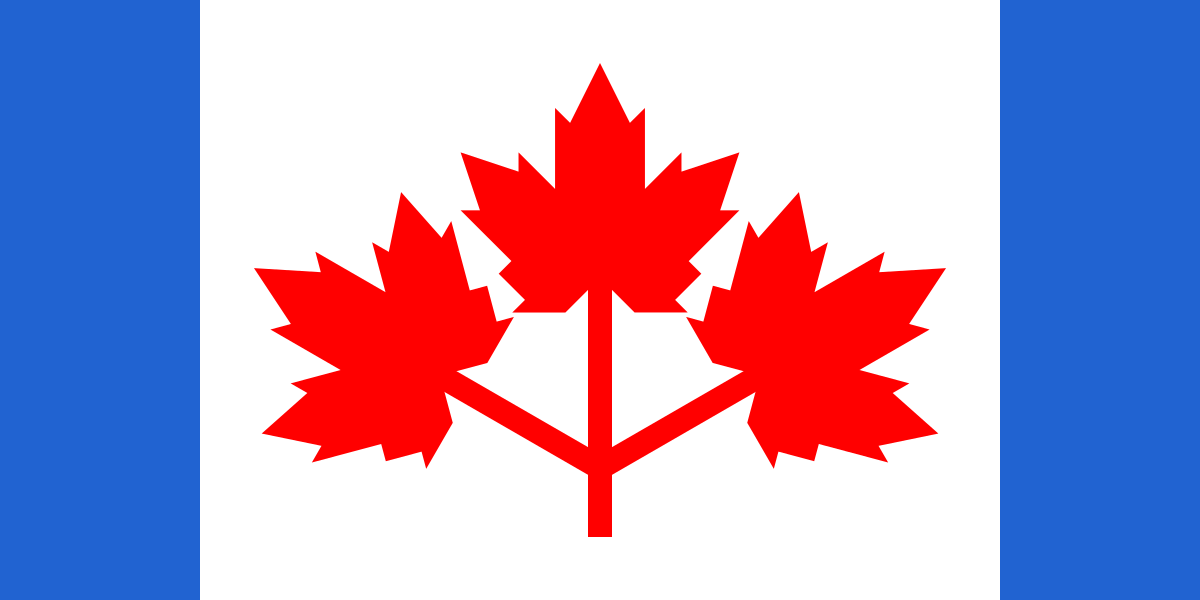
Three red maple leaves meet on one stem in a white field between two blue vertical borders.
When and how this design was used
Lester Pearson supported this design during the flag debate. The committee selected a single leaf with red side panels. The Pearson Pennant was never the national flag.
Lester Pearson wanted a distinctive Canadian flag in place before the centenary of Confederation in 1967. Heraldic artist Alan Beddoe developed Pearson’s idea into this proposal, with a sprig of three red maple leaves between blue borders. On the adopted flag, a single leaf replaced the sprig and red replaced blue at the sides.
Dates in Canada flag history
1964 — Great Flag Debate · A parliamentary process selected a distinctive national design.
1965 — Maple Leaf flag raised · The new flag first flew officially on 15 February.
Compare with the current flag of Canada
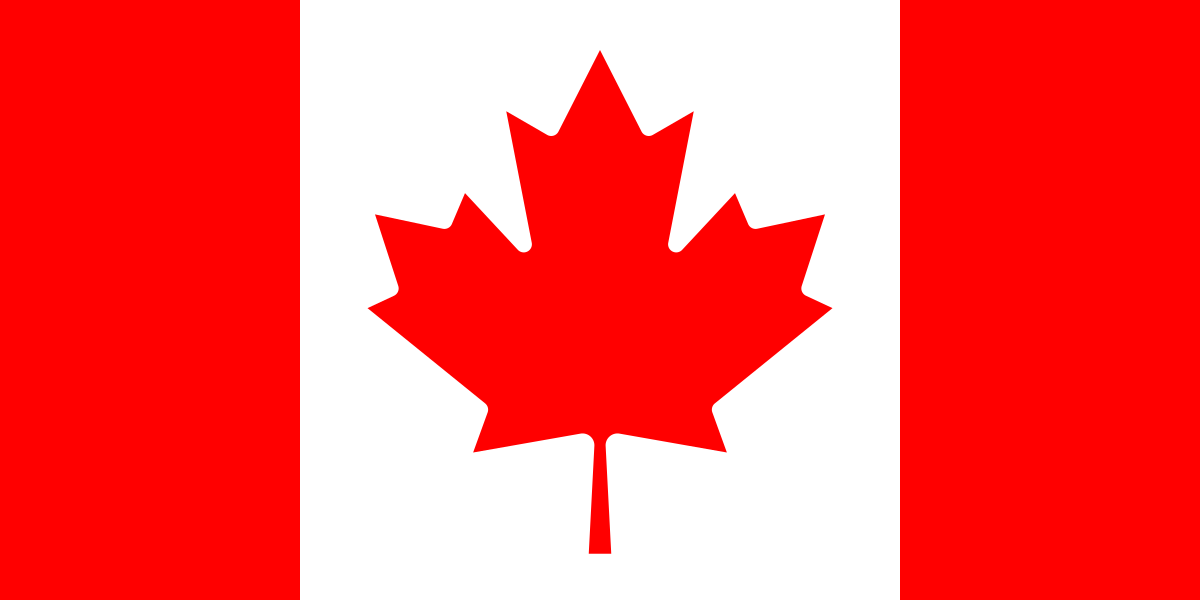
A single red maple leaf with eleven points sits in a white square between two red side bands. Each red band is half as wide as the square.
What Did We Learn Today?
Canada’s Pearson Pennant proposed three maple leaves and blue side panels. The flag adopted in 1965 has one leaf and two red side panels.
Sources & Data Notes
View references and illustration credit
- Canadian Heritage · The history of the National Flag of Canada
- Canadian Heritage — Description of the National Flag
- Canadian Heritage: National Flag of Canada learning activity
Historical illustration
Illustration source · No machine-readable author provided. Zscout370 assumed (based on copyright claims). · Public domain

Locally served SVG. Design as credited at source.