Flag Explorer
Canada Flag Meaning and the Eleven-Point Maple Leaf
Canada’s present flag emerged from the Great Flag Debate of 1964.
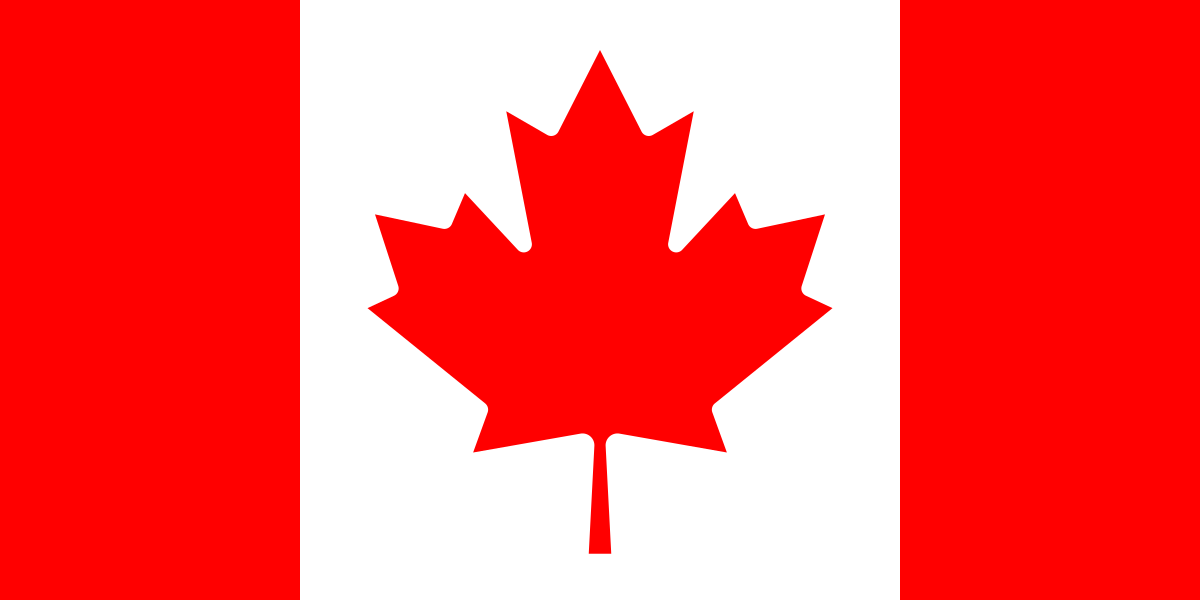
Why does Canada’s maple leaf have eleven points?
The eleven points give the stylized maple leaf a clear outline at a distance and when the cloth moves. Their number has no official province-by-province meaning. The red leaf and the wide white center replaced the Canadian Red Ensign when the new flag first flew in 1965.
The design and its details
A single red maple leaf with eleven points sits in a white square between two red side bands. Each red band is half as wide as the square.
| Collection | Country flags |
|---|---|
| Adoption or design date | 15 February 1965 |
| Geographic region | North America · Northern America |
| Illustrated proportions (height to width) | 1:2 |
Look closer · The maple leaf
What the flag means
The leaf’s eleven points do not stand for eleven provinces, territories or founding groups. The stylised shape was chosen for clarity. Red and white are Canada’s national colors, while the maple leaf carries a long Canadian symbolic history.
| Element | Meaning or historical connection |
|---|---|
| Maple leaf | Canadian national identity, drawing on an emblem familiar long before the 1965 flag. |
| Red and white | The national color combination used to set the leaf clearly against its field. |
| Eleven points | Chosen for a recognisable graphic shape. They do not represent eleven provinces, territories or founding groups. |
| White central square | A simple setting for the leaf, twice as wide as each red side panel. |
Compare the flags of Canada and Peru
What fills the white space between the red side panels? In both drawings, the flagpole side is on the left.

Reveal the flag names and clues
A · Canada — A single maple leaf fills a white square. Each red side panel is half as wide as the central white area.
B · Peru — On the plain civil version, the white middle band is empty and all three bands are equally wide. A state version adds arms.
How the flag developed
Earlier practice included the Union Flag and the Canadian Red Ensign, whose arms and badges changed over time. Selecting a new flag was therefore a decision about the country’s shared national identity as well as a matter of graphic design.
George Stanley’s proposal, inspired by the Royal Military College of Canada’s flag, helped shape the selected single-leaf design. Graphic work refined the maple leaf for clear reproduction, and the flag first flew officially on 15 February 1965. The leaf had already served as a Canadian symbol in military, cultural and sporting contexts; the new flag gave that familiar emblem a simple national setting.
What happened to Pearson’s three-leaf flag?
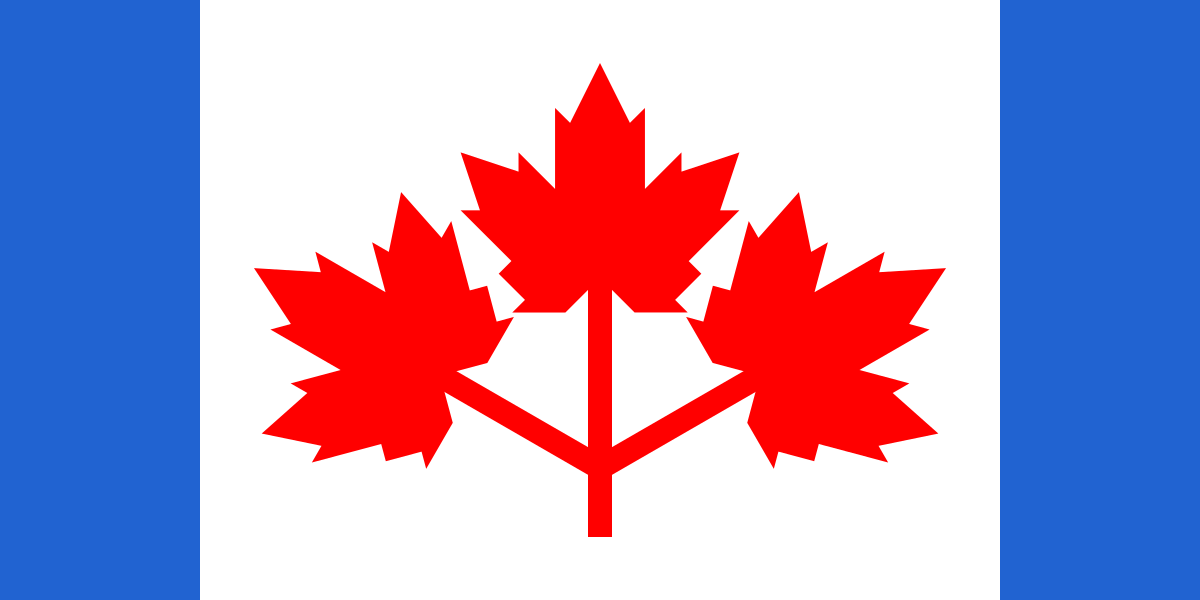
In 1964 Lester Pearson backed a sprig of three red maple leaves between two blue side panels. Alan Beddoe turned the idea into a drawing and it reached the parliamentary committee’s shortlist. That makes the Pearson Pennant a finalist in the debate. The Canadian Red Ensign was the flag in use before the Maple Leaf.
George Stanley’s competing concept placed a single leaf between red panels. Even this design changed on the way to the flagpole. A thirteen-point drawing lost definition at a distance, so the final drawing used eleven. A blue-bordered three-leaf image and a thirteen-point single leaf therefore belong to different stages of the decision.
The main changes over time
Before 1965 — Union Flag and Red Ensign
British and Canadian ensigns preceded the present national flag.
1964 — Great Flag Debate
A parliamentary process selected a distinctive national design.
1965 — Maple Leaf flag raised
The new flag first flew officially on 15 February.
Historical flags in pictures
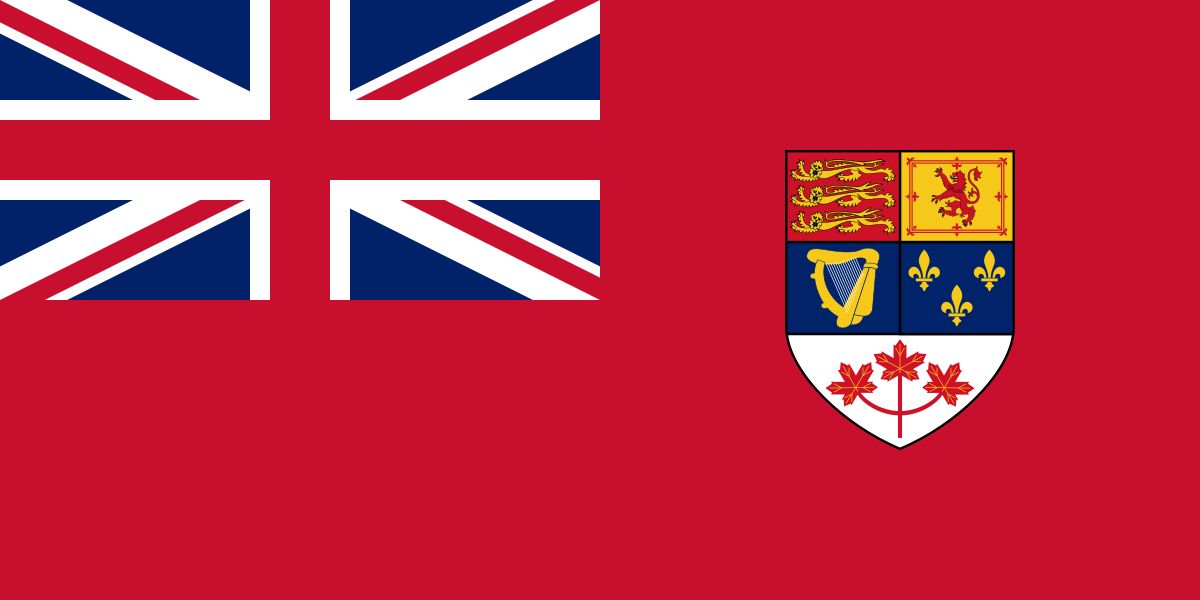
Earlier designs and other uses
Canadian naval, air-force, royal and provincial flags have separate purposes. A Red Ensign in an older photograph belongs to a different period of national flag use.
Download the flag
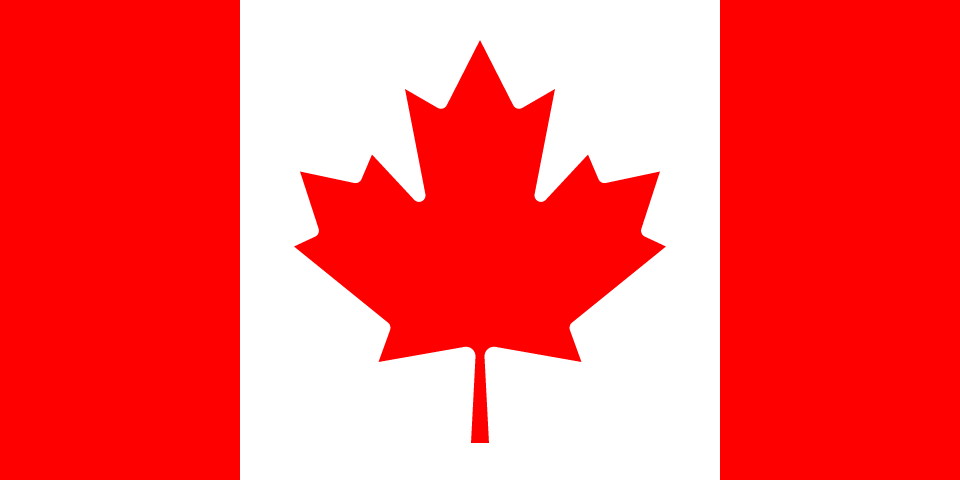
Artwork credit and reuse
Flagpedia vector collection · Public domain. The PNG is a raster export of the credited SVG.
What Did We Learn Today?
One red maple leaf sits in a white central square between red side bands. The white area is twice as wide as each red band. No Union Flag or coat of arms belongs on the current national design.
Sources & Data Notes
View references and illustration credits
The dates distinguish adoption of the flag from later revisions to its artwork. The comparison uses the two illustrations at the same height, with the hoist on the left.
- Canadian Heritage · The history of the National Flag of Canada
- Canadian Heritage — Description of the National Flag.
- Canadian Heritage: National Flag of Canada learning activity.
- Flagpedia: Canada — flag artwork and comparison reference.
- Flag history reference and bibliography — chronology and links to underlying sources.
Illustration credits
- Flag of Canada (1957–1965).svg — Denelson83; Public domain.
- Three red maple leaves between blue borders — No machine-readable author provided. Zscout370 assumed (based on copyright claims).. Public domain.

