Flag Explorer
Vanuatu’s Flag and the Boar’s Tusk in the Y
Vanuatu’s national design developed from colors used by the Vanua’aku Pati during the movement for independence from the jointly British- and French-administered New Hebrides.
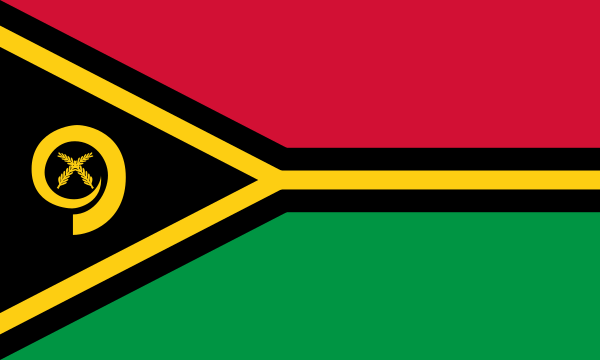
What do the tusk and crossed leaves on Vanuatu’s flag mean?
The curved boar’s tusk signifies prosperity and customary wealth. Inside it two crossed namele leaves are associated with peace. Both are yellow against the black hoist triangle. A yellow Y outlined in black separates the triangle from the red and green fields.
The design and its details
Two equal horizontal bands of red (top) and green with a black isosceles triangle (based on the left side); a black-edged yellow stripe in the shape of a horizontal “Y” faces the left side and encloses the triangle; a boar’s tusk in the triangle circles two crossed namele fern fronds, all in yellow.
| Collection | Country flags |
|---|---|
| Adoption or design date | 18 February 1980; independence on 30 July 1980 |
| Geographic region | Oceania · Melanesia |
| Illustrated proportions (height to width) | 3:5 |
Look closer · The tusk and namele leaves
What the flag means
The tusk is associated with prosperity and customary value, while the namele fronds represent peace. The yellow Y is bordered in black and reaches both hoist corners.
| Element | Meaning or historical connection |
|---|---|
| Red | Unity and the blood of people and boars in the national explanation. |
| Green | The islands’ vegetation and resources. |
| Black | The ni-Vanuatu people. |
| Yellow Y | The archipelago’s broad shape and the light of the Christian Gospel. |
| Boar’s tusk and crossed namele leaves | Prosperity and peace, drawing on important local cultural symbols. |
Compare the flags of Vanuatu and Zimbabwe
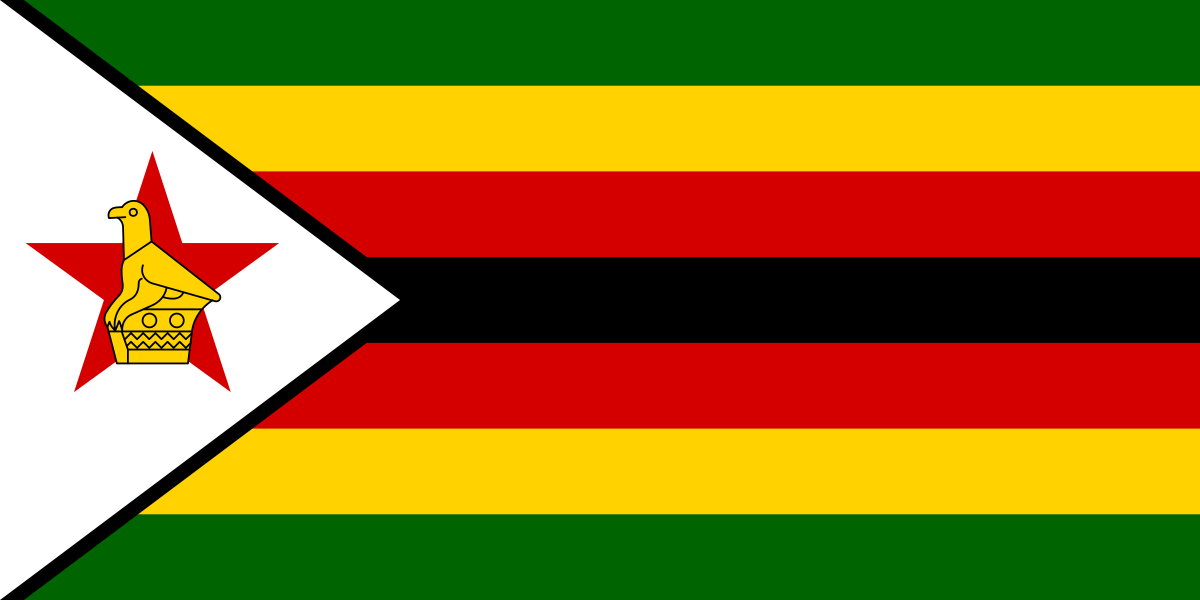
What lies inside the triangle and where do its edges lead? In both drawings, the flagpole side is on the left.
Reveal the flag names and clues
A · Vanuatu — A boar’s tusk and crossed leaves occupy a black triangle. Its edges join a yellow-edged Y shape continuing through the flag.
B · Zimbabwe — A bird and red star sit inside a white triangle. Horizontal stripes continue from it to the fly.
How the flag developed
A parliamentary process selected the final national arrangement before independence in 1980.
The sideways Y reflects the broad layout of the island chain. A boar’s tusk and crossed namele fern fronds connect the national device with local cultural traditions. The national flag therefore brought together movement colors and a specifically Ni-Vanuatu emblem rather than retaining either colonial power’s flag.
The main changes over time
1970s — Independence movement
Party colors supplied the basis for the national palette.
1980 — National adoption and independence
The Y-shaped flag became the independent state’s symbol.
Earlier designs and other uses
British, French and joint-administration flags belong to the New Hebrides period; they are not current Vanuatu flags.
Download the flag
Artwork credit and reuse
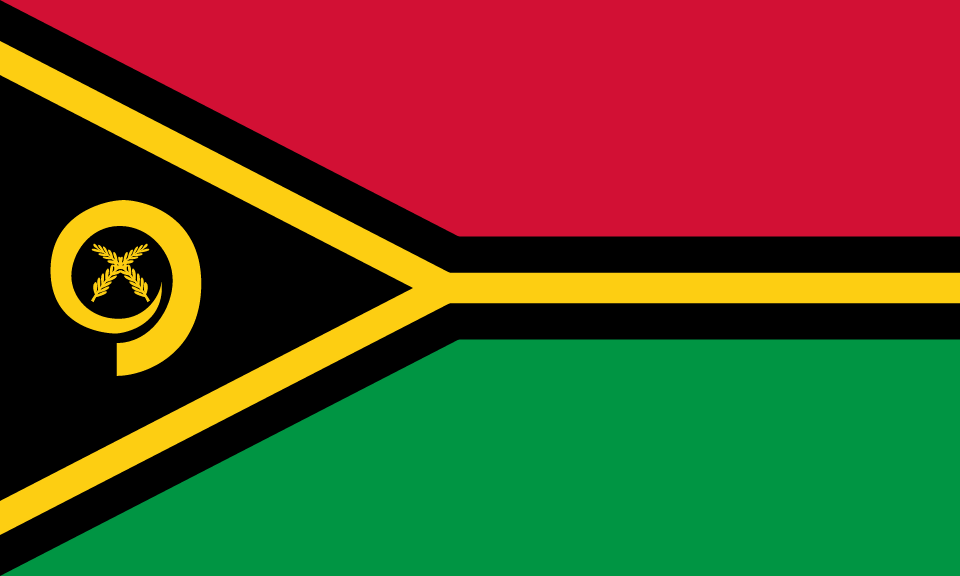
Flagpedia vector collection · Public domain. The PNG is a raster export of the credited SVG.
What Did We Learn Today?
Red over green is divided by a black-edged yellow sideways Y. The black hoist triangle contains a gold tusk and crossed fern fronds.
Sources & Data Notes
View references and illustration credits
The dates distinguish adoption of the flag from later revisions to its artwork. The comparison uses the two illustrations at the same height, with the hoist on the left.
- Flags of the World, Vanuatu, construction and detail of the tusk and fern leaves — The vexillological record dates adoption to 18 February 1980 and illustrates the tusk and crossed leaves separately from the full flag.
- Archived World Factbook country record — background flag description and symbolic interpretations; later changes are explained above.
- Flagpedia: Vanuatu — flag artwork and comparison reference.
- Flag history reference and bibliography — chronology and links to underlying sources.
The flag downloads include the artwork credit and reuse terms for the SVG and PNG.