National flag guide
Flag of Tuvalu: Meaning, Symbols and History
Tuvalu adopted its light blue flag with nine yellow stars at independence in 1978.
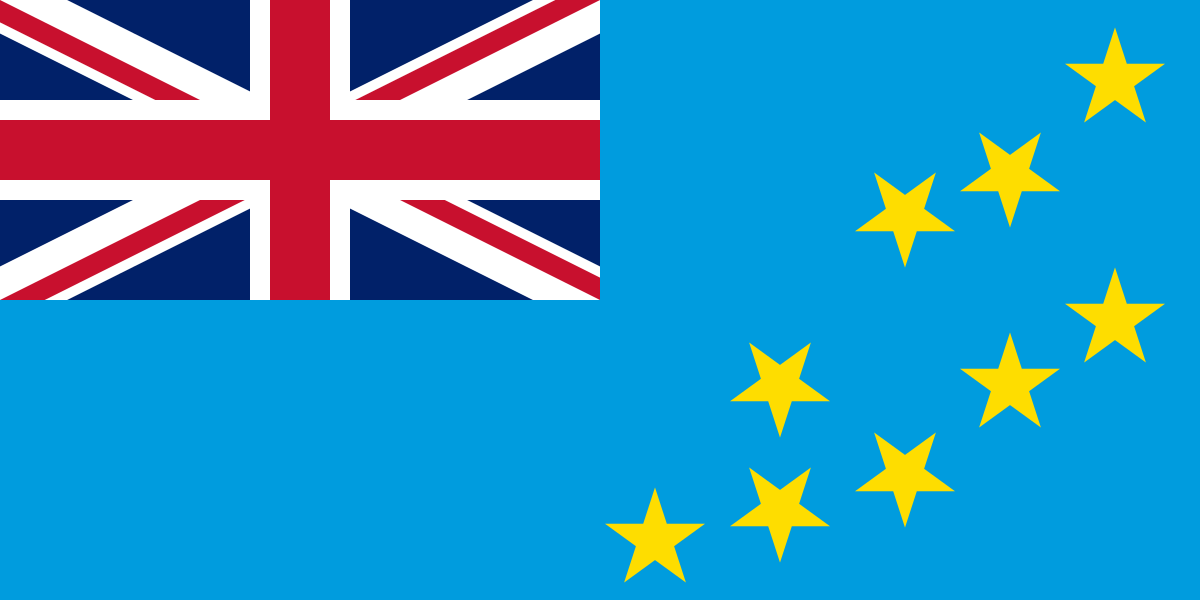
Light blue with the UK flag in the upper-left quadrant; the right half of the flag has nine five-pointed yellow stars. The stars represent Tuvalu’s nine islands. Their arrangement is map-like, and individual star orientations form part of the design. A Union Flag sits on light blue with nine yellow stars distributed across the fly.
The design and its details
Light blue with the UK flag in the upper-left quadrant; the right half of the flag has nine five-pointed yellow stars.
| Flag | Tuvalu |
|---|---|
| Collection | Country flags |
| Adoption or specification | 1 October 1978; restored on 11 April 1997 |
| Browsing region | Oceania · Polynesia |
| Illustrated proportions (height:width) | 1:2 |
What the flag means
The stars represent Tuvalu’s nine islands. Their arrangement is map-like, and individual star orientations form part of the design.
| Element | Meaning or historical connection |
|---|---|
| Light blue | The Pacific setting, in a design based on the ensign tradition. |
| Union Flag | The historical British connection. |
| Nine gold stars | The nine island components of Tuvalu, arranged geographically rather than as a simple decorative circle. |
| Star count and national name | The name’s traditional association with eight does not mean that the nine-star flag is a printing error; settlement and island counting have their own history. |
How the flag developed
Tuvalu adopted its light blue flag with nine yellow stars at independence in 1978. It had previously shared the Gilbert and Ellice Islands colonial flag before the separation of the two island groups.
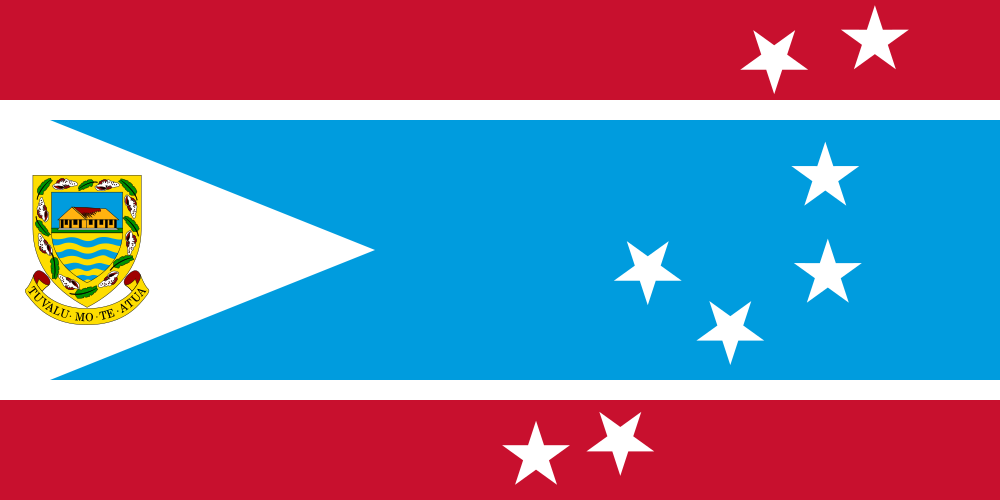
A different flag without the Union Flag was introduced in 1995 and formally used in 1996, with stripes and the national arms. The familiar Union-Flag design returned in 1997. The nine stars form a geographic arrangement of the islands rather than a neat decorative constellation, so moving them into an even circle changes the flag.
The main changes over time
1978 — Independence flag
The nine-star light blue flag was adopted.
1995–1997 — Temporary replacement
A striped arms flag replaced the familiar arrangement.
1997 — Earlier design restored
The Union-Flag-and-stars design returned.
Historical flags in pictures
How to recognise this flag
A Union Flag sits on light blue with nine yellow stars distributed across the fly. Fiji has a shield instead.
Compare the relevant designs in these guides:
Earlier designs and other uses
The striped 1990s design is a historical national flag, not an unadopted proposal.
Questions about this flag
When was the flag adopted?
1 October 1978; restored on 11 April 1997. An adoption date can refer to a design, its restoration or a later legal specification; the timeline above separates those stages.
What should I check before identifying an older example?
The striped 1990s design is a historical national flag, not an unadopted proposal.
What Did We Learn Today?
A Union Flag sits on light blue with nine yellow stars distributed across the fly. Fiji has a shield instead. Its adoption and later changes reflect the national history described in the timeline, while older or specialist flags need their own labels.
Sources & Data Notes
This guide distinguishes first use, national adoption, restoration and later construction standards. Traditional or commonly reported interpretations are identified where they differ from a formal specification. It is a dated reference, not a live record of every change in official flag use.
- Archived World Factbook country record — background flag description and symbolic interpretations; later changes are explained above.
- Flagpedia: Tuvalu — flag artwork and comparison reference.
- Flag history reference and bibliography — chronology and links to underlying sources.
The main illustration preserves the selected flag artwork’s proportions; these are a reproduction guide, not a substitute for a legal construction drawing. Color names group shades for browsing.
Illustration credits
- Flag of Tuvalu (1995–1997).svg — Thommy; Public domain.
