National flag guide
Flag of Trinidad and Tobago: Meaning, Symbols and History
Trinidad and Tobago selected Carlisle Chang’s red, white and black design for independence in 1962.
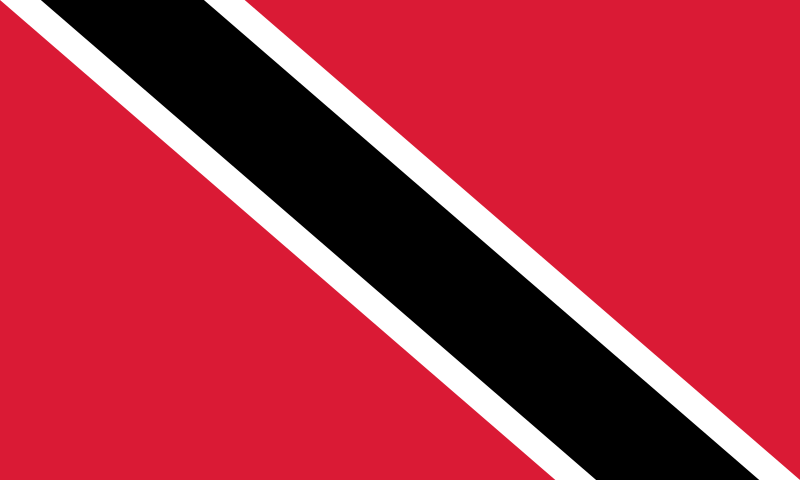
Red with a white-edged black diagonal band from the upper left to the lower right. Official explanations connect red, white and black with fire, water and earth as well as the people’s courage, equality and dedication. These are linked interpretations of one design, not separate flags.
The design and its details
Red with a white-edged black diagonal band from the upper left to the lower right.
| Flag | Trinidad and Tobago |
|---|---|
| Collection | Country flags |
| Adoption or specification | 31 August 1962 |
| Browsing region | North America · Caribbean |
| Illustrated proportions (height:width) | 3:5 |
What the flag means
Official explanations connect red, white and black with fire, water and earth as well as the people’s courage, equality and dedication. These are linked interpretations of one design, not separate flags.
| Element | Meaning or historical connection |
|---|---|
| Red | The sun, vitality and the people’s courage and warmth. |
| White | Water, equality and the purity of national aspirations. |
| Black | The land’s wealth and the dedication of the people. |
| Diagonal arrangement | Brings together the traditional earth, water and fire associations in one national design. |
How the flag developed
Trinidad and Tobago selected Carlisle Chang’s red, white and black design for independence in 1962. It replaced a British colonial ensign whose badge depicted a ship approaching the islands.
The diagonal arrangement created a recognisable national symbol without retaining the colonial canton. The country became a republic in 1976 and continued with the same national flag, while head-of-state symbols changed. The two-island name does not mean the flag must depict two islands or carry two stars; its symbolism is expressed through colors and geometry.
The main changes over time
Colonial period — Blue ensign
The colonial badge showed a ship and coastal landscape.
1962 — Independence flag
Chang’s diagonal design became the national flag.
1976 — Republic
The country retained the flag after becoming a republic.
How to recognise this flag
The black band, outlined in white, descends from the upper hoist to the lower fly across a red field. Saint Kitts and Nevis uses a differently oriented band with stars.
Earlier designs and other uses
The naval ensign has a different field and cross arrangement. It should not replace the ordinary national flag.
Questions about this flag
When was the flag adopted?
31 August 1962. An adoption date can refer to a design, its restoration or a later legal specification; the timeline above separates those stages.
What should I check before identifying an older example?
The naval ensign has a different field and cross arrangement. It should not replace the ordinary national flag.
What Did We Learn Today?
The black band, outlined in white, descends from the upper hoist to the lower fly across a red field. Saint Kitts and Nevis uses a differently oriented band with stars. Its adoption and later changes reflect the national history described in the timeline, while older or specialist flags need their own labels.
Sources & Data Notes
This guide distinguishes first use, national adoption, restoration and later construction standards. Traditional or commonly reported interpretations are identified where they differ from a formal specification. It is a dated reference, not a live record of every change in official flag use.
- Archived World Factbook country record — background flag description and symbolic interpretations; later changes are explained above.
- Flagpedia: Trinidad and Tobago — flag artwork and comparison reference.
- Flag history reference and bibliography — chronology and links to underlying sources.
The main illustration preserves the selected flag artwork’s proportions; these are a reproduction guide, not a substitute for a legal construction drawing. Color names group shades for browsing.
Current flag artwork is supplied with the original flag collection; the package’s artwork register contains provenance and license details.