Flag Explorer
Qatar Flag Meaning and Its Nine-Point Edge
Qatar’s flag developed from Gulf red-and-white maritime flags.
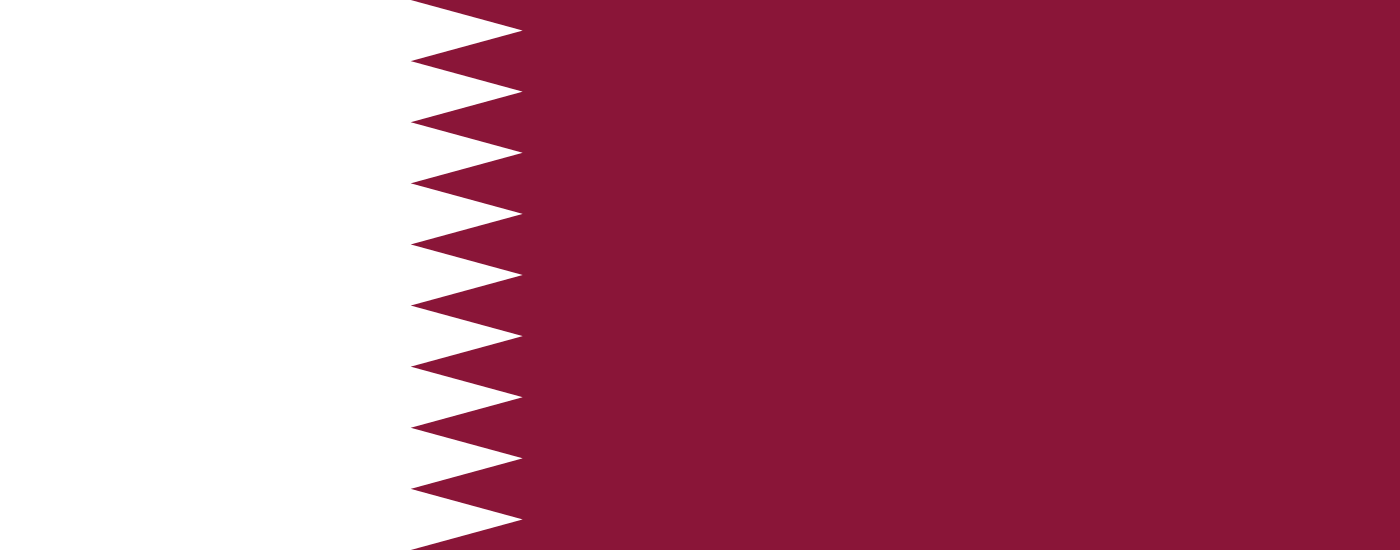
Why are there nine points on Qatar’s flag?
Nine white points project into the maroon field. The count is associated with Qatar’s historical place as the ninth member of the reconciled Gulf emirates in the traditional account. Bahrain has five points. Qatar’s especially long outline supplies a second clue.
The design and its details
Maroon with a broad, serrated white band on the left side.
| Collection | Country flags |
|---|---|
| Adoption or design date | 9 July 1971 for the modern design |
| Geographic region | Asia · Western Asia |
| Illustrated proportions (height to width) | 11:28 |
Look closer · Nine serrations
What the flag means
The nine white points are associated with Qatar’s treaty-era position among the Gulf’s reconciled emirates. The very long rectangle and maroon color are essential to recognising the modern flag.
| Element | Meaning or historical connection |
|---|---|
| Maroon | The distinctive national shade, with historical connections to local dyeing and later associations with sacrifice. |
| White | Peace. |
| Nine-point serrated division | Conventionally connected with Qatar’s position as the ninth Gulf emirate in the treaty-era grouping after its 1916 British agreement. |
| Long proportions | A defining feature of the national construction, alongside the maroon shade and nine points; Bahrain’s shorter red flag is a different design. |
Compare the flags of Qatar and Bahrain
Count the points where the two colors meet. What changes? In both drawings, the flagpole side is on the left.
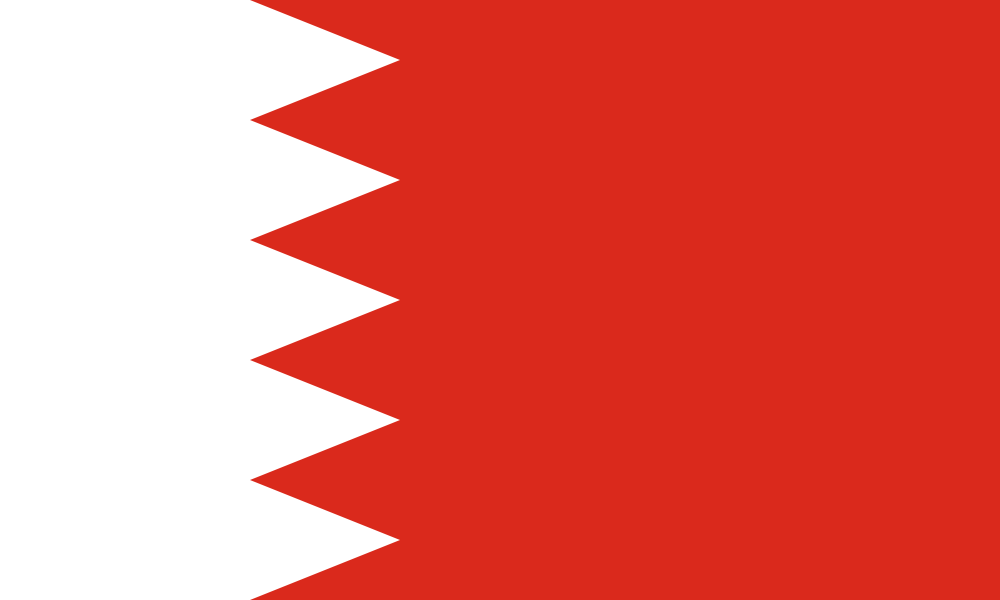
Reveal the flag names and clues
A · Qatar — Nine white points meet the maroon field. The unusually long outline gives a second clue when the full flag is visible.
B · Bahrain — Five white points meet the red field. They stay visible even in a black-and-white drawing.
How the flag developed
A serrated boundary and a distinctive maroon field increasingly separated its design from those of neighboring states.
The modern flag was established shortly before independence in 1971, with later law clarifying its specifications. Accounts of maroon’s development often refer to local dye traditions and changes under sunlight, but the present color should be understood through the current official specification rather than one anecdote alone.
The main changes over time
Nineteenth–early twentieth centuries — Gulf maritime tradition
Red-and-white precedents developed toward a separate Qatari design.
1940s–1971 — Maroon and serration develop
The distinctive modern color and edge became established.
1971 — Modern national flag
The flag was adopted shortly before independence.
Earlier designs and other uses
Preserving the original long proportions is important. Cropping Qatar into a standard short rectangle makes comparison with Bahrain misleading.
Download the flag
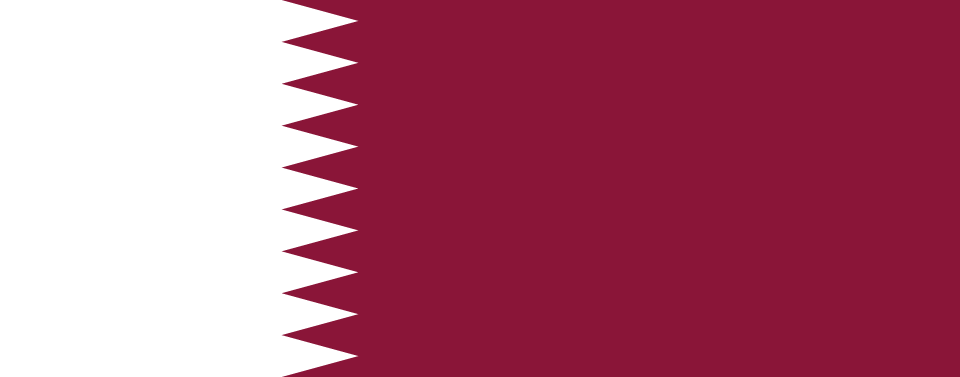
Artwork credit and reuse
Flagpedia vector collection · Public domain. The PNG is a raster export of the credited SVG.
What Did We Learn Today?
Qatar has nine white points and a maroon field in an 11:28 rectangle. Bahrain has five points, a red field and much shorter proportions.
Sources & Data Notes
View references and illustration credits
The dates distinguish adoption of the flag from later revisions to its artwork. The comparison uses the two illustrations at the same height, with the hoist on the left.
- Qatar Ministry of Foreign Affairs, National flag — The ministry specifies nine white triangles pointing into the maroon field and identifies the maroon shade as Pantone 1955 C.
- Archived World Factbook country record — background flag description and symbolic interpretations; later changes are explained above.
- Flagpedia: Qatar — flag artwork and comparison reference.
- Flag history reference and bibliography — chronology and links to underlying sources.
The flag downloads include the artwork credit and reuse terms for the SVG and PNG.