Flag Explorer
Peru’s Flag and the Difference Between Civil and State Use
Peru’s civil flag has three vertical red, white and red bands. The state flag adds the national arms to the white band.

Why do some Peruvian flags have a coat of arms?
Peru’s national flag has three equal red, white and red bands. On the state flag, the pabellón nacional, the white band carries the national arms with red-and-white standards around the shield. On the war flag used by the armed forces and National Police, palm and laurel branches flank the shield.
The design and its details
Three equal vertical bands of red, white and red.
| Collection | Country flags |
|---|---|
| Adoption or design date | Vertical design from 1825; civil form clarified in 1950 |
| Geographic region | South America |
| Illustrated proportions (height to width) | 2:3 |
| Version shown | Civil flag without the arms |
What the flag means
The arms bring together a vicuña, cinchona tree and cornucopia to represent different kinds of national wealth. Those devices explain the arms-bearing version; they do not appear on the plain civil flag shown here.
| Element | Meaning or historical connection |
|---|---|
| Red | Traditionally associated with courage and the independence struggle. |
| White | Peace and national aspirations. |
| Arms on the state version | The vicuña, cinchona tree and cornucopia express animal, plant and mineral riches. |
| Plain civil flag | The national flag defined in Article 4 of Law 32251 has a plain white centre. |
Compare the flags of Peru and Canada
What fills the white space between the red side panels? In both drawings, the flagpole side is on the left.
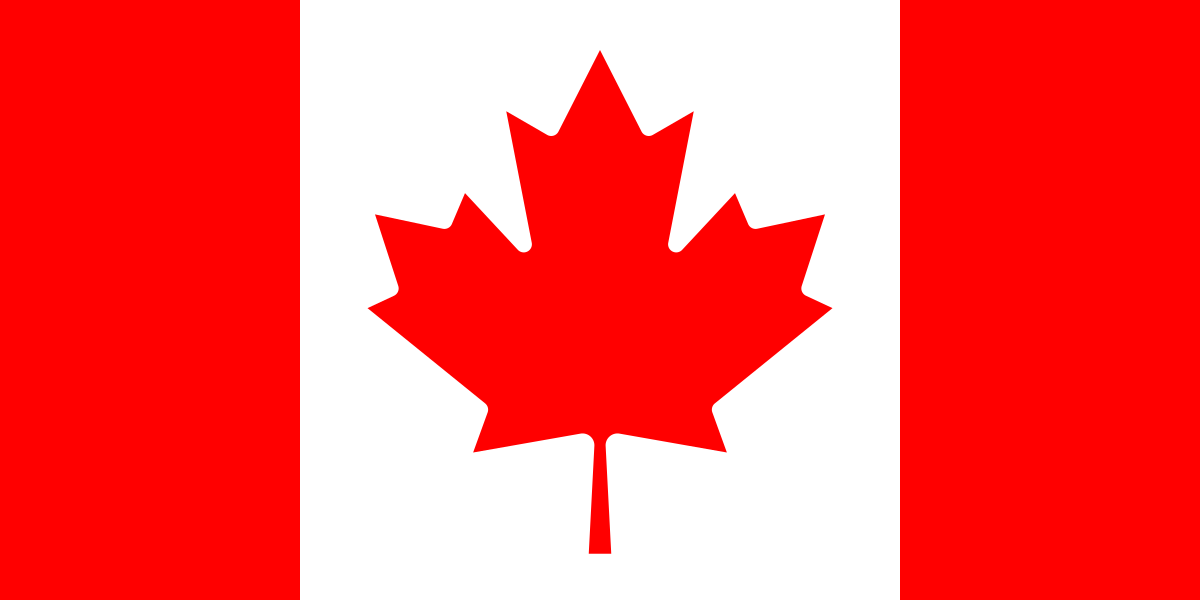
Reveal the flag names and clues
A · Canada — A single maple leaf fills a white square. Each red side panel is half as wide as the central white area.
B · Peru — On the plain civil version, the white middle band is empty and all three bands are equally wide. A state version adds arms.
How the flag developed
Peru’s first independence flag of 1820 used a diagonal arrangement, followed by changing red-and-white designs during the early republic. The vertical red-white-red arrangement was established in 1825.
Changes in 1950 clarified the use of the plain civil flag. In 2025, Law 32251 brought the three designs together in one illustrated schedule. Its drawings identify the plain national flag, the flag for state institutions and the war flag.
The main changes over time
1820 — First independence design
An early diagonal red-and-white flag preceded the familiar triband.
1825 — Vertical national arrangement
Red-white-red became established vertically.
1950 — Civil and state uses clarified
The plain civil flag was distinguished from arms-bearing official variants.
2025 — Official drawings published together
Annex I to Law 32251 illustrates the national flag, the state flag and the war flag in a single chart.
Historical flags in pictures
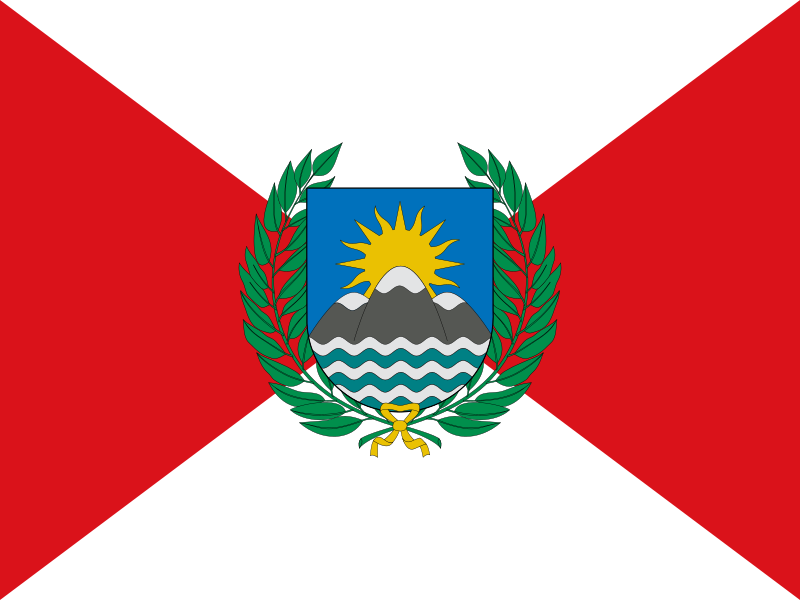
Earlier designs and other uses
Article 8 reserves the pabellón nacional for state institutions. Its central emblem is the escudo nacional. Article 10 gives the war flag of the armed forces and National Police a different version of the arms, the escudo de armas. Look to either side of the shield to tell them apart.
Download the flag

Artwork credit and reuse
Flagpedia vector collection · Public domain. The PNG is a raster export of the credited SVG.
What Did We Learn Today?
Peru has vertical red-white-red bands. Canada places a maple leaf in a wider white center and uses narrower red side bands.
Sources & Data Notes
View references and illustration credits
The dates distinguish adoption of the flag from later revisions to its artwork. The comparison uses the two illustrations at the same height, with the hoist on the left.
- El Peruano, Law 32251, Annex I, official illustrations — The chart shows the plain national flag, the state flag with red-and-white standards around the shield, and the war flag with palm and laurel branches.
- Peru, Law 32251 on national symbols, Articles 4, 5, 8, 10 and 11, El Peruano — Articles 4, 8 and 10 identify the plain national flag, the arms used on the state flag and the arms on the war flag.
- Archived World Factbook country record — background flag description and symbolic interpretations; later changes are explained above.
- Flagpedia: Peru — flag artwork and comparison reference.
- Flag history reference and bibliography — chronology and links to underlying sources.
Illustration credits
- Flag of Peru (1821-1822).svg — Huhsunqu; Public domain.
