National flag guide
Flag of Montenegro: Meaning, Symbols and History
Montenegro has used both heraldic red-field flags and red-blue-white tricolours in its modern history.
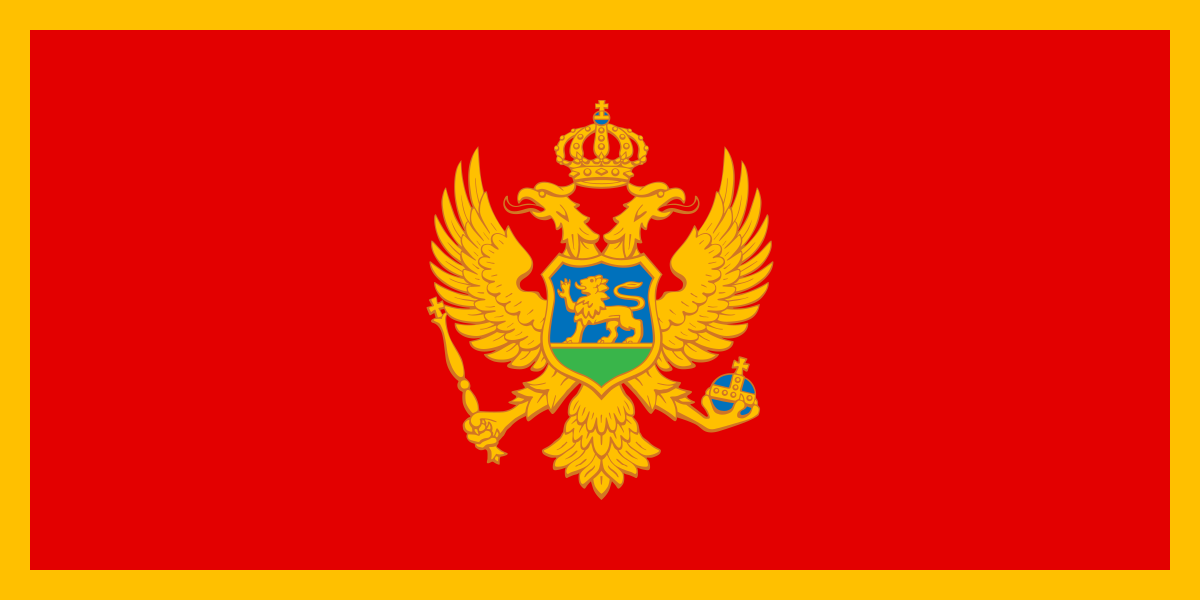
A red field bordered with a narrow golden-yellow stripe; the Montenegrin coat of arms in the center is a double-headed golden eagle, with a crown above; the eagle holds a golden scepter in its right claw and a blue orb in its left; the eagle's breast shield shows a golden lion on a green field in front of a blue sky.
The design and its details
A red field bordered with a narrow golden-yellow stripe; the Montenegrin coat of arms in the center is a double-headed golden eagle, with a crown above; the eagle holds a golden scepter in its right claw and a blue orb in its left; the eagle's breast shield shows a golden lion on a green field in front of a blue sky.
| Flag | Montenegro |
|---|---|
| Collection | Country flags |
| Adoption or specification | 13 July 2004; retained after independence in 2006 |
| Browsing region | Europe · Southern Europe |
| Illustrated proportions (height:width) | 1:2 |
What the flag means
The eagle and lion draw on dynastic, religious and state heraldry. Their presence should not be turned into a claim that the modern republic is a monarchy or theocracy. The gold border is an integral part of the national design.
| Element | Meaning or historical connection |
|---|---|
| Red field and gold border | A royal and national heraldic tradition retained in the present flag. |
| Double-headed eagle | A historic dynastic and state emblem. |
| Crown, sceptre and orb | Symbols of sovereign royal authority. |
| Lion on the breast shield | A further historical heraldic device; the shield is part of the arms, not a map of present regions. |
How the flag developed
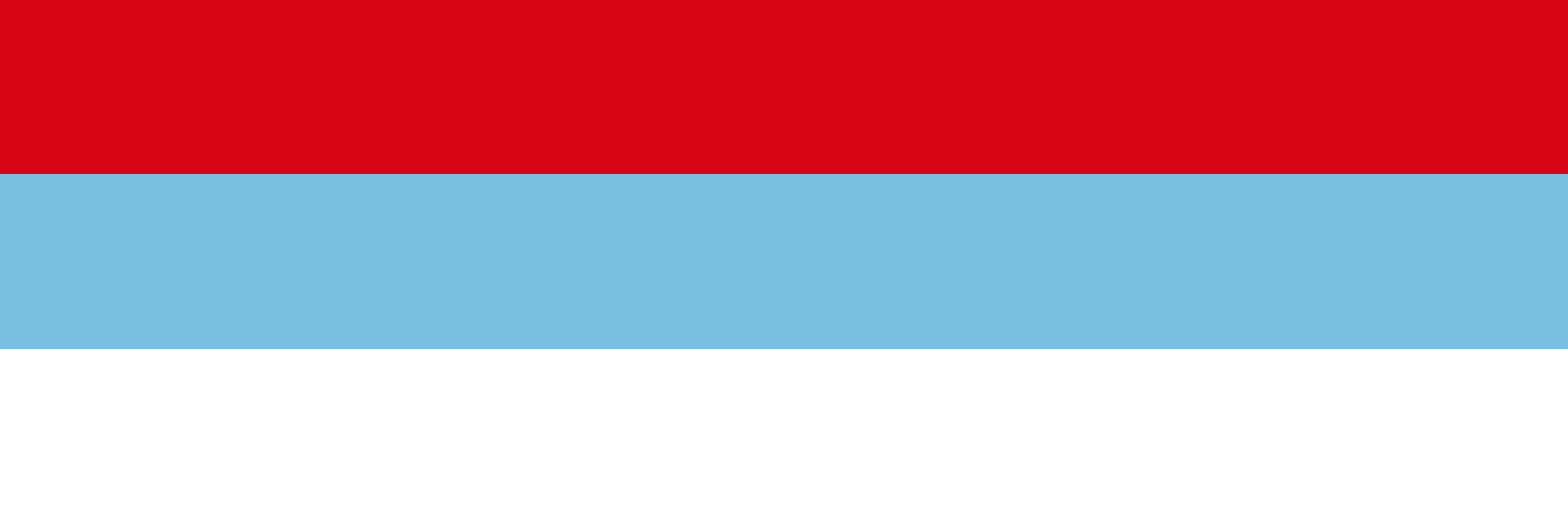
Montenegro has used both heraldic red-field flags and red-blue-white tricolours in its modern history. Nineteenth-century dynastic and military flags often combined red with crosses or state arms, while twentieth-century republican designs followed the tricolour family associated with the region.
The red flag with gold border and arms was adopted in 2004 while Montenegro was still part of the state union with Serbia. It was retained when Montenegro became independent in 2006. The flag’s adoption date therefore precedes the modern state’s independence date. The crowned double-headed eagle recalls older heraldic traditions even though Montenegro’s present constitutional form is a republic.
The main changes over time
Nineteenth century — Heraldic red flags
Crosses and arms appeared on dynastic and military red-field designs.
Twentieth century — Republican tricolours
Red-blue-white designs served changing republican and federal contexts.
2004–2006 — Present design and statehood
The red-and-gold design was adopted before independence and retained afterward.
Historical flags in pictures
How to recognise this flag
Montenegro has a red field, a continuous gold border and a gold double-headed eagle. Albania’s black eagle has no gold border; Serbia places a white eagle on a tricolour.
Earlier designs and other uses
Older Montenegrin tricolours remain historically and politically significant. They should be dated and described separately from the current national flag.
Questions about this flag
When was the flag adopted?
13 July 2004; retained after independence in 2006. An adoption date can refer to a design, its restoration or a later legal specification; the timeline above separates those stages.
What should I check before identifying an older example?
Older Montenegrin tricolours remain historically and politically significant. They should be dated and described separately from the current national flag.
What Did We Learn Today?
Montenegro has a red field, a continuous gold border and a gold double-headed eagle. Albania’s black eagle has no gold border; Serbia places a white eagle on a tricolour. Its adoption and later changes reflect the national history described in the timeline, while older or specialist flags need their own labels.
Sources & Data Notes
This guide distinguishes first use, national adoption, restoration and later construction standards. Traditional or commonly reported interpretations are identified where they differ from a formal specification. It is a dated reference, not a live record of every change in official flag use.
- Archived World Factbook country record — background flag description and symbolic interpretations; later changes are explained above.
- Flagpedia: Montenegro — flag artwork and comparison reference.
- Flag history reference and bibliography — chronology and links to underlying sources.
The main illustration preserves the selected flag artwork’s proportions; these are a reproduction guide, not a substitute for a legal construction drawing. Color names group shades for browsing.
Illustration credits
- Flag of Montenegro (1993–2004).svg — Zirland; CC BY-SA 2.5.
