National flag guide
Flag of Lithuania: Meaning, Symbols and History
Lithuania chose yellow-green-red during the creation of its modern independent republic.
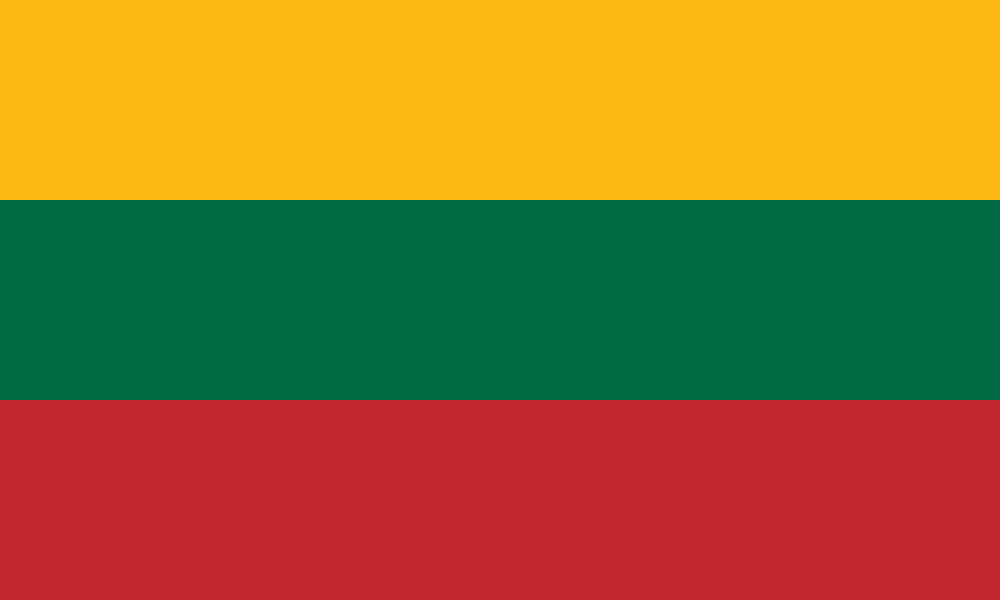
Three equal horizontal bands of yellow (top), green, and red. Yellow is commonly linked with sunlight and prosperity, green with nature and hope, and red with courage and sacrifice. These interpretations sit alongside the deliberate modern design decision made in the independence era. Lithuania is yellow-green-red from top to bottom.
The design and its details
Three equal horizontal bands of yellow (top), green, and red.
| Flag | Lithuania |
|---|---|
| Collection | Country flags |
| Adoption or specification | 25 April 1918; restored in 1988; proportions revised in 2004 |
| Browsing region | Europe · Northern Europe |
| Illustrated proportions (height:width) | 3:5 |
What the flag means
Yellow is commonly linked with sunlight and prosperity, green with nature and hope, and red with courage and sacrifice. These interpretations sit alongside the deliberate modern design decision made in the independence era.
| Element | Meaning or historical connection |
|---|---|
| Yellow | Sunlight, fields and national well-being in common explanations. |
| Green | Forests, nature, freedom and hope. |
| Red | Courage and sacrifice in defense of the homeland. |
How the flag developed
Lithuania chose yellow-green-red during the creation of its modern independent republic. Debate included whether to use a historical red banner with the Vytis mounted knight, but a tricolour drawing on colors found in folk art became the national flag in 1918.
The tricolour was suppressed during Soviet rule and remained a symbol of independence outside official institutions. It returned in 1988 during the national revival, before the restoration of independence in 1990. In 2004 its proportions changed from the longer 1:2 rectangle to 3:5. The historical red banner with the mounted knight also gained a distinct state role; it is not simply an obsolete version that can be ignored.
The main changes over time
1918 — National tricolour
The independent republic adopted yellow-green-red.
1988–1990 — Restoration
The tricolour returned during the movement to restore independence.
2004 — New proportions
The national flag’s ratio became 3:5; the historical banner received a separate state role.
Historical flags in pictures

How to recognise this flag
Lithuania is yellow-green-red from top to bottom. Ethiopia and Bolivia arrange related colors differently and may add emblems. The current Lithuanian national flag has no central coat of arms.
Earlier designs and other uses
The historical state flag shows a mounted knight on red. It has a separate official purpose from the yellow-green-red national tricolour.
Questions about this flag
When was the flag adopted?
25 April 1918; restored in 1988; proportions revised in 2004. An adoption date can refer to a design, its restoration or a later legal specification; the timeline above separates those stages.
What should I check before identifying an older example?
The historical state flag shows a mounted knight on red. It has a separate official purpose from the yellow-green-red national tricolour.
What Did We Learn Today?
Lithuania is yellow-green-red from top to bottom. Ethiopia and Bolivia arrange related colors differently and may add emblems. The current Lithuanian national flag has no central coat of arms. Its adoption and later changes reflect the national history described in the timeline, while older or specialist flags need their own labels.
Sources & Data Notes
This guide distinguishes first use, national adoption, restoration and later construction standards. Traditional or commonly reported interpretations are identified where they differ from a formal specification. It is a dated reference, not a live record of every change in official flag use.
- Archived World Factbook country record — background flag description and symbolic interpretations; later changes are explained above.
- Flagpedia: Lithuania — flag artwork and comparison reference.
- Flag history reference and bibliography — chronology and links to underlying sources.
The main illustration preserves the selected flag artwork’s proportions; these are a reproduction guide, not a substitute for a legal construction drawing. Color names group shades for browsing.
Illustration credits
- Flag of Lithuanian SSR.svg; Public domain.
