Flag Explorer
Jamaica’s Flag and the Meaning of Its Gold Diagonal Cross
Jamaica adopted its black-green-gold flag at independence in 1962.
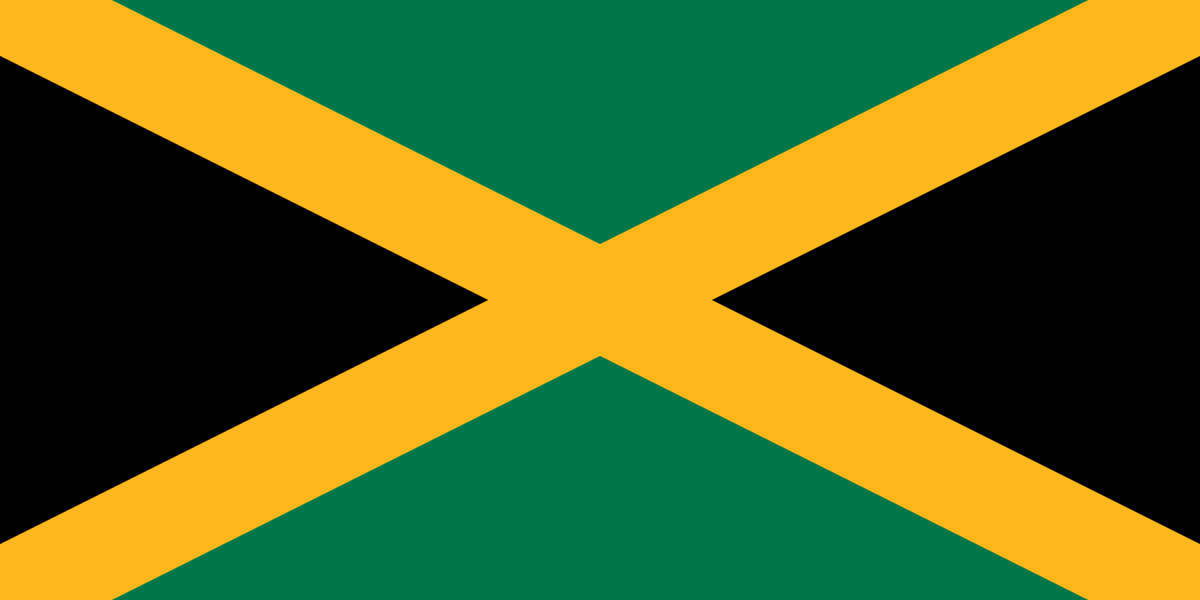
What do the colors of Jamaica’s flag mean today?
The current official interpretation associates black with the strength and creativity of the people, gold with sunlight and natural wealth, and green with hope and agricultural resources. Older explanations assigned different meanings to black. The diagonal gold cross and the four fields remained the same.
The design and its details
Diagonal yellow cross divides the flag into four triangles, two green (top and bottom) and two black (left and right).
| Collection | Country flags |
|---|---|
| Adoption or design date | 6 August 1962 |
| Geographic region | North America · Caribbean |
| Illustrated proportions (height to width) | 1:2 |
What the flag means
Green is associated with the land and hope, gold with sunlight and natural wealth, and black with the strength and creativity of the people. Older explanations may emphasise hardship; source dates help explain that difference.
| Element | Meaning or historical connection |
|---|---|
| Black | In the modern government explanation, the strength and creativity of the people; older hardship interpretations should be dated as earlier explanations. |
| Gold | Sunlight and natural wealth. |
| Green | Hope and agricultural resources. |
| Diagonal cross | Separates the colors into a distinctive saltire design, rather than representing four administrative regions. |
Who chose Jamaica’s saltire, and how are its colors read today?
A national competition produced suggestions, but Jamaica’s Information Service records that a bipartisan parliamentary committee completed the design for independence on 6 August 1962. The gold diagonals leave green above and below and black at the two ends.
The present official explanation connects black with the strength and creativity of the people, gold with sunshine and wealth, and green with hope and agricultural resources. Older descriptions using hardship for black should be read as evidence of earlier explanations.
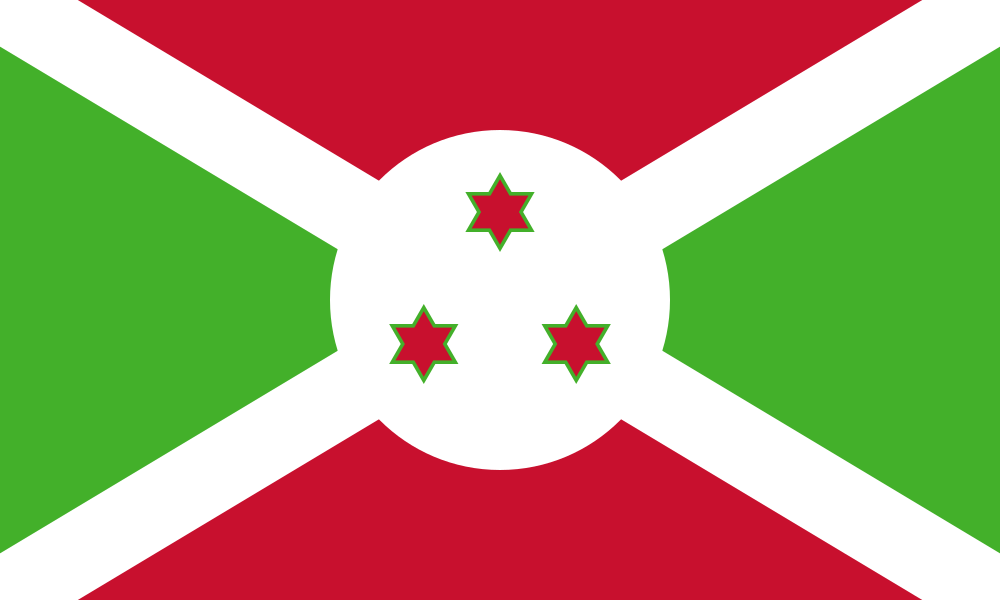
Compare the flags of Jamaica and Burundi
What fills the middle of the diagonal cross? In both drawings, the flagpole side is on the left.
Reveal the flag names and clues
A · Jamaica — The two gold diagonals meet directly between green and black triangles. No disc covers their crossing.
B · Burundi — A white disc conceals the intersection of the white diagonals. It carries three red stars outlined in green.
How the flag developed
The selection process considered a striped proposal before choosing the diagonal cross, a layout that avoided close resemblance to another newly independent state’s flag.
The national flag replaced colonial ensigns but remained after later political and constitutional debates. Its gold saltire divides the cloth into four distinct triangles and gives Jamaica a design readily separated from the many horizontal and vertical tricolours of the same period. The symbolism of black has also been expressed more positively in later official explanations than in some older accounts centered on hardship.
The main changes over time
Colonial period — British-style ensigns
Territorial flags preceded the independence design.
1962 — National flag adopted
The gold saltire, green and black design became the national flag.
Earlier designs and other uses
State, naval and head-of-state flags have separate designs. The ordinary national flag is the four-triangle saltire.
Download the flag
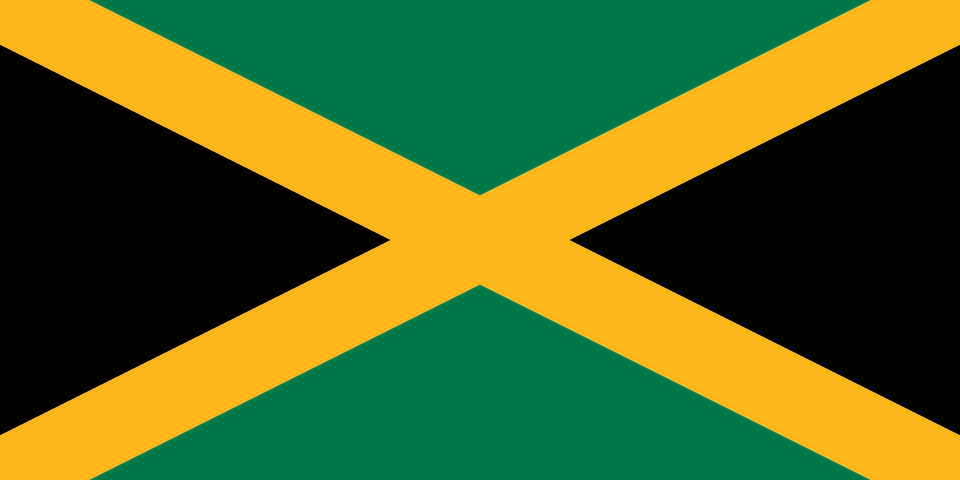
Artwork credit and reuse
Flagpedia vector collection · Public domain. The PNG is a raster export of the credited SVG.
What Did We Learn Today?
A gold diagonal cross divides green top and bottom triangles from black side triangles. None of the three principal colors is red, white or blue.
Sources & Data Notes
View references and illustration credits
The dates distinguish adoption of the flag from later revisions to its artwork. The comparison uses the two illustrations at the same height, with the hoist on the left.
- Jamaica Information Service · Jamaican flag
- Jamaica Information Service: Jamaican Flag.
- Archived World Factbook country record — background flag description and symbolic interpretations; later changes are explained above.
- Flagpedia: Jamaica — flag artwork and comparison reference.
- Flag history reference and bibliography — chronology and links to underlying sources.
The flag downloads include the artwork credit and reuse terms for the SVG and PNG.