Flag Explorer
India Flag Meaning and the 24-Spoke Ashoka Chakra
India’s national flag developed from the independence movement’s tricolours.
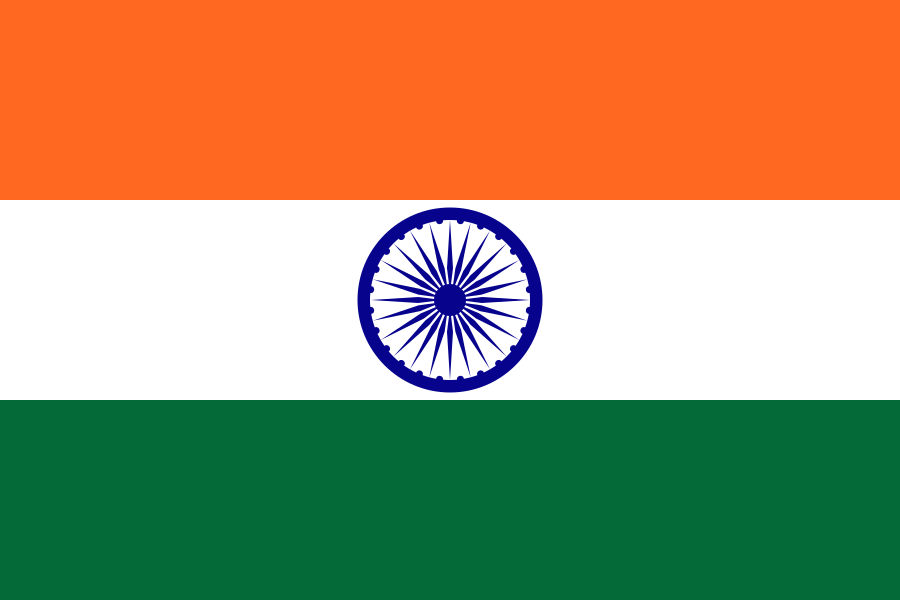
Why does the wheel on India’s flag have 24 spokes?
The navy Ashoka Chakra is a wheel with 24 evenly spaced spokes, drawn from the Buddhist and Mauryan emblem tradition. The spokes belong to one continuous wheel on the white band. Lists that give each spoke an individual virtue are interpretations of the emblem.
The design and its details
Three equal horizontal bands of saffron (top), white, and green, with a blue chakra (24-spoked wheel) centered in the white band.
| Collection | Country flags |
|---|---|
| Adoption or design date | 22 July 1947 |
| Geographic region | Asia · Southern Asia |
| Illustrated proportions (height to width) | 2:3 |
Look closer · The Ashoka Chakra
What the flag means
The Ashoka Chakra is a wheel associated with dharma and movement. The colors are officially explained through courage and sacrifice, truth and peace, and growth or fertility, rather than as permanent labels for separate religious communities.
| Element | Meaning or historical connection |
|---|---|
| Saffron | Courage, strength and renunciation in national explanations. |
| White | Peace and truth. |
| Green | The land’s fertility, growth and national well-being. |
| Navy-blue Ashoka Chakra | A twenty-four-spoked wheel associated with dharma, law and movement. It replaced the spinning-wheel device of the earlier nationalist flag. |
| Three colors together | The present national explanation should not be reduced to one stripe per religious community. |
Compare the flags of India and Niger
What fills the white stripe between orange and green? In both drawings, the flagpole side is on the left.
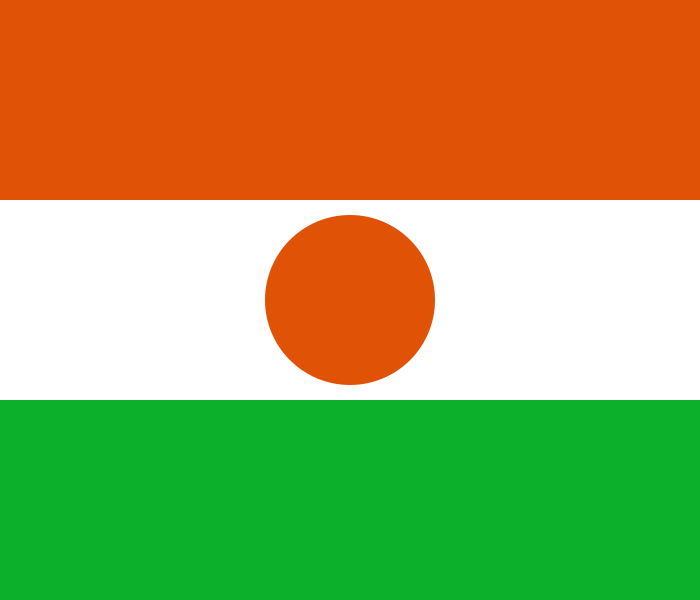
Reveal the flag names and clues
A · India — A navy-blue wheel with 24 spokes sits in the center. A detailed copy shows the hub, rim and spokes.
B · Niger — A solid orange disc sits in the middle. Even in monochrome its uninterrupted silhouette distinguishes it from a wheel.
How the flag developed
Earlier movement flags used a spinning wheel, or charkha, associated with self-reliance and the freedom struggle.
The Constituent Assembly adopted the present design in July 1947, shortly before independence. A twenty-four-spoked Ashoka Chakra replaced the spinning wheel while the saffron-white-green arrangement continued. The republic retained the flag after 1950. The earlier charkha flag belongs to the independence movement’s history and should not be silently presented as the current national design.
From the spinning wheel to the Ashoka Chakra
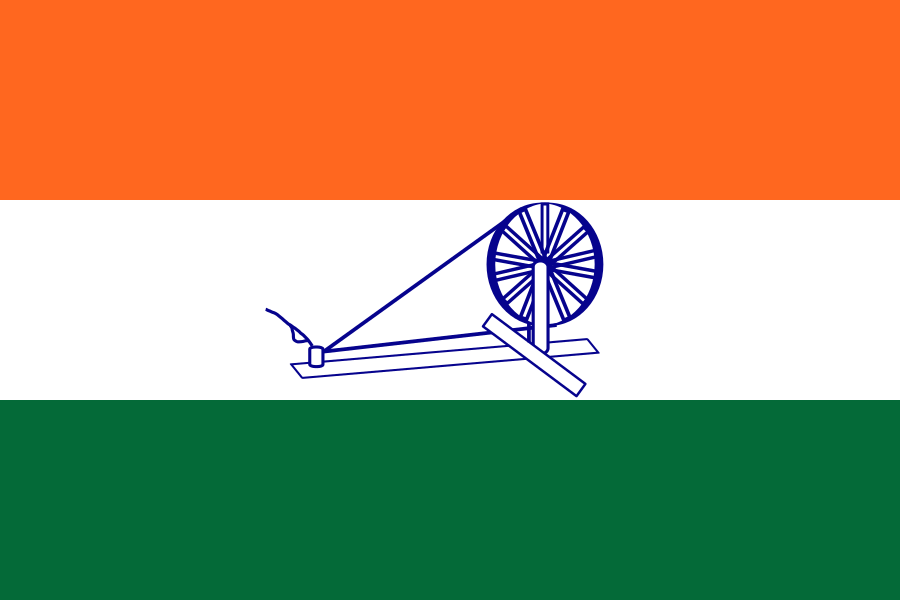
The Indian national movement used several flag proposals before independence. A spinning wheel, or charkha, became an important symbol of self-reliance and the movement associated with Mahatma Gandhi.
The national flag adopted by the Constituent Assembly on 22 July 1947 used a navy-blue Ashoka Chakra in the white band. The wheel has twenty-four spokes and connects the design with the dharma wheel associated with the Lion Capital of Ashoka. It should not be drawn as the earlier spinning wheel.
The flag’s saffron, white and green bands are often misrepresented as a simple division between religious communities. Official explanations instead connect them with values such as courage and sacrifice, truth and peace, and growth or fertility. The wheel adds movement and ethical purpose to that interpretation. The national emblem based on the Lion Capital is a separate state symbol, not an additional device required on the ordinary flag.
The main changes over time
1931 — Movement tricolour
A saffron-white-green flag carried the spinning wheel.
1947 — National flag adopted
The Constituent Assembly selected the Chakra design.
1950 — Republic
The republic retained the national flag.
Earlier designs and other uses
The spinning-wheel movement flag is historical. Military and naval ensigns have separate designs and uses.
Download the flag

Artwork credit and reuse
Flagpedia vector collection · Public domain. The PNG is a raster export of the credited SVG.
What Did We Learn Today?
The blue wheel has twenty-four spokes in the white middle band. Niger has an orange disc on a shorter orange-white-green flag, and Ireland uses vertical stripes.
Sources & Data Notes
View references and illustration credits
The dates distinguish adoption of the flag from later revisions to its artwork. The comparison uses the two illustrations at the same height, with the hoist on the left.
- Press Information Bureau, illustrated history of India’s national flag (PDF). The factsheet records the adoption date and illustrates the evolution of the design.
- Constituent Assembly of India, national flag resolution of 22 July 1947 (PDF, page 1). The motion identifies the wheel on the Sarnath Lion Capital as the model. The Assembly’s decision is on PDF page 27. Both government documents were checked on 19 November 2026.
- 1931 movement flag illustration by Nicholas (Nichalp), public domain, Wikimedia Commons.
- Archived World Factbook country record — background flag description and symbolic interpretations; later changes are explained above.
- Flagpedia: India — flag artwork and comparison reference.
- Flag history reference and bibliography — chronology and links to underlying sources.

The flag downloads include the artwork credit and reuse terms for the SVG and PNG.