National flag guide
Flag of Germany: Meaning, Symbols and History
Black-red-gold belongs to Germany’s nineteenth-century liberal and national movement.
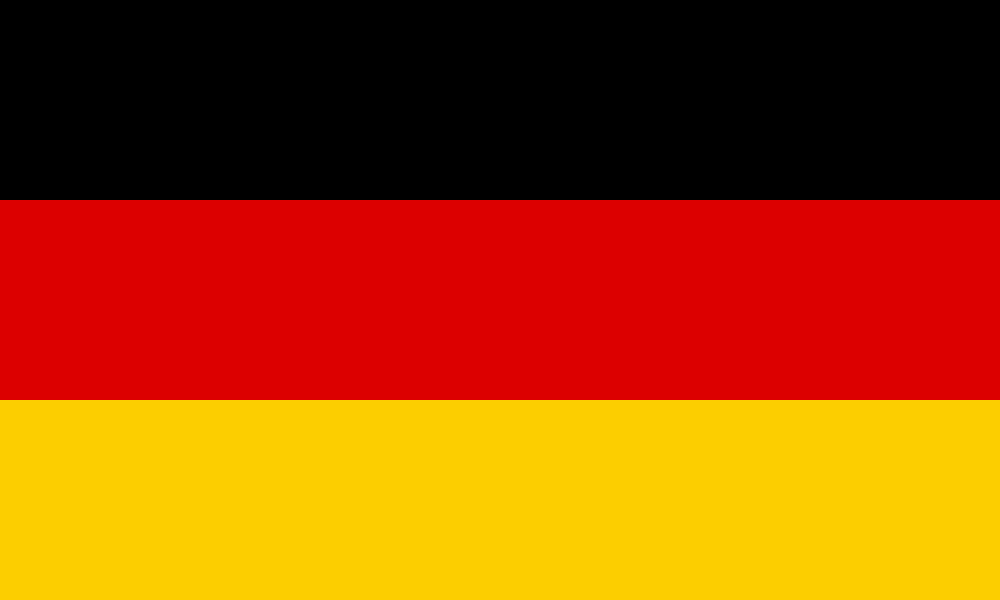
Three equal horizontal bands of black (top), red, and gold. The lower stripe is traditionally called gold, even when represented by yellow cloth or digital color. The modern democratic association of black-red-gold is more useful than assigning an invented fixed virtue to each stripe. The federal service flag adds an eagle shield for authorised government use.
The design and its details
Three equal horizontal bands of black (top), red, and gold.
| Flag | Germany |
|---|---|
| Collection | Country flags |
| Adoption or specification | 23 May 1949; retained at reunification in 1990 |
| Browsing region | Europe · Western Europe |
| Illustrated proportions (height:width) | 3:5 |
What the flag means
The lower stripe is traditionally called gold, even when represented by yellow cloth or digital color. The modern democratic association of black-red-gold is more useful than assigning an invented fixed virtue to each stripe. The federal service flag adds an eagle shield for authorised government use.
| Element | Meaning or historical connection |
|---|---|
| Black, red and gold | A national color tradition associated with nineteenth-century national and liberal movements, the Weimar Republic and the Federal Republic. |
| Plain three bands | The ordinary national flag does not require an eagle. |
| Federal shield | Appears on the federal service flag for authorised governmental uses; it is a separate official version. |
How the flag developed
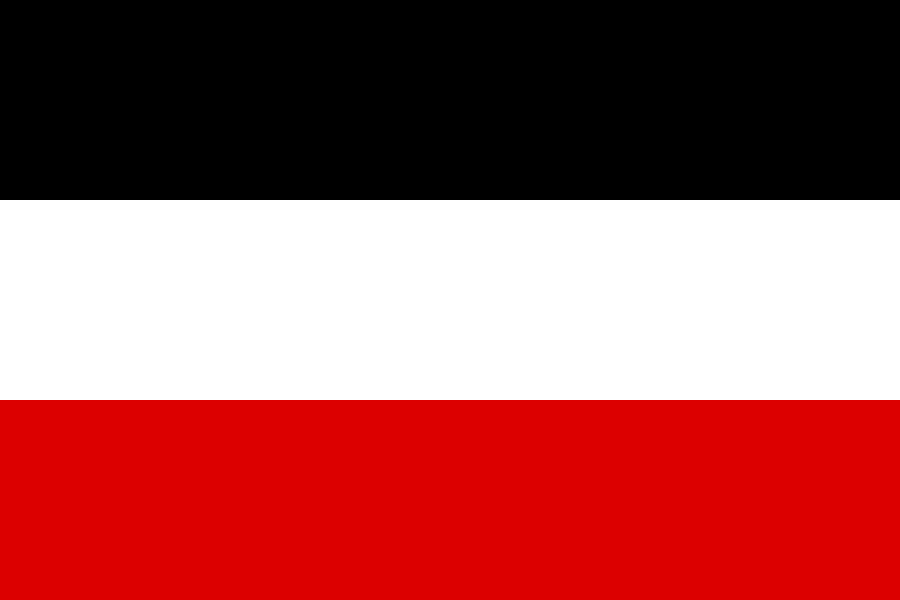
Black-red-gold belongs to Germany’s nineteenth-century liberal and national movement. The colors became especially prominent during the revolutions of 1848 and returned with the Weimar Republic after the First World War. They should be distinguished from the black-white-red flag associated with the North German Confederation and the German Empire. Those different tricolours expressed different political traditions, even though both are part of German history.
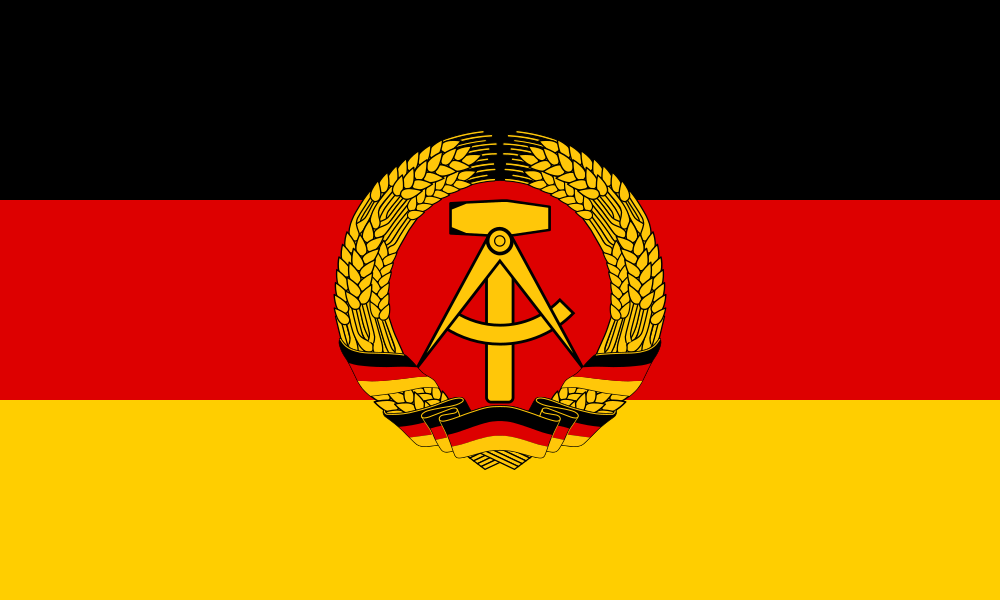
The Nazi regime replaced the republican colors, and the Federal Republic restored black-red-gold in 1949. East Germany initially used the same plain tricolour, then added its hammer-and-compass emblem in 1959. After reunification in 1990, the plain federal flag continued. The history is therefore not one uninterrupted march from a medieval banner to a modern nation: the choice of colors repeatedly marked constitutional and political breaks.
Two tricolour traditions and a divided state
Germany’s black-red-gold and black-white-red flags represent different historical traditions. Black-red-gold became associated with liberal and national movements and the 1848–1849 revolutionary period. The Weimar Republic and later Federal Republic adopted that palette.
The German Empire instead used black-white-red, inherited from the North German Confederation. The two combinations should be read in their political setting rather than treated as interchangeable arrangements of familiar German colors.
After 1949 both German states initially used plain black-red-gold. East Germany’s addition of a hammer-and-compass emblem in 1959 created a visible distinction that lasted until reunification. The modern ordinary national flag is plain; the federal service flag adds a federal shield for authorised government use. A shield is therefore not required on every correctly produced German national flag.
The main changes over time
1848–1849 — National movement
Black-red-gold represented the revolutionary movement and its proposed national institutions.
1871–1918 — Imperial tricolour
The German Empire used black-white-red.
1919–1933 — Weimar Republic
Black-red-gold became the republican national flag.
1949; 1990 — Federal flag
The Federal Republic adopted the plain tricolour in 1949 and retained it at reunification.
Historical flags in pictures
How to recognise this flag
Germany is black-red-gold from top to bottom. Belgium has vertical black-yellow-red bands. A hammer-and-compass emblem on the German tricolour identifies the former East German state flag.
Earlier designs and other uses
The Bundesdienstflagge bears the federal shield. The ordinary national flag is the plain tricolour; the East German arms-bearing flag is historical.
Questions about this flag
When was the flag adopted?
23 May 1949; retained at reunification in 1990. An adoption date can refer to a design, its restoration or a later legal specification; the timeline above separates those stages.
What should I check before identifying an older example?
The Bundesdienstflagge bears the federal shield. The ordinary national flag is the plain tricolour; the East German arms-bearing flag is historical.
What Did We Learn Today?
Germany is black-red-gold from top to bottom. Belgium has vertical black-yellow-red bands. A hammer-and-compass emblem on the German tricolour identifies the former East German state flag. Its adoption and later changes reflect the national history described in the timeline, while older or specialist flags need their own labels.
Sources & Data Notes
This guide distinguishes first use, national adoption, restoration and later construction standards. Traditional or commonly reported interpretations are identified where they differ from a formal specification. It is a dated reference, not a live record of every change in official flag use.
- Archived World Factbook country record — background flag description and symbolic interpretations; later changes are explained above.
- Flagpedia: Germany — flag artwork and comparison reference.
- Flag history reference and bibliography — chronology and links to underlying sources.
The main illustration preserves the selected flag artwork’s proportions; these are a reproduction guide, not a substitute for a legal construction drawing. Color names group shades for browsing.
Illustration credits
- Flag of the German Empire.svg — Original: Adolf Soetbeer, Otto von Bismarck Vector: B1mbo, Madden; Public domain.
- Flag of East Germany.svg — Flaggenentwurf: unbekannt
diese Datei: Jwnabd; Public domain.

